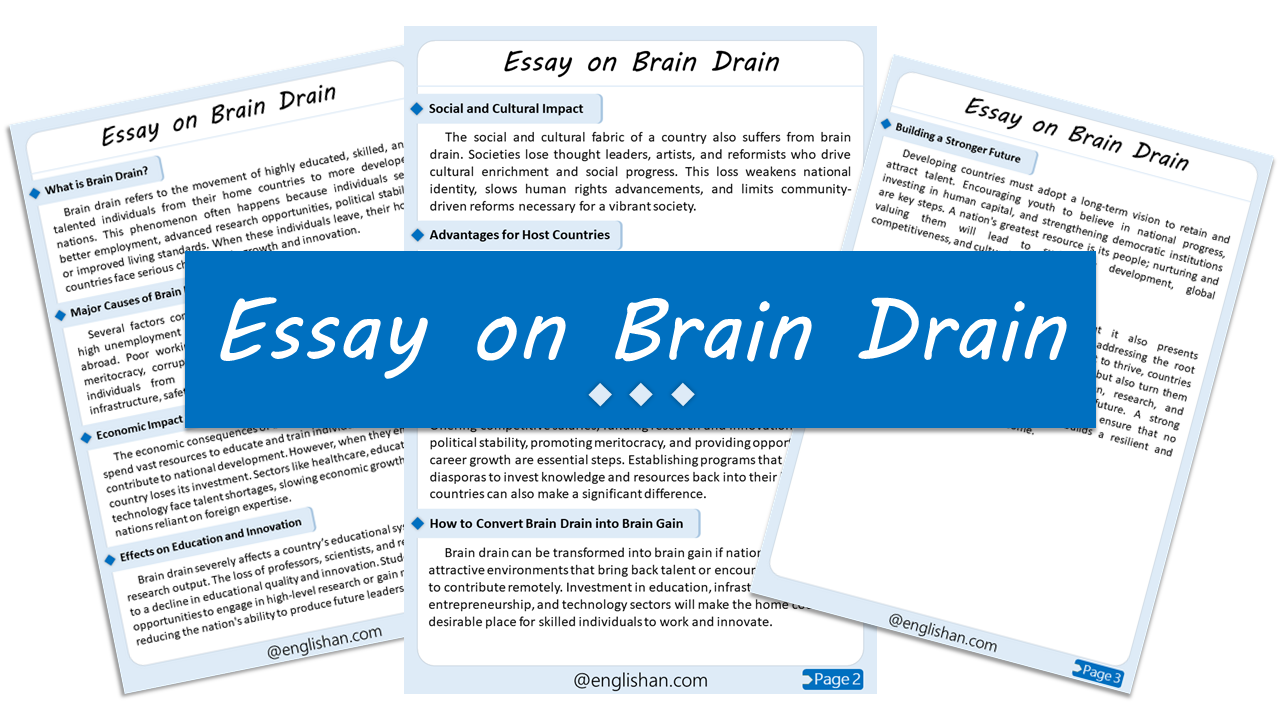
When writing about brain drain, it’s important to understand why skilled people leave their country and how it impacts development. This essay on brain drain explains its causes, effects, and ways to reduce it. It’s written in 500 words to help students with homework or exams. You can download this brain drain essay as a free PDF or image to study or print.
10 Lines Brain Drain Essay for Class 2 to Class 5
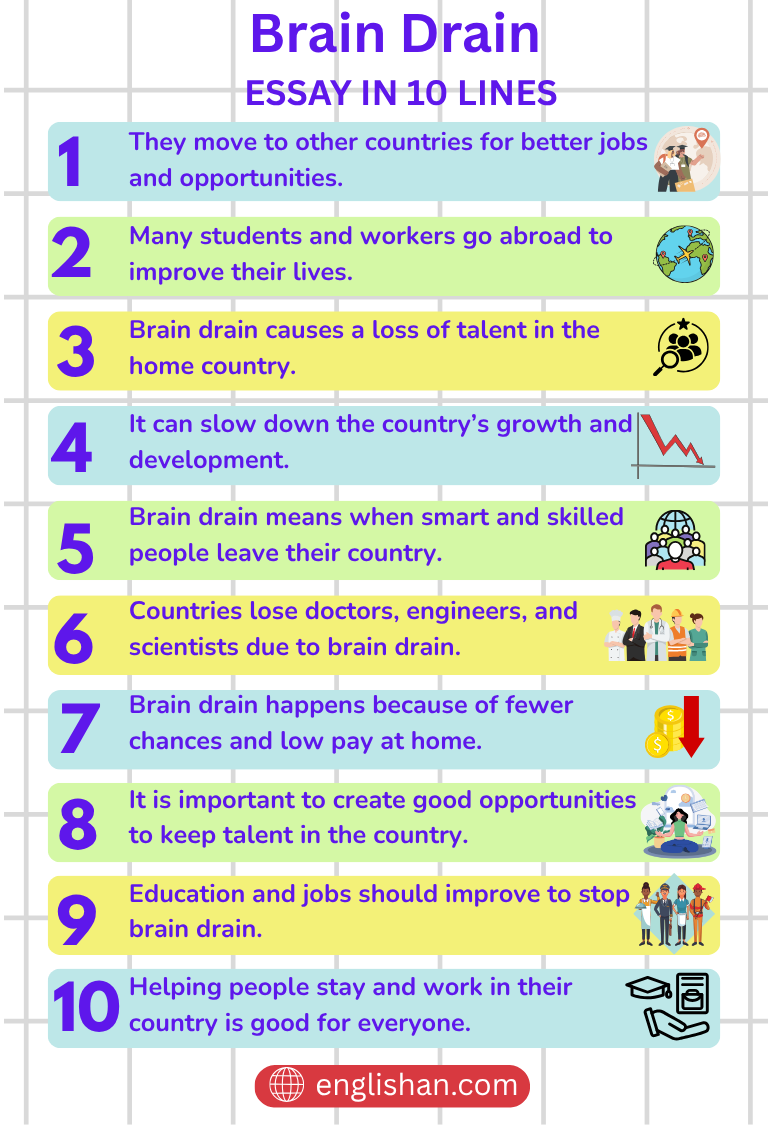
- They move to other countries for better jobs and opportunities.
- Many students and workers go abroad to improve their lives.
- Brain drain causes a loss of talent in the home country.
- It can slow down the country’s growth and development.
- Brain drain means when smart and skilled people leave their country.
- Countries lose doctors, engineers, and scientists due to brain drain.
- Brain drain happens because of fewer chances and low pay at home.
- It is important to create good opportunities to keep talent in the country.
- Education and jobs should improve to stop brain drain.
- Helping people stay and work in their country is good for everyone.
250 Words Essay on Brain Drain for Middle School
Brain drain is when skilled and talented people leave their own country to live and work in another country. This usually happens because they want better jobs, higher salaries, or improved living conditions. Many students, doctors, engineers, and scientists move abroad seeking these opportunities.
Brain drain causes a shortage of important professionals in the home country. When many skilled people leave, it can slow down the country’s development. This is a big problem for countries that need smart workers to grow their economy and improve services like health and education.
One main reason for brain drain is the lack of good jobs or low pay in the home country. People want to have a better life and support their families, so they move where they feel more respected and rewarded.
To stop brain drain, countries should create better education systems and job opportunities. Governments can encourage people to stay by offering good salaries and working conditions. Supporting innovation and research can also help keep talented people at home.
Brain drain affects both the people who leave and those who stay behind. When people work together to improve their country, it becomes stronger and more successful. Preventing brain drain is important for a bright future.
500 Words Brain Drain Essay for Upper Primary and Lower Secondary
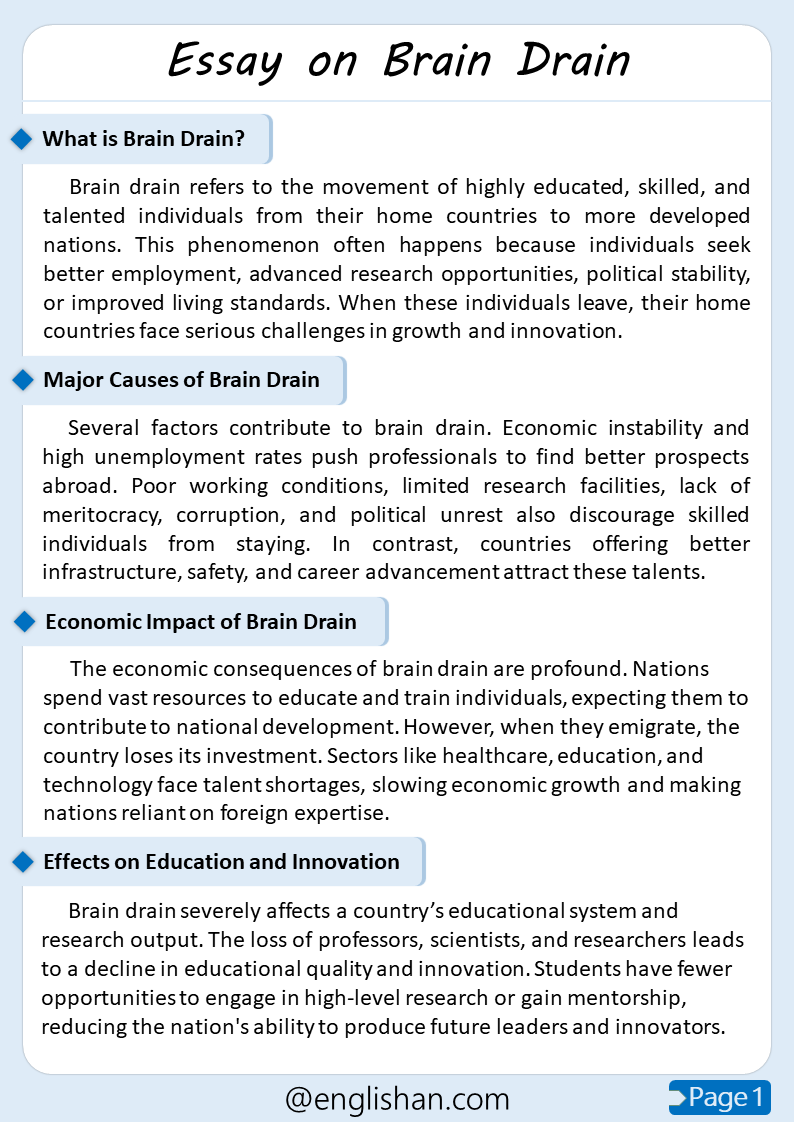
What is Brain Drain?
Brain drain refers to the movement of highly educated, skilled, and talented individuals from their home countries to more developed nations. This phenomenon often happens because individuals seek better employment, advanced research opportunities, political stability, or improved living standards. When these individuals leave, their home countries face serious challenges in growth and innovation.
Major Causes of Brain Drain
Several factors contribute to brain drain. Economic instability and high unemployment rates push professionals to find better prospects abroad. Poor working conditions, limited research facilities, lack of meritocracy, corruption, and political unrest also discourage skilled individuals from staying. In contrast, countries offering better infrastructure, safety, and career advancement attract these talents.
Economic Impact of Brain Drain
The economic consequences of brain drain are profound. Nations spend vast resources to educate and train individuals, expecting them to contribute to national development. However, when they emigrate, the country loses its investment. Sectors like healthcare, education, and technology face talent shortages, slowing economic growth and making nations reliant on foreign expertise.
Effects on Education and Innovation
Brain drain severely affects a country’s educational system and research output. The loss of professors, scientists, and researchers leads to a decline in educational quality and innovation. Students have fewer opportunities to engage in high-level research or gain mentorship, reducing the nation’s ability to produce future leaders and innovators.
Social and Cultural Impact
The social and cultural fabric of a country also suffers from brain drain. Societies lose thought leaders, artists, and reformists who drive cultural enrichment and social progress. This loss weakens national identity, slows human rights advancements, and limits community-driven reforms necessary for a vibrant society.
Advantages for Host Countries
While developing nations struggle with brain drain, host countries benefit. They gain skilled labor without spending on education or training costs. Migrants contribute to economic growth, scientific research, healthcare improvements, and cultural diversity. Universities and corporations in developed countries are enriched by the talents and innovations of these immigrants.
Solutions to Brain Drain
To address brain drain, countries must improve internal conditions. Offering competitive salaries, funding research and innovation, ensuring political stability, promoting meritocracy, and providing opportunities for career growth are essential steps. Establishing programs that encourage diasporas to invest knowledge and resources back into their home countries can also make a significant difference.
How to Convert Brain Drain into Brain Gain
Brain drain can be transformed into brain gain if nations create attractive environments that bring back talent or encourage expatriates to contribute remotely. Investment in education, infrastructure, entrepreneurship, and technology sectors will make the home country a desirable place for skilled individuals to work and innovate.
Building a Stronger Future
Developing countries must adopt a long-term vision to retain and attract talent. Encouraging youth to believe in national progress, investing in human capital, and strengthening democratic institutions are key steps. A nation’s greatest resource is its people; nurturing and valuing them will lead to sustainable development, global competitiveness, and cultural richness.
Conclusion
Brain drain poses serious challenges, but it also presents opportunities for growth and improvement. By addressing the root causes and creating a better environment for talent to thrive, countries can not only stop the outflow of skilled individuals but also turn them into valuable contributors. Investing in education, research, and governance is essential to securing a nation’s future. A strong commitment to empowering human resources will ensure that no country loses its brightest minds but rather builds a resilient and prosperous society for generations to come.
Difficult Words Used in 500 Brain Drain Essay
| Word | Meaning |
|---|---|
| Emigration | The act of leaving one’s country to settle permanently elsewhere |
| Infrastructure | Fundamental systems and services, such as transport and communication |
| Intellectuals | People engaged in creative and critical thinking |
| Innovation | Introduction of new ideas, methods, or products |
| Meritocracy | A system in which success is based on individual ability |
| Depletion | Reduction in quantity or quality |
| Diaspora | The movement or scattering of people away from an established homeland |
| Sustainability | Ability to maintain certain processes over time |
| Resilience | Capacity to recover quickly from difficulties |
| Expatriates | People who live outside their native country |
Brain Drain Essay PDF
You May Also Like