When writing about the Vaisakhi festival, it’s important to understand how it brings people together through harvest celebrations and Sikh traditions. This essay on Vaisakhi explains the history, religious meaning, cultural events, and the joyful ways people celebrate. It’s written in 500 words to help students with school homework or exam preparation. You can download this Vaisakhi essay as a free PDF or image to study or print.
10 Lines Vaisakhi festival Essay for Class 2 to Class 5
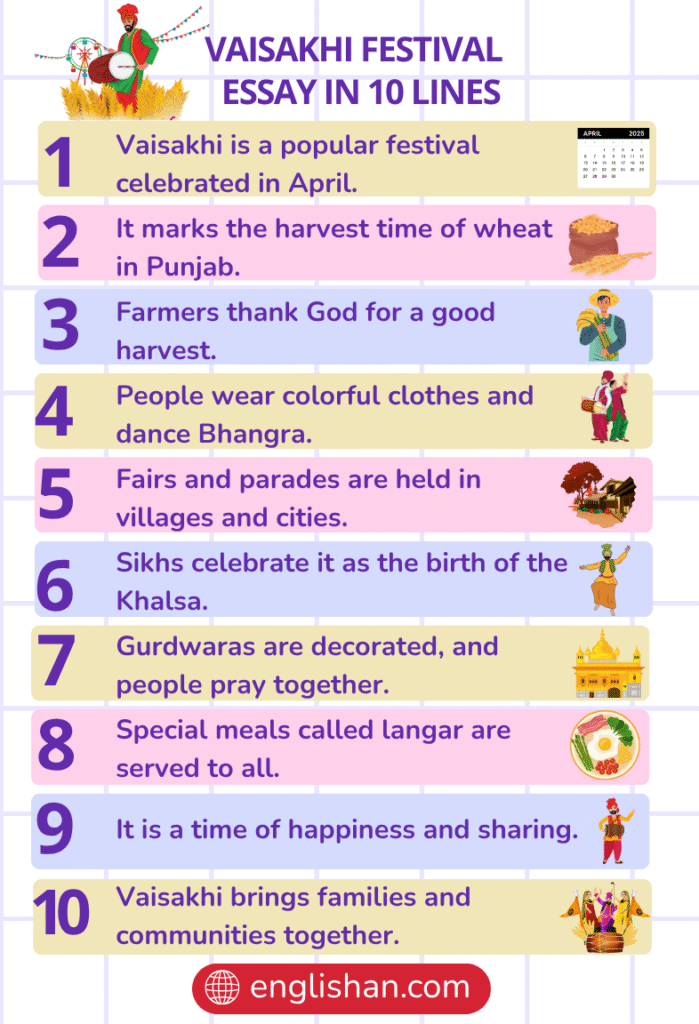
- Vaisakhi is a popular festival celebrated in April.
- It marks the harvest time of wheat in Punjab.
- Farmers thank God for a good harvest.
- People wear colorful clothes and dance Bhangra.
- Fairs and parades are held in villages and cities.
- Sikhs celebrate it as the birth of the Khalsa.
- Gurdwaras are decorated, and people pray together.
- Special meals called langar are served to all.
- It is a time of happiness and sharing.
- Vaisakhi brings families and communities together.
250 Words Essay on Vaisakhi festival for Middle School
Vaisakhi is a joyful and important festival celebrated mostly in Punjab, India. It takes place every year in April and marks the beginning of the harvest season. Farmers are happy because it is time to gather the crops they have worked hard to grow. They thank God for a good harvest and celebrate with songs, dances, and delicious food.
For Sikhs, Vaisakhi is also a religious festival. It was on this day in 1699 that Guru Gobind Singh Ji created the Khalsa, a group of brave and faithful followers. This makes Vaisakhi a special day in Sikh history. People visit Gurdwaras, sing hymns, and take part in Nagar Kirtan, which is a parade with music and prayers.
During Vaisakhi, people wear colorful traditional clothes. Men perform Bhangra and women perform Giddha, two lively Punjabi dances. Fairs are held in many villages, where people enjoy games, food stalls, and music. Community meals, known as langar, are served at Gurdwaras, and everyone is welcome to eat, showing equality and kindness.
Vaisakhi teaches us to be thankful, work hard, and live in unity. It is a time for celebration, prayer, and helping others. This festival brings families and communities closer and fills the air with joy and respect for tradition.
500 Words Vaisakhi festival Essay for Upper Primary and Lower Secondary
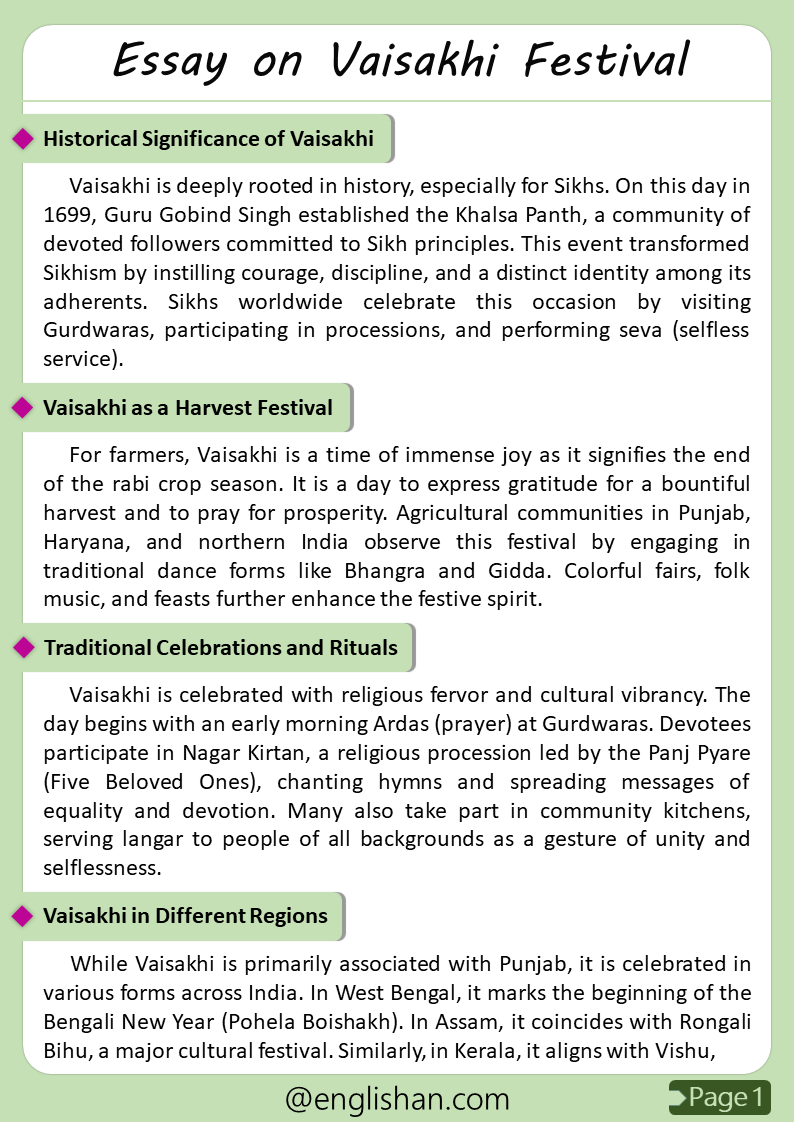
Historical Significance of Vaisakhi
Vaisakhi is deeply rooted in history, especially for Sikhs. On this day in 1699, Guru Gobind Singh established the Khalsa Panth, a community of devoted followers committed to Sikh principles. This event transformed Sikhism by instilling courage, discipline, and a distinct identity among its adherents. Sikhs worldwide celebrate this occasion by visiting Gurdwaras, participating in processions, and performing seva (selfless service).
Vaisakhi as a Harvest Festival
For farmers, Vaisakhi is a time of immense joy as it signifies the end of the rabi crop season. It is a day to express gratitude for a bountiful harvest and to pray for prosperity. Agricultural communities in Punjab, Haryana, and northern India observe this festival by engaging in traditional dance forms like Bhangra and Gidda. Colorful fairs, folk music, and feasts further enhance the festive spirit.
Traditional Celebrations and Rituals
Vaisakhi is celebrated with religious fervor and cultural vibrancy. The day begins with an early morning Ardas (prayer) at Gurdwaras. Devotees participate in Nagar Kirtan, a religious procession led by the Panj Pyare (Five Beloved Ones), chanting hymns and spreading messages of equality and devotion. Many also take part in community kitchens, serving langar to people of all backgrounds as a gesture of unity and selflessness.
Vaisakhi in Different Regions
While Vaisakhi is primarily associated with Punjab, it is celebrated in various forms across India. In West Bengal, it marks the beginning of the Bengali New Year (Pohela Boishakh). In Assam, it coincides with Rongali Bihu, a major cultural festival. Similarly, in Kerala, it aligns with Vishu, symbolizing prosperity and renewal. This diversity highlights the festival’s broader cultural impact beyond Sikhism.
Role of Gurdwaras in Vaisakhi Celebrations
Gurdwaras play a central role in Vaisakhi celebrations. Special prayers, kirtans, and discourses are conducted, emphasizing the spiritual importance of the day. Devotees visit these holy places to seek blessings and participate in religious activities.
Baisakhi Mela: The Festive Spirit
Baisakhi Melas (fairs) are organized across Punjab, featuring folk music, dance performances, and traditional Punjabi cuisine. These fairs provide an opportunity for people to come together, celebrate, and enjoy cultural activities.
Importance of Nagar Kirtan in Vaisakhi
The Nagar Kirtan, a vibrant religious procession, is one of the key highlights of Vaisakhi. Led by the Panj Pyare, it involves devotees singing hymns, displaying martial arts, and spreading messages of peace and equality.
Vaisakhi and Sikh Identity
Vaisakhi is not just a festival but a symbol of Sikh identity. The formation of the Khalsa Panth marked a significant turning point in Sikh history, reinforcing the principles of courage, equality, and devotion to God.
Cultural Symbolism in Vaisakhi
Vaisakhi embodies the spirit of unity, equality, and cultural heritage in Sikhism and Indian traditions. The festival represents the values of bravery, community service, and devotion. The turban, sword, and unshorn hair—symbols of Sikh identity—are especially honored during this celebration.
Impact of Vaisakhi on Future Generations
Vaisakhi continues to inspire younger generations by instilling values of faith, service, and cultural pride. Schools, community centers, and Sikh organizations hold educational events to teach children about the festival’s historical and spiritual significance, ensuring that the rich traditions are carried forward.
Modern-Day Observance of Vaisakhi
Today, Vaisakhi is celebrated not just in India but worldwide. Sikh communities in countries like Canada, the UK, and the US organize large-scale events, parades, and community gatherings to mark the occasion, keeping the spirit of Vaisakhi alive.
Conclusion
Vaisakhi is more than just a festival; it is a day of spiritual significance, gratitude, and joy. Whether commemorating the Khalsa’s founding or rejoicing in the harvest, this festival unites people across different backgrounds. Its celebrations, marked by devotion and merriment, continue to reflect India’s rich cultural heritage.
Difficult Words Used in 500 Vaisakhi Festival Essay
| Word | Meaning |
|---|---|
| Khalsa Panth | A Sikh warrior community founded in 1699 |
| Seva | Selfless service for the community |
| Nagar Kirtan | Religious procession with hymn chanting |
| Panj Pyare | The Five Beloved Ones in Sikhism |
| Langar | Free community meal at Sikh Gurdwaras |
| Ardas | Sikh prayer for blessings and guidance |
| Bhangra | Traditional Punjabi folk dance |
| Rabi Crop | Harvested crops grown in the winter season |
Vaisakhi Festival Essay PDF
You May Also Like