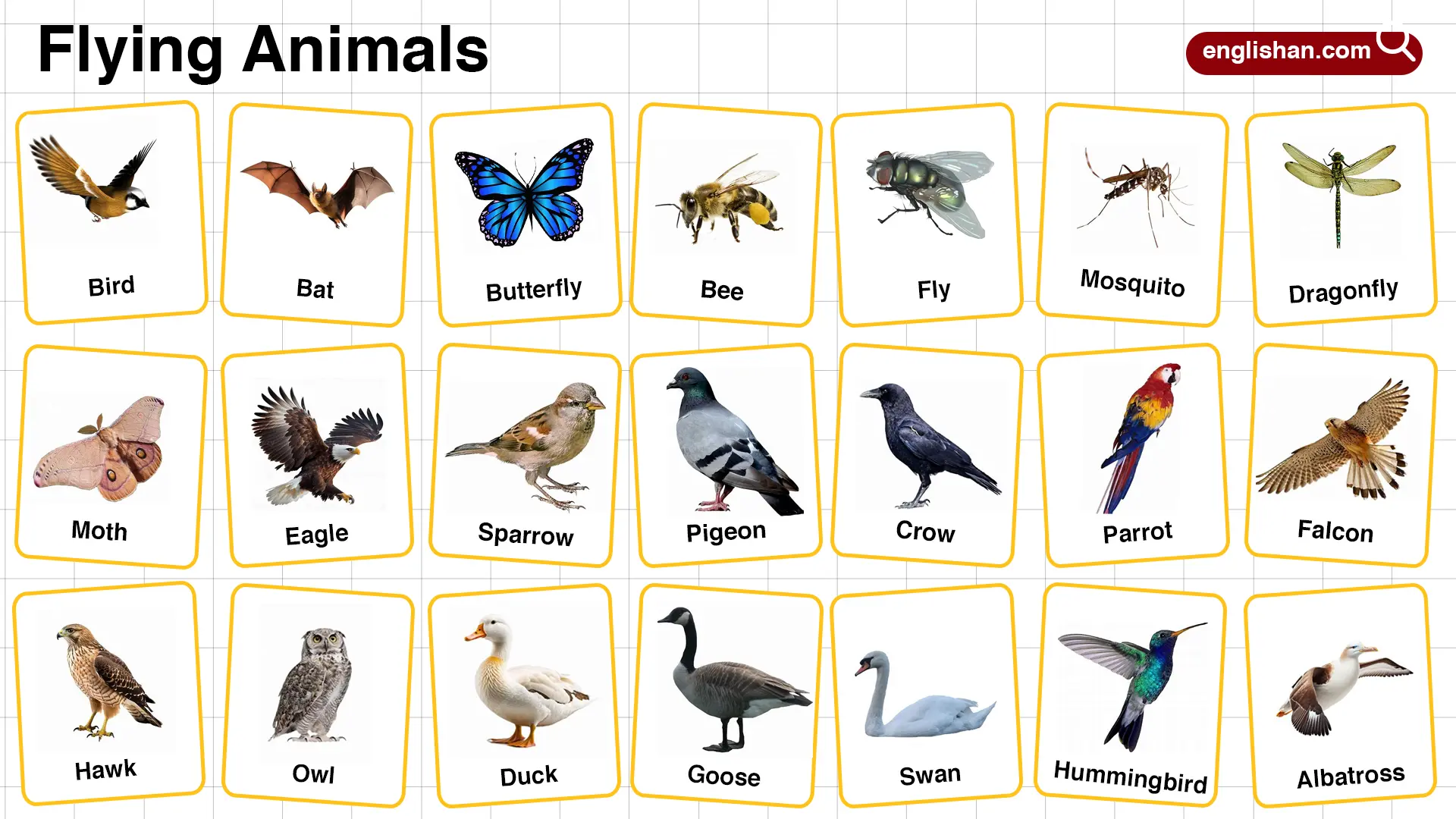
Many animals use wings to fly, glide, or hover through the air. Flying animals names include eagle, butterfly, bat, bee, parrot, and dragonfly. Some flap fast, while others move smoothly. They live in forests, fields, or near water and fly to find food or stay safe. With pictures, it’s easier to learn their names and notice how their wings and motion are different.
By learning flying animals names, you’ll describe movement, nature, and creatures clearly in conversations or school topics.
List of Flying Animals Names
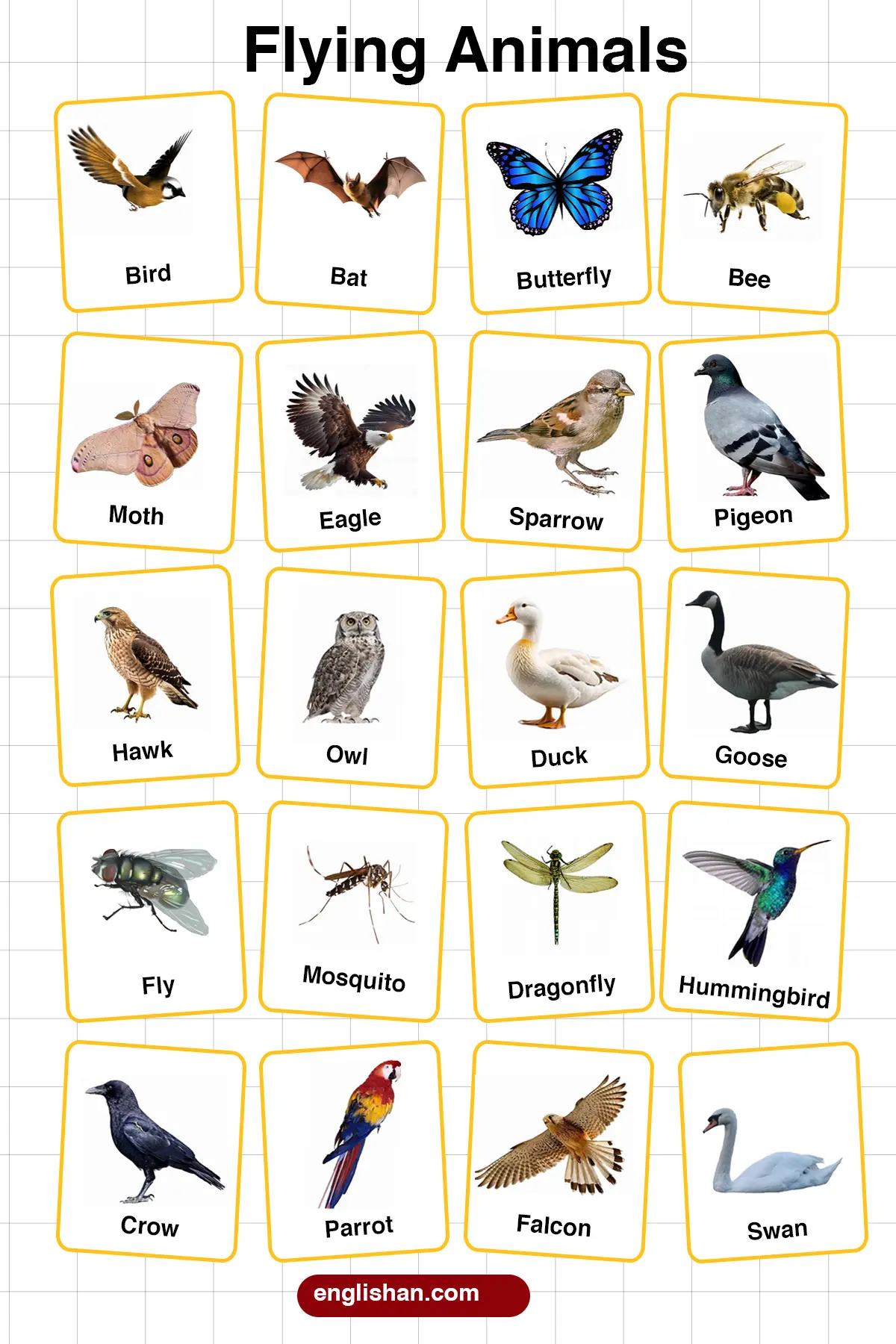
Below is a list of common flying animals in English. These names are helpful for beginners and learners trying to build basic animal vocabulary:
- Bird
- Bat
- Butterfly
- Bee
- Fly
- Mosquito
- Dragonfly
- Moth
- Eagle
- Sparrow
- Pigeon
- Crow
- Parrot
- Falcon
- Hawk
- Owl
- Duck
- Goose
- Swan
- Hummingbird
- Albatross
- Vulture
- Seagull
- Magpie
- Hornet
- Wasp
- Beetle
- Ladybug
- Locust
- Firefly
Birds and small flying creatures can also live with people as friendly companions, just like the ones listed in Pet Animals Names in English.
Birds That Can Fly
Birds are some of the most common flying animals. Most birds fly using feathers and powerful wing muscles. Below are examples grouped by features.
Small Birds That Soar in the Sky
These birds are known for quick flight and smooth movement through trees and air.
- Sparrow: A tiny bird found in cities and villages; it flies fast and low.
- Pigeon: Common in urban areas and parks, pigeons can fly short and long distances.
- Crow: Intelligent black birds that fly steadily with strong wingbeats.
- Parrot: Known for colorful feathers, parrots are excellent flyers and strong climbers.
- Magpie: Black and white birds that fly in short, sharp glides between trees.
Powerful Flying Birds with Long Wings
These birds are skilled in gliding and long-distance soaring.
- Eagle: A powerful bird of prey with a wide wingspan; it flies very high.
- Falcon: Very fast in flight, falcons dive quickly to catch prey.
- Hawk: Similar to falcons, hawks circle high in the sky looking for food.
- Vulture: Large birds that soar slowly in circles, often seen in open skies.
- Albatross: Known for long-distance flying over the ocean, with wide wingspans.
Colorful Birds Known for Flying Skills
These birds are not just beautiful but also skilled flyers.
- Hummingbird: Tiny birds that can hover in place and fly backward.
- Duck: Water birds that fly in groups, usually low over lakes and rivers.
- Goose: Larger than ducks, geese migrate in V-shaped formations.
- Swan: Elegant birds that can fly long distances and take off from water.
- Seagull: Found near oceans and lakes, seagulls glide easily in the wind.
Insects That Are Able to Fly
Many insects fly using wings that beat rapidly. Some have two wings, others have four. Here’s a list of the most common flying insects.
Tiny Insects with Wings
These small insects are often seen around homes, gardens, or fields.
- Fly: A common house insect that moves quickly and lands lightly.
- Mosquito: Known for biting, mosquitoes fly quietly and often stay near water.
- Bee: Important for pollination, bees fly from flower to flower.
- Hornet: Larger than bees and known for their powerful sting and fast flight.
- Wasp: Narrow-waisted insects with smooth stings; they fly fast and hover often.
Flying Bugs
These insects are usually seen outdoors, especially near flowers, water, or fields.
- Butterfly: Brightly colored wings and gentle flight; they rest on flowers often.
- Moth: Similar to butterflies but mostly fly at night and rest during the day.
- Dragonfly: Long bodies with two sets of wings; they dart across water and grass.
- Beetle: Some beetles have wings under their hard shells and can fly.
- Ladybug: Small red insects with black spots; they open their shells to fly.
- Locust: Grasshopper-like insects that swarm in groups and fly great distances.
- Firefly: Insects that glow at night and fly in warm weather.
Mammals and Other Flying Creatures
Most mammals do not fly, but some have developed wings or gliding membranes.
Flying Mammals Like Bats
These are the only mammals truly capable of powered flight.
- Bat: The only flying mammal. Bats fly using thin wings made from stretched skin.
Gliding Animals That Appear to Fly
Some animals don’t truly fly but glide from tree to tree. While not on this list, such animals include flying squirrels and gliding lizards. These examples help understand the difference between gliding and flying.
Identity of Flying Animals Names
For easy review, below is a complete chart showing all flying animals.
| Birds | Insects | Mammals |
|---|---|---|
| Eagle | Butterfly | Bat |
| Falcon | Moth | — |
| Hawk | Bee | — |
| Owl | Fly | — |
| Parrot | Mosquito | — |
| Sparrow | Dragonfly | — |
| Crow | Hornet | — |
| Pigeon | Wasp | — |
| Duck | Ladybug | — |
| Goose | Beetle | — |
| Swan | Firefly | — |
| Seagull | Locust | — |
| Hummingbird | — | — |
| Vulture | — | — |
| Magpie | — | — |
| Albatross | — | — |
Flying Animals Seen in Different Habitats
Flying animals live in different environments. Some prefer forests, others live near water or in open fields.
Forest-Dwelling Flyers
- Owl: Hunts at night and flies quietly in wooded areas.
- Magpie: Nests in trees and flies among forest branches.
- Butterfly: Rests on leaves and flies through clearings.
Animals That Fly Over Water
- Duck: Swims and flies across lakes and rivers.
- Swan: Takes off from water with heavy wingbeats.
- Seagull: Flies over oceans and lands on beaches.
Sky Animals in Deserts and Plains
- Vulture: Soars over deserts looking for food.
- Locust: Flies in swarms across dry open lands.
- Falcon: Found in grasslands and deserts, flies fast in open skies.
Master all animals names in English and build strong vocabulary with this complete post.
FAQs About Flying Animals
True flyers: Animals like birds, bats, and insects flap their wings to stay in the air. For example: Bat, eagle, bee, dragonfly, hummingbird
Gliders: Animals such as flying squirrels glide using flaps of skin but don’t flap to fly. For example: Flying squirrel, gliding lizard
Birds fly using feathers and wings with bones, while insects fly using thin, fast-moving wings connected to their thorax.
Birds fly using feathers and wings with bones, while insects fly using thin, fast-moving wings connected to their thorax.
You May Also Like
- Domestic Animals
- Omnivores Animals
- Shy Animals
- Animals with Antlers
- Desert Animals
- Extinct Animals
- Animals that Start with F
- 20+ Animals that Start with S