
Birds make sounds like chirping, cooing, and cawing to call, warn, or attract attention. These sounds have names in English that match what you hear in nature or daily life.
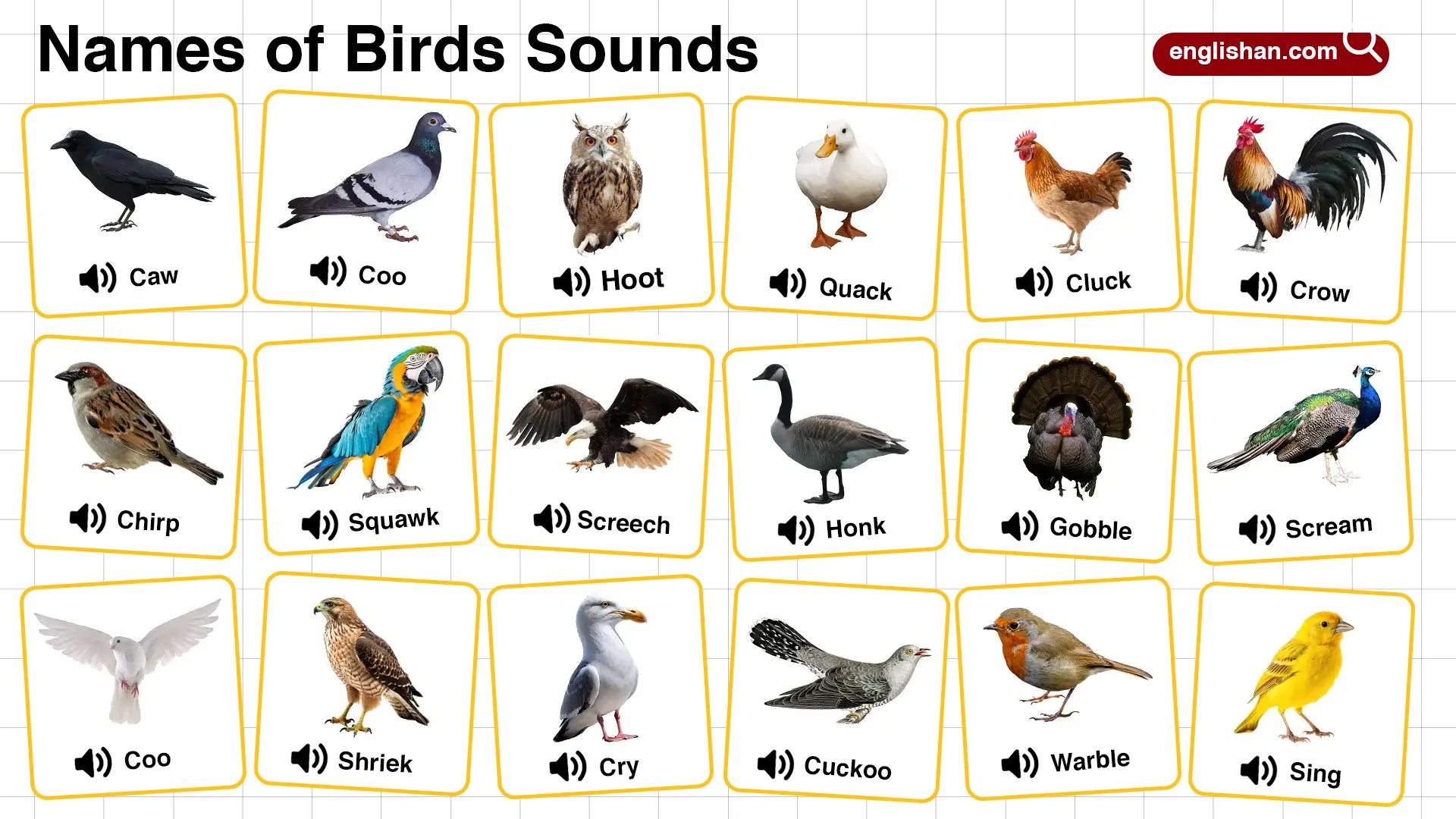
This post shares names of birds sounds and pictures of the birds to build vocabulary. You’ll learn how to name and group bird calls like chirp, hoot, and squawk in simple English.
List of Birds Sounds in English
Understanding which bird makes which sound helps with recognition and vocabulary building. Below is a list of birds and the common names of their sounds in English.
- Crow – Caw
- Pigeon – Coo
- Owl – Hoot
- Duck – Quack
- Hen – Cluck
- Rooster – Crow
- Sparrow – Chirp
- Parrot – Squawk
- Eagle – Screech
- Goose – Honk
- Turkey – Gobble
- Peacock – Scream
- Dove – Coo
- Hawk – Shriek
- Seagull – Cry
- Cuckoo – Cuckoo
- Nightingale – Warble
- Canary – Sing
- Woodpecker – Drum
- Magpie – Chatter

Familiar Bird Sounds with Names
These bird sounds are heard most often in daily environments such as gardens, parks, or neighborhoods. Learning these makes everyday English more meaningful.
- Chirp: A short, high sound made by small birds like sparrows or finches.
- Coo: A soft, gentle sound that pigeons and doves use to communicate calmly.
- Caw: A loud and rough sound from crows, often used to warn or call others.
- Cluck: A repeated sound hens make when walking or staying close to their chicks.
- Quack: Ducks make this sharp sound while swimming or when they feel disturbed.
- Hoot: A deep sound that owls use at night to claim space or alert others.
- Squawk: A loud, sudden cry from parrots or other birds when surprised or calling out.
- Crow: The long morning call made by a rooster, usually heard at sunrise.
Rare Bird Sounds in Nature
Some birds make unusual sounds that are not often heard but are important for learners to know. These sounds are distinct and linked to specific bird behaviors.
- Screech: A sharp, high-pitched cry made by eagles or owls when alert or in flight.
- Shriek: A loud and sudden sound that hawks use while flying high or spotting prey.
- Gobble: A bubbling sound made by turkeys, mostly during mating or when feeling excited.
- Scream: Peacocks make this sharp sound when they sense danger or to call attention.
- Warble: A flowing series of soft notes sung by birds like nightingales, mostly during calm hours.
- Sing: Canaries use this bright, musical sound for communication or when feeling happy.
- Cry: A sharp call from seagulls, often made in groups near the shore.
- Chatter: Magpies make this sound when they are active or talking to their group.
- Drum: A fast tapping sound made by woodpeckers as they hit tree trunks to find insects.
Categories of Bird Sounds
Bird sounds can be divided into categories based on their purpose. Understanding these helps learners group sounds and relate them to behaviors.
- Call: A short sound used to alert others or make contact with nearby birds.
- Song: A longer and more musical pattern often used during mating season or territory defense.
- Alarm Call: A fast and loud sound made when danger is near, like a predator or human.
- Flight Call: A quick sound used in the air to keep the group flying together.
- Mimicry: Some birds copy the sounds of other birds or even machines or people.
Alarm, Song, and Communication Calls
Birds use different types of calls depending on the situation. Each serves a role in survival, bonding, or territory.
- Alarm Call: Made quickly and loudly when a bird feels danger is close or something is wrong.
- Song: Long and smooth sound patterns made by birds to attract mates or stay in a good mood.
- Communication Call: Used softly by birds to talk with each other during feeding or resting.
Mimicked Sounds by Birds
Some birds are excellent at copying the sounds they hear. These mimicry sounds help with learning and understanding advanced vocabulary.
- Parrots: Known for copying human voices, other bird calls, and even random everyday noises.
- Lyrebirds: They can mimic almost anything like chainsaws, alarms, or other bird calls.
- Mockingbirds: Repeat several other bird sounds during one song and can confuse predators.
- Starlings: Copy whistles, car alarms, or barking dogs in parks and open areas.
Sounds Produced by Water Birds
These calls help readers recognize birds near lakes or oceans.
- Duck: Quack
- Goose: Honk
- Seagull: Cry
- Swan: Trumpet
- Cormorant: Gurgle
Sounds of Forest-Dwelling Birds
Woodland bird noises help learners connect species to habitat.
- Owl: Hoot
- Nightingale: Warble
- Woodpecker: Drum
- Cuckoo: Cuckoo
- Magpie: Chatter
Sounds of Garden and Urban Birds
Everyday birds and their typical calls you can hear near homes.
- Sparrow: Chirp
- Pigeon: Coo
- Crow: Caw
- Robin: Tweet
- Blackbird: Song
Sounds of Nocturnal Birds
Night birds have unique calls suited for dark hours.
- Owl: Hoot
- Nightingale: Warble
- Turkey: Gobble (sometimes heard early morning)
Noises Produced by Water Birds
A repeat for focus: unique water bird calls are useful for bird watchers.
- Swan: Trumpet
- Heron: Croak
- Pelican: Squawk
Examples of Bird Noises and Their Names
Below are examples of birds and the words that match their most known sounds.
- Owl – Hoot
- Parrot – Squawk
- Crow – Caw
- Duck – Quack
- Rooster – Crow
- Canary – Sing
- Hawk – Shriek
- Woodpecker – Drum
- Sparrow – Chirp
Onomatopoeic Words for Bird Calls
These words sound like the noise they describe. Learning these helps in building listening and writing skills in English.
- Chirp: Light and quick sound, common with sparrows, often heard in bushes or trees.
- Caw: Rough and harsh, heard from crows that sit on wires or rooftops.
- Hoot: Deep and echo-like call that comes from owls during quiet nighttime hours.
- Coo: Soft and comforting tone that pigeons or doves make in peaceful settings.
- Gobble: A loud and shaking call from turkeys when they’re excited or trying to impress.
- Cluck: Low sounds made by hens, especially when guarding their chicks or moving around.
- Squawk: Parrots use this rough cry when they’re annoyed or just trying to talk.
- Cuckoo: A repeated call that sounds like its name, mostly from cuckoo birds.
- Drum: Made by woodpeckers tapping on tree trunks in a regular, echoing rhythm.
- Warble: A long flow of soft tones, made by birds like nightingales in early morning.
Baby Bird Sounds and What They Mean
Baby birds make soft sounds to get attention. These noises are soft, short, and frequent. Understanding them is helpful in describing animal communication.
- Peep: A small, sharp sound that chicks use when they need warmth or feel scared.
- Chirp: Baby birds use this repeating sound to call for food or comfort.
- Whimper: A weak cry from baby birds when they feel tired or cold.
- Cheep: A quiet sound babies make when waking up or sensing their parents nearby.
Recognizing Birds by Their Sounds
Listening to birds is a way to recognize them without seeing. These common tips help identify bird species through sound.
- Learn bird and sound pairings: Knowing which sound belongs to which bird improves understanding and memory.
- Focus on pitch and rhythm: These help tell similar-sounding birds apart more easily.
- Compare local bird sounds: Birds in the same area have calls that can be learned together.
- Use recordings for practice: Listening again and again helps build sound recognition.
English Action Words for Bird Sounds
English uses special verbs to talk about how birds sound. These words improve vocabulary and writing expression.
- To chirp: Means to make a short and light sound, often repeated many times.
- To hoot: Refers to a deep and slow noise made by owls at night.
- To squawk: Describes a loud and rough call, mostly by parrots or seabirds.
- To warble: Used when a bird sings in a soft and musical voice.
- To gobble: A bubbling noise made by turkeys, especially during feeding.
- To coo: A warm and soft sound made by birds like pigeons and doves.
- To screech: A high and unpleasant cry often heard from birds like hawks.
- To chatter: Describes birds making fast and noisy calls like magpies or jays.
Conclusion
Learning the names of birds sounds gives you the right words to describe what birds do. It helps build your vocabulary with useful and clear examples like chirp, hoot, and squawk. These sound names also make it easier to talk about birds in English, recognize them, and understand how they communicate. The more you practice these sound words, the better you will get at identifying birds and using correct terms. Keep learning bird calls and their meanings it’s a strong way to connect language and the world around you.
FAQs About Birds Sounds
Yes, some birds (like parrots, mockingbirds, and starlings) use mimicry to copy human speech or other animal sounds. Their syrinx allows this complex sound production
Baby birds peep, cheep, or squeak to signal hunger or need for parental attention. These calling sounds help chicks get food from adults .
No, not all birds sing. Song is most common in songbirds (order Passeriformes) during breeding seasons. Other birds, like ducks or crows, make calls or non‑vocal sounds instead.
Bird songs are longer, more complex melodies used for mating and territory, typically sung by males during breeding. Bird calls are short, simple sounds for alarms, contact, or feeding signals
You May Also Like