A wheelchair has several distinct parts, and knowing their names helps people talk about the chair with accuracy. These names are used by students, caregivers, patients, and professionals when discussing seating, movement, maintenance, or adjustments.
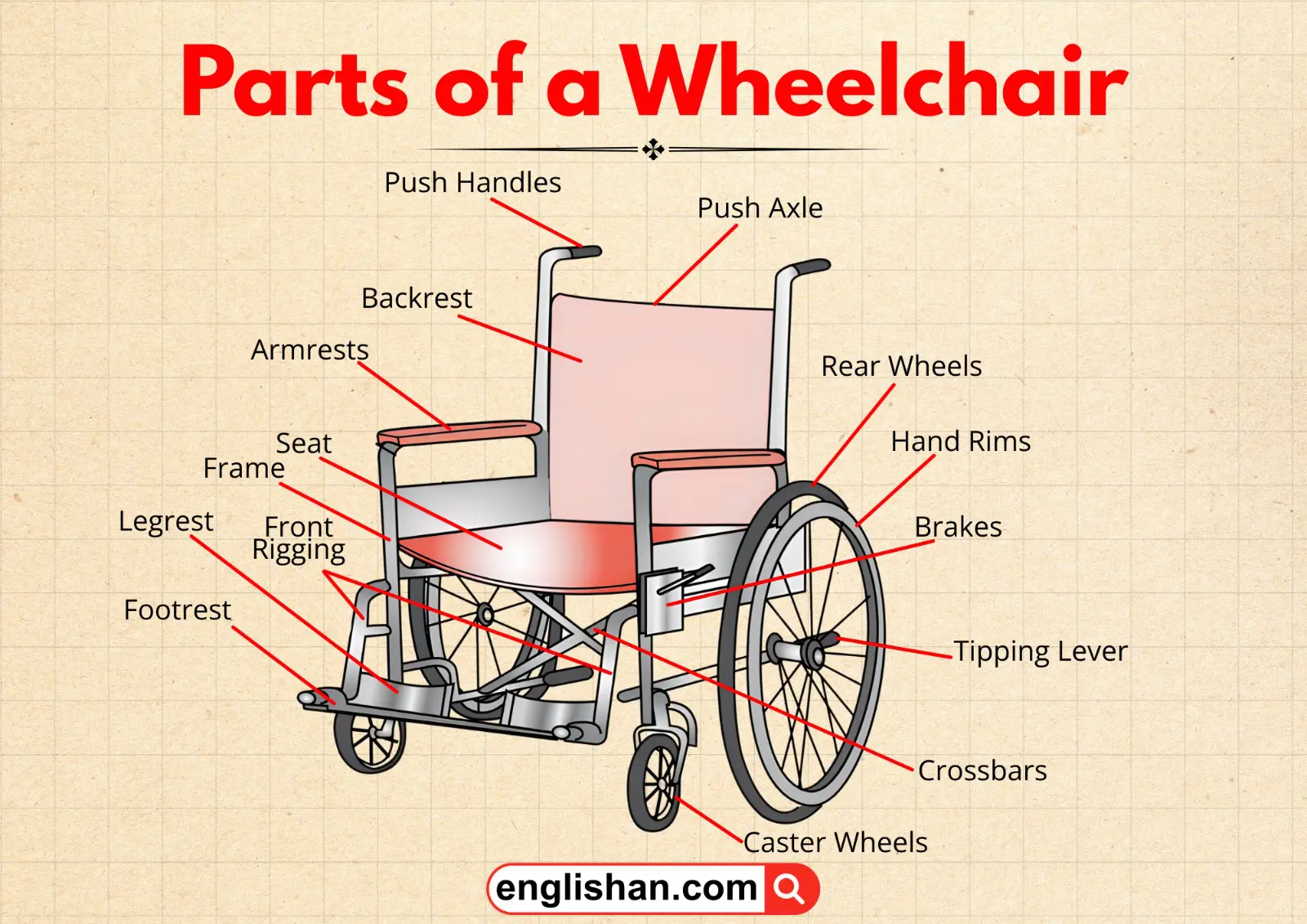
This page lists the parts of a wheelchair for reference, including the frame, seat, backrest, armrests, footrests, push handles, brakes, rear wheels, front casters, and hand rims. A standard manual wheelchair is used as the reference. The labeled diagram below lets readers match each name to the correct part of the chair.
Wheelchair Parts Diagram With Names
Parts Of A Manual Wheelchair
Footrest
It supports the feet and keeps posture steady during movement. Adjustable designs improve lower body comfort and reduce strain during longer use.
Legrest
This section supports the lower legs and allows elevation when needed. Changing its angle can improve circulation support and ease pressure buildup.
Front Rigging
It connects the foot and leg supports to the main structure as one unit. This linkage maintains alignment and stability during motion and stops unwanted flex.
Frame
It carries load and holds all major components together. Material and shape determine overall strength and influence how smoothly the wheelchair moves.
Seat
The sitting surface distributes body weight during use. Cushioning and tension affect pressure control and long term comfort.
Armrests
They provide upper body support and help with balance during rest or movement. Proper height improves arm support and reduces shoulder strain.
Backrest
This section supports the torso and keeps posture upright. Its angle and firmness shape spinal support during extended sitting.
Push Handles
They allow controlled pushing and steering by an attendant. Grip shape affects handling control and comfort during guidance.
Push Axle
It connects the wheels to the frame and allows smooth rotation. Axle design influences rolling efficiency and stability during movement.
Rear Wheels And Caster Wheels
They handle rolling motion and direction changes during movement. Size and material affect rolling stability and how easily surfaces are crossed.
Hand Rims
Used for self propulsion, these rings transfer hand force into wheel motion. Surface finish and diameter influence push control and comfort over repeated strokes.
Brakes
This system locks wheel movement when stopping is needed. Proper engagement provides secure holding during transfers or rest.
Tipping Lever
It creates leverage to tilt the wheelchair over small obstacles. The added leverage improves maneuvering ease without sudden force.
Crossbars
They link frame sections and keep the structure rigid under load. This reinforcement improves frame stability and weight distribution.
Anti-Tip Casters
Designed to limit backward rotation, these small wheels reduce sudden lift. Their presence adds safety balance during slope changes or quick motion.
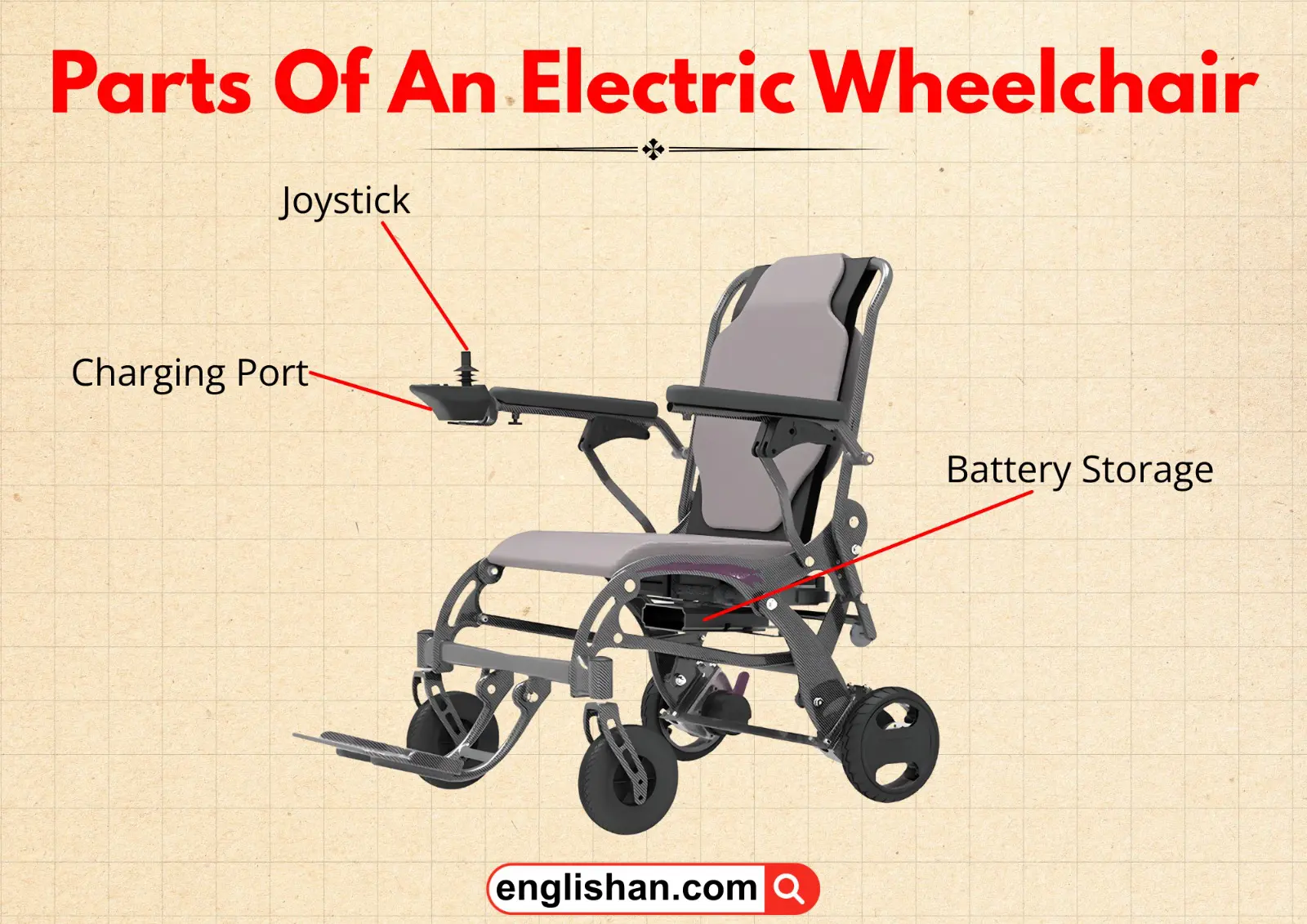
Parts Of An Electric Wheelchair
Joystick
It controls direction and speed through small hand movements. Sensitivity settings shape drive response and allow smooth, predictable motion.
Charging Port
This inlet connects the chair to its power source for recharging. A secure connection maintains power continuity and protects the electrical system during charge cycles.
Battery Storage
It houses the batteries that supply energy to the motor and controls. Proper enclosure supports energy capacity and keeps output steady during daily operation.
Key Takeaways on Parts of a Wheelchair
All components work together as one system, not as separate pieces, and that system manages steering and rolling control. The parts of wheelchair affect how motion stays stable during turns and stops. Wheel diameter creates a direct cause and effect, since greater diameter affects stability and rolling effort. Many models follow aluminum or steel frame standards that balance strength with weight. We use exact part names as practical precision, so requests, notes, and service records match the intended component.
You May Also Like