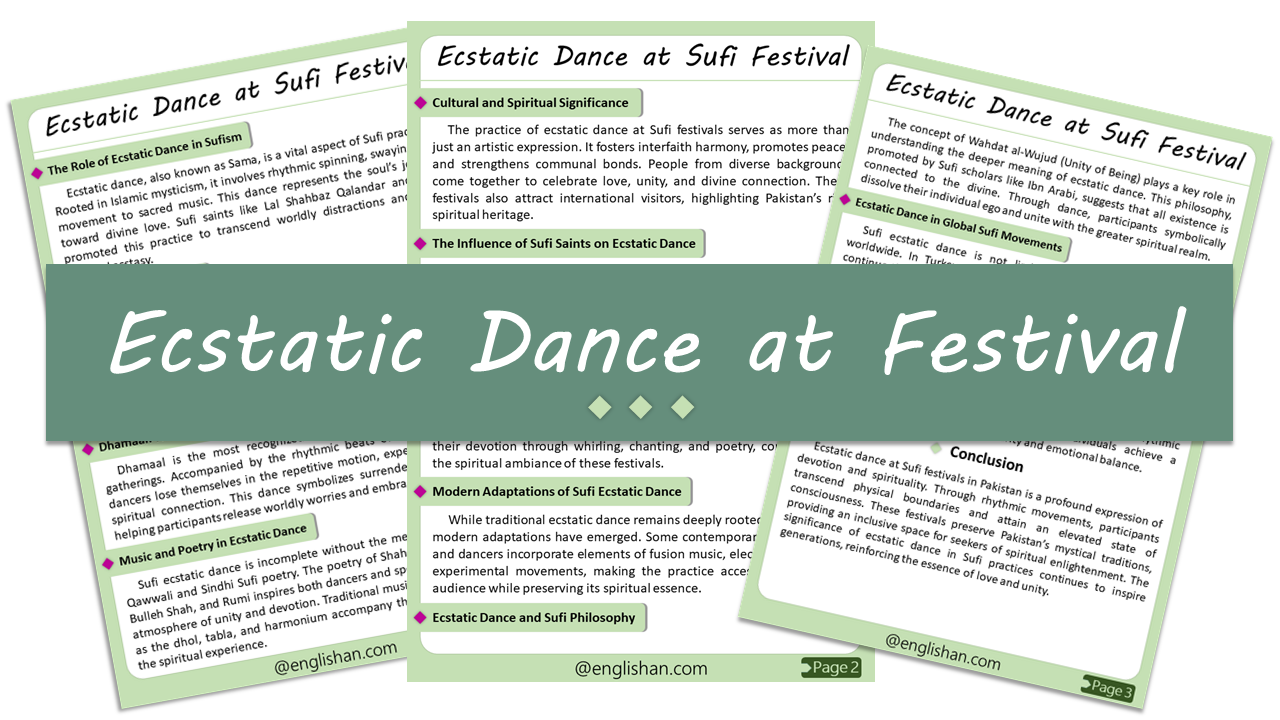
When writing about the ecstatic dance at Sufi festivals essay, it’s important to understand how this spiritual movement connects people with peace and devotion. This essay on ecstatic dance at a Sufi festival in Pakistan explains its meaning, role in Sufi traditions, musical background, and how it inspires unity and joy. It’s written in 500 words to help students with homework or exams. You can download this Sufi dance essay as a free PDF or image to study or print.
10 Lines Ecstatic dance at sufi festival in pakistan Essay for Class 2 to Class 5
- Sufi festivals are spiritual events with music and dancing.
- Ecstatic dance is an important part of these festivals.
- People spin and move freely to express deep love for God.
- This dance is often seen at shrines and dargahs.
- It shows peace, love, and unity among people.
- The dancers wear white clothes and colorful scarves.
- Drums and flutes play while the dance continues.
- Many people gather to watch and feel joy.
- It is a peaceful way to feel close to God.
- Children also enjoy watching the beautiful spinning dance.

250 Words Essay on Ecstatic dance at sufi festival in pakistan for Middle School
Ecstatic dance is one of the most beautiful parts of a Sufi festival. It is a way for people to express their spiritual love through movement and music. These dances are performed at Sufi shrines during special festivals or Urs celebrations. The dancers usually move in circles, spinning with open arms and closed eyes. This act is done not to entertain, but to connect deeply with God.
At the heart of the ecstatic dance is the idea of forgetting the world and feeling only peace, love, and unity. The music helps guide the dancers, often using traditional instruments like drums, flutes, and harmoniums. As the music gets faster, the dance becomes more emotional. People watching can feel the strong emotions in the air.
Men and sometimes women wear white robes or traditional clothes with colorful scarves. The whole setting becomes magical with lights, sounds, and the energy of faith. For many, it is not just a dance but a form of prayer. It helps the mind calm down and brings joy to the heart.
At Sufi festivals, this dance also brings people together. Visitors of all ages, including children, come to see and enjoy this peaceful tradition. It teaches people about love, tolerance, and inner peace. The ecstatic dance at Sufi festivals is a beautiful part of cultural and spiritual life in many parts of the world.
500 Words Ecstatic dance at sufi festival in Pakistan Essay for Upper Primary and Lower Secondary
The Role of Ecstatic Dance in Sufism
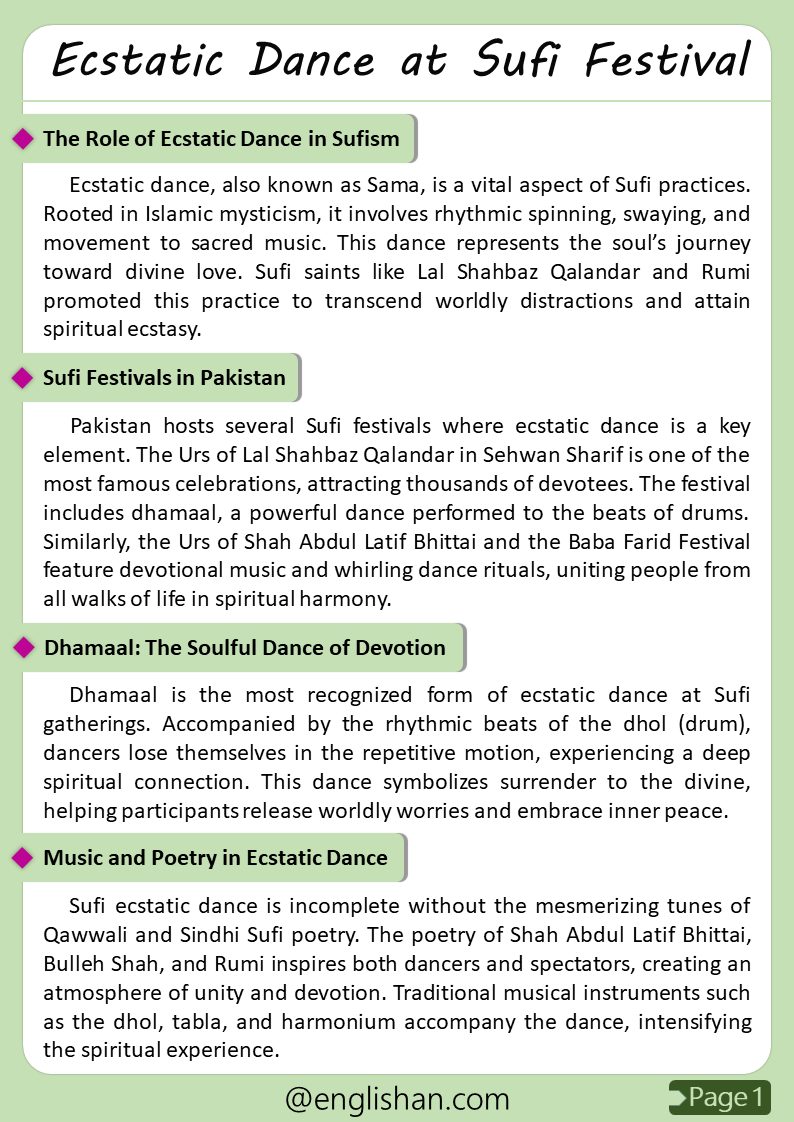
Ecstatic dance, also known as Sama, is a vital aspect of Sufi practices. Rooted in Islamic mysticism, it involves rhythmic spinning, swaying, and movement to sacred music. This dance represents the soul’s journey toward divine love. Sufi saints like Lal Shahbaz Qalandar and Rumi promoted this practice to transcend worldly distractions and attain spiritual ecstasy.
Sufi Festivals in Pakistan
Pakistan hosts several Sufi festivals where ecstatic dance is a key element. The Urs of Lal Shahbaz Qalandar in Sehwan Sharif is one of the most famous celebrations, attracting thousands of devotees. The festival includes dhamaal, a powerful dance performed to the beats of drums. Similarly, the Urs of Shah Abdul Latif Bhittai and the Baba Farid Festival feature devotional music and whirling dance rituals, uniting people from all walks of life in spiritual harmony.
Dhamaal: The Soulful Dance of Devotion
Dhamaal is the most recognized form of ecstatic dance at Sufi gatherings. Accompanied by the rhythmic beats of the dhol (drum), dancers lose themselves in the repetitive motion, experiencing a deep spiritual connection. This dance symbolizes surrender to the divine, helping participants release worldly worries and embrace inner peace.
Music and Poetry in Ecstatic Dance
Sufi ecstatic dance is incomplete without the mesmerizing tunes of Qawwali and Sindhi Sufi poetry. The poetry of Shah Abdul Latif Bhittai, Bulleh Shah, and Rumi inspires both dancers and spectators, creating an atmosphere of unity and devotion. Traditional musical instruments such as the dhol, tabla, and harmonium accompany the dance, intensifying the spiritual experience.
Cultural and Spiritual Significance
The practice of ecstatic dance at Sufi festivals serves as more than just an artistic expression. It fosters interfaith harmony, promotes peace, and strengthens communal bonds. People from diverse backgrounds come together to celebrate love, unity, and divine connection. These festivals also attract international visitors, highlighting Pakistan’s rich spiritual heritage.
The Influence of Sufi Saints on Ecstatic Dance
Sufi saints have played a pivotal role in shaping the tradition of ecstatic dance. Figures like Lal Shahbaz Qalandar, Bulleh Shah, and Rumi emphasized the power of dance as a means of spiritual awakening. Their teachings continue to inspire generations, reinforcing the idea that dance can be a medium of divine connection.
The Role of Women in Sufi Ecstatic Dance
Women actively participate in Sufi ecstatic dance, especially in certain regions of Pakistan. Their involvement challenges traditional norms and highlights the inclusive nature of Sufism. Women express their devotion through whirling, chanting, and poetry, contributing to the spiritual ambiance of these festivals.
Modern Adaptations of Sufi Ecstatic Dance
While traditional ecstatic dance remains deeply rooted in Sufi culture, modern adaptations have emerged. Some contemporary Sufi musicians and dancers incorporate elements of fusion music, electronic beats, and experimental movements, making the practice accessible to a wider audience while preserving its spiritual essence.
Ecstatic Dance and Sufi Philosophy
The concept of Wahdat al-Wujud (Unity of Being) plays a key role in understanding the deeper meaning of ecstatic dance. This philosophy, promoted by Sufi scholars like Ibn Arabi, suggests that all existence is connected to the divine. Through dance, participants symbolically dissolve their individual ego and unite with the greater spiritual realm.
Ecstatic Dance in Global Sufi Movements
Sufi ecstatic dance is not limited to Pakistan but is practiced worldwide. In Turkey, the Whirling Dervishes of the Mevlevi Order continue the tradition of spiritual spinning. In North Africa, Sufi orders incorporate trance-like movements into their rituals. This global presence highlights the universal appeal of ecstatic dance in connecting people to the divine.
Impact of Ecstatic Dance on Mental and Emotional Well-being
Engaging in ecstatic dance has psychological benefits, including stress relief, emotional healing, and enhanced self-awareness. The rhythmic movements and immersive experience help individuals achieve a meditative state, promoting mental clarity and emotional balance.
Conclusion of Ecstatic dance at sufi festival in pakistan
Ecstatic dance at Sufi festivals in Pakistan is a profound expression of devotion and spirituality. Through rhythmic movements, participants transcend physical boundaries and attain an elevated state of consciousness. These festivals preserve Pakistan’s mystical traditions, providing an inclusive space for seekers of spiritual enlightenment. The significance of ecstatic dance in Sufi practices continues to inspire generations, reinforcing the essence of love and unity.
Difficult Words Used in 500 Ecstatic Dance at Sufi Festival in Pakistan Essay
| Word | Meaning |
|---|---|
| Mysticism | Spiritual belief that seeks direct connection with the divine |
| Transcend | To go beyond normal limits or boundaries |
| Devotional | Expressing religious worship or dedication |
| Ecstasy | A state of intense joy or spiritual elevation |
| Communal | Shared by a group or community |
| Harmony | A state of peaceful coexistence |
| Rituals | Religious or traditional ceremonies |
| Spiritual | Relating to the soul or higher consciousness |
Ecstatic Dance at Sufi Festival in Pakistan Essay PDF
You May Also Like