Mobile Addiction Essay helps students learn how to write structured essays on mobile phone overuse. It includes 10-line, 250-word, and 500-word formats, each designed to support different learning levels. These samples improve clarity, save time, and match school writing goals. The topic builds confidence by offering clear formats that support understanding. This content is structured to meet classroom needs and helps students master essay writing with purpose and focus.
10 Lines Mobile Addiction Essay for Class 2 to Class 5
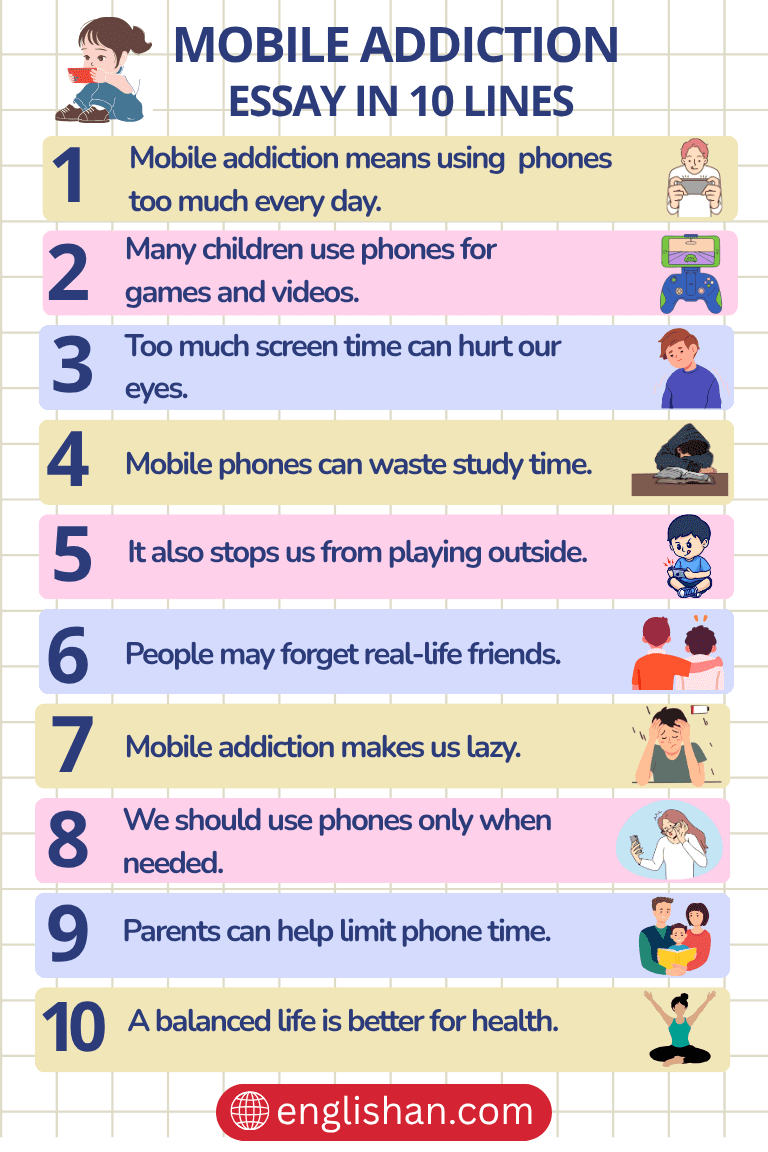
- Mobile addiction means using phones too much every day.
- Many children use phones for games and videos.
- Too much screen time can hurt our eyes.
- Mobile phones can waste study time.
- It also stops us from playing outside.
- People may forget real-life friends.
- Mobile addiction makes us lazy.
- We should use phones only when needed.
- Parents can help limit phone time.
- A balanced life is better for health.
250 Words Essay on Mobile Addiction for Middle School
Mobile addiction is when someone uses their phone too much. It has become common in children and teenagers. Many students spend hours watching videos, playing games, or chatting online. This habit affects schoolwork and health.
First, mobile addiction can reduce study time. Students often forget their homework or delay reading. Also, sitting too long with a phone can cause headaches or tired eyes. Because of this, children might feel sleepy during class or lose focus.
Then, it can harm social life. Kids who use phones too much talk less with family and friends. They may also miss out on sports or outdoor games. Because of mobile addiction, real-life activities feel boring compared to screen time.
In the end, mobile phones are useful but must be used wisely. Students should set limits for screen use. Parents and teachers can guide children to balance phone time and study. A healthy routine helps kids stay active and do better in school.
500 Words Mobile Addiction Essay for Upper Primary and Lower Secondary
Understanding Mobile Addiction
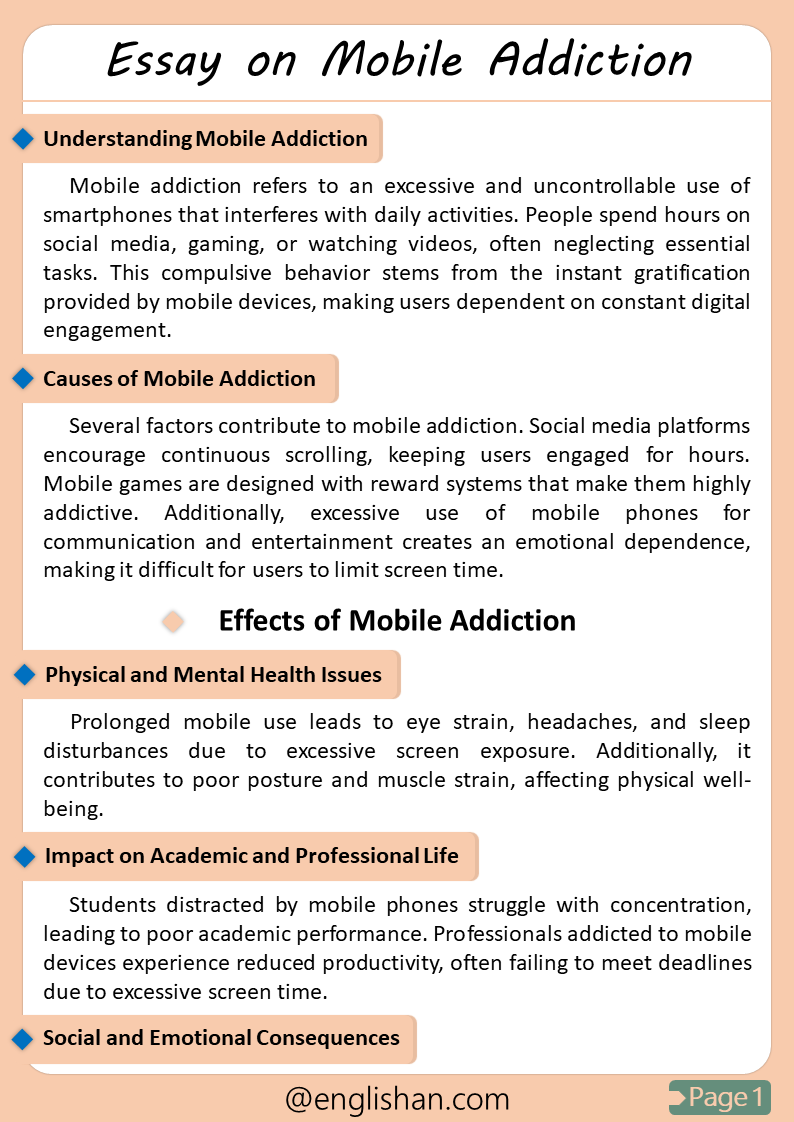
Mobile addiction refers to an excessive and uncontrollable use of smartphones that interferes with daily activities. People spend hours on social media, gaming, or watching videos, often neglecting essential tasks. This compulsive behavior stems from the instant gratification provided by mobile devices, making users dependent on constant digital engagement.
Causes of Mobile Addiction
Several factors contribute to mobile addiction. Social media platforms encourage continuous scrolling, keeping users engaged for hours. Mobile games are designed with reward systems that make them highly addictive. Additionally, excessive use of mobile phones for communication and entertainment creates an emotional dependence, making it difficult for users to limit screen time.
Effects of Mobile Addiction
Physical and Mental Health Issues
Prolonged mobile use leads to eye strain, headaches, and sleep disturbances due to excessive screen exposure. Additionally, it contributes to poor posture and muscle strain, affecting physical well-being.
Impact on Academic and Professional Life
Students distracted by mobile phones struggle with concentration, leading to poor academic performance. Professionals addicted to mobile devices experience reduced productivity, often failing to meet deadlines due to excessive screen time.
Social and Emotional Consequences
Excessive phone usage leads to social isolation, as individuals prefer virtual interactions over real-life conversations. This weakens interpersonal relationships, leading to emotional detachment from family and friends.
A study found that over 50% of young adults feel lonely despite being constantly connected online. The overuse of mobile phones often replaces face-to-face communication, impacting emotional well-being.
Psychological Aspects of Mobile Addiction
Mobile addiction often stems from psychological factors such as stress, anxiety, and loneliness. People turn to their devices as a coping mechanism, leading to a cycle of dependency. The fear of missing out (FOMO) also contributes to compulsive phone use, as individuals feel pressured to stay constantly updated.
The Role of Technology in Mobile Addiction
Advancements in technology, including AI-driven algorithms and personalized content, have increased mobile dependency. Social media platforms and entertainment apps use data-driven strategies to keep users engaged, making it harder to break free from screen addiction.
Solutions to Overcome Mobile Addiction
Setting Screen Time Limits
Using built-in digital well-being tools can help track and reduce screen time. Setting specific limits on social media and gaming apps can prevent excessive mobile usage.
Engaging in Offline Activities
Encouraging outdoor activities, reading books, and practicing hobbies can help shift focus from mobile devices to productive tasks. Participating in group activities such as sports or volunteering also strengthens social bonds and reduces reliance on digital interactions.
Implementing No-Phone Zones
Designating areas like bedrooms and dining tables as no-phone zones can help individuals reduce dependency on mobile phones, improving social interactions and sleep quality. Families who implement tech-free mealtimes report stronger relationships and better communication.
Role of Parents and Educators
Parents and teachers play a crucial role in helping young individuals develop healthy mobile habits. Setting rules, promoting physical activities, and encouraging face-to-face interactions can reduce screen dependency.
Practical Strategies for Parents & Teachers:
- Using Parental Control Apps: Applications like Google Family Link and Apple Screen Time help manage and limit mobile use for children.
- Encouraging Digital-Free Hours: Setting specific hours during which children engage in outdoor play, reading, or creative activities.
- Teaching Digital Literacy: Schools can integrate programs that educate students on the responsible use of technology and the risks of excessive screen time.
Conclusion
Mobile addiction is a serious issue affecting people across all age groups. It leads to health problems, academic decline, and social detachment. However, by setting limits, engaging in offline activities, and prioritizing real-life interactions, individuals can regain control over their screen time. Overcoming mobile addiction requires conscious efforts and a balanced approach to technology use.
Difficult Words Used in 500 Mobile Addiction Essay
| Word | Meaning |
|---|---|
| Gratification | A feeling of pleasure or satisfaction |
| Compulsive | Difficult to control |
| Dependency | A strong need for something |
| Isolation | Being separated from others |
| Interference | Causing disruption or obstruction |
Mobile Addiction Essay PDF
You May Also Like