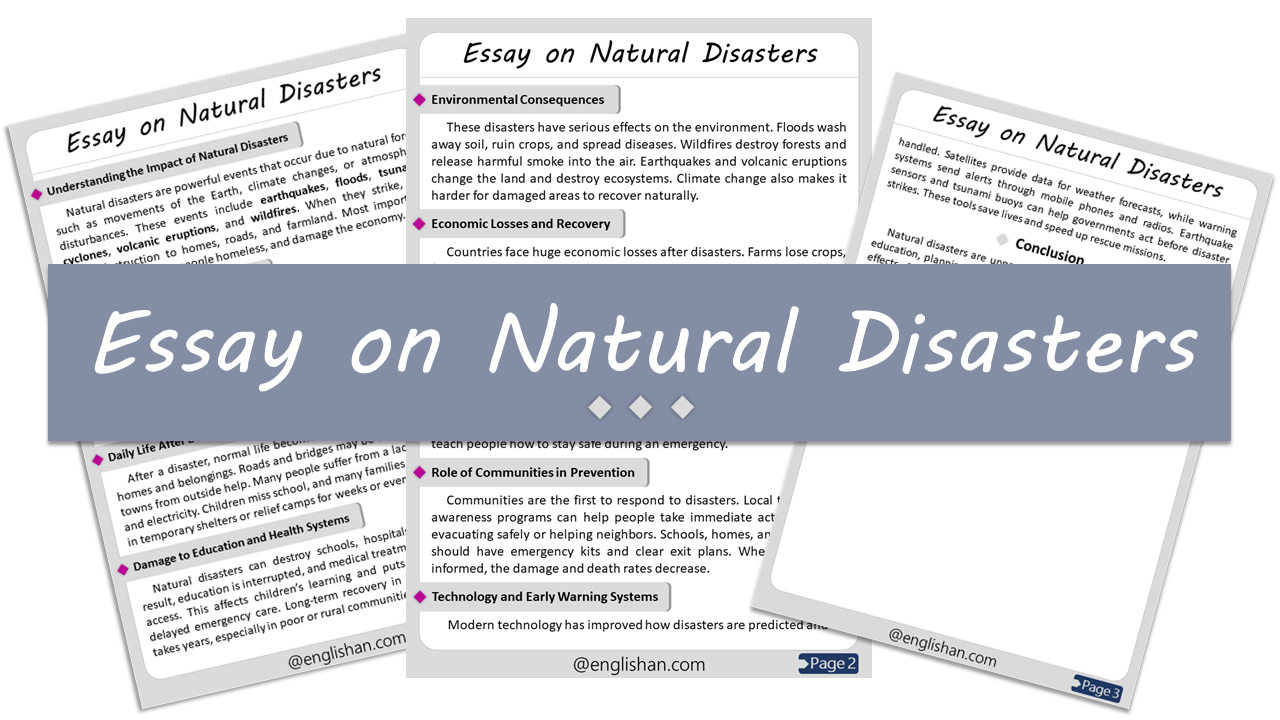
When writing about natural disasters, it’s important to understand the sudden events caused by nature that can damage lives and property. This essay explains different types, their effects, and ways to stay safe. It’s written in 500 words to help students with homework or exams. You can download this natural disasters essay as a free PDF or image to study or print.
10 Lines Natural Disasters Essay for Class 2 to Class 5
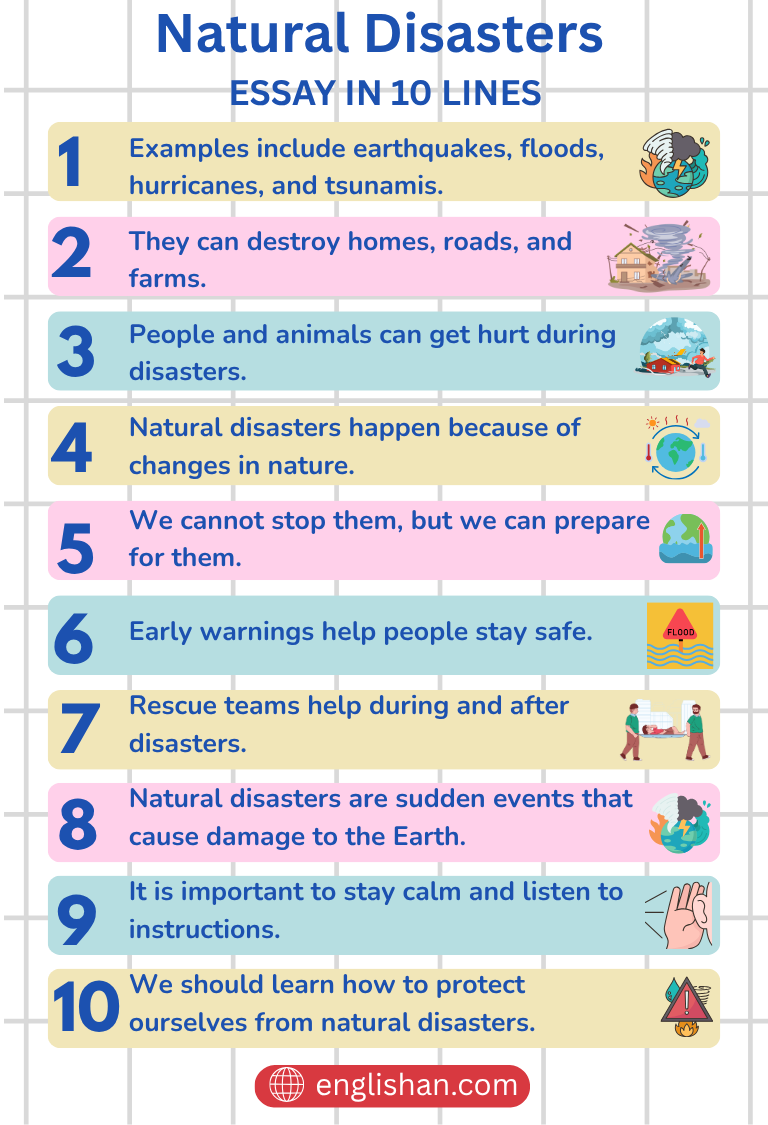
- Examples include earthquakes, floods, hurricanes, and tsunamis.
- They can destroy homes, roads, and farms.
- People and animals can get hurt during disasters.
- Natural disasters happen because of changes in nature.
- We cannot stop them, but we can prepare for them.
- Early warnings help people stay safe.
- Rescue teams help during and after disasters.
- Natural disasters are sudden events that cause damage to the Earth.
- It is important to stay calm and listen to instructions.
- We should learn how to protect ourselves from natural disasters.
250 Words Essay on Natural Disasters for Middle School
Natural disasters are powerful and sudden events that cause damage to the Earth, people, and animals. Some common natural disasters are earthquakes, floods, hurricanes, tornadoes, and tsunamis. These events happen because of natural forces like shaking of the Earth’s surface, heavy rains, or strong winds.
Earthquakes occur when the ground shakes suddenly, which can destroy buildings and roads. Floods happen when water overflows from rivers or heavy rains and cover land. Hurricanes and tornadoes bring strong winds that damage homes and trees. Tsunamis are big waves caused by underwater earthquakes that flood coastal areas.
Natural disasters can cause injuries and loss of life. They also damage homes, schools, and farms, affecting people’s lives and the economy. Animals lose their habitats too.
Even though we cannot stop natural disasters, we can prepare for them. Governments and communities create warning systems to alert people before disasters happen. Emergency plans and rescue teams help save lives and provide food and shelter to those affected.
It is important to stay calm during disasters and follow safety instructions. Learning about natural disasters and how to respond can protect us and others.
In conclusion, natural disasters are dangerous, but being prepared and aware helps reduce their impact on our lives.
500 Words Natural Disasters Essay for Upper Primary and Lower Secondary
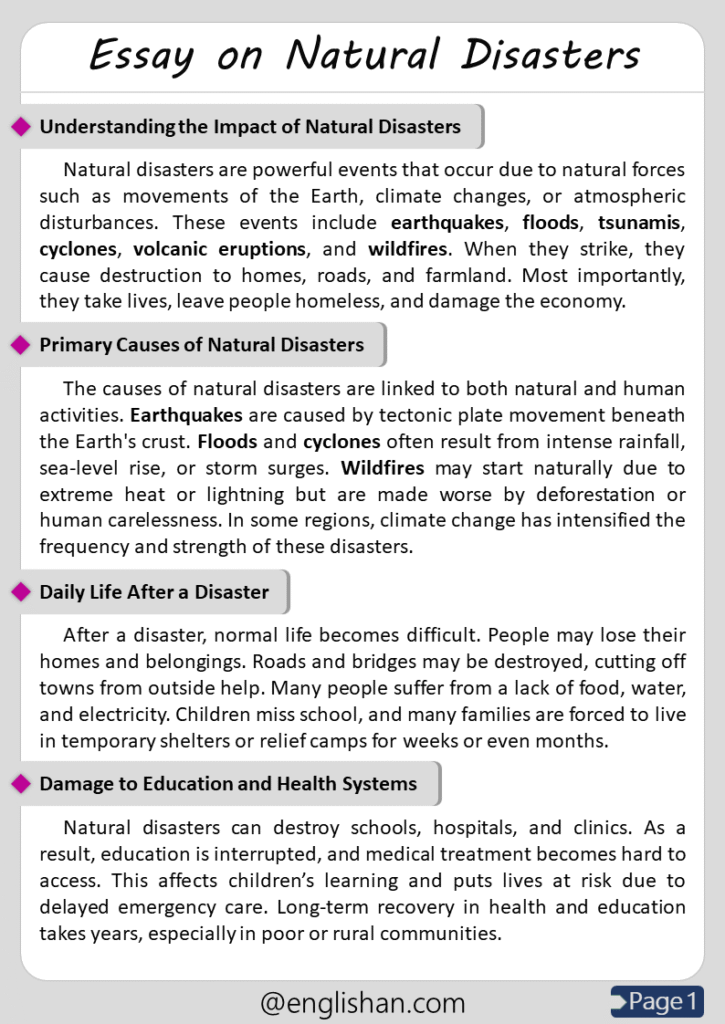
Understanding the Impact of Natural Disasters
Natural disasters are powerful events that occur due to natural forces such as movements of the Earth, climate changes, or atmospheric disturbances. These events include earthquakes, floods, tsunamis, cyclones, volcanic eruptions, and wildfires. When they strike, they cause destruction to homes, roads, and farmland. Most importantly, they take lives, leave people homeless, and damage the economy.
Primary Causes of Natural Disasters
The causes of natural disasters are linked to both natural and human activities. Earthquakes are caused by tectonic plate movement beneath the Earth’s crust. Floods and cyclones often result from intense rainfall, sea-level rise, or storm surges. Wildfires may start naturally due to extreme heat or lightning but are made worse by deforestation or human carelessness. In some regions, climate change has intensified the frequency and strength of these disasters.
Daily Life After a Disaster
After a disaster, normal life becomes difficult. People may lose their homes and belongings. Roads and bridges may be destroyed, cutting off towns from outside help. Many people suffer from a lack of food, water, and electricity. Children miss school, and many families are forced to live in temporary shelters or relief camps for weeks or even months.
Damage to Education and Health Systems
Natural disasters can destroy schools, hospitals, and clinics. As a result, education is interrupted, and medical treatment becomes hard to access. This affects children’s learning and puts lives at risk due to delayed emergency care. Long-term recovery in health and education takes years, especially in poor or rural communities.
Environmental Consequences
These disasters have serious effects on the environment. Floods wash away soil, ruin crops, and spread diseases. Wildfires destroy forests and release harmful smoke into the air. Earthquakes and volcanic eruptions change the land and destroy ecosystems. Climate change also makes it harder for damaged areas to recover naturally.
Economic Losses and Recovery
Countries face huge economic losses after disasters. Farms lose crops, factories stop running, and transport systems are damaged. Rebuilding homes, schools, and roads takes time and money. For some families, it takes years to recover from the financial impact. Insurance claims rise, and government spending increases sharply during disaster recovery.
Government Preparedness and Relief
Governments play a vital role before, during, and after a disaster. Effective disaster management includes setting up early warning systems, emergency response teams, and public education campaigns. In many countries, disaster drills are conducted in schools and offices to teach people how to stay safe during an emergency.
Role of Communities in Prevention
Communities are the first to respond to disasters. Local training and awareness programs can help people take immediate action, such as evacuating safely or helping neighbors. Schools, homes, and workplaces should have emergency kits and clear exit plans. When citizens are informed, the damage and death rates decrease.
Technology and Early Warning Systems
Modern technology has improved how disasters are predicted and handled. Satellites provide data for weather forecasts, while warning systems send alerts through mobile phones and radios. Earthquake sensors and tsunami buoys can help governments act before disaster strikes. These tools save lives and speed up rescue missions.
Conclusion
Natural disasters are unpredictable but not unmanageable. Through education, planning, technology, and cooperation, we can reduce their effects. People must learn to respect nature and build safer homes, schools, and cities. A strong, prepared community can recover faster and protect future generations from the worst impacts.
Difficult Words Used in 500 Natural Disasters Essay
| Word | Meaning |
|---|---|
| Unpredictable | Something that cannot be expected or forecasted accurately |
| Tectonic | Related to large-scale movements of Earth’s crust |
| Deforestation | Cutting down forests in a large area |
| Displacement | The act of forcing people to leave their homes |
| Infrastructure | Basic physical systems like transport, power, and buildings |
| Surge | A sudden strong increase (e.g., in water or electricity) |
| Resilience | The ability to recover quickly from problems or setbacks |
| Ecosystem | A community of living and nonliving things working together |
| Catastrophic | Involving great damage or suffering |
| Mitigation | The action of reducing the severity or seriousness of something |
Natural Disasters Essay PDF
You May Also Like