When writing about rainwater harvesting, it’s important to understand how collecting and storing rainwater can help solve water problems. This essay on rainwater harvesting explains its meaning, process, uses, and benefits in everyday life. It’s written in 500 words to help students with homework or exams. You can download this rainwater harvesting essay as a free PDF or image to study or print.
10 Lines RainWater Harvesting Essay for Class 2 to Class 5
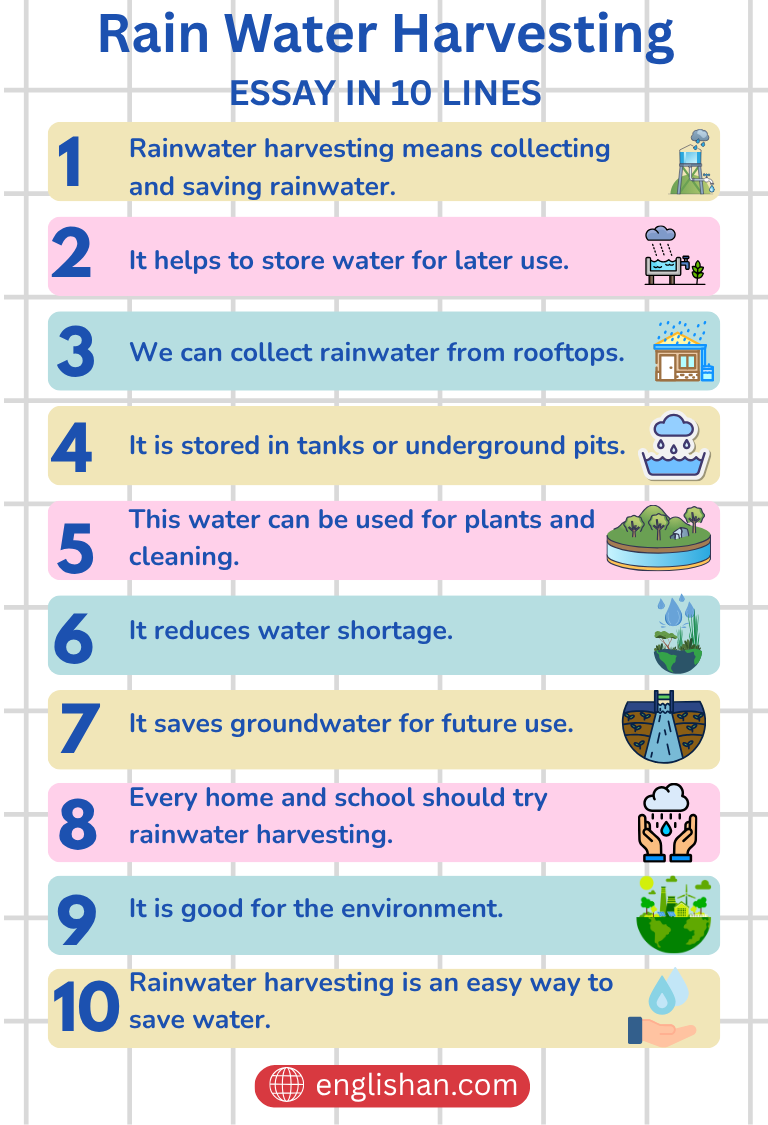
- Rainwater harvesting means collecting and saving rainwater.
- It helps to store water for later use.
- We can collect rainwater from rooftops.
- It is stored in tanks or underground pits.
- This water can be used for plants and cleaning.
- It reduces water shortage.
- It saves groundwater for future use.
- Every home and school should try rainwater harvesting.
- It is good for the environment.
- Rainwater harvesting is an easy way to save water.
250 Words Essay on RainWater Harvesting for Middle School
Rainwater harvesting is the method of collecting and storing rainwater for later use. It is an ancient and useful technique to make the most of natural rain. When rain falls on rooftops, open grounds, or roads, it often gets wasted by flowing away. By using rainwater harvesting systems, this water can be collected and stored for various needs.
The process is simple. Rainwater is collected from rooftops and directed into a storage tank or underground pit using pipes. It can also be filtered and used for watering plants, washing clothes, cleaning floors, and even for drinking if properly cleaned.
Rainwater harvesting has many benefits. It helps reduce water bills, saves groundwater, and avoids wastage. In many areas where there is less rainfall or frequent water shortage, this method is a helpful solution. It also reduces soil erosion and flooding during heavy rains.
Schools, houses, offices, and farms can all use this method. It is a low-cost, eco-friendly way to manage water. Governments and environmental groups encourage people to set up rainwater harvesting systems to fight water scarcity.
In conclusion, rainwater harvesting is a smart and sustainable way to save water. It teaches us to value and conserve natural resources. Every student should learn about it and share the idea with others to protect our environment and future.
500 Words RainWater Harvesting Essay for Upper Primary and Lower Secondary
Understanding Rainwater Harvesting
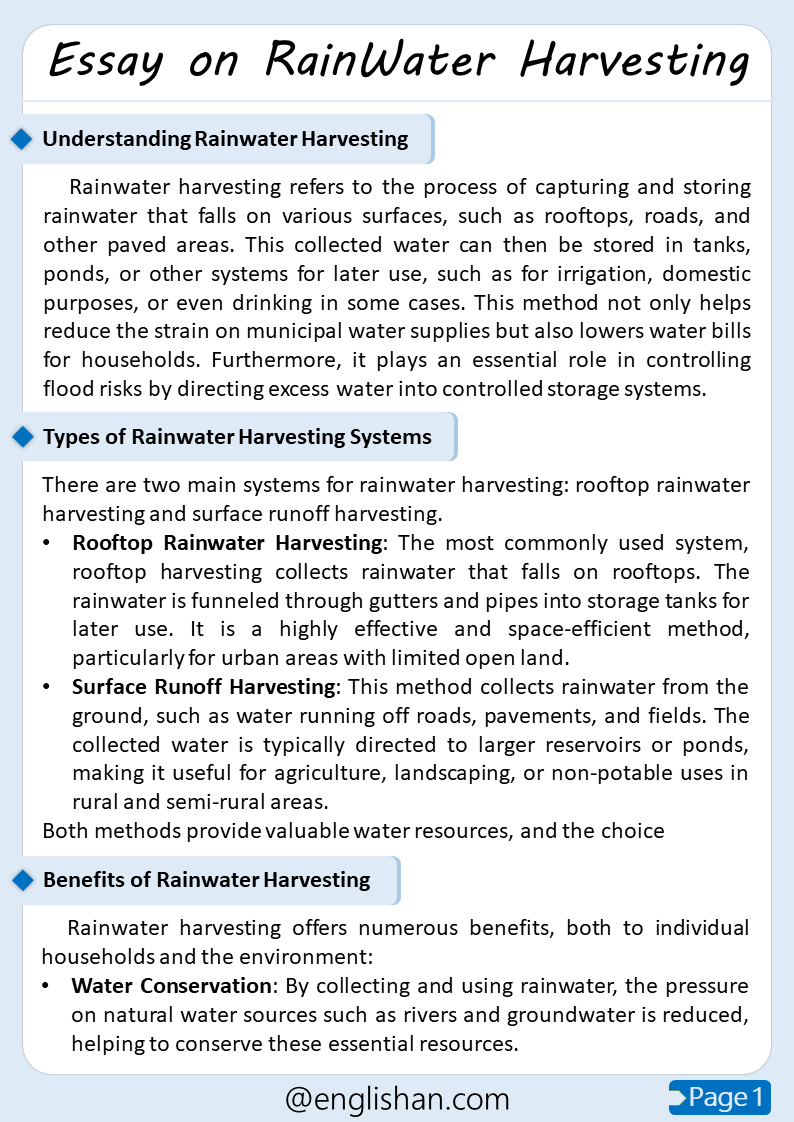
Rainwater harvesting refers to the process of capturing and storing rainwater that falls on various surfaces, such as rooftops, roads, and other paved areas. This collected water can then be stored in tanks, ponds, or other systems for later use, such as for irrigation, domestic purposes, or even drinking in some cases. This method not only helps reduce the strain on municipal water supplies but also lowers water bills for households. Furthermore, it plays an essential role in controlling flood risks by directing excess water into controlled storage systems.
Types of Rainwater Harvesting Systems
There are two main systems for rainwater harvesting: rooftop rainwater harvesting and surface runoff harvesting.
- Rooftop Rainwater Harvesting: The most commonly used system, rooftop harvesting collects rainwater that falls on rooftops. The rainwater is funneled through gutters and pipes into storage tanks for later use. It is a highly effective and space-efficient method, particularly for urban areas with limited open land.
- Surface Runoff Harvesting: This method collects rainwater from the ground, such as water running off roads, pavements, and fields. The collected water is typically directed to larger reservoirs or ponds, making it useful for agriculture, landscaping, or non-potable uses in rural and semi-rural areas.
Both methods provide valuable water resources, and the choice of system depends on factors like available space, local weather patterns, and water requirements.
Benefits of Rainwater Harvesting
Rainwater harvesting offers numerous benefits, both to individual households and the environment:
- Water Conservation: By collecting and using rainwater, the pressure on natural water sources such as rivers and groundwater is reduced, helping to conserve these essential resources.
- Cost Savings: Using collected rainwater for non-drinking purposes like irrigation, cleaning, and flushing toilets can significantly lower water bills.
- Flood Prevention: Properly managing the rainwater runoff can reduce the risk of flooding by channeling excess water into storage systems rather than allowing it to overwhelm drainage systems.
- Improved Water Quality: Rainwater is often cleaner than groundwater, as it is naturally filtered by the atmosphere, making it ideal for non-potable uses and, in some cases, potable uses after proper filtration.
Challenges in Rainwater Harvesting
While rainwater harvesting is highly beneficial, there are challenges that must be addressed to ensure its success:
- Storage Space: Urban environments often lack sufficient space for large storage tanks. Innovative solutions, like underground tanks or vertical systems, can help overcome this challenge.
- Maintenance: Regular cleaning of gutters, pipes, and tanks is essential to ensure the quality of the collected water. Implementing effective filtration systems can help reduce maintenance efforts.
- Initial Setup Costs: The initial cost of installing a rainwater harvesting system can be high, particularly for professionally installed systems. However, many governments offer incentives, and the long-term savings on water bills can make this investment worthwhile.
Impact on Agriculture
Rainwater harvesting has a particularly profound impact on agriculture, especially in regions prone to droughts or where water resources are scarce. By storing rainwater during rainy periods, farmers can access a reliable water supply for irrigation during dry spells. This practice helps ensure crop growth and stability in food production, reducing reliance on costly irrigation systems. In areas where water scarcity is a challenge, rainwater harvesting can be a vital tool in maintaining agricultural productivity and food security.
Environmental Impact of Rainwater Harvesting
In addition to conserving water, rainwater harvesting helps mitigate environmental issues associated with water over-extraction. By reducing reliance on groundwater, it preserves the natural water table, preventing its depletion. Furthermore, rainwater harvesting reduces stormwater runoff, which often carries pollutants into natural water bodies, improving the overall water quality in the environment. In urban settings, collecting rainwater helps combat the urban heat island effect by reducing the need for water used in cooling processes, leading to lower energy consumption and a cooler environment.
Conclusion of Rainwater Harvesting Essay
Rainwater harvesting is an effective and sustainable method for conserving water, reducing dependence on municipal water sources, and lowering water costs. It provides a reliable water source for various uses, from irrigation to domestic consumption, and helps mitigate flooding and water shortages. With the growing challenges of climate change and water scarcity, rainwater harvesting offers a practical solution for communities around the world to ensure a consistent and sustainable water supply while promoting environmental conservation. By embracing this practice, both individuals and communities can play a critical role in the responsible use and preservation of water resources for future generations.
Difficult Words Used in 500 Rainwater Harvesting Essay
| Word | Meaning |
|---|---|
| Municipal | Relating to a city or town or its governing body. |
| Strain | The pressure or stress placed on something or someone. |
| Potable | Safe to drink or suitable for drinking. |
| Filtration | The process of removing impurities or particles from a liquid or gas. |
| Over-extraction | The act of taking more resources, such as water, than can be naturally replenished. |
| Depletion | The reduction or exhaustion of a resource. |
| Runoff | Water that flows over the surface of the ground, often after rain, and may carry pollutants. |
| Reservoir | A large natural or artificial lake used to store water. |
| Arid | Extremely dry, especially due to low rainfall. |
| Sustainability | The ability to be maintained or continued over time without depleting resources. |
Rainwater Harvesting Essay PDF
You May Also Like