Englishan-Logo-resized Englishan-Logo-resized
  • Home
  • Grammar
    • Parts of speech
    • Tenses
    • Worksheets
    • Example Sentences
  • Vocabulary
    • Picture Vocabulary
      • Animals
        • Insects
      • Foods
        • Fruits
      • Things
    • Words Lists
      • 5 Letter Words
      • Long Words
    • Vocabulary for Kids
    • Synonyms
    • Antonyms
    • Confused Words
    • Phrasal Verbs
  • English Composition
    • Applications
    • Essay Writing
    • Letters
  • Worksheets
    • Kindergarten Worksheets
  • Contact
Reading: Affective vs Effective
Share
EnglishanEnglishan
Font ResizerAa
  • Home
  • Grammar
  • Vocabulary
  • English Composition
  • Worksheets
  • Contact
Search
Follow US
  • About
  • Contact
  • Privacy Policy
  • Terms of Service
Copyright © 2026 englishan.com All Rights Reserved.
Englishan > Confused Words > Affective vs Effective
Confused Words

Affective vs Effective

Julian Mercer
By
Julian Mercer
Last updated: March 25, 2025
3 Min Read
Affective vs Effective – Key differences explained
Affective vs Effective with examples for easy learning
SHARE

Many English learners confuse affective and effective because they look similar but have different meanings. Affective relates to emotions, while effective means producing a desired result. Understanding these distinctions is important for proper communication. Expand your vocabulary by visiting our Confused Words section.

In This Page
  • Meanings of Affective and Effective
    • Affective
    • Effective
  • Differences Between Affective and Effective
  • Usage of Affective
  • Usage of Effective
  • Formal and Informal Uses of Affective and Effective
  • FAQs

Meanings of Affective and Effective

Affective

Affective (adjective) refers to emotions, feelings, or psychological states.

  • His speech had a strong affective impact on the audience. (Emotional influence)

Effective

Effective (adjective) means producing a desired result or having an intended effect.

  • The new teaching method is highly effective. (Produces the intended outcome)
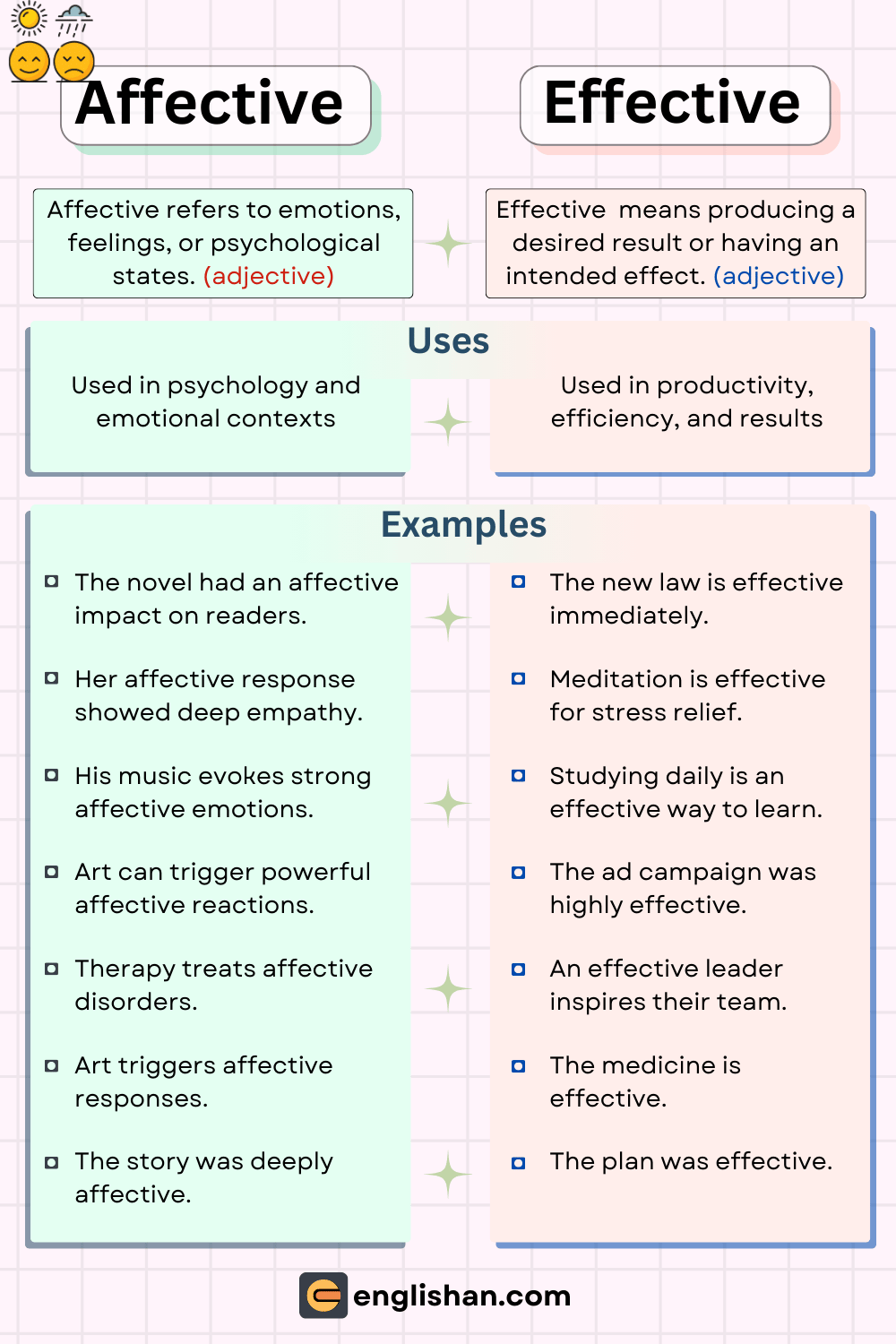
Affective and Effective – Definitions and Examples
Examples showing correct usage of affective and effective in English.
Advertisement

Differences Between Affective and Effective

AspectAffectiveEffective
MeaningRelated to emotions and feelingsProducing an intended result
UsageUsed in psychology and emotional contextsUsed in productivity, efficiency, and results
Part of SpeechAdjectiveAdjective
ExampleThe affective response to the movie was overwhelming.This medicine is highly effective for headaches.
Memory TrickThink of “affection” when you see affectiveThink of “effect” when you see effective

Usage of Affective

  • The teacher’s affective approach helped students feel comfortable.
  • Ahmed’s affective connection with his friends makes him a great listener.

Usage of Effective

  • The new study techniques were effective in improving scores.
  • This effective strategy helped the company increase profits.

Formal and Informal Uses of Affective and Effective

UseAffective ExampleEffective Example
FormalHis research focuses on affective disorders.The policy has been effective in reducing crime.
InformalThat speech was really affective!This new workout plan is super effective!

FAQs

1. How can I remember the difference between affective and effective?

Think of affective as related to emotions and effective as something that works well. A simple trick: affective = affection, effective = effect.

2. Can “affective” and “effective” be used interchangeably?

No. Affective refers to emotions, while effective describes efficiency or results. Using one instead of the other changes the meaning.

3. What is an example sentence using both words?

Fatima’s affective storytelling made the lesson more effective.

You May Also Like

  • Then vs Than
  • Words Related to Nature for Kids
  • Other Ways To Say No in English
  • 100 Words to Use instead of VERY to Improve English
  • 11 Effective Ways to Learn English Quickly by Yourself
Advertisement
Share This Article
Facebook Pinterest Whatsapp Whatsapp LinkedIn Reddit Copy Link
Julian Mercer
ByJulian Mercer
Follow:
Julian Mercer is the founder of Englishan.com and has spent over a decade helping English learners improve through online lessons and practical writing. Having worked with students across many countries, he knows the questions people repeat, the mistakes that slow progress, and the moments that make English click. On Englishan, he writes about vocabulary, picture vocabulary, grammar, and everyday English to help readers speak with ease, read with less strain, and write with more confidence.
Previous Article Edible mushrooms names and types Edible Mushrooms
Next Article Names of First Aid Kit Items and Their Uses Names of First Aid Kit Items
270KLike
82KPin
- Advertisement -

You Might Also Like

Insure vs Ensure – Key Differences Explained
Confused Words

Insure vs Ensure

12 Min Read
Discrete vs Discreet – Key Difference Explained
Confused Words

Discrete vs Discreet

3 Min Read
Then vs Than – Meaning and Usage Difference
Confused Words

Then vs Than

3 Min Read
Confused Words: Accept, Except, and Expect
Confused Words

Accept Except and Expect Difference

10 Min Read
Englishan-Logo-resized Englishan-Logo-resized

Englishan.com is a blog for better writing, speaking, and study results. We publish grammar and vocabulary posts, plus worksheets, word lists, and example sentences for practice.

Important Pages

  • About
  • Contact
  • Privacy Policy
  • Terms of Service

Get in Touch for Queries

Got any questions - Reach us out at
  • contact@englishan.com
  • +971561449880
  • About
  • Contact
  • Privacy Policy
  • Terms of Service
Welcome Back!

Sign in to your account

Username or Email Address
Password

Lost your password?