Desert plants grow in dry areas with very little rain, like the Sahara or the Sonoran Desert. These plants are built to survive heat, store water, and handle poor soil. Some have thick stems, small leaves, or sharp spines to protect themselves.
This post lists desert plant names with pictures. You’ll learn common species found in hot, dry places, grouped to make vocabulary learning easier and clearer.
What Are Desert Plants?
Desert plants are species that thrive in dry, hot environments with little rainfall. They have special features that help them survive harsh desert conditions. Knowing about desert plants helps you understand how living things adapt to water shortages and extreme heat. This knowledge also improves your vocabulary about plants suited for arid lands. The terms you will learn include succulents, cacti, shrubs, and trees common in deserts. Pictures will help you recognize these plants by name and appearance.
List of Desert Plant Names
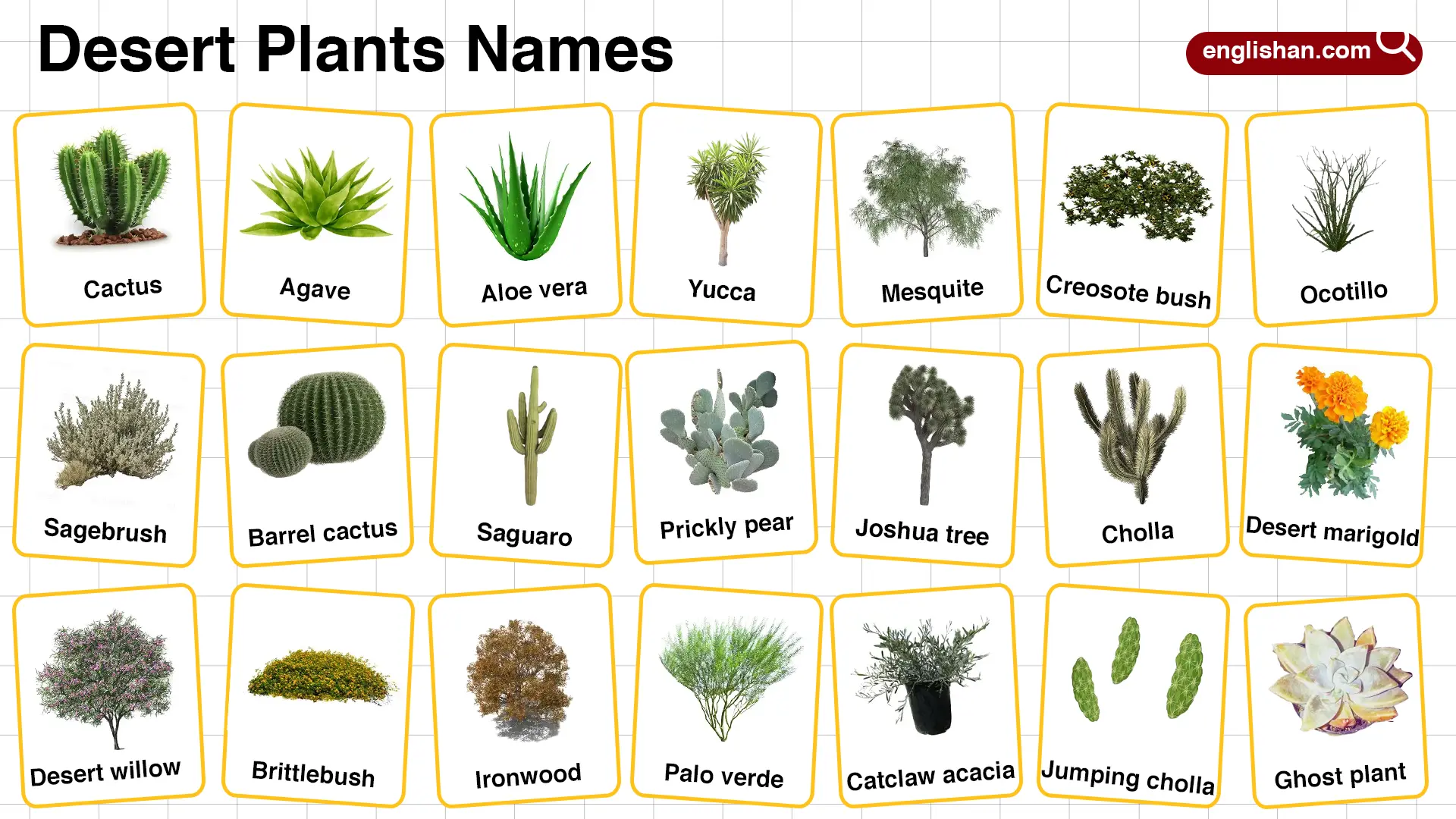
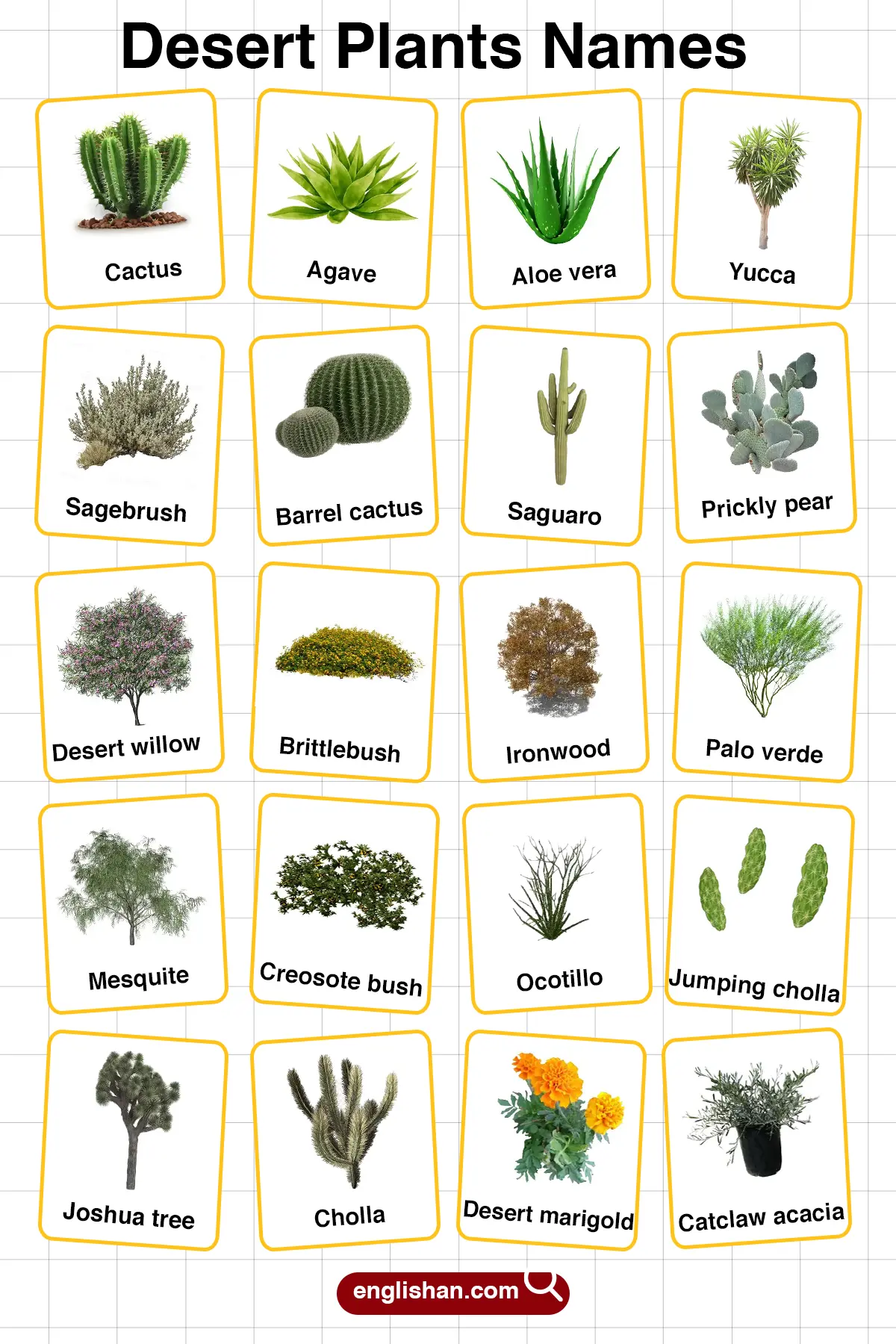
Below is a list of well-known desert plants. These plants are common in deserts around the world and show different ways plants can survive dryness.
- Cactus
- Agave
- Aloe vera
- Yucca
- Mesquite
- Creosote bush
- Ocotillo
- Sagebrush
- Barrel cactus
- Saguaro
- Prickly pear
- Joshua tree
- Cholla
- Desert marigold
- Desert willow
- Brittlebush
- Ironwood
- Palo verde
- Catclaw acacia
- Jumping cholla
- Ghost plant
- Elephant tree
- Soaptree yucca
- Fishhook cactus
- Beavertail cactus
- Organ pipe cactus
- Blue agave
- Sand verbena
- Tumbleweed
- Mormon tea
Types of Desert Plants
Desert plants are specially adapted to survive in hot, dry climates with little rainfall. These plants have features like water-storing tissues, small or no leaves, and deep or widespread roots. Below are some common types of desert plants:
Cacti
Cacti are a group of desert plants known for their thick, fleshy stems that store water. They usually have spines instead of leaves, which help reduce water loss and protect them from animals. Some well-known cacti include:
- Saguaro: Stores water in its tall stem; provides homes for birds like woodpeckers and owls.
- Barrel Cactus: Round shape holds water; sometimes called the “compass cactus” for pointing southwest.
- Prickly Pear: Has flat pads and edible fruits; used in food and medicine.
- Cholla: Covered in sharp spines; often used to protect property and mark land.
- Jumping Cholla: Spines detach easily and stick to skin or fur for defense.
- Fishhook Cactus: Spines are curved like hooks; grows in rocky desert areas.
- Beavertail Cactus: Named for its flat pads; produces bright pink or purple flowers.
- Organ Pipe Cactus: Tall and multi-stemmed; found in southern deserts and blooms at night.
Succulents
Succulents are plants that keep water in their leaves, stems, or roots. They often look thick and juicy. Besides cacti, other succulents grow in deserts to survive dry conditions. Examples are:
- Agave: Used to make sweet syrup and natural fibers for ropes.
- Aloe Vera: Used to treat burns, cuts, and dry skin with cooling gel.
- Ghost Plant: Grown in dry soil for decoration; leaves change color in sunlight.
- Elephant Tree: Stores water in its thick trunk and survives long dry periods.
- Blue Agave: Used for making tequila and also grows well in hot, dry areas.
- Soaptree Yucca: Roots were used by Native people to make natural soap and shampoo.
List of Desert Shrubs and Trees
Desert shrubs and trees have special features like deep roots or small leaves to save water. They often provide shade and shelter for desert animals.
- Mesquite: Deep roots help it get water far underground.
- Creosote Bush: Leaves reduce water loss and release a strong smell.
- Sagebrush: Silvery leaves reflect sunlight.
- Desert Willow: Grows flowers even in dry times.
- Brittlebush: Has small, fuzzy leaves.
- Ironwood: Very tough and long-living tree.
- Palo Verde: Its green bark helps in photosynthesis.
- Catclaw Acacia: Curved thorns protect it from animals.
- Joshua Tree: Unique tree with spiky branches.
Adaptations of Desert Plants
Desert plants have special ways to survive long dry spells and hot temperatures. These adaptations help them store or save water.
Water Storage
Many desert plants store water in their thick stems, leaves, or roots. This helps them survive when there is no rain for months.
- Cacti store water in their fleshy stems.
- Succulents keep water in their thick leaves.
- Elephant Tree stores water in its trunk.
- Agave has large leaves that hold water.
Roots
Desert plants have unique root systems that help them get water.
- Some have deep roots that reach underground water, like Mesquite and Ironwood.
- Others have wide shallow roots to quickly absorb rainwater, like Creosote Bush.
- Some roots spread far to catch as much water as possible.
Names of Desert Flowers
Some desert plants bloom with colorful flowers to attract pollinators even in dry places. Here are common desert flowers:
- Desert Marigold: Yellow flowers bloom after rain.
- Desert Willow: Purple or pink flowers attract bees.
- Sand Verbena: Bright purple or pink blooms cover the ground.
- Brittlebush: Yellow flowers in spring and summer.
Uses of Desert Plants
Desert plants are useful in many ways. Some provide food, medicine, or materials.
- Aloe Vera: Used for skin treatment and healing.
- Agave: Leaves used to make ropes and tequila.
- Mesquite: Seeds can be ground into flour.
- Prickly Pear: Fruit is edible and used in jams.
- Mormon Tea: Used as an herbal drink.
- Creosote Bush: Traditional medicine uses for infections.
Conclusion
Desert plants have special names, features, and uses. From cacti and shrubs to flowering plants and tall trees, they are full of surprises. Learning these names helps students understand nature in dry places using English. Each plant is unique and adapted to survive where water is hard to find.
FAQs About Desert Plants Names
The most common desert plant name is cactus, especially species like saguaro, prickly pear, and barrel cactus.
Some flowering desert plants include desert marigold, brittlebush, desert willow, and ocotillo.
Desert plants like aloe vera, prickly pear, mesquite, and mormon tea are known for their healing or edible parts.
Desert shrubs are smaller and bushy like sagebrush, while desert trees are taller like mesquite or palo verde.
You May Also Like