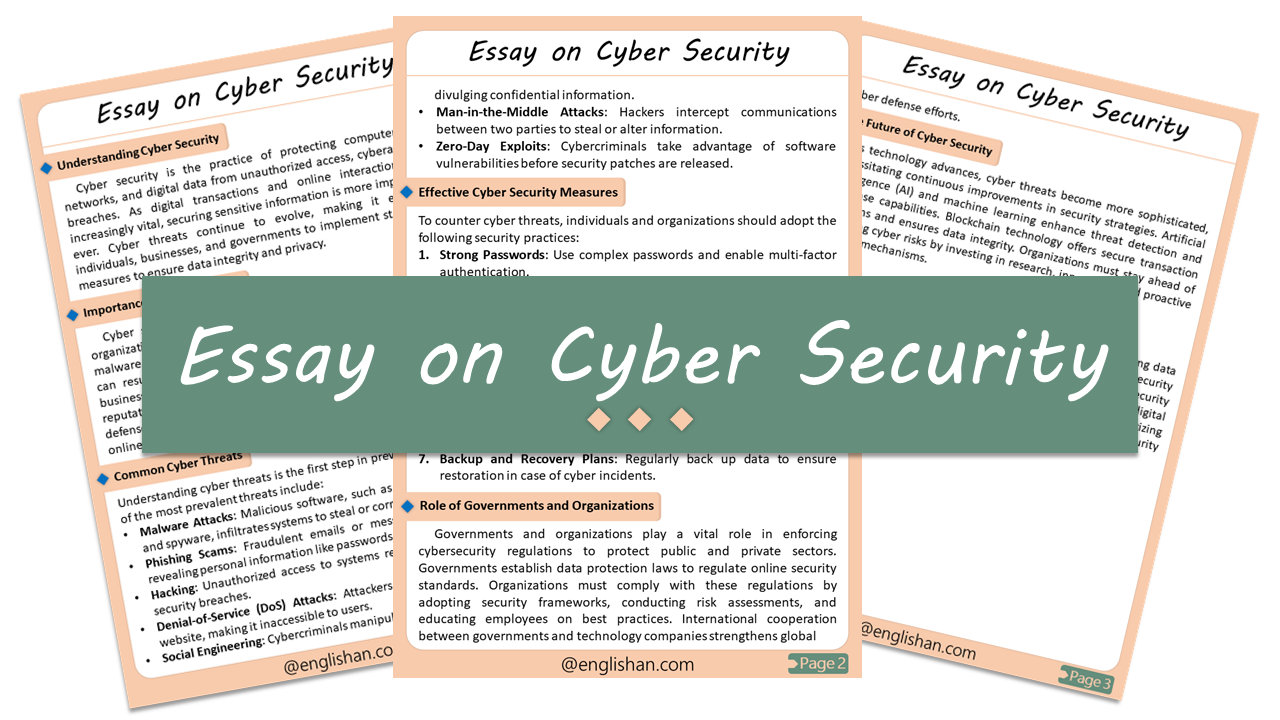
A Cyber Security Essay helps students understand digital safety through clear, structured writing. It supports learning with sample formats like 10-line, 250-word, and 500-word essays. Designed for school levels, these formats explain the topic in ways that save time and support faster comprehension. Cybersecurity, data protection, and online threats are related terms that build context. This topic offers key support for learners and search engines by using structured, concise, and picture-based formats.
10 Lines Cyber security Essay for Class 2 to Class 5
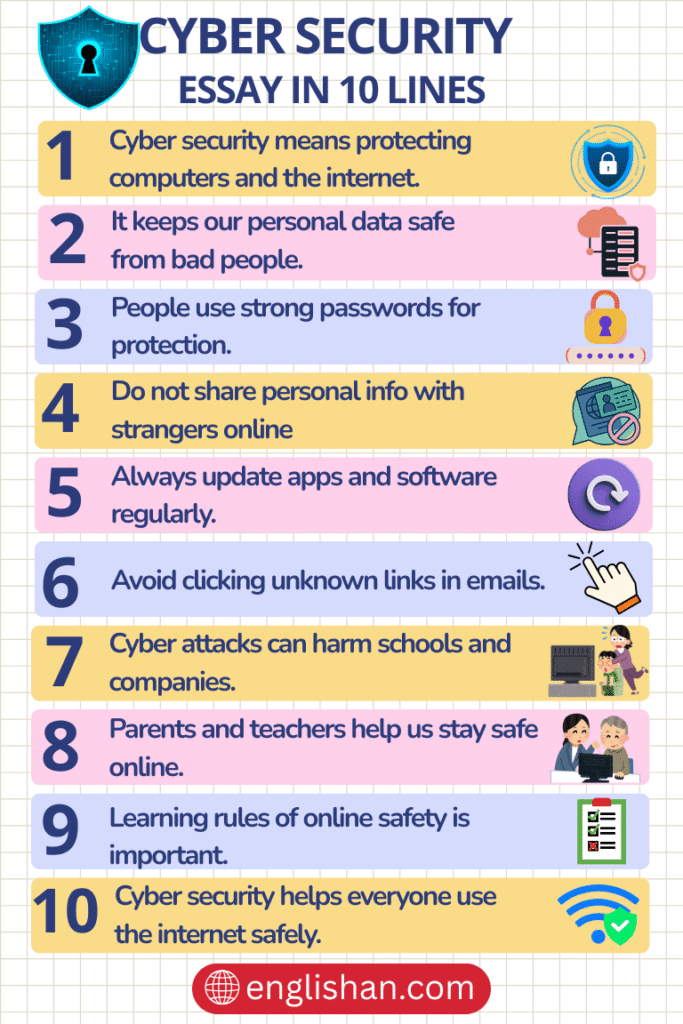
- Cyber security means protecting computers and the internet.
- It keeps our personal data safe from bad people.
- People use strong passwords for protection.
- Do not share personal info with strangers online.
- Always update apps and software regularly.
- Avoid clicking unknown links in emails.
- Cyber attacks can harm schools and companies.
- Parents and teachers help us stay safe online.
- Learning rules of online safety is important.
- Cyber security helps everyone use the internet safely.
250 Words Essay on Cyber security for Middle School
Cyber security is the protection of computers, networks, and personal data from online threats. It helps keep our information safe when we use the internet. Today, almost everyone uses computers, smartphones, and the internet, so cyber security has become very important.
Cyber security works by stopping hackers, viruses, and other harmful attacks. Hackers try to steal personal data, such as passwords, addresses, and bank details. To protect ourselves, we must use strong passwords, keep software updated, and never share personal information with strangers online.
There are many types of cyber attacks, like phishing emails, fake websites, and viruses. These tricks are used to fool people into giving away their data. That’s why students should be careful when opening emails or clicking on unknown links.
Cyber security is not only for adults. It is very important for students too. Schools use the internet for learning, so protecting student data is necessary. Students can also become targets if they don’t use the internet wisely.
To stay safe, students should follow simple rules: don’t share passwords, always log out of accounts, avoid downloading unknown files, and ask an adult if something seems wrong. Using antivirus software and trusted websites also helps a lot.
In conclusion, cyber security helps everyone use the internet safely. It teaches us how to protect our devices, data, and privacy. Learning good cyber habits early will help us stay safe and smart online in the future.
500 Words Cyber security Essay for Upper Primary and Lower Secondary
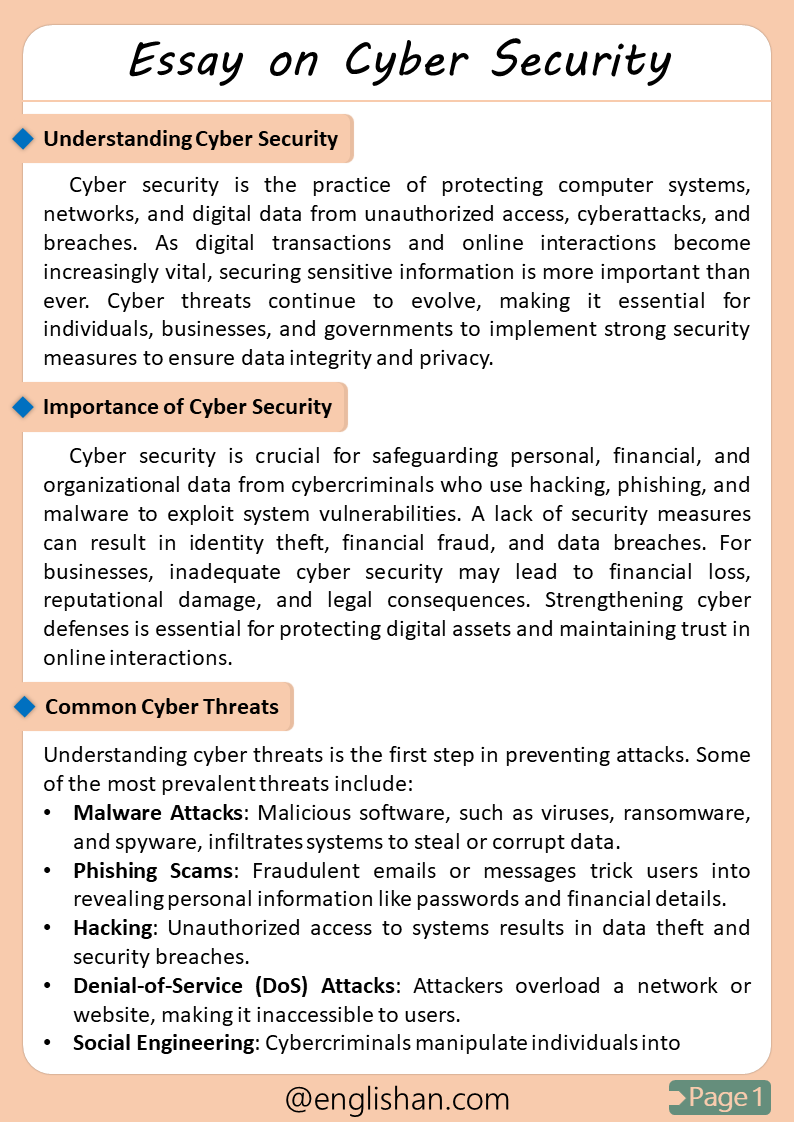
Understanding Cyber Security
Cyber security is the practice of protecting computer systems, networks, and digital data from unauthorized access, cyberattacks, and breaches. As digital transactions and online interactions become increasingly vital, securing sensitive information is more important than ever. Cyber threats continue to evolve, making it essential for individuals, businesses, and governments to implement strong security measures to ensure data integrity and privacy.
Importance of Cyber Security
Cyber security is crucial for safeguarding personal, financial, and organizational data from cybercriminals who use hacking, phishing, and malware to exploit system vulnerabilities. A lack of security measures can result in identity theft, financial fraud, and data breaches. For businesses, inadequate cyber security may lead to financial loss, reputational damage, and legal consequences. Strengthening cyber defenses is essential for protecting digital assets and maintaining trust in online interactions.
Common Cyber Threats
Understanding cyber threats is the first step in preventing attacks. Some of the most prevalent threats include:
- Malware Attacks: Malicious software, such as viruses, ransomware, and spyware, infiltrates systems to steal or corrupt data.
- Phishing Scams: Fraudulent emails or messages trick users into revealing personal information like passwords and financial details.
- Hacking: Unauthorized access to systems results in data theft and security breaches.
- Denial-of-Service (DoS) Attacks: Attackers overload a network or website, making it inaccessible to users.
- Social Engineering: Cybercriminals manipulate individuals into divulging confidential information.
- Man-in-the-Middle Attacks: Hackers intercept communications between two parties to steal or alter information.
- Zero-Day Exploits: Cybercriminals take advantage of software vulnerabilities before security patches are released.
Effective Cyber Security Measures
To counter cyber threats, individuals and organizations should adopt the following security practices:
- Strong Passwords: Use complex passwords and enable multi-factor authentication.
- Regular Software Updates: Keep operating systems and security software updated to patch vulnerabilities.
- Firewalls and Antivirus Software: Install security tools to detect and prevent malicious activities.
- Cyber Awareness Training: Educate users on safe online practices to reduce risks.
- Data Encryption: Encrypt sensitive data to prevent unauthorized access.
- Network Security Policies: Implement strict access controls and monitor network activity.
- Backup and Recovery Plans: Regularly back up data to ensure restoration in case of cyber incidents.
Role of Governments and Organizations
Governments and organizations play a vital role in enforcing cybersecurity regulations to protect public and private sectors. Governments establish data protection laws to regulate online security standards. Organizations must comply with these regulations by adopting security frameworks, conducting risk assessments, and educating employees on best practices. International cooperation between governments and technology companies strengthens global cyber defense efforts.
The Future of Cyber Security
As technology advances, cyber threats become more sophisticated, necessitating continuous improvements in security strategies. Artificial intelligence (AI) and machine learning enhance threat detection and response capabilities. Blockchain technology offers secure transaction solutions and ensures data integrity. Organizations must stay ahead of emerging cyber risks by investing in research, innovation, and proactive defense mechanisms.
Conclusion
Cyber security is essential for protecting digital assets, ensuring data privacy, and mitigating cyber threats. By implementing strong security measures, staying informed about risks, and adhering to cybersecurity policies, individuals and organizations can create a safer digital environment. As the digital landscape continues to evolve, prioritizing cyber security will remain crucial in maintaining trust and security online.
Difficult Words Used in 500 Cyber Security Essay
| Word | Definition |
|---|---|
| Cybersecurity | The practice of protecting systems, networks, and data from cyber threats. |
| Phishing | A fraudulent attempt to obtain sensitive information through deceptive messages. |
| Encryption | The process of converting data into a coded format to prevent unauthorized access. |
| Malware | Malicious software designed to harm or exploit computer systems. |
| Espionage | The act of secretly gathering information without authorization. |
| Vulnerabilities | Weaknesses in a system that can be exploited by cybercriminals. |
| Authentication | A security process that verifies user identity before granting access. |
| Firewall | A security system that monitors and controls incoming and outgoing network traffic. |
Cyber Security PDF
You May Also Like