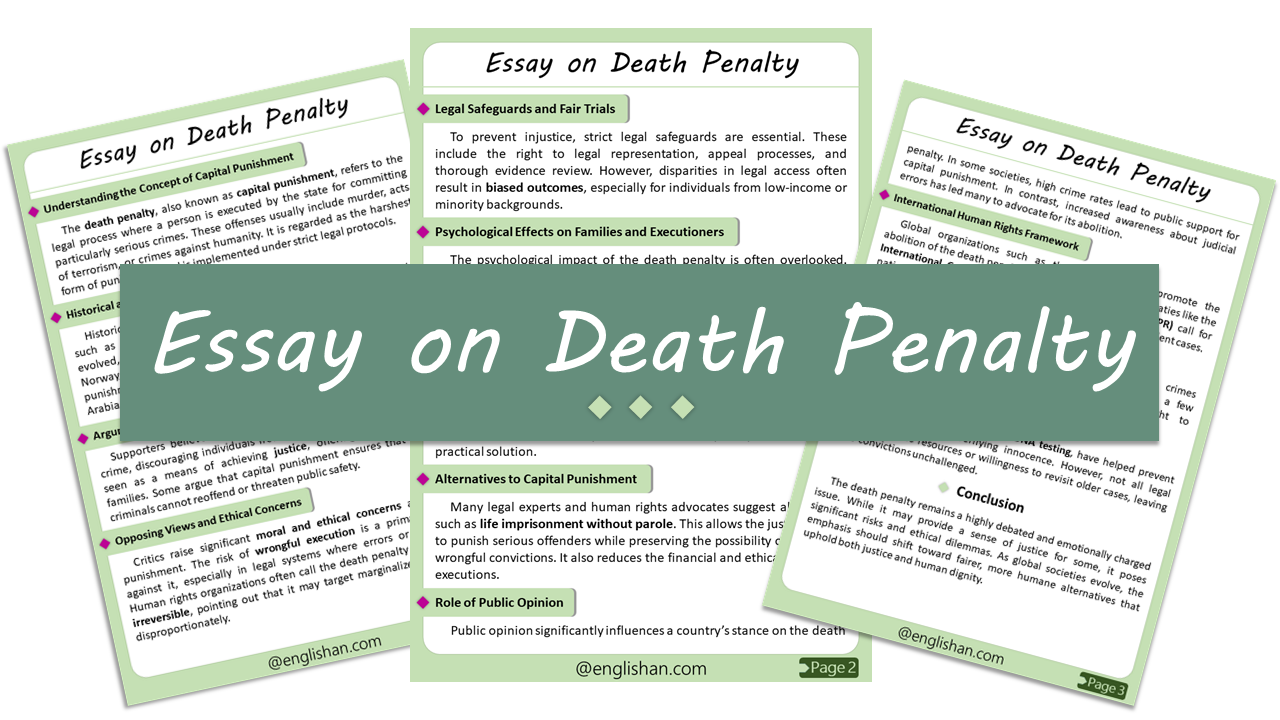
When writing about the death penalty, it’s important to understand how different countries use this punishment for serious crimes. This essay on the death penalty explains its meaning, reasons for support or opposition, and the effects it has on society and justice. It’s written in 10 line, 250 word, and 500 word formats to help students with homework or exams. You can download this death penalty essay as a free PDF or image to study or print.
10 Lines Death Penalty Essay for Class 2 to Class 5
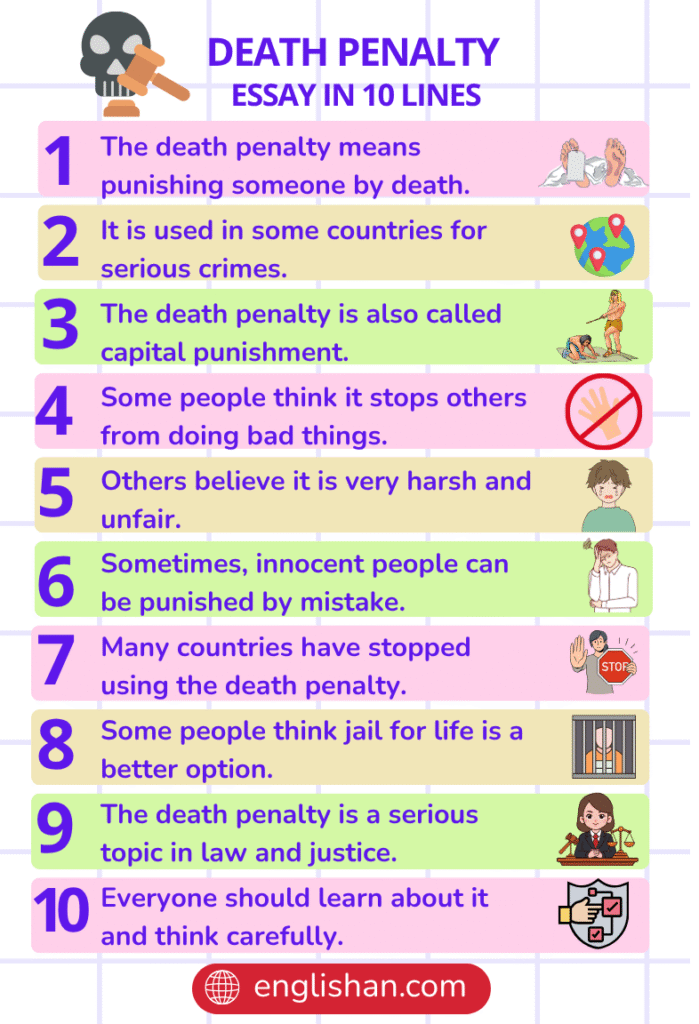
- The death penalty means punishing someone by death.
- It is used in some countries for serious crimes.
- The death penalty is also called capital punishment.
- Some people think it stops others from doing bad things.
- Others believe it is very harsh and unfair.
- Sometimes, innocent people can be punished by mistake.
- Many countries have stopped using the death penalty.
- Some people think jail for life is a better option.
- The death penalty is a serious topic in law and justice.
- Everyone should learn about it and think carefully.
250 Words Essay on Death Penalty for Middle School
The death penalty, also known as capital punishment, is a legal punishment where a person is put to death for committing a very serious crime, like murder or terrorism. It has been used in many countries for centuries, but today, it is a topic of strong debate.
Some people believe that the death penalty helps stop crimes. They say if people know they could lose their life for doing something terrible, they might not do it. This is called a deterrent effect. Others believe it brings justice to victims and their families.
However, many people are against the death penalty. They say it is not right to take a person’s life, even if they have done something wrong. One big reason is the chance of punishing an innocent person by mistake. Once someone is executed, the decision cannot be changed.
Some countries have stopped using the death penalty. They use life imprisonment instead, which keeps the person in jail forever. This way, justice is served without ending a life.
The death penalty is a serious issue with strong opinions on both sides. It is important to understand the facts, think deeply, and learn about laws and human rights before taking a stand.
500 Words Death Penalty Essay for Upper Primary and Lower Secondary
Understanding the Concept of Capital Punishment
The death penalty, also known as capital punishment, refers to the legal process where a person is executed by the state for committing particularly serious crimes. These offenses usually include murder, acts of terrorism, or crimes against humanity. It is regarded as the harshest form of punishment and is implemented under strict legal protocols.
Historical and Global Perspectives
Historically, the death penalty has existed since ancient civilizations such as Babylon, Rome, and Greece. Over time, the practice has evolved, with some countries abolishing it completely. Nations like Norway, Germany, and Australia have permanently ended capital punishment, while countries like the United States, China, and Saudi Arabia continue to practice it under specific legal conditions.
Arguments in Support of the Death Penalty
Supporters believe that the death penalty acts as a deterrent to crime, discouraging individuals from committing violent acts. It is also seen as a means of achieving justice, offering closure to victims’ families. Some argue that capital punishment ensures that dangerous criminals cannot reoffend or threaten public safety.
Opposing Views and Ethical Concerns
Critics raise significant moral and ethical concerns about capital punishment. The risk of wrongful execution is a primary argument against it, especially in legal systems where errors or biases occur. Human rights organizations often call the death penalty inhumane and irreversible, pointing out that it may target marginalized communities disproportionately.
Legal Safeguards and Fair Trials
To prevent injustice, strict legal safeguards are essential. These include the right to legal representation, appeal processes, and thorough evidence review. However, disparities in legal access often result in biased outcomes, especially for individuals from low-income or minority backgrounds.
Psychological Effects on Families and Executioners
The psychological impact of the death penalty is often overlooked. Families of both the victims and the accused experience long-lasting emotional trauma. Executioners and legal staff involved in the process may suffer from moral injury, stress, and emotional detachment over time.
Cost of the Death Penalty
Contrary to public belief, death penalty cases are often more expensive than life imprisonment. Costs arise from prolonged trials, appeals, legal defenses, and the maintenance of death row facilities. These financial burdens question whether capital punishment is a practical solution.
Alternatives to Capital Punishment
Many legal experts and human rights advocates suggest alternatives such as life imprisonment without parole. This allows the justice system to punish serious offenders while preserving the possibility of correcting wrongful convictions. It also reduces the financial and ethical burdens of executions.
Role of Public Opinion
Public opinion significantly influences a country’s stance on the death penalty. In some societies, high crime rates lead to public support for capital punishment. In contrast, increased awareness about judicial errors has led many to advocate for its abolition.
International Human Rights Framework
Global organizations such as the United Nations promote the abolition of the death penalty as part of the right to life. Treaties like the International Covenant on Civil and Political Rights (ICCPR) call for nations to restrict or abolish executions, especially in non-violent cases.
Juveniles and the Death Penalty
International law prohibits executing individuals for crimes committed as minors. However, this practice still occurs in a few countries. Executing juvenile offenders violates their right to rehabilitation and is widely condemned.
Technological Advances and DNA Evidence
Modern forensic tools, especially DNA testing, have helped prevent wrongful executions by verifying innocence. However, not all legal systems have the resources or willingness to revisit older cases, leaving some convictions unchallenged.
Conclusion
The death penalty remains a highly debated and emotionally charged issue. While it may provide a sense of justice for some, it poses significant risks and ethical dilemmas. As global societies evolve, the emphasis should shift toward fairer, more humane alternatives that uphold both justice and human dignity.

Difficult Words Used in 500 Death Penalty Essay
| Word | Meaning |
|---|---|
| Capital punishment | Execution authorized by the state for serious crimes |
| Deterrent | Something that discourages people from doing something bad |
| Closure | A feeling of resolution or emotional conclusion |
| Wrongful execution | Killing someone legally despite their innocence |
| Inhumane | Lacking compassion or kindness; cruel |
| Bias | An unfair preference or prejudice in judgment |
| Moral injury | Emotional harm caused by acting against one’s ethical beliefs |
| Rehabilitation | The process of helping someone return to a normal or better condition |
| ICCPR | An international treaty protecting civil and political rights |
| Forensic | Related to scientific methods used in solving crimes |
Death Penalty Essay PDF
You May Also Like