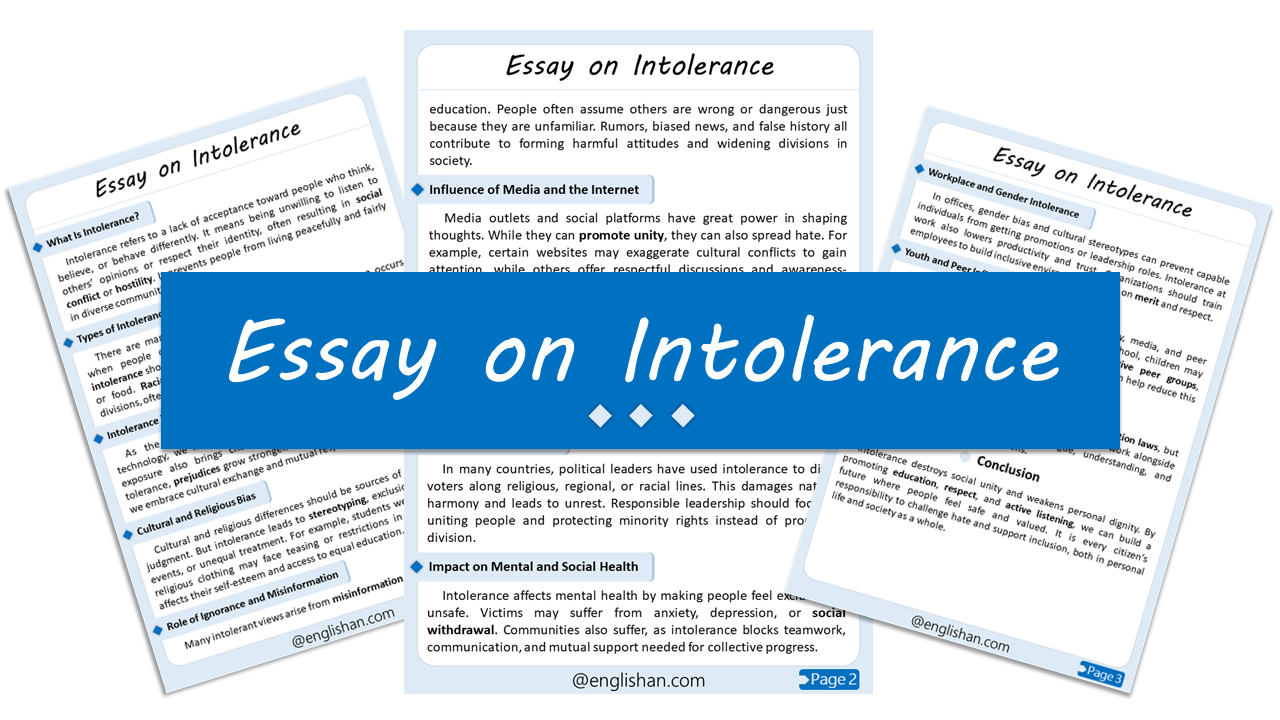
When writing about intolerance, it’s important to understand how not accepting others’ differences can cause problems in society. This essay on intolerance explains what it means, its causes, effects, and ways to promote kindness and respect. It’s written in 500 words to help students with homework or exams. You can download this intolerance essay as a free PDF or image to study or print.
10 Lines Intolerance Essay for Class 2 to Class 5
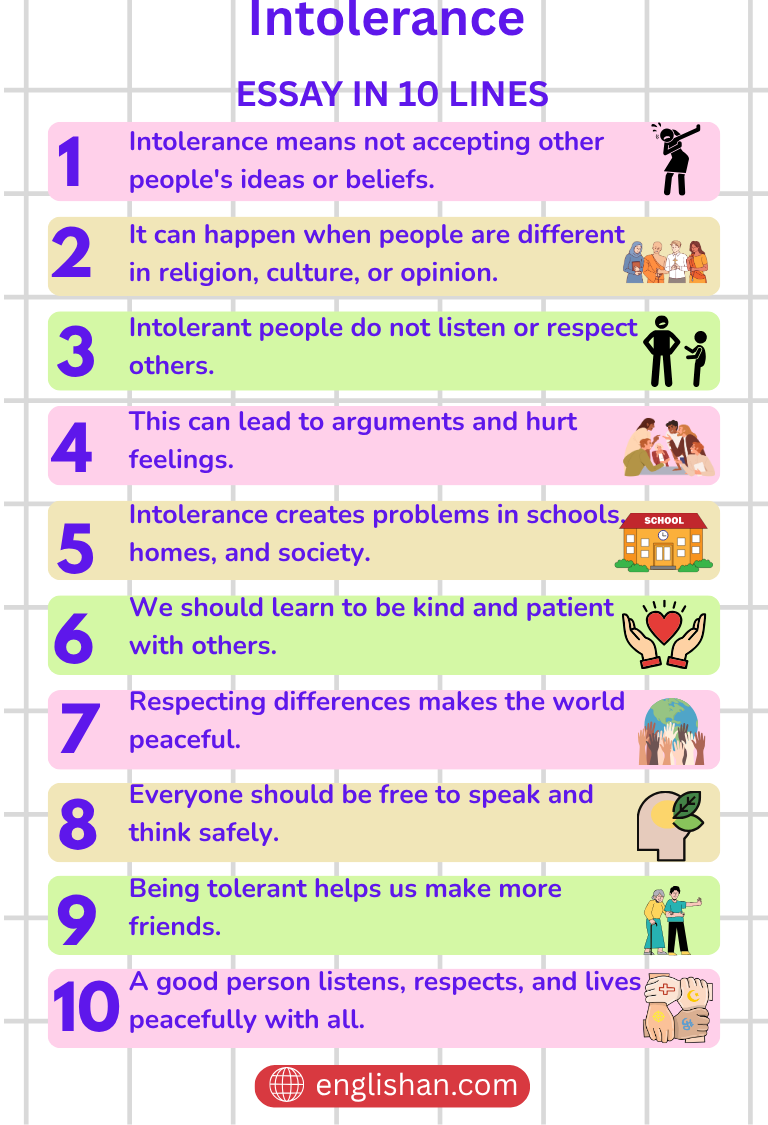
- Intolerance means not accepting other people’s ideas or beliefs.
- It can happen when people are different in religion, culture, or opinion.
- Intolerant people do not listen or respect others.
- This can lead to arguments and hurt feelings.
- Intolerance creates problems in schools, homes, and society.
- We should learn to be kind and patient with others.
- Respecting differences makes the world peaceful.
- Everyone should be free to speak and think safely.
- Being tolerant helps us make more friends.
- A good person listens, respects, and lives peacefully with all.
250 Words Essay on Intolerance for Middle School
Intolerance means not accepting or respecting others who have different opinions, beliefs, or ways of life. It can be based on religion, language, culture, or personal choices. When someone is intolerant, they may be unkind or even hateful toward others simply because they are different.
Intolerance is a big problem in today’s world. It causes fights, arguments, and sometimes even violence. When people do not accept each other’s views, it creates anger and separation. This is harmful to schools, families, and communities. Intolerant behavior makes people feel unsafe and unwelcome.
One main reason for intolerance is a lack of understanding. People may not know much about other cultures or beliefs, so they react with fear or hate. Education, kind behavior, and open conversations can help reduce intolerance.
We must learn to respect others, even if we don’t agree with them. Everyone has the right to live, speak, and think freely. A peaceful society is only possible when we accept and care for each other.
Being tolerant means being patient, kind, and open-minded. It helps us learn new things, build strong friendships, and grow as better human beings.
In conclusion, intolerance hurts people and divides communities. But tolerance brings peace and unity. It is our duty to be respectful and fair to all, no matter how different they are.
500 Words Intolerance Essay for Upper Primary and Lower Secondary
What Is Intolerance?
Intolerance refers to a lack of acceptance toward people who think, believe, or behave differently. It means being unwilling to listen to others’ opinions or respect their identity, often resulting in social conflict or hostility. It prevents people from living peacefully and fairly in diverse communities.
Types of Intolerance
There are many forms of intolerance. Religious intolerance occurs when people cannot accept others’ faiths or practices. Cultural intolerance shows up when people mock or reject other customs, dress, or food. Racial, gender, and political intolerance also cause deep divisions, often leading to bullying, discrimination, or violence.
Intolerance in a Globalized World
As the world becomes more connected through travel and technology, we interact with more diverse groups. However, global exposure also brings challenges. When societies fail to promote tolerance, prejudices grow stronger. Global unity depends on how well we embrace cultural exchange and mutual respect.
Cultural and Religious Bias
Cultural and religious differences should be sources of learning, not judgment. But intolerance leads to stereotyping, exclusion from social events, or unequal treatment. For example, students wearing different religious clothing may face teasing or restrictions in schools, which affects their self-esteem and access to equal education.
Role of Ignorance and Misinformation
Many intolerant views arise from misinformation, fear, or lack of education. People often assume others are wrong or dangerous just because they are unfamiliar. Rumors, biased news, and false history all contribute to forming harmful attitudes and widening divisions in society.
Influence of Media and the Internet
Media outlets and social platforms have great power in shaping thoughts. While they can promote unity, they can also spread hate. For example, certain websites may exaggerate cultural conflicts to gain attention, while others offer respectful discussions and awareness-building content.
Education as a Solution
Teaching tolerance at a young age is essential. Schools can include lessons on diversity, human rights, and respectful communication. Reading books from different cultures, holding debates, and organizing exchange programs can help students become more open-minded and accepting.
Intolerance in Politics
In many countries, political leaders have used intolerance to divide voters along religious, regional, or racial lines. This damages national harmony and leads to unrest. Responsible leadership should focus on uniting people and protecting minority rights instead of promoting division.
Impact on Mental and Social Health
Intolerance affects mental health by making people feel excluded or unsafe. Victims may suffer from anxiety, depression, or social withdrawal. Communities also suffer, as intolerance blocks teamwork, communication, and mutual support needed for collective progress.
Workplace and Gender Intolerance
In offices, gender bias and cultural stereotypes can prevent capable individuals from getting promotions or leadership roles. Intolerance at work also lowers productivity and trust. Organizations should train employees to build inclusive environments based on merit and respect.
Youth and Peer Influence
Young people form beliefs by observing family, media, and peer behavior. If intolerance is common at home or school, children may grow up thinking discrimination is normal. Positive peer groups, awareness campaigns, and inclusive school policies can help reduce this risk.
Laws and Legal Protections
Governments must create and enforce anti-discrimination laws, but legislation alone is not enough. Legal systems should work alongside community programs that promote dialogue, understanding, and peaceful coexistence among all citizens.
Conclusion
Intolerance destroys social unity and weakens personal dignity. By promoting education, respect, and active listening, we can build a future where people feel safe and valued. It is every citizen’s responsibility to challenge hate and support inclusion, both in personal life and society as a whole.

Difficult Words Used in 500 Intolerance Essay
| Word | Meaning |
|---|---|
| Hostility | Unfriendly or aggressive behavior |
| Stereotyping | Generalizing traits to a group unfairly |
| Misinformation | Wrong or false information shared as fact |
| Withdrawal | Pulling away from social interaction due to stress or fear |
| Merit | Quality of being worthy or capable, especially in work or education |
| Prejudice | Unreasonable dislike based on race, gender, religion, etc. |
| Exposure | Experience or contact with something new |
| Coexistence | Living peacefully with differences |
| Legislation | A law or set of laws made by a government |
| Cultural exchange | Learning and sharing ideas between different traditions |
Intolerance Essay PDF
You May Also Like