When writing about the Kalash Festival, it’s important to understand the unique culture and traditions of the Kalash people. This essay on the Kalash Festival explains the main celebrations, rituals, music, and dances that show their rich heritage. It is written in 250 words to help middle school students with homework or exams. You can download this Kalash Festival essay as a free PDF or image to study or print.
10 Lines Kalash Festival Essay for Class 2 to Class 5
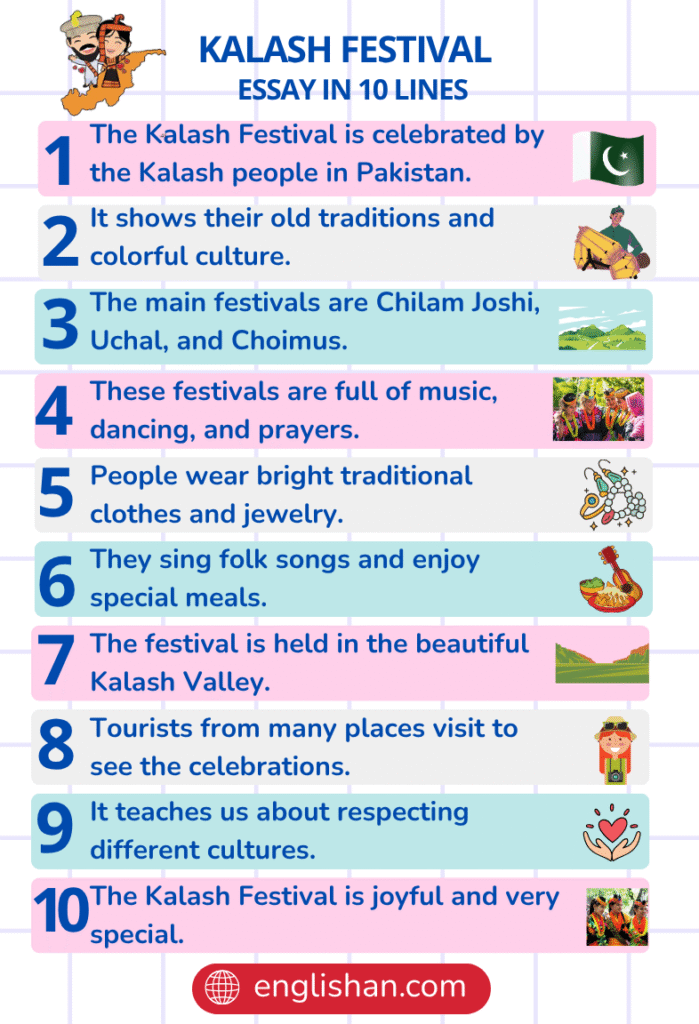
- The Kalash Festival is celebrated by the Kalash people in Pakistan.
- It shows their old traditions and colorful culture.
- The main festivals are Chilam Joshi, Uchal, and Choimus.
- These festivals are full of music, dancing, and prayers.
- People wear bright traditional clothes and jewelry.
- They sing folk songs and enjoy special meals.
- The festival is held in the beautiful Kalash Valley.
- Tourists from many places visit to see the celebrations.
- It teaches us about respecting different cultures.
- The Kalash Festival is joyful and very special.
250 Words Essay on Kalash Festival for Middle School
The Kalash Festival is one of the most unique and colorful cultural celebrations in Pakistan. It is celebrated by the Kalash people, a small community living in the beautiful valleys of Chitral, in northern Pakistan. The Kalash are known for their rich traditions, vibrant clothing, and unique beliefs.
The Kalash celebrate three main festivals each year: Chilam Joshi, Uchal, and Choimus. Chilam Joshi is held in May and marks the arrival of spring. Uchal, celebrated in August, is a harvest festival where people thank their gods for the crops. Choimus is the winter festival, celebrated in December, and is the most spiritual and sacred of all.
During the festivals, people wear colorful clothes and headpieces made of beads and flowers. They dance in circles, sing traditional songs, and offer prayers to their gods. Special food is cooked, and families gather to enjoy the celebrations. Visitors from different parts of the world come to watch these cultural events.
The Kalash Festival teaches us the value of preserving ancient traditions and living in harmony with nature. It is a beautiful display of joy, unity, and cultural pride.
These festivals are important not only for the Kalash community but also for the world, as they highlight a way of life that is different yet beautiful. Students can learn a lot from the Kalash people about respect, peace, and tradition.
500 Words Kalash Festival Essay for Upper Primary and Lower Secondary
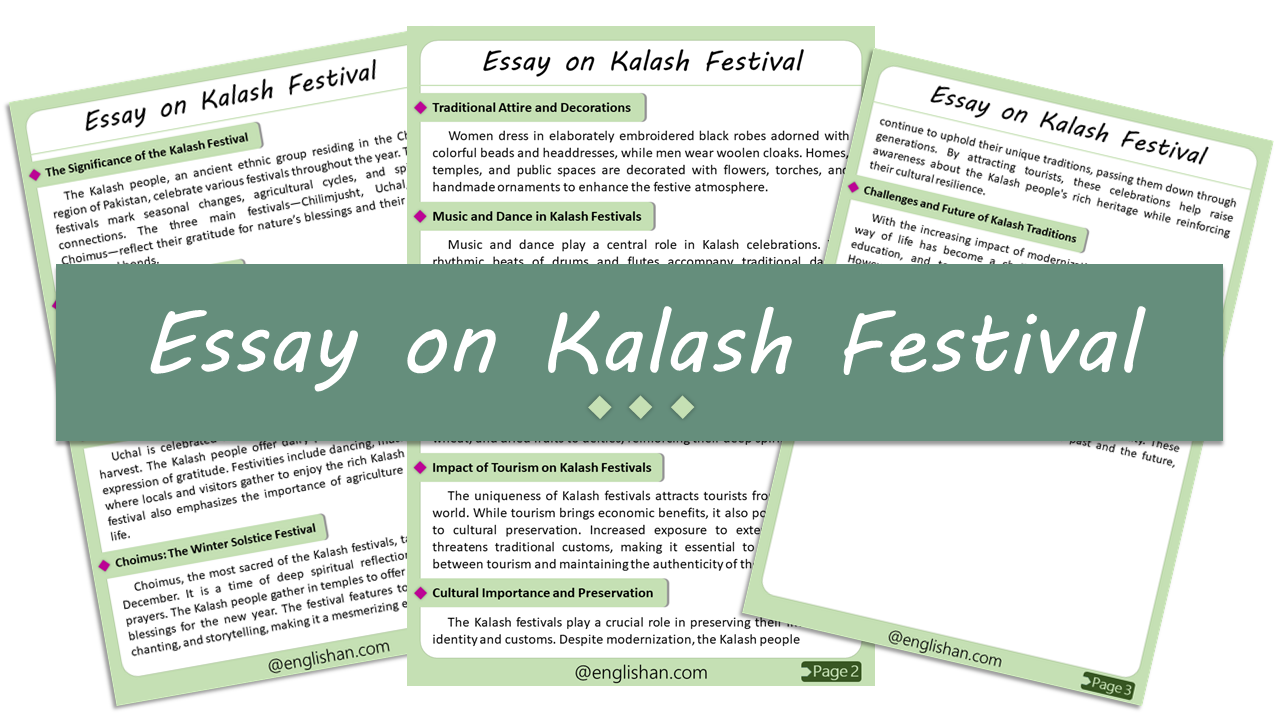
The Significance of the Kalash Festival
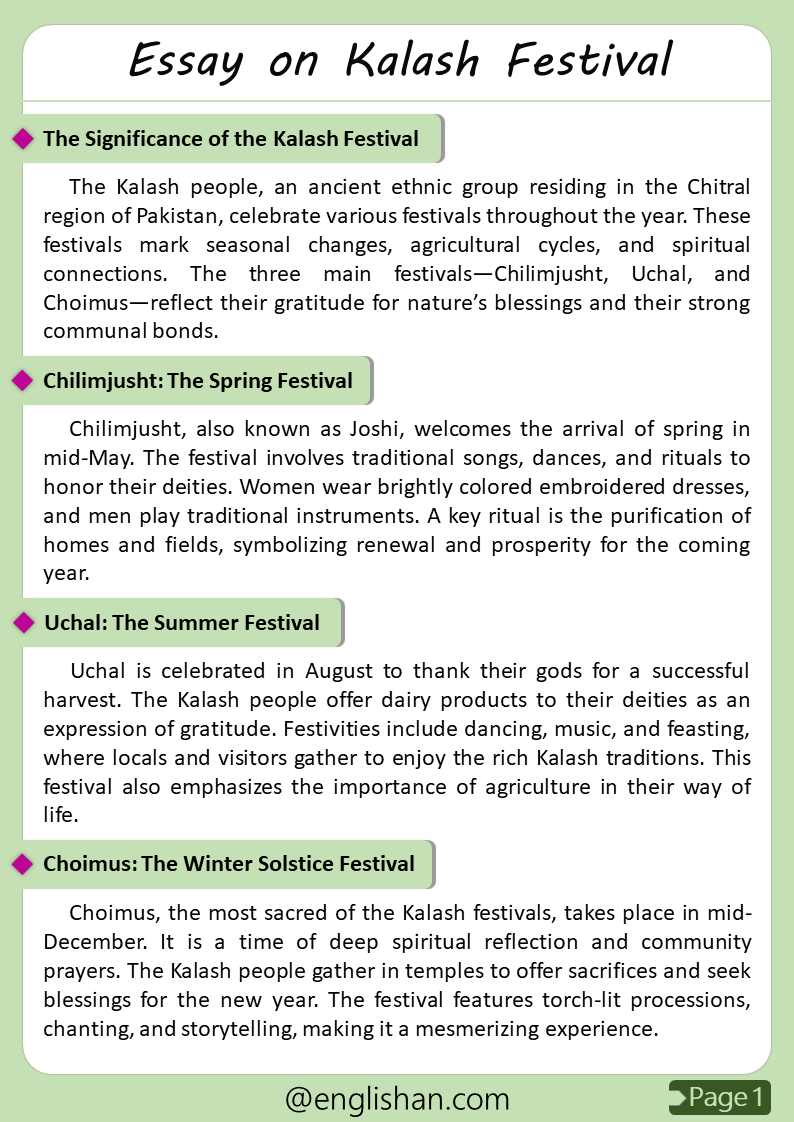
The Kalash people, an ancient ethnic group residing in the Chitral region of Pakistan, celebrate various festivals throughout the year. These festivals mark seasonal changes, agricultural cycles, and spiritual connections. The three main festivals—Chilimjusht, Uchal, and Choimus—reflect their gratitude for nature’s blessings and their strong communal bonds.
Chilimjusht: The Spring Festival
Chilimjusht, also known as Joshi, welcomes the arrival of spring in mid-May. The festival involves traditional songs, dances, and rituals to honor their deities. Women wear brightly colored embroidered dresses, and men play traditional instruments. A key ritual is the purification of homes and fields, symbolizing renewal and prosperity for the coming year.
Uchal: The Summer Festival
Uchal is celebrated in August to thank their gods for a successful harvest. The Kalash people offer dairy products to their deities as an expression of gratitude. Festivities include dancing, music, and feasting, where locals and visitors gather to enjoy the rich Kalash traditions. This festival also emphasizes the importance of agriculture in their way of life.
Choimus: The Winter Solstice Festival
Choimus, the most sacred of the Kalash festivals, takes place in mid-December. It is a time of deep spiritual reflection and community prayers. The Kalash people gather in temples to offer sacrifices and seek blessings for the new year. The festival features torch-lit processions, chanting, and storytelling, making it a mesmerizing experience.
Traditional Attire and Decorations
Women dress in elaborately embroidered black robes adorned with colorful beads and headdresses, while men wear woolen cloaks. Homes, temples, and public spaces are decorated with flowers, torches, and handmade ornaments to enhance the festive atmosphere.
Music and Dance in Kalash Festivals
Music and dance play a central role in Kalash celebrations. The rhythmic beats of drums and flutes accompany traditional dances performed in large circles. These dances symbolize unity, joy, and gratitude toward their deities. The community gathers in open spaces to sing and dance, making the festivals lively and engaging.
Spiritual Practices and Rituals
The Kalash people follow ancient spiritual practices, offering prayers, sacrifices, and rituals to their gods. These ceremonies are performed by elders and spiritual leaders to ensure prosperity and protection for their community. Special rituals during the festivals include offerings of milk, wheat, and dried fruits to deities, reinforcing their deep spiritual beliefs.
Impact of Tourism on Kalash Festivals
The uniqueness of Kalash festivals attracts tourists from around the world. While tourism brings economic benefits, it also poses challenges to cultural preservation. Increased exposure to external influences threatens traditional customs, making it essential to find a balance between tourism and maintaining the authenticity of these traditions.
Cultural Importance and Preservation
The Kalash festivals play a crucial role in preserving their indigenous identity and customs. Despite modernization, the Kalash people continue to uphold their unique traditions, passing them down through generations. By attracting tourists, these celebrations help raise awareness about the Kalash people’s rich heritage while reinforcing their cultural resilience.
Challenges and Future of Kalash Traditions
With the increasing impact of modernization, preserving the Kalash way of life has become a challenge. The influence of technology, education, and tourism has introduced changes in their lifestyle. However, efforts by cultural organizations and local communities continue to protect and document these traditions, ensuring their survival for future generations.
Conclusion
The Kalash Festival is a testament to the resilience and cultural pride of the Kalash people. Through their seasonal celebrations, they express their connection to nature and maintain their distinct identity. These vibrant festivals serve as a bridge between the past and the future, ensuring that their traditions thrive.
Difficult Words Used in 500 Kalash Festival Essay
| Word | Meaning |
|---|---|
| Ethnic | Relating to a specific cultural group |
| Rituals | Ceremonial acts performed for traditions |
| Indigenous | Native to a particular place |
| Solstice | The longest or shortest day of the year |
| Procession | A group moving forward in an orderly way |
Kalash Festival Essay PDF
You May Also Like