

When writing about Navruz recognized by UNESCO essay, it’s important to understand its history, cultural significance, and celebrations. This essay explains the festival’s origins, why UNESCO honors it, and how people observe it today. It’s written in 500 words to help students with homework or exams. You can download this Navruz essay as a free PDF or image to study or print.
10 Lines Navruz Recognized by UNESCO Essay for Class 2 to Class 5
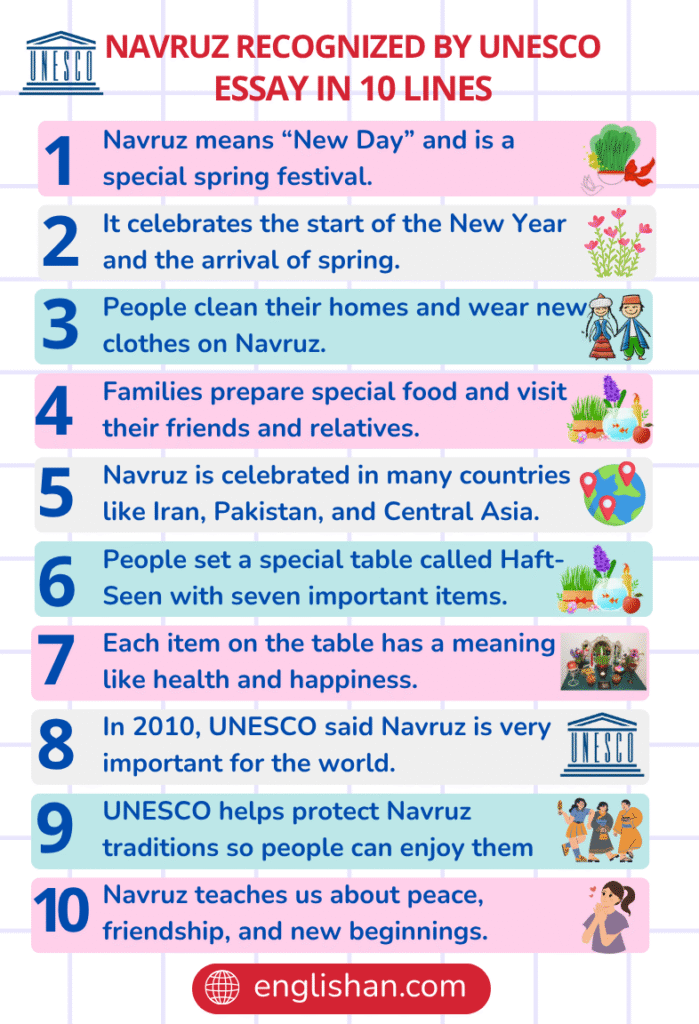
- Navruz means “New Day” and is a special spring festival.
- It celebrates the start of the New Year and the arrival of spring.
- People clean their homes and wear new clothes on Navruz.
- Families prepare special food and visit their friends and relatives.
- Navruz is celebrated in many countries like Iran, Pakistan, and Central Asia.
- People set a special table called Haft-Seen with seven important items.
- Each item on the table has a meaning like health and happiness.
- In 2010, UNESCO said Navruz is very important for the world.
- UNESCO helps protect Navruz traditions so people can enjoy them forever.
- Navruz teaches us about peace, friendship, and new beginnings.
250 Words Essay on Navruz Recognized by UNESCO for Middle School
Navruz, also spelled Nowruz, is a traditional festival that marks the beginning of the New Year in many countries, especially in Central Asia and parts of the Middle East. It is celebrated on the first day of spring, around March 21st. Navruz means “new day” and symbolizes renewal, rebirth, and new beginnings. This festival has been celebrated for over 3,000 years and is a time when families come together to clean their homes, prepare special foods, and enjoy music and dancing.
In 2010, UNESCO recognized Navruz as an Intangible Cultural Heritage of Humanity. This recognition highlights the importance of Navruz as a festival that promotes peace, friendship, and cultural diversity. UNESCO’s acknowledgment helps protect the traditions and rituals of Navruz, ensuring they are passed down to future generations.
Navruz celebrations include many unique customs, such as setting the Haft-Seen table, which features seven symbolic items starting with the Persian letter “S.” These items represent health, prosperity, and happiness. People also visit friends and relatives, exchange gifts, and perform special prayers for a good year ahead.
Overall, Navruz is not just a celebration of the New Year but also a way to bring communities together. The UNESCO recognition helps remind the world of the cultural richness and unity that Navruz represents. This essay helps middle school students understand the significance of Navruz and its cultural value.
500 Words Navruz Recognized by UNESCO Essay for Upper Primary and Lower Secondary
Historical Background of Navruz
Navruz, also known as Nowruz, originated over 3,000 years ago in the Persian Empire. The term “Navruz” means “New Day” in Persian and symbolizes renewal and rebirth. Historically, it has been celebrated across Central Asia, the Middle East, the Caucasus, and parts of South Asia. Ancient Zoroastrian traditions strongly influenced the festival, associating it with the vernal equinox. The festival has evolved over centuries, incorporating various regional customs while retaining its core message of unity and renewal.
Cultural Significance of Navruz
Navruz is a time for families and communities to gather, reflecting on the past and embracing new beginnings. The festival promotes peace, harmony, and cultural heritage among diverse societies. Common traditions include:
- House Cleaning (Khaneh Tekani): Symbolizing purification before the new year.
- Haft-Seen Table: A ceremonial display of seven symbolic items representing prosperity, health, and happiness.
- Festive Meals: Special dishes like “Sabzi Polo” (herbed rice) and “Sumalak” (a sweet wheat-based dish) are prepared.
- Fire Jumping: A ritual to eliminate negativity and welcome positive energy.
- Gift-Giving and Charity: Strengthening bonds within families and communities.
Navruz and UNESCO Recognition
Recognizing its deep cultural significance, UNESCO inscribed Navruz on the Representative List of the Intangible Cultural Heritage of Humanity in 2009. This acknowledgment emphasizes Navruz as a unifying tradition celebrated across multiple nations, promoting intercultural dialogue and peace. Countries such as Iran, Azerbaijan, Afghanistan, Kazakhstan, and Turkey have worked together to preserve and promote Navruz traditions globally.
Modern-Day Observance of Navruz
Navruz is celebrated worldwide, with governments and cultural organizations hosting public events. The United Nations declared March 21 as the International Day of Nowruz, recognizing its role in fostering peace and solidarity. In many countries, public holidays, festivals, and performances mark the occasion, showcasing folk music, dance, and traditional crafts.
Navruz and Environmental Awareness
Navruz fosters a deep connection with nature, aligning with the spring equinox to symbolize renewal and environmental consciousness. Many customs emphasize sustainability, such as planting trees, growing sprouts, and appreciating natural cycles.
Navruz as a Symbol of Peace and Unity
Navruz transcends national and religious boundaries, fostering mutual respect and unity. The festival’s emphasis on togetherness encourages peaceful coexistence among different ethnic and cultural groups.
Navruz in Literature and Art
Navruz has inspired poetry, music, and art across various cultures. Famous Persian poets such as Ferdowsi and Hafez have referenced Navruz in their works, celebrating themes of renewal, joy, and wisdom.
Navruz in Different Countries
While Navruz has common elements, its customs vary across regions. In Iran, the celebration lasts for 13 days, while in Central Asia, large public gatherings and sports events mark the occasion. Afghanistan and Turkey incorporate unique music, dance, and culinary traditions to enrich the festival experience.
Educational Importance of Navruz
Many educational institutions incorporate Navruz into their curricula, teaching students about cultural heritage, diversity, and history. Schools organize special events to highlight the festival’s significance in different parts of the world.
Conclusion
Navruz is more than just a new year celebration; it is a symbol of cultural identity, unity, and renewal. UNESCO’s recognition ensures that this cherished tradition continues to thrive across generations. As people worldwide honor Navruz, they embrace a message of hope, resilience, and harmony.

Difficult Words Used in 500 Navruz Recognized by UNESCO Essay
| Word | Meaning |
|---|---|
| Intangible | Not physical or touchable; abstract heritage |
| Inscribed | Officially recorded or recognized |
| Vernal Equinox | The time when day and night are of equal length, marking spring’s arrival |
| Intercultural | Relating to multiple cultures and their interactions |
| Solidarity | Unity and mutual support among individuals or nations |
Navruz Recognized by UNESCO Essay PDF
You May Also Like