
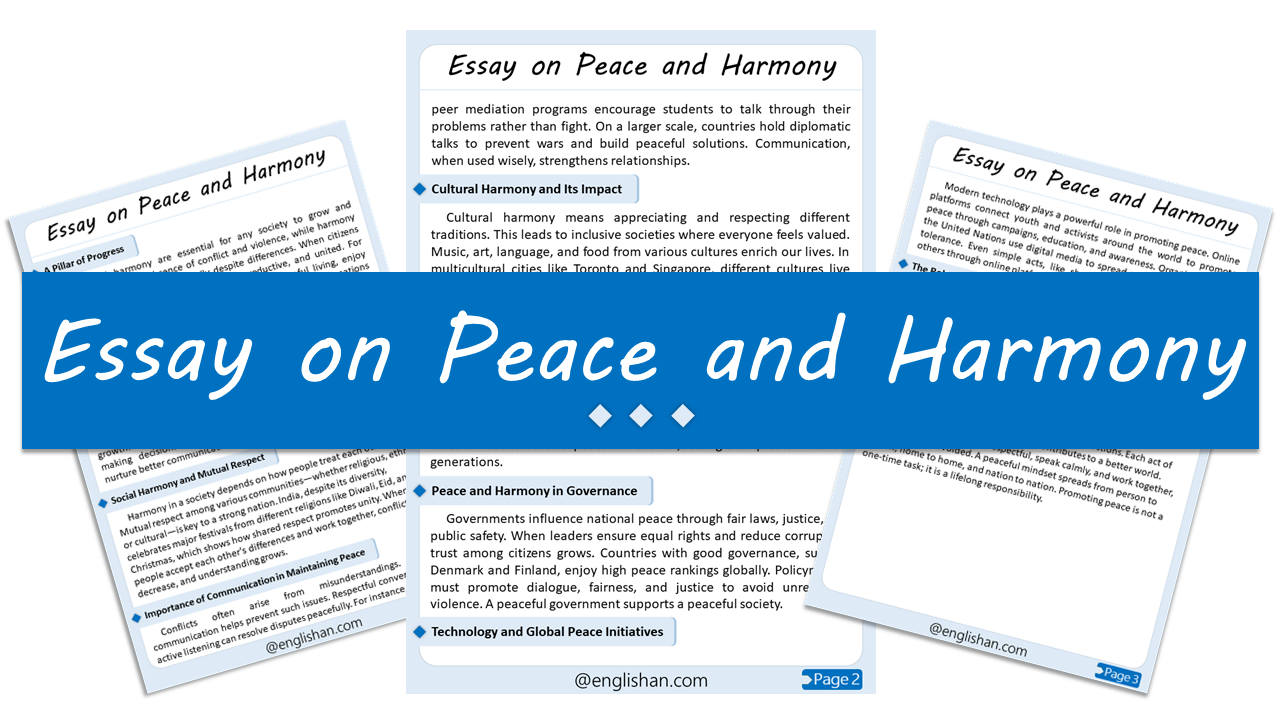
When writing about peace and harmony, it’s important to understand how kindness, respect, and friendship help people live happily together. This essay on peace and harmony explains their meaning, why they matter, and ways to promote them in daily life. It’s written in 500 words to help students with homework, exams, or projects. You can download this peace and harmony essay as a free PDF or image to study or print.
10 Lines Peace and Harmony Essay for Class 2 to Class 5
- Peace means living without fights or wars.
- Harmony means getting along well with others.
- Peace and harmony make homes and schools happy.
- We should always be kind and help each other.
- Saying sorry can bring peace after a fight.
- Listening carefully helps us understand friends better.
- Peace is needed everywhere, in families and countries.
- Harmony teaches us to accept different people.
- We can make peace by sharing and caring.
- A peaceful world is a happy world for everyone.

250 Words Essay on Peace and Harmony for Middle School
Peace and harmony are very important for a happy life. Peace means living without violence, fights, or wars. Harmony means living together in friendship and understanding, even if people are different. Both peace and harmony help create a safe and loving environment.
At home, peace means that family members do not argue and respect each other’s feelings. When there is harmony in the family, everyone feels happy and comfortable. The same is true in schools, where students should get along well and help one another.
Peace and harmony are also important in communities and countries. When people work together without fighting, the country grows and develops faster. Wars and conflicts cause pain, loss, and sadness. So, it is better to solve problems through talking and understanding.
To promote peace and harmony, we must be kind, patient, and respectful. Listening to others, accepting differences, and helping those in need can bring people closer. We can also say sorry when we hurt someone and forgive others to keep peace alive.
In conclusion, peace and harmony make life better for everyone. They create a world where people live happily and work together for a brighter future. Every person, young or old, can help build peace and harmony in their home, school, and community.
500 Words Peace and Harmony Essay for Upper Primary and Lower Secondary
A Pillar of Progress
Peace and harmony are essential for any society to grow and develop. Peace is the absence of conflict and violence, while harmony refers to living together respectfully despite differences. When citizens live in harmony, society becomes stable, productive, and united. For example, countries like Switzerland, known for peaceful living, enjoy high quality of life and strong democratic systems. Peaceful nations attract investors, tourists, and build better futures for their citizens.
The Role of Peace in Personal Development
Inner peace leads to better emotional and mental health. When individuals live in peaceful surroundings, they are less likely to face stress, fear, or anger. Students, for instance, perform better in schools with calm environments. Peace supports focus, learning, and personal growth. People who feel secure and respected are more confident in making decisions and building relationships. Peaceful homes also nurture better communication among family members.
Social Harmony and Mutual Respect
Harmony in a society depends on how people treat each other. Mutual respect among various communities—whether religious, ethnic, or cultural—is key to a strong nation. India, despite its diversity, celebrates major festivals from different religions like Diwali, Eid, and Christmas, which shows how shared respect promotes unity. When people accept each other’s differences and work together, conflicts decrease, and understanding grows.
Importance of Communication in Maintaining Peace
Conflicts often arise from misunderstandings. Effective communication helps prevent such issues. Respectful conversations and active listening can resolve disputes peacefully. For instance, in schools, peer mediation programs encourage students to talk through their problems rather than fight. On a larger scale, countries hold diplomatic talks to prevent wars and build peaceful solutions. Communication, when used wisely, strengthens relationships.
Cultural Harmony and Its Impact
Cultural harmony means appreciating and respecting different traditions. This leads to inclusive societies where everyone feels valued. Music, art, language, and food from various cultures enrich our lives. In multicultural cities like Toronto and Singapore, different cultures live side by side peacefully. Tolerance and acceptance allow people to learn from each other and reduce prejudice.
Educational Approaches to Build Peace
Schools play a vital role in teaching peaceful behavior. Curriculum can include lessons on kindness, empathy, and human rights. Programs like UNESCO’s “Education for Peace” teach children how to respect diversity and solve problems calmly. Schools that promote teamwork and community service help students become responsible, peace-loving citizens. Teachers model peaceful behavior, setting examples for future generations.
Peace and Harmony in Governance
Governments influence national peace through fair laws, justice, and public safety. When leaders ensure equal rights and reduce corruption, trust among citizens grows. Countries with good governance, such as Denmark and Finland, enjoy high peace rankings globally. Policymakers must promote dialogue, fairness, and justice to avoid unrest and violence. A peaceful government supports a peaceful society.
Technology and Global Peace Initiatives
Modern technology plays a powerful role in promoting peace. Online platforms connect youth and activists around the world to promote peace through campaigns, education, and awareness. Organizations like the United Nations use digital media to spread messages of peace and tolerance. Even simple acts, like sharing a positive story or helping others through online platforms, contribute to a global culture of peace.
The Role of Youth in Promoting Peace
Young people are vital in building a peaceful future. They bring fresh ideas and strong energy to solve problems in new ways. Many youth-led organizations work for environmental peace, gender equality, and community service. For example, “Peace First” trains young leaders to run peace-building projects worldwide. When empowered, youth become voices for justice, equality, and unity.
Conclusion
Peace and harmony must begin with individual actions. Each act of kindness, understanding, and fairness contributes to a better world. When people choose to be respectful, speak calmly, and work together, conflicts can be avoided. A peaceful mindset spreads from person to person, home to home, and nation to nation. Promoting peace is not a one-time task; it is a lifelong responsibility.

Difficult Words Used in 500 Peace and Harmony Essay
| Word | Meaning |
|---|---|
| Coexistence | Living together peacefully despite differences |
| Prosperity | The state of being successful, especially economically |
| Discrimination | Unfair treatment based on race, gender, religion, etc. |
| Dialogue | A conversation or discussion to resolve issues |
| Inclusiveness | The practice of including people of all backgrounds and abilities |
| Awareness | Knowledge or understanding about a subject or situation |
| Governance | The way rules and decisions are made and enforced in a group or country |
| Campaigns | Organized actions to achieve a goal, often related to social causes |
| Platforms | Online or physical spaces for sharing information and connecting people |
| Empowering | Giving people the power and confidence to act or make decisions |
Peace and Harmony Essay PDF
You May Also Like