When writing about population growth, it’s important to understand how the number of people increases and how it affects daily life and resources. This essay on population growth explains the causes, problems, and solutions in simple words. It’s written in 500 words to help students with homework or exams. You can download this population growth essay as a free PDF or image to study or print.
10 Lines Population Growth Essay for Class 2 to Class 5
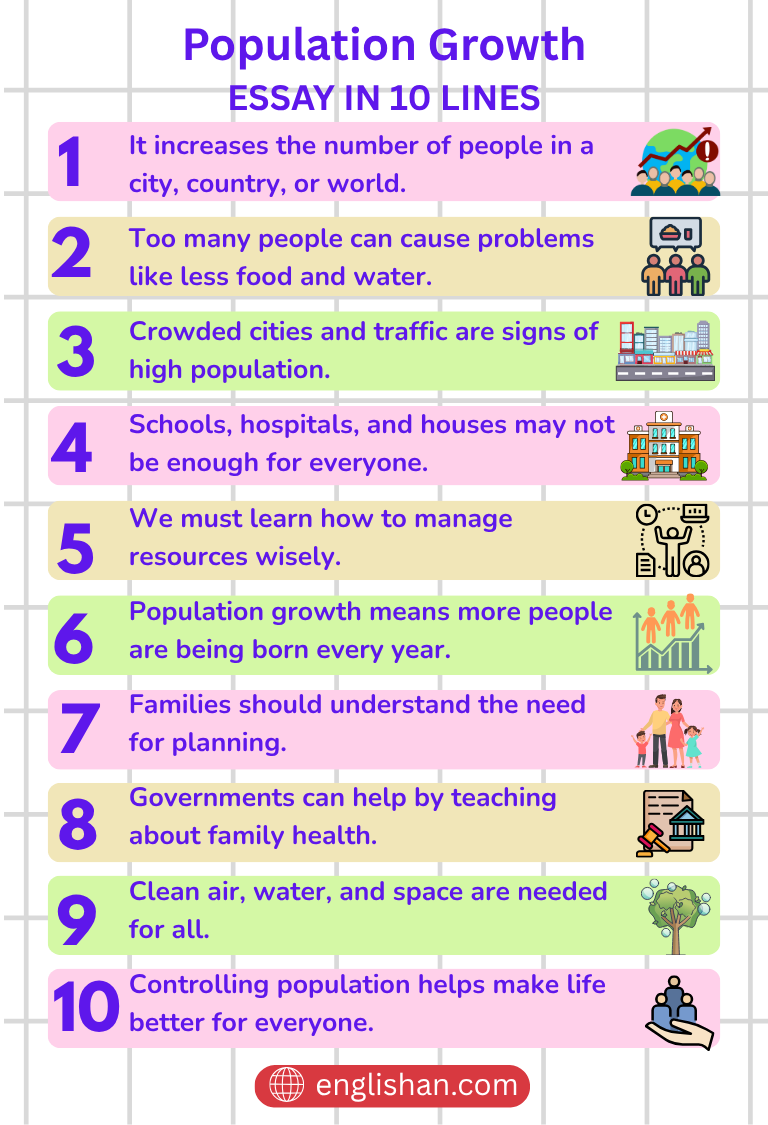
- It increases the number of people in a city, country, or world.
- Too many people can cause problems like less food and water.
- Crowded cities and traffic are signs of high population.
- Schools, hospitals, and houses may not be enough for everyone.
- We must learn how to manage resources wisely.
- Population growth means more people are being born every year.
- Families should understand the need for planning.
- Governments can help by teaching about family health.
- Clean air, water, and space are needed for all.
- Controlling population helps make life better for everyone.
250 Words Essay on Population Growth for Middle School
Population growth means an increase in the number of people living in a place. When more people are born and fewer people die, the population grows. This is happening in many countries around the world, especially in large cities.
While having more people can mean more ideas and more workers, very fast population growth can cause many problems. It can lead to crowded cities, more traffic, and a shortage of food, clean water, and housing. Schools and hospitals may not have enough space or staff to help everyone. Natural resources like forests, rivers, and clean air are also used up quickly.
To manage population growth, it is important to spread awareness about family planning and healthcare. Parents should be taught about the importance of small families. Governments must also help by providing education, healthcare, and job opportunities, especially in rural areas. When people have better lives, they are more likely to make better choices.
Population growth can also be controlled by improving the status of women through education and work. When girls are educated, they tend to marry later and have fewer children.
In conclusion, population growth is a serious issue that affects the quality of life for everyone. If we plan well and use resources wisely, we can make sure that there is enough for all people now and in the future.
500 Words Population Growth Essay for Upper Primary and Lower Secondary
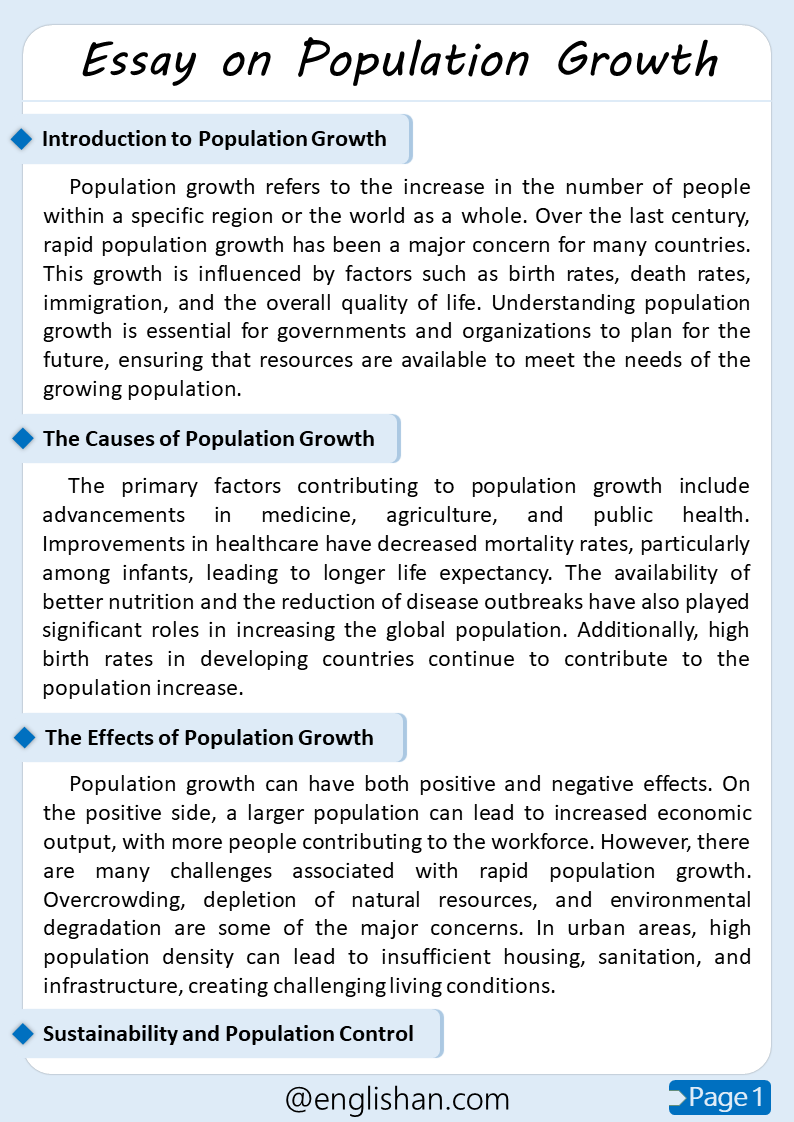
Introduction to Population Growth
Population growth refers to the increase in the number of people within a specific region or the world as a whole. Over the last century, rapid population growth has been a major concern for many countries. This growth is influenced by factors such as birth rates, death rates, immigration, and the overall quality of life. Understanding population growth is essential for governments and organizations to plan for the future, ensuring that resources are available to meet the needs of the growing population.
The Causes of Population Growth
The primary factors contributing to population growth include advancements in medicine, agriculture, and public health. Improvements in healthcare have decreased mortality rates, particularly among infants, leading to longer life expectancy. The availability of better nutrition and the reduction of disease outbreaks have also played significant roles in increasing the global population. Additionally, high birth rates in developing countries continue to contribute to the population increase.
The Effects of Population Growth
Population growth can have both positive and negative effects. On the positive side, a larger population can lead to increased economic output, with more people contributing to the workforce. However, there are many challenges associated with rapid population growth. Overcrowding, depletion of natural resources, and environmental degradation are some of the major concerns. In urban areas, high population density can lead to insufficient housing, sanitation, and infrastructure, creating challenging living conditions.
Sustainability and Population Control
To address the challenges of population growth, countries must adopt sustainable development practices. This includes promoting family planning programs, encouraging education, particularly for women, and increasing access to healthcare services. Effective population control measures can help balance population growth with the availability of resources. Governments and organizations must focus on long-term strategies that not only address the needs of the current population but also ensure that future generations have access to clean water, food, and other essentials.
Urbanization and Population Growth
Urbanization is the process of people moving from rural areas to cities, often in search of better opportunities. As the global population grows, more people are migrating to urban centers, leading to overcrowded cities and increased strain on infrastructure. Urban areas may offer better access to healthcare, education, and employment, but they also face issues such as pollution, housing shortages, and social inequality. Effective urban planning is essential to manage the effects of urbanization on population growth.
The Role of Education in Controlling Population Growth
Education plays a significant role in managing population growth. Educating people, particularly women, about family planning, reproductive health, and the social and economic benefits of having smaller families can help reduce birth rates. In many parts of the world, improving literacy and access to education has led to a decline in fertility rates, which in turn slows down population growth. Education also empowers individuals to make informed decisions about their futures and contributes to overall societal well-being.
Economic Impacts of Population Growth
Population growth can have far-reaching effects on a country’s economy. A larger workforce can drive economic growth, but it can also increase competition for jobs and resources, potentially leading to higher levels of poverty. In some countries, rapid population growth has led to high unemployment rates, and the strain on public services, such as healthcare and education, can hinder economic development. Governments must find a balance between encouraging growth and ensuring economic stability.
The Environmental Consequences of Population Growth
As the population grows, the demand for resources such as water, energy, and food increases. This can lead to the overuse and depletion of natural resources, resulting in environmental damage. Deforestation, pollution, and climate change are all exacerbated by population growth. To mitigate these environmental impacts, it is crucial to adopt sustainable practices, including renewable energy sources, resource conservation, and policies aimed at reducing carbon emissions.
Conclusion of Essay on Population Growth
In conclusion, population growth is a complex issue that presents both opportunities and challenges. While a growing population can drive economic development, it also requires careful management of resources and environmental impact. By understanding the causes and effects of population growth, societies can develop policies that support sustainable development. Addressing these challenges requires international cooperation and a commitment to improving the quality of life for all people, regardless of their country or economic status.
Difficult Words Used in 500 Population Growth Essay
| Word | Meaning |
|---|---|
| Mortality | The state of being subject to death, often used to refer to death rates. |
| Sustainability | The ability to maintain or support a process over the long term. |
| Depletion | The reduction or exhaustion of a resource. |
| Immigration | The action of moving to a new country or region to live. |
| Infrastructure | The basic physical and organizational structures needed for operation. |
| Urbanization | The process of making an area more urban, often associated with city growth. |
Population Growth Essay PDF
You May Also Like