
In English grammar, gender shows whether a word refers to a male, female, or neither. Understanding gender in English helps us choose the right words when we talk about people, animals, or objects. For kids, it’s an important step in learning how to use English correctly—like knowing when to say he, she, or it. This makes it easier to talk about people and things the right way.
What Is Gender in English Grammar?
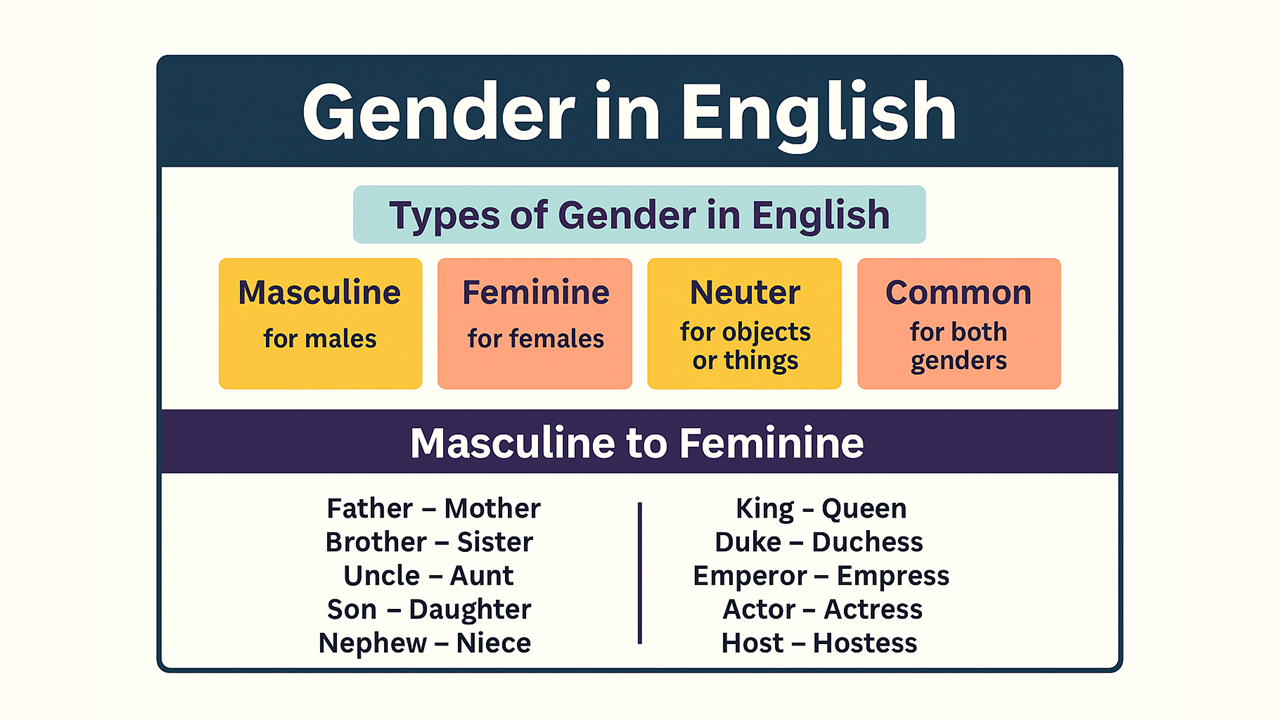
In English grammar, gender tells us whether a word refers to a male, female, or neither. It helps us choose the correct word when talking about people, animals, or things. While some languages assign gender to almost every noun, English uses gender mainly for specific nouns and pronouns.
Gender in English isn’t always about biology. Sometimes, even non-living things are grouped under gender categories. That’s why it’s important to understand which words are masculine, feminine, neuter, or common. This knowledge improves both writing and speaking accuracy.
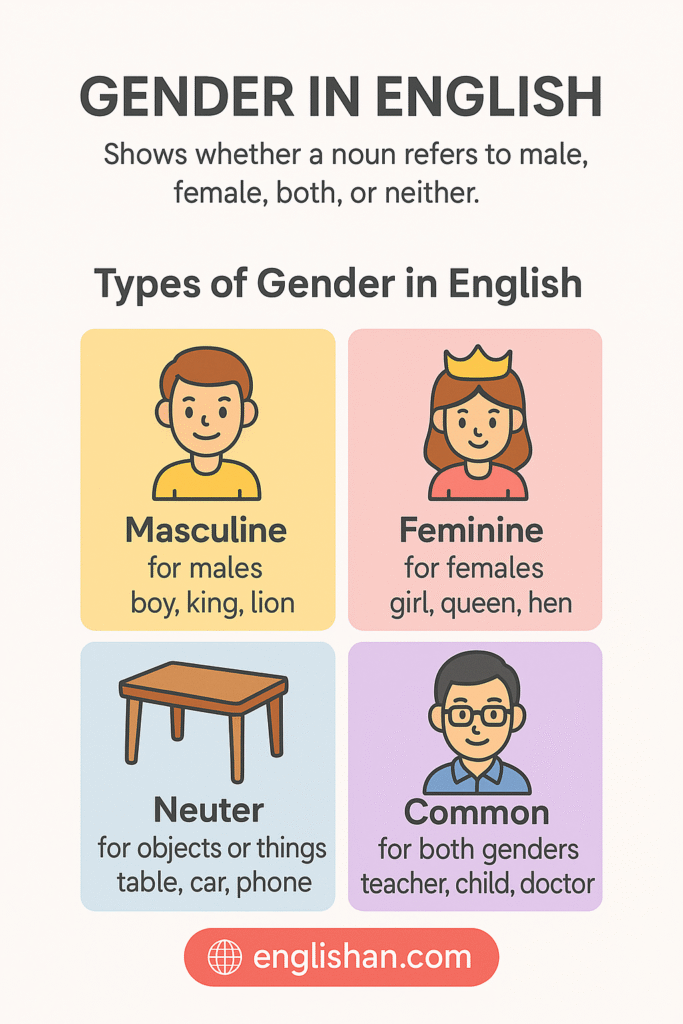
Types of Gender in English (with Examples)
Masculine Gender
Masculine gender refers to male people or animals. These words identify the subject as male.
Examples:
- boy
- man
- father
- son
- brother
- uncle
- husband
- nephew
- king
- prince
- gentleman
- host
- waiter
- actor
- wizard
- monk
- rooster
- bull
- stallion
- lion
- tiger
- peacock
- drake
- gander
Feminine Gender
Feminine gender refers to female people or animals. These words indicate the subject is female.
Examples:
- girl
- woman
- mother
- daughter
- sister
- aunt
- wife
- niece
- queen
- princess
- lady
- hostess
- waitress
- actress
- witch
- nun
- hen
- cow
- mare
- lioness
- tigress
- peahen
- duck
- goose
Neuter Gender
Neuter gender refers to objects or things that are not alive and have no biological gender. Most inanimate objects fall into this category.
Examples:
- book
- pen
- pencil
- bag
- table
- chair
- fan
- car
- bus
- train
- school
- building
- computer
- phone
- lamp
- bottle
- window
- box
- cup
- clock
- shoe
- shirt
- hat
- bed
- sofa
- road
- city
- country
- tree
- rock
Common Gender
Common gender words refer to roles or people that can be either male or female. The gender is not made clear unless additional context is provided.
Examples:
- child
- baby
- student
- friend
- teacher
- cousin
- parent
- doctor
- engineer
- leader
- singer
- dancer
- author
- artist
- cook
- driver
- pilot
- coach
- lawyer
- judge
- boss
- client
- visitor
- guest
- manager
How to Change the Gender in English Words
Some English words change to reflect gender. This can happen in a few different ways.
Change by Adding a Suffix
Certain words form their feminine counterparts by adding suffixes like -ess.
| Masculine | Feminine |
|---|---|
| actor | actress |
| waiter | waitress |
| host | hostess |
| prince | princess |
| steward | stewardess |
| lion | lioness |
| tiger | tigress |
| god | goddess |
| heir | heiress |
| emperor | empress |
Use a Different Word
Some masculine and feminine forms use entirely different words.
Examples:
- father → mother
- son → daughter
- brother → sister
- uncle → aunt
- husband → wife
- king → queen
- man → woman
- nephew → niece
- monk → nun
- wizard → witch
Same Word for Both Genders
Some nouns don’t change at all. The same word is used for both males and females, and the gender must be understood from context.
Examples:
- baby
- child
- student
- friend
- teacher
- cousin
- parent
- doctor
- engineer
- driver
- singer
- artist
- leader
- author
- cook
- pilot
- boss
- client
- guest
- visitor
Change Gender from Masculine to Feminine
The list below shows common masculine nouns and their corresponding feminine forms in English.
| Masculine | Feminine |
| actor | actress |
| boy | girl |
| brother | sister |
| bull | cow |
| count | countess |
| duke | duchess |
| emperor | empress |
| father | mother |
| gentleman | lady |
| hero | heroine |
| host | hostess |
| king | queen |
| man | woman |
| nephew | niece |
| prince | princess |
| son | daughter |
| stallion | mare |
| tiger | tigress |
| uncle | aunt |
| waiter | waitress |
| wizard | witch |
| husband | wife |
| monk | nun |
| god | goddess |
| sir | madam |
| lion | lioness |
| bachelor | spinster |
| drake | duck |
| earl | countess |
| fox | vixen |
| lord | lady |
| master | mistress |
| mayor | mayoress |
| poet | poetess |
| priest | priestess |
| prophet | prophetess |
| shepherd | shepherdess |
| heir | heiress |
| steward | stewardess |
| beau | belle |
| bridegroom | bride |
| bullock | heifer |
| conductor | conductress |
| patron | patroness |
| sultan | sultana |
| gander | goose |
| landlord | landlady |
| dog | bitch |

Gender Chart with Examples
| Gender Type | Examples |
| Masculine | boy, man, king, father, uncle, prince, rooster, actor, hero, waiter, wizard, monk, stallion, bull, lion, tiger, peacock, gander, drake, gentleman, host |
| Feminine | girl, woman, queen, mother, aunt, princess, hen, actress, heroine, waitress, witch, nun, mare, cow, lioness, tigress, duck, goose, lady, hostess, peahen |
| Neuter | table, pen, city, computer, road, book, chair, bag, train, car, fan, building, phone, lamp, bottle, window, box, cup, clock, rock, pencil, sofa |
| Common | teacher, doctor, child, cousin, artist, student, parent, friend, singer, driver, leader, author, cook, engineer, lawyer, coach, judge, guest, client, manager, visitor |
FAQs about Gender in English Grammar
What is gender in grammar?
Gender shows whether a noun refers to a male, female, or neutral subject.
What are the 4 types of gender?
Masculine, feminine, neuter, and common.
How do we change gender in English?
By using suffixes, replacing the word, or keeping it the same depending on the context.
What is the opposite gender?
The word that refers to the other gender, like man and woman, or uncle and aunt.
Which words have no gender?
Neuter gender words like book, car, or tree.
Why is learning gender important?
It helps in using correct grammar, especially for choosing pronouns and describing nouns clearly.
You May Also Like