

Many types of house flies live in places like kitchens, drains, basements, and near garbage. Some are large and slow; others are tiny and hard to spot. They vary in size, shape, and where they breed, but all can be found indoors or just outside the house.
In this post, you’ll learn names of different house flies with pictures to help you understand them.
List of Types of House Flies
House flies come in various types, each with different looks and habits. Some stay near food or garbage, while others gather in drains or windows. This list includes common indoor flies like the housefly, fruit fly, and drain fly to help you identify and manage them easily.
- House Fly
- Blow Fly
- Fruit Fly
- Drain Fly
- Flesh Fly
- Cluster Fly
- Stable Fly
- Phorid Fly
- Cheese Skipper
- Little House Fly
- Filter Fly
- Fungus Gnat
- Lessor House Fly
- Moth Fly
- Sphaerocerid Fly
- Soldier Fly
- Latrine Fly
- Sewer Fly
- Vinegar Fly
- Sand Fly
- Hover Fly
- Scuttle Fly
- Deer Fly
- Black Fly
- Eye Gnat
- Dog Fly
- Tachinid Fly
- Frit Fly
- Bottle Fly
- Screwworm Fly
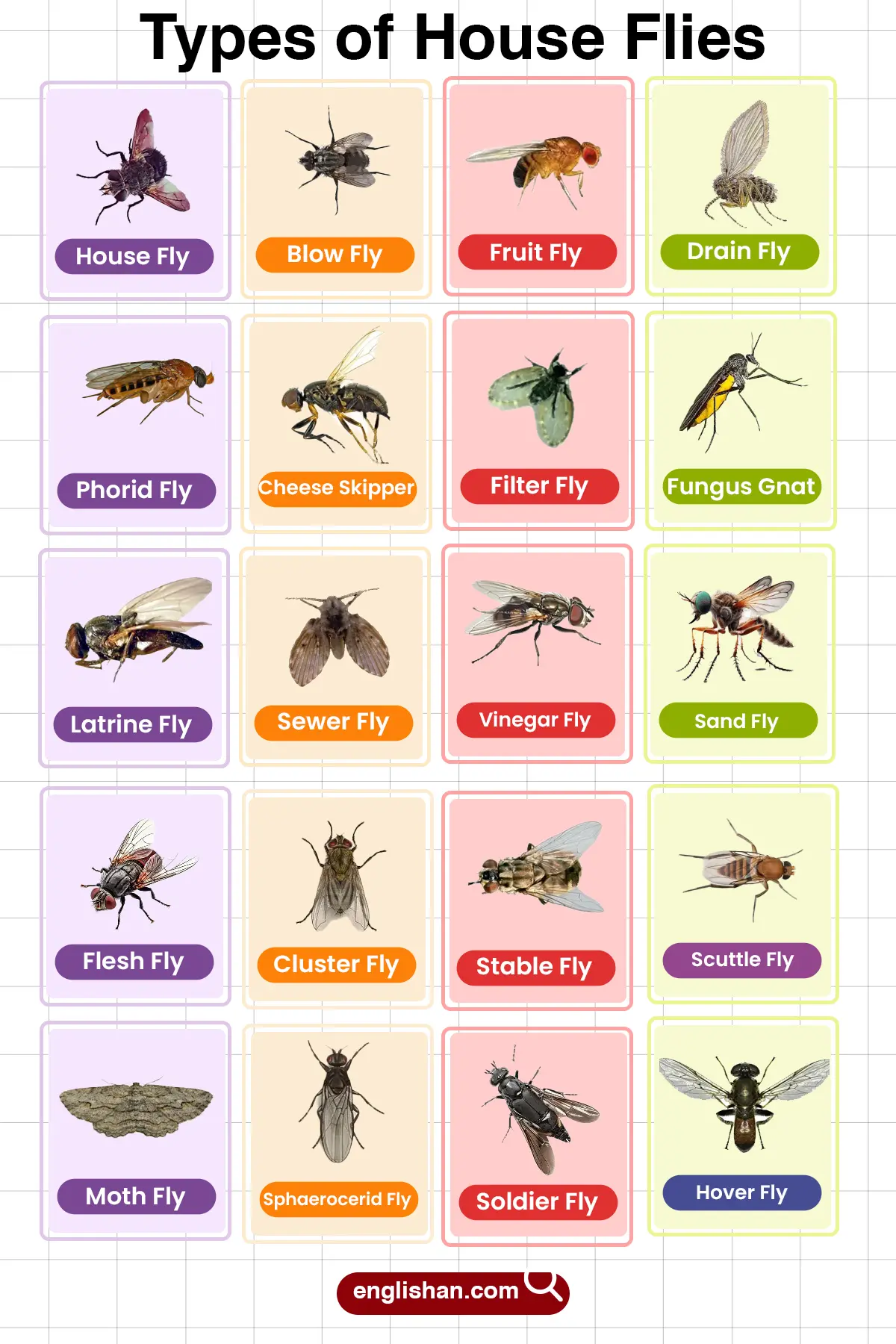
Types of House Flies
House flies come in different shapes, habits, and sizes. Below is a chart of the most common indoor types you might notice around your home, windows, or trash bins.
Common House Flies
Common House Flies are medium-sized insects often seen indoors near food, waste, or windows. They move quickly and sometimes bite.
- Housefly (Musca domestic): The housefly is a gray fly with red eyes. It’s found near food, waste, or windows.
- Cluster Fly: The cluster fly moves slowly and gathers in warm corners or sunny window edges.
- Little House Fly: The little house fly hovers in the air and stays active during the day near doors or open spaces.
- Lesser House Fly: The lesser house fly is slim and fast. It flies in quick, jerky lines and often avoids people.
- Stable Fly: The stable fly looks like a housefly but bites. It feeds on blood and may enter homes near animals.
FliesAround Food or Trash
These flies are strongly attracted to waste, meat, and decay. The chart below lists types often seen near garbage, compost, or rotting materials in homes or buildings.
- Blow Fly: The blow fly has a metallic body and lays eggs in rotting food and dead animals.
- Flesh Fly: The flesh fly is gray with dark lines. It visits meat waste and can carry germs.
- Cheese Skipper: The cheese skipper lays eggs in soft cheese, meat, and grease. Its larvae can jump when disturbed.
- Bottle Fly: The bottle fly shines blue or green and moves fast around meat and decaying matter.
- Screwworm Fly: The screwworm fly lays eggs in wounds of animals. It’s rare indoors but dangerous if present.
- Latrine Fly: These flies breed in sewage-rich spots and may fly up from drains or old plumbing systems.
Small Indoor Flies
Smaller flies can be hard to spot but are common indoors. Below is a list of types that live near drains, soil, or old fruit and move quietly or hover in small spaces.
- Fruit Fly: The fruit fly is a small, tan-colored fly that gathers around ripe fruits and sugary liquids.
- Drain Fly: The drain fly looks like a fuzzy moth and is usually found in bathroom or kitchen sink drains.
- Filter Fly: The filter fly is similar to the drain fly but more active. It can be found in filters and sewage traps.
- Vinegar Fly: The vinegar fly is often confused with the fruit fly. It loves acidic liquids and sweet spills.
- Phorid Fly: The phorid fly walks more than it flies. It hides in moist places like broken pipes and trash areas.
- Scuttle Fly: The scuttle fly runs in short bursts. It often lives in drains, damp bins, or rotten foods.
- Moth Fly: It looks fuzzy and rests on bathroom tiles or near standing water. It’s mostly slow and silent.
- Sewer Fly: Common in backup drains, this fly lives in waste systems and sometimes escapes into indoor sinks.
- Fungus Gnat: Black and slow, this gnat-like fly hovers near houseplants and lays eggs in moist soil.
- Sphaerocerid Fly: Dark and round, this fly feeds on decaying plant waste and prefers damp, enclosed areas.
Flies in Damp or Fungal Zones
Some flies live in moist places like potted soil, basements, or compost. Below is a list of types that prefer fungi, damp plants, or decaying organic matter.
- Fungus Gnat: Common around overwatered plants, this fly lays eggs in wet soil and feeds on organic root decay.
- Sphaerocerid Fly: Dark and rounded, it hides in compost bins or wet decaying plant waste near walls or behind furniture.
Flies Seen Near Lights and Windows
These flies are often seen during the day near glass, lights, or bright indoor areas. Below is a list of types that hover in open spaces and are drawn to light.
- Hover Fly: This bee-like fly hovers in place near windows and rarely lands on food or humans.
- Sand Fly: Tiny and pale, it appears at night near outdoor lights and sometimes sneaks indoors from sandy zones.
- Soldier Fly: Wasp-like in appearance, it stays near sunlit doors or windows and sometimes lays eggs in wet compost.
Conclusion
Learn the types of house flies in English with pictures. This list helps you recognize names like fruit fly, drain fly, and more. Each name includes a short description. Ideal for learners who want to identify flies found indoors.
FAQs on Types of House Flies
No. House flies vary in shape, color, and behavior. Some bite, like the stable fly, while others, like the phorid fly, run more than fly.
Fungus gnats live in damp plant soil and feed on decaying roots or compost near houseplants.
The most common house flies include the housefly, fruit fly, drain fly, blow fly, and cluster fly. Each appears in different home areas.
You May Also Like