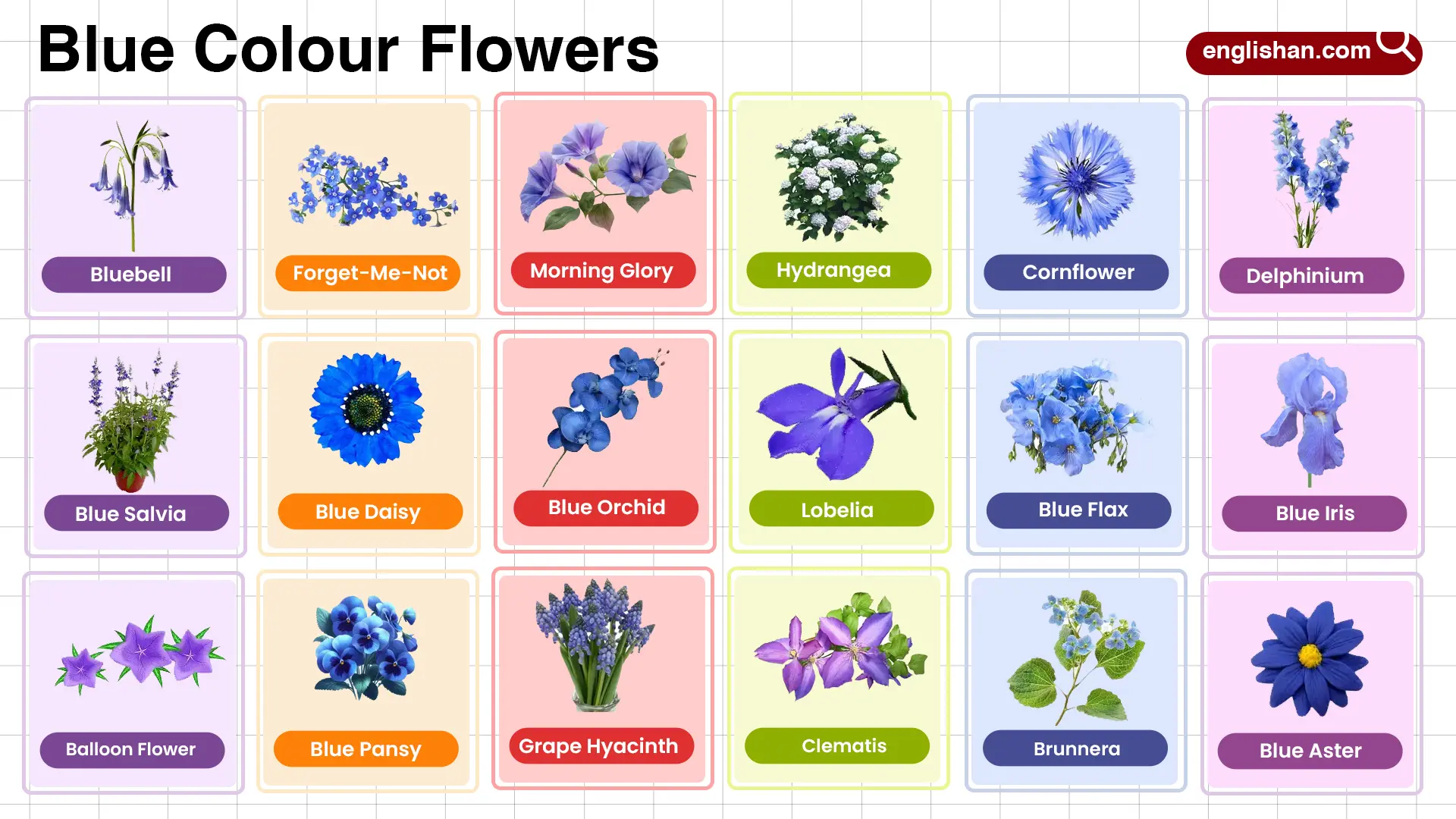
Many flowers bloom in different shades of blue, from pale sky tones to deep navy hues. If you’re ever curious about the blue colour flowers name, some are naturally blue, while others seem that way because of how light reflects on their petals. Names like Delphinium and Cornflower often come up when talking about plants or describing outdoor scenes. The group of blue colour flowers includes seasonal blooms, water-loving plants, and a few rare varieties.
This post helps learners use blue colour flowers in everyday English when describing gardens, seasons, or plants with pictures.
Blue Colour Flowers Name List in English
Below is a complete list of blue colour flowers with their common English names.
- Bluebell
- Forget-Me-Not
- Morning Glory
- Hydrangea
- Cornflower
- Delphinium
- Blue Salvia
- Blue Daisy
- Blue Orchid
- Lobelia
- Blue Flax
- Bachelor’s Button
- Blue Iris
- Balloon Flower
- Blue Pansy
- Grape Hyacinth
- Clematis
- Brunnera
- Blue Aster
- Chicory
What Are Blue Colour Flowers?
Blue flowers are those that bloom with petals in various shades of blue. They can be pale, bold, or rare and are described often in classroom materials, stories, and art activities.
Types of Blue Flowers in Nature
This section gives a simple way to learn about different kinds of blue flowers based on their natural shade or rarity. Below is a list to help understand light, dark, and rare types.
Light Blue Flowers
Light blue flowers are soft and gentle in tone. Below are commonly known names.
- Forget-Me-Not: Tiny blue clusters that stand for love and memory.
- Blue Flax: Spring flower that grows fast and looks lovely.
- Chicory: Roadside flower that opens early in the day.
- Blue Daisy: Light blue petals with a yellow center.
- Blue Aster: Late summer bloom that attracts bees and butterflies.
Dark Blue Flowers
These flowers are darker and more vivid in color. They are often described using words like deep or rich.
- Delphinium: Tall spikes, bold blue, great for back gardens.
- Cornflower: Field flower, deep blue, symbol of hope.
- Balloon Flower: Buds puff up before they bloom.
- Grape Hyacinth: Tiny grape-like blooms in early spring.
- Lobelia: Low-growing flower, perfect for baskets and pots.
Rare Blue Flower Varieties
These flowers are less common and are often used in poems or as rare examples in lessons.
- Blue Orchid: Rare and elegant, often used in special gifts.
- Blue Iris: Tall petals, deep blue, symbol of wisdom in stories.
- Clematis: Climbing plant with eye-catching blue blooms.
- Blue Salvia: Bright spikes that attract bees and hummingbirds.
Common Blue Flowers Names
This section lists blue colour flowers that are often used when teaching basic vocabulary. These examples are good for making simple sentences and descriptions.
Annual Blue Flowers Name
Annuals grow and bloom for one season. These names appear in English learning when talking about short-term plant life.
- Morning Glory: Fast-growing vine with soft blue blooms.
- Cornflower: Bright blue flower from field gardens.
- Blue Pansy: Round petals with deep blue shades.
- Blue Daisy: Yellow center with light blue petals.
- Lobelia: Small dark blue flowers for pots and borders.
Perennial Blue Flowers Name
Perennials bloom every year and are easy to use when talking about nature or gardens in English.
- Bluebell: Spring bloom, bell-shaped, grows in shade.
- Delphinium: Tall spikes, deep blue, summer flower.
- Hydrangea: Big clusters, turn blue in acidic soil.
- Clematis: Climbing plant, bright blue spring blooms.
- Brunnera: Tiny flowers, heart-shaped leaves, loves shade.
Blue Wildflowers by Region
Some blue wildflowers grow in specific areas of the world. This section helps learners talk about location and nature together in English.
List of North American Blue Wildflowers
These are commonly found in fields or open areas in North America.
- Chicory: Light blue flower seen along roadsides.
- Bachelor’s Button: Round, deep blue garden flower.
- Blue Flax: Sky-blue bloom that grows in spring.
- Bluebell: Bell-shaped flower found in shade.
- Balloon Flower: Buds puff up like balloons before opening.
Asian and European Blue Wildflowers
These flowers are often seen in stories, poems, and lessons from European and Asian sources.
- Blue Iris: Tall, deep blue flower in stories.
- Forget-Me-Not: Tiny blue flower for memory and love.
- Cornflower: Bold blue bloom from European fields.
- Grape Hyacinth: Grape-shaped flower that blooms in spring.
- Blue Aster: Soft blue petals that attract bees.
Blue Flowers That Grow in Water
Some blue flowers prefer wet places or shallow water. This section lists names of flowers found near lakes or ponds, often used in nature descriptions.
- Lobelia
- Blue Iris
- Water Forget-Me-Not
- Pickerelweed
Conclusion
Knowing blue colour flowers names in English helps describe nature, seasons, and emotions clearly. These words often appear in stories and learning tasks. Use this list to build vocabulary and talk about blue flowers confidently with pictures and examples.
FAQs on Blue Colour Flowers
Naturally blue flowers include Bluebell, Cornflower, Delphinium, and Blue Flax. These grow without any artificial coloring.
Blue pigment is uncommon in plants. Many flowers appear blue due to light reflection rather than true blue pigments.
Delphinium, Hydrangea, and Lobelia are popular garden flowers with blue blooms, known for their vibrant color.
You May Also Like