When writing about the camel, it’s important to understand how this animal survives in harsh desert conditions and helps people in dry regions. This essay on the camel explains its special body parts, daily uses, importance to desert life, and role in transportation. It’s written in 500 words to help students with homework or exams. You can download this camel essay as a free PDF or image to study or print.
10 Lines Camel Essay for Class 2 to Class 5
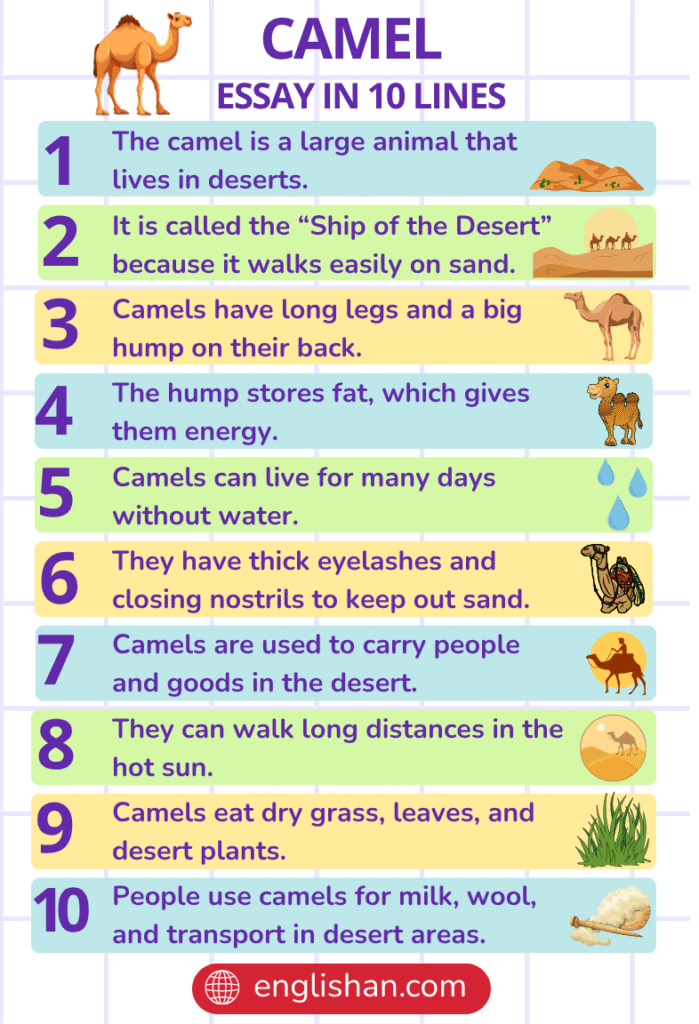
- The camel is a large animal that lives in deserts.
- It is called the “Ship of the Desert” because it walks easily on sand.
- Camels have long legs and a big hump on their back.
- The hump stores fat, which gives them energy.
- Camels can live for many days without water.
- They have thick eyelashes and closing nostrils to keep out sand.
- Camels are used to carry people and goods in the desert.
- They can walk long distances in the hot sun.
- Camels eat dry grass, leaves, and desert plants.
- People use camels for milk, wool, and transport in desert areas.
250 Words Essay on Camel for Middle School
The camel is a strong and useful animal that is best known for living in the desert. It is often called the “Ship of the Desert” because it can travel long distances across hot, sandy areas with ease. Camels are well adapted to desert life with features that help them survive in dry and hot climates.
A camel has a long neck, long legs, and a hump on its back. The hump does not hold water, but it stores fat, which gives the camel energy when food and water are not available. Camels can live for several days without water and can drink a lot of water at once when they find it.
Camels have thick eyelashes, hairy ears, and the ability to close their nostrils to protect themselves from blowing sand. Their wide, padded feet help them walk easily on soft desert sand. Camels are slow-moving animals, but they can travel for long hours without getting tired.
People in desert regions use camels for transportation, carrying loads, and riding. They also get milk, wool, and sometimes even meat from camels. In some countries, camel racing is a traditional sport.
The camel plays an important role in the lives of people who live in desert areas. It is a symbol of patience, strength, and survival. Because of its special body parts and hardworking nature, the camel is one of the most respected animals in the desert.
500 Words Camel Essay for Upper Primary and Lower Secondary
Physical Characteristics of Camels
Camels are large, strong mammals with long legs and a distinctive hump on their back. They are well-adapted to desert life, with thick eyelashes and closable nostrils that protect them from sandstorms. Their broad, padded feet prevent them from sinking into the sand. The two main species are the dromedary camel, which has one hump, and the Bactrian camel, which has two humps.
Adaptations for Survival
Camels possess remarkable adaptations that help them thrive in extreme conditions. Their humps store fat, which provides energy when food is scarce. They can survive without water for long periods, as their bodies efficiently retain moisture. Additionally, camels can drink large amounts of water quickly when it becomes available. Their thick fur insulates them from the heat during the day and keeps them warm at night. Camels also have uniquely shaped blood cells that allow them to retain water more effectively.
Role in Human Life
For centuries, camels have been vital to human civilization. They have been used for transportation, carrying goods across deserts in trade routes such as the Silk Road. Many communities rely on camels for their milk, meat, and even wool. Camel milk is highly nutritious and an essential source of sustenance in arid regions. In some cultures, camels are also part of traditional celebrations and races.
Camels in Modern Times
Although modern technology has replaced camels in many industries, they are still valuable in certain regions. In remote desert areas, camels remain an important mode of transport. They are also used in tourism, where visitors enjoy camel rides in desert safaris. Additionally, scientific studies continue to explore the medicinal benefits of camel milk, which has gained popularity for its potential health benefits.
Camels and Their Diet
Camels have a unique diet that allows them to survive in harsh environments. They eat a variety of desert plants, including dry grass, thorny bushes, and salty vegetation. Their tough mouths and specialized digestive systems enable them to consume food that other animals cannot digest.
Camels and Water Consumption
One of the most remarkable features of camels is their ability to go without water for extended periods. When they do drink, they can consume up to 40 gallons of water in one sitting. Their bodies are designed to retain water efficiently, reducing the need for frequent hydration.
Importance of Camels in Desert Ecosystems
Camels play an important role in maintaining the balance of desert ecosystems. By grazing on vegetation, they help prevent overgrowth and promote plant diversity. Additionally, their movement across the land helps in seed dispersal, contributing to the growth of new plants.
Cultural and Religious Significance of Camels
In many cultures and religions, camels hold special significance. In Islamic traditions, camels are mentioned in religious texts and were historically used for trade and pilgrimage. They are also symbols of endurance, patience, and strength in various folklore and stories.
Conservation Efforts for Camels
Despite their resilience, some species of camels face threats due to habitat loss and overexploitation. Conservation organizations, such as the Wild Camel Protection Foundation, are working to protect wild camels, such as the critically endangered Bactrian camel, through habitat preservation and breeding programs.
Conclusion
Camels are extraordinary animals that have supported human life for thousands of years. Their unique adaptations make them perfect for desert environments, and they continue to play an important role in various cultures and industries. Understanding their significance helps us appreciate their resilience and contribution to human civilization.

Difficult Words Used in 500 Camel Essay
| Word | Meaning |
|---|---|
| Adaptations | Special changes that help animals survive in their environment. |
| Arid | Very dry, having little rain. |
| Civilization | A society with a developed culture and way of life. |
| Insulates | Protects from heat or cold. |
| Nutritional | Related to providing necessary food for health. |
| Exploitation | The use of something in an unfair or harmful way. |
| Sustenance | Food or drink needed to stay alive. |
Camel Essay PDF
You May Also Like