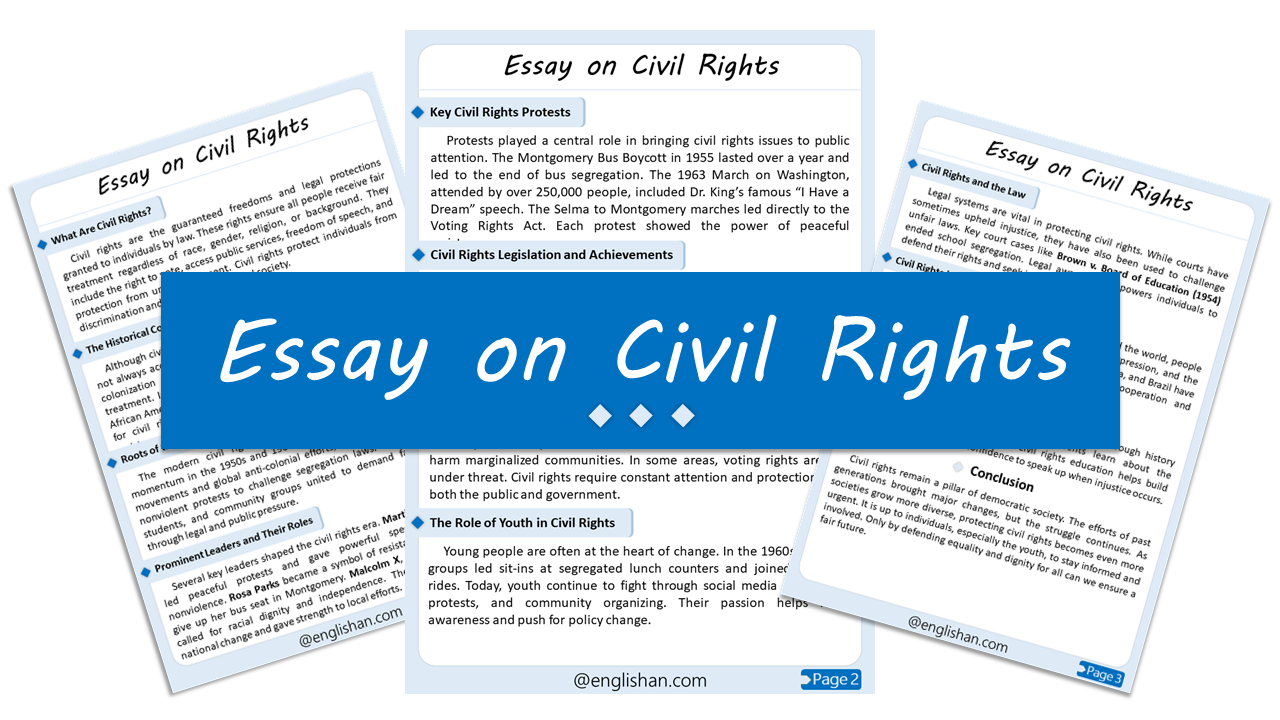
When writing about civil rights, it’s important to understand how people work to ensure fairness, equality, and justice for all. This essay on civil rights explains what they are, why they matter, key historical events, and the role of leaders like Martin Luther King Jr. It’s written in 500 words to help students with homework or exams. You can download this civil rights essay as a free PDF or image to study or print.
10 Lines Civil Rights Essay for Class 2 to Class 5
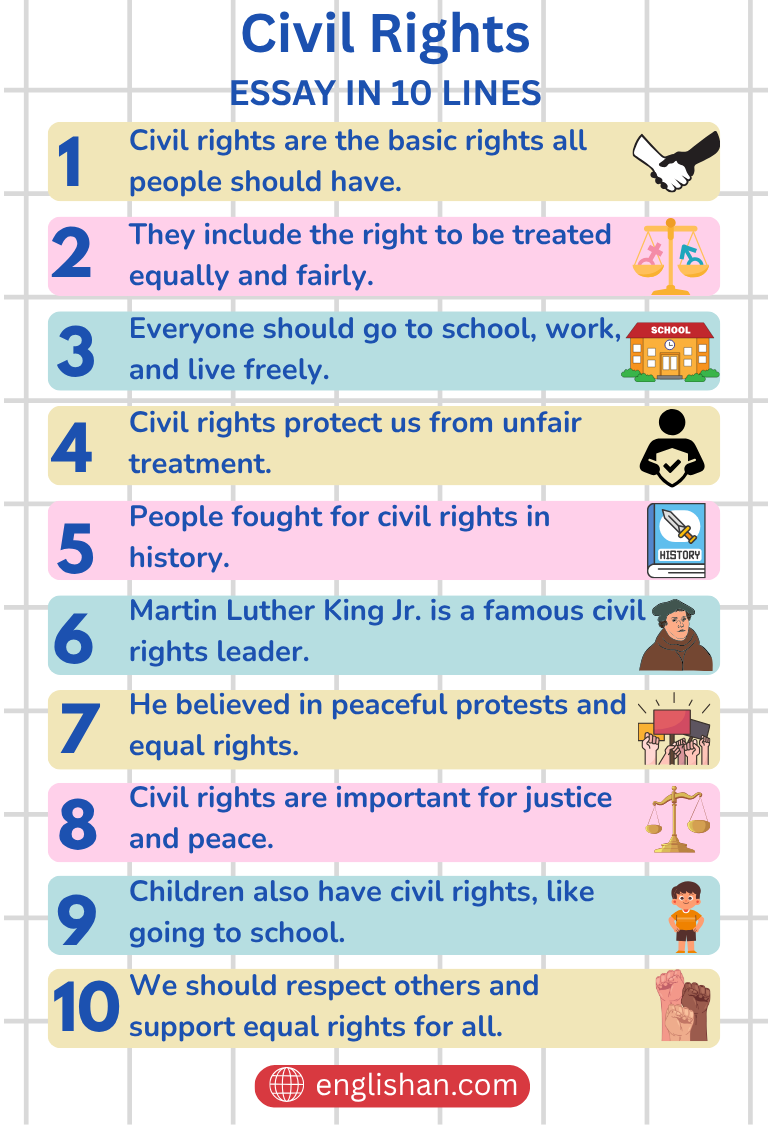
- Civil rights are the basic rights all people should have.
- They include the right to be treated equally and fairly.
- Everyone should go to school, work, and live freely.
- Civil rights protect us from unfair treatment.
- People fought for civil rights in history.
- Martin Luther King Jr. is a famous civil rights leader.
- He believed in peaceful protests and equal rights.
- Civil rights are important for justice and peace.
- Children also have civil rights, like going to school.
- We should respect others and support equal rights for all.
250 Words Essay on Civil Rights for Middle School
Civil rights are the rights that every person has, no matter their race, religion, gender, or background. These rights include the right to vote, go to school, get a job, and be treated equally in society. Civil rights help protect people from unfair treatment and make sure everyone has the chance to live a good life.
In history, many people were denied their civil rights, especially African Americans. They were treated unfairly and kept out of schools, jobs, and public places. Leaders like Martin Luther King Jr. worked hard to fight for civil rights. He gave speeches, led marches, and believed in peaceful protests. His work helped bring big changes in laws so that everyone could have equal rights.
Civil rights are still important today. Some people still face unfair treatment because of who they are. That’s why it is important to learn about civil rights and speak up when we see something wrong.
Every child also has rights to education, safety, and freedom from harm. These rights help children grow and learn in a good environment.
In conclusion, civil rights help build a fair and equal world. We should all respect one another and make sure no one is left out. When we understand civil rights, we can help create a better society for everyone.
500 Words Civil Rights Essay for Upper Primary and Lower Secondary
What Are Civil Rights?
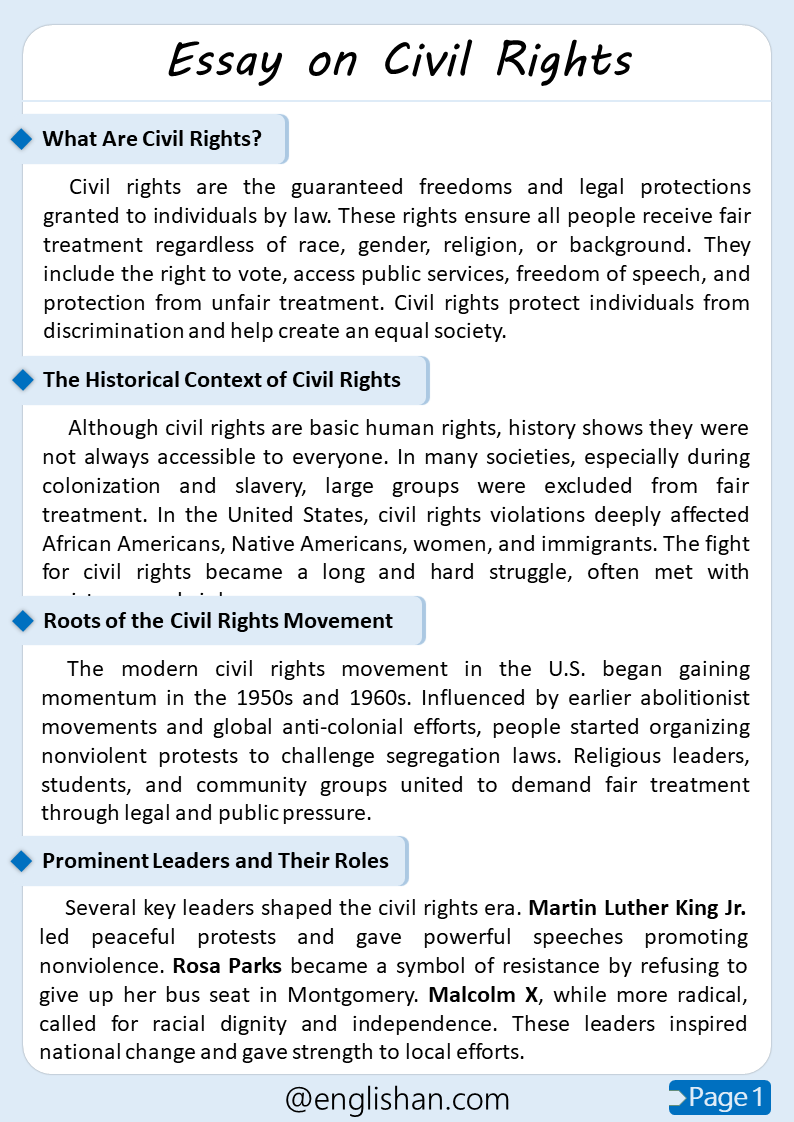
Civil rights are the guaranteed freedoms and legal protections granted to individuals by law. These rights ensure all people receive fair treatment regardless of race, gender, religion, or background. They include the right to vote, access public services, freedom of speech, and protection from unfair treatment. Civil rights protect individuals from discrimination and help create an equal society.
The Historical Context of Civil Rights
Although civil rights are basic human rights, history shows they were not always accessible to everyone. In many societies, especially during colonization and slavery, large groups were excluded from fair treatment. In the United States, civil rights violations deeply affected African Americans, Native Americans, women, and immigrants. The fight for civil rights became a long and hard struggle, often met with resistance and violence.
Roots of the Civil Rights Movement
The modern civil rights movement in the U.S. began gaining momentum in the 1950s and 1960s. Influenced by earlier abolitionist movements and global anti-colonial efforts, people started organizing nonviolent protests to challenge segregation laws. Religious leaders, students, and community groups united to demand fair treatment through legal and public pressure.
Prominent Leaders and Their Roles
Several key leaders shaped the civil rights era. Martin Luther King Jr. led peaceful protests and gave powerful speeches promoting nonviolence. Rosa Parks became a symbol of resistance by refusing to give up her bus seat in Montgomery. Malcolm X, while more radical, called for racial dignity and independence. These leaders inspired national change and gave strength to local efforts.
Key Civil Rights Protests
Protests played a central role in bringing civil rights issues to public attention. The Montgomery Bus Boycott in 1955 lasted over a year and led to the end of bus segregation. The 1963 March on Washington, attended by over 250,000 people, included Dr. King’s famous “I Have a Dream” speech. The Selma to Montgomery marches led directly to the Voting Rights Act. Each protest showed the power of peaceful resistance.
Civil Rights Legislation and Achievements
The movement’s efforts resulted in major legal changes. The Civil Rights Act of 1964 banned segregation in public places and discrimination in employment. The Voting Rights Act of 1965 removed barriers like literacy tests that prevented minorities from voting. These laws were major victories, improving lives and expanding democratic participation.
Challenges that Persist Today
Despite progress, civil rights challenges remain. Racial profiling, police brutality, and unequal access to healthcare and education continue to harm marginalized communities. In some areas, voting rights are still under threat. Civil rights require constant attention and protection from both the public and government.
The Role of Youth in Civil Rights
Young people are often at the heart of change. In the 1960s, student groups led sit-ins at segregated lunch counters and joined freedom rides. Today, youth continue to fight through social media campaigns, protests, and community organizing. Their passion helps raise awareness and push for policy change.
Civil Rights and the Law
Legal systems are vital in protecting civil rights. While courts have sometimes upheld injustice, they have also been used to challenge unfair laws. Key court cases like Brown v. Board of Education (1954) ended school segregation. Legal awareness empowers individuals to defend their rights and seek justice.
Civil Rights in a Global Context
Civil rights are not only an American issue. Around the world, people continue to fight for gender equality, freedom of expression, and the right to education. Countries such as South Africa, India, and Brazil have had major civil rights movements. International cooperation and pressure can support global human rights causes.
Education’s Role in Civil Rights Awareness
Schools are powerful places to teach civil rights. Through history lessons, literature, and social studies, students learn about the importance of fairness and justice. Civil rights education helps build empathy, respect, and the confidence to speak up when injustice occurs.
Conclusion of Civil Rights Essay
Civil rights remain a pillar of democratic society. The efforts of past generations brought major changes, but the struggle continues. As societies grow more diverse, protecting civil rights becomes even more urgent. It is up to individuals, especially the youth, to stay informed and involved. Only by defending equality and dignity for all can we ensure a fair future.
Difficult Words Used in 500 Civil Rights Essay
| Word | Meaning |
|---|---|
| Discrimination | Unfair treatment based on identity such as race, gender, or religion |
| Segregation | The separation of people by race, gender, or other differences |
| Legislation | Laws passed by a government or authority |
| Oppression | Unjust and cruel control over others |
| Marginalized | Treated as insignificant or less important |
| Protests | Public actions showing disagreement with policies or injustices |
| Resistance | Opposition or refusal to accept something unjust |
| Empower | To give someone the ability or confidence to act |
| Inequality | A lack of fairness or equal treatment |
| Abolitionist | A person who works to end slavery or other forms of injustice |
Civil Rights Essay PDF
You May Also Like