When writing about cleanliness, it’s important to understand how staying clean keeps us healthy, safe, and happy. This essay on cleanliness explains personal hygiene, clean surroundings, good habits, and the role of cleanliness in daily life. It’s written in 500 words to help students with homework or exams. You can download this cleanliness essay as a free PDF or image to study or print.
10 Lines Cleanliness Essay for Class 2 to Class 5
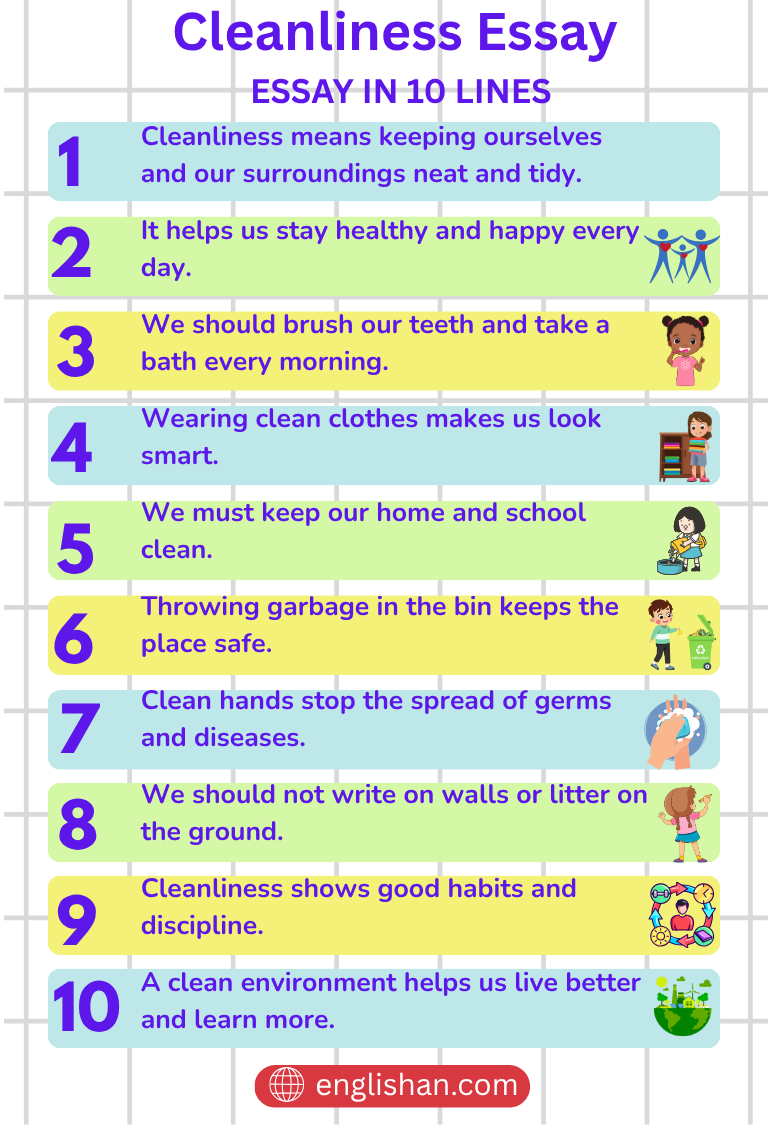
- Cleanliness means keeping ourselves and our surroundings neat and tidy.
- It helps us stay healthy and happy every day.
- We should brush our teeth and take a bath every morning.
- Wearing clean clothes makes us look smart.
- We must keep our home and school clean.
- Throwing garbage in the bin keeps the place safe.
- Clean hands stop the spread of germs and diseases.
- We should not write on walls or litter on the ground.
- Cleanliness shows good habits and discipline.
- A clean environment helps us live better and learn more.
250 Words Essay on Cleanliness for Middle School
Cleanliness means keeping ourselves and the environment around us clean and neat. It is an important habit that helps us stay healthy, look presentable, and feel good. Cleanliness protects us from germs, diseases, and bad smells. When we stay clean, we feel fresh and confident.
We should begin cleanliness from our own bodies by bathing daily, brushing our teeth, and wearing clean clothes. Clean hands, trimmed nails, and tidy hair are also signs of personal cleanliness. But that is not enough—we must also keep our homes, schools, and public places clean.
Clean surroundings help us live in a safe and pleasant environment. Throwing waste in dustbins, not spitting on roads, and not writing on walls are good habits. Cleaning classrooms, desks, and schoolyards shows responsibility and care for shared spaces. In public places, cleanliness shows respect for others.
Cleanliness is also linked to discipline. People who keep their things organized are often more focused and successful. At school, cleanliness helps us concentrate better and feel more comfortable. It also teaches us teamwork when we clean our surroundings together.
In conclusion, cleanliness is not just a habit but a way of life. It keeps us healthy, shows respect for others, and builds a better society. Every child must learn to be clean and spread the message of cleanliness at home, school, and everywhere they go.
500 Words Cleanliness Essay for Upper Primary and Lower Secondary
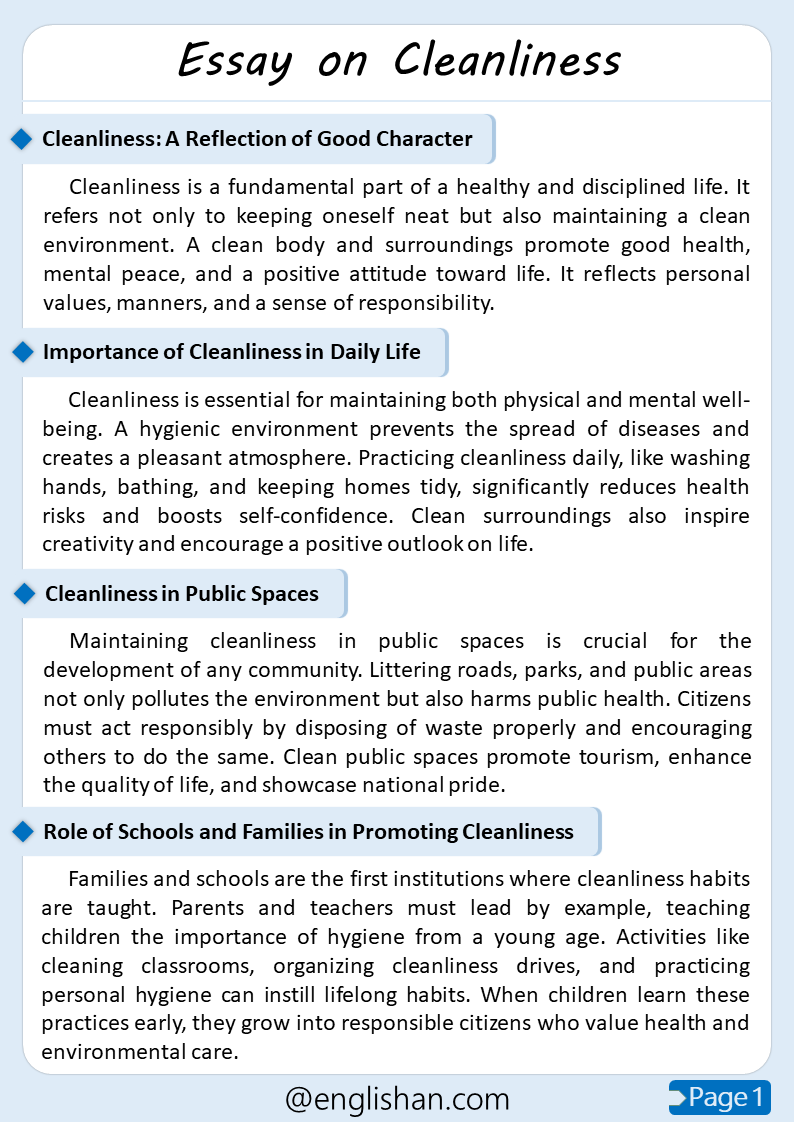
Cleanliness: A Reflection of Good Character
Cleanliness is a fundamental part of a healthy and disciplined life. It refers not only to keeping oneself neat but also maintaining a clean environment. A clean body and surroundings promote good health, mental peace, and a positive attitude toward life. It reflects personal values, manners, and a sense of responsibility.
Importance of Cleanliness in Daily Life
Cleanliness is essential for maintaining both physical and mental well-being. A hygienic environment prevents the spread of diseases and creates a pleasant atmosphere. Practicing cleanliness daily, like washing hands, bathing, and keeping homes tidy, significantly reduces health risks and boosts self-confidence. Clean surroundings also inspire creativity and encourage a positive outlook on life.
Cleanliness in Public Spaces
Maintaining cleanliness in public spaces is crucial for the development of any community. Littering roads, parks, and public areas not only pollutes the environment but also harms public health. Citizens must act responsibly by disposing of waste properly and encouraging others to do the same. Clean public spaces promote tourism, enhance the quality of life, and showcase national pride.
Role of Schools and Families in Promoting Cleanliness
Families and schools are the first institutions where cleanliness habits are taught. Parents and teachers must lead by example, teaching children the importance of hygiene from a young age. Activities like cleaning classrooms, organizing cleanliness drives, and practicing personal hygiene can instill lifelong habits. When children learn these practices early, they grow into responsible citizens who value health and environmental care.
Government Initiatives for Cleanliness
Governments worldwide recognize the importance of cleanliness and launch initiatives to encourage it. Campaigns like ‘Swachh Bharat Abhiyan’ in India aim to promote hygiene, build sanitation infrastructure, and spread awareness among citizens. These programs remind individuals that maintaining cleanliness is a shared responsibility and requires active participation from all members of society.
Connection Between Cleanliness and Health
There is a strong relationship between cleanliness and overall health. Good hygiene habits, such as washing hands and keeping surroundings clean, prevent infections and reduce the risk of serious illnesses. Maintaining personal cleanliness protects the body from harmful bacteria and viruses, leading to a stronger immune system. A healthy individual contributes positively to a healthier community.
Environmental Impact of Cleanliness
Cleanliness directly impacts the environment. Proper waste management, recycling, and clean living spaces help reduce pollution. A clean environment supports biodiversity, conserves natural resources, and ensures that future generations inherit a healthier planet. As citizens, we must take responsibility for our waste and act sustainably to protect nature.
Cleanliness and Mental Well-being
Cleanliness also affects mental health. Living in a clean, organized space can lower stress levels, improve focus, and create a sense of calm. Cluttered and dirty surroundings often lead to anxiety and decreased productivity, showing that cleanliness is crucial for emotional balance. A tidy environment promotes positive thinking and overall mental well-being.
Challenges in Maintaining Cleanliness
Despite its importance, maintaining cleanliness faces challenges such as public negligence, lack of resources, and poor awareness. Addressing these issues requires community cooperation, stronger policies, and continuous education about hygiene practices. Citizens need to work together to overcome these barriers and maintain a clean environment.
Personal Responsibility Towards Cleanliness
Cleanliness begins with personal responsibility. Each individual must adopt simple practices like proper waste disposal, regular cleaning, and promoting hygiene habits among peers. When individuals act responsibly, society benefits collectively, leading to a cleaner and healthier environment. Our actions, no matter how small, make a significant impact on the world around us.
Conclusion
Cleanliness is more than a personal habit; it is a social duty. It plays a crucial role in building a healthy, prosperous, and respectful society. Every individual must contribute by maintaining personal hygiene and keeping their environment clean. By practicing cleanliness daily, we help create a world that is healthier, happier, and more beautiful for future generations.
Difficult Words Used in 500 Cleanliness Essay
| Word | Meaning |
|---|---|
| Hygiene | Conditions or practices conducive to maintaining health and preventing disease |
| Infrastructure | The basic physical systems of a place (e.g., roads, sanitation) |
| Responsibility | The duty to deal with something or take care of someone |
| Discipline | The practice of training oneself to follow rules or a code of behavior |
| Initiative | An action taken to solve a problem or improve a situation |
| Prosperous | Successful, usually by earning a lot of money or achieving well-being |
| Biodiversity | The variety of plant and animal life in a particular habitat |
| Negligence | Failure to take proper care in doing something |
| Productivity | The rate at which tasks are completed or goods are produced |
Cleanliness Essay PDF
You May Also Like