
When writing about floods, it’s important to understand how too much water can overflow onto land and cause serious damage. This essay on floods explains the main causes, harmful effects, and simple safety tips to stay protected. It’s written in 500 words to help students with homework or exams. You can download this flood essay as a free PDF or image to study or print.
10 Lines Flood Essay for Class 2 to Class 5
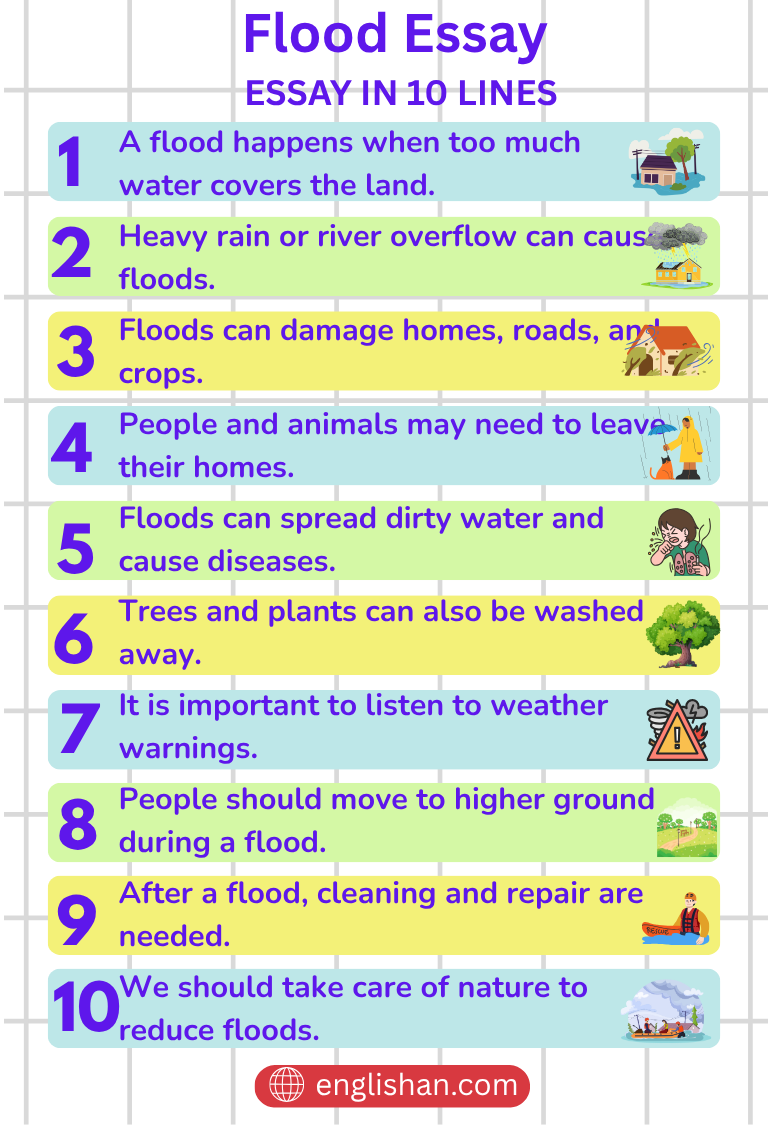
- A flood happens when too much water covers the land.
- Heavy rain or river overflow can cause floods.
- Floods can damage homes, roads, and crops.
- People and animals may need to leave their homes.
- Floods can spread dirty water and cause diseases.
- Trees and plants can also be washed away.
- It is important to listen to weather warnings.
- People should move to higher ground during a flood.
- After a flood, cleaning and repair are needed.
- We should take care of nature to reduce floods.
250 Words Essay on Flood for Middle School
A flood is a natural disaster that occurs when water overflows and covers land that is usually dry. Floods often happen because of heavy rainfall, river overflow, melting snow, or poor drainage systems. They can cause serious damage to houses, roads, farms, and buildings.
When a flood occurs, people may have to leave their homes and move to safer places. Floodwater can carry mud, waste, and harmful germs, which can lead to the spread of diseases. Floods also destroy crops and harm animals. The electricity supply may be cut off, and clean drinking water becomes hard to find.
To stay safe during a flood, it is important to listen to weather reports and warnings. People living in flood-prone areas should be prepared and know where to go in an emergency. Moving to higher ground is one of the best ways to avoid danger. After the flood, families must clean their homes and check for damage.
Some floods are caused by human actions such as cutting down too many trees and blocking natural water paths. Planting more trees and keeping rivers and drains clean can help prevent floods. Building dams and proper drainage systems can also reduce flood damage.
In conclusion, floods can be dangerous and cause great harm. But with proper care, preparation, and respect for nature, we can reduce the risks and keep ourselves safe.
500 Words Flood Essay for Upper Primary and Lower Secondary
Understanding Floods: Causes, Effects, and Solutions
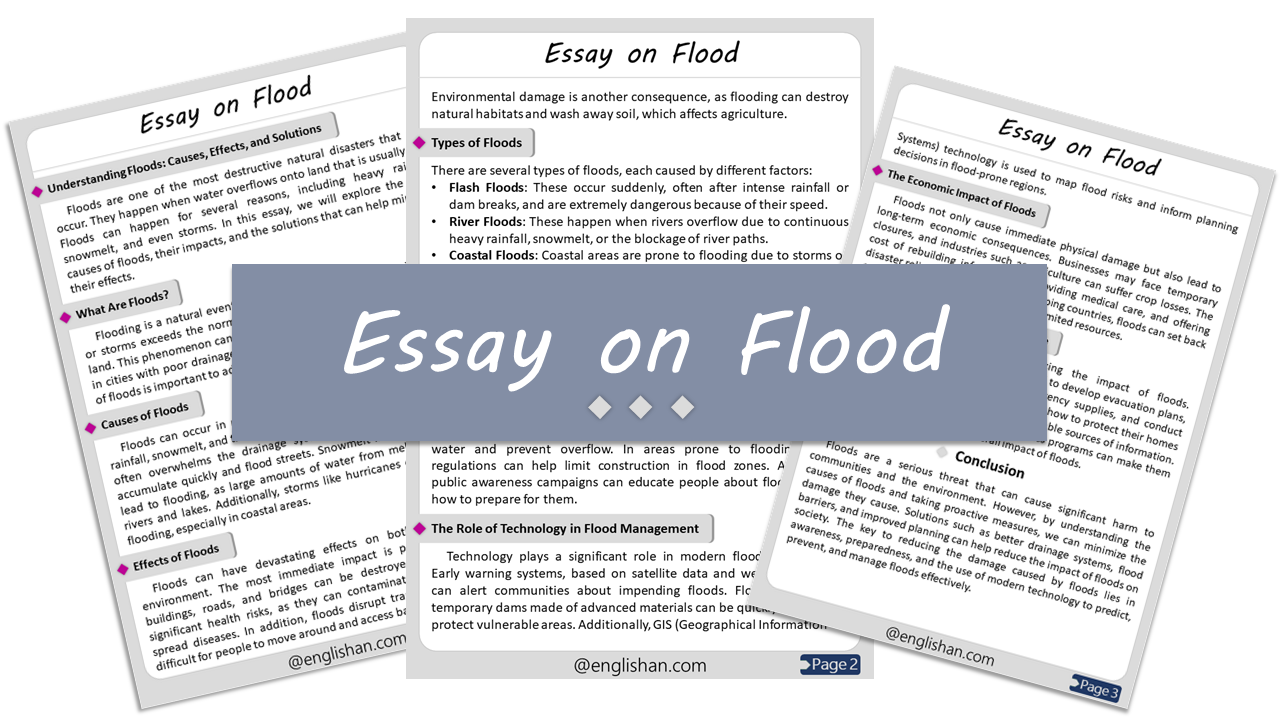
Floods are one of the most destructive natural disasters that can occur. They happen when water overflows onto land that is usually dry. Floods can happen for several reasons, including heavy rainfall, snowmelt, and even storms. In this essay, we will explore the main causes of floods, their impacts, and the solutions that can help minimize their effects.
What Are Floods?
Flooding is a natural event that occurs when water from rain, rivers, or storms exceeds the normal flow limits and covers the surrounding land. This phenomenon can occur in coastal areas, along rivers, or even in cities with poor drainage systems. Understanding the different types of floods is important to address the specific challenges they present.
Causes of Floods
Floods can occur in many ways, but the primary causes are heavy rainfall, snowmelt, and the overflow of rivers and streams. Heavy rainfall often overwhelms the drainage systems in cities, causing water to accumulate quickly and flood streets. Snowmelt in the spring can also lead to flooding, as large amounts of water from melting snow enter rivers and lakes. Additionally, storms like hurricanes can cause severe flooding, especially in coastal areas.
Effects of Floods
Floods can have devastating effects on both people and the environment. The most immediate impact is property damage, as buildings, roads, and bridges can be destroyed. Floods also pose significant health risks, as they can contaminate drinking water and spread diseases. In addition, floods disrupt transportation, making it difficult for people to move around and access basic services. Environmental damage is another consequence, as flooding can destroy natural habitats and wash away soil, which affects agriculture.
Types of Floods
There are several types of floods, each caused by different factors:
- Flash Floods: These occur suddenly, often after intense rainfall or dam breaks, and are extremely dangerous because of their speed.
- River Floods: These happen when rivers overflow due to continuous heavy rainfall, snowmelt, or the blockage of river paths.
- Coastal Floods: Coastal areas are prone to flooding due to storms or rising sea levels. These floods can cause significant damage to coastal communities.
- Urban Floods: These occur in cities with poor drainage systems, often triggered by heavy rains or storms.
Solutions to Prevent Flooding
To reduce the damage caused by floods, many solutions can be implemented. One important solution is the construction of better drainage systems in cities to ensure that rainwater can flow away quickly. Governments can also build dams and levees to control river water and prevent overflow. In areas prone to flooding, zoning regulations can help limit construction in flood zones. Additionally, public awareness campaigns can educate people about flood risks and how to prepare for them.
The Role of Technology in Flood Management
Technology plays a significant role in modern flood management. Early warning systems, based on satellite data and weather forecasts, can alert communities about impending floods. Flood barriers and temporary dams made of advanced materials can be quickly deployed to protect vulnerable areas. Additionally, GIS (Geographical Information Systems) technology is used to map flood risks and inform planning decisions in flood-prone regions.
The Economic Impact of Floods
Floods not only cause immediate physical damage but also lead to long-term economic consequences. Businesses may face temporary closures, and industries such as agriculture can suffer crop losses. The cost of rebuilding infrastructure, providing medical care, and offering disaster relief is significant. For developing countries, floods can set back economic progress and strain already limited resources.
Preparedness and Community Response
Preparedness is essential in reducing the impact of floods. Governments and local communities need to develop evacuation plans, ensure that people have access to emergency supplies, and conduct regular flood drills. Individuals should know how to protect their homes and property and stay informed through reliable sources of information. Involving communities in flood preparedness programs can make them more resilient and reduce the overall impact of floods.
Conclusion
Floods are a serious threat that can cause significant harm to communities and the environment. However, by understanding the causes of floods and taking proactive measures, we can minimize the damage they cause. Solutions such as better drainage systems, flood barriers, and improved planning can help reduce the impact of floods on society. The key to reducing the damage caused by floods lies in awareness, preparedness, and the use of modern technology to predict, prevent, and manage floods effectively.

Difficult Words Used in 500 Flood Essay
| Word | Meaning |
|---|---|
| Overflows | When water spills over from its usual boundary, like a river or lake. |
| Drainage | The system of removing excess water from land, often through pipes. |
| Contaminate | To make something impure or unsafe by adding harmful substances. |
| Zoning | The process of dividing land into areas with different uses, such as residential or industrial. |
| Levees | Barriers built to prevent water from overflowing onto land. |
| Flash Flood | A sudden and severe flood that occurs within six hours of a heavy rainfall or other cause. |
| GIS | A system that helps map and analyze data about geographic locations and flood risks. |
Flood Essay PDF
You May Also Like