When writing about how to eradicate corruption, it’s important to understand the causes, effects, and solutions to this social problem. This essay on eradicating corruption explains its impact on society, common forms, and practical steps to reduce it. It’s written in 500 words to help students with homework or exams. You can download this corruption essay as a free PDF or image to study or print.
10 Lines How to Eradicate Corruption Essay for Class 2 to Class 5
- Corruption means doing wrong things for money or power.
- It harms people and slows down progress.
- Corruption can happen in schools, offices, or governments.
- Honest people help stop corruption.
- Good rules and strong laws reduce corruption.
- Teachers should teach children to be honest.
- People should not give bribes to get work done.
- Using technology can make systems more fair.
- Everyone must work together to end corruption.
- A clean and honest country is good for all.

250 Words Essay on How to Eradicate Corruption for Middle School
Corruption is when people use their power, money, or position to do wrong things for personal gain. It affects schools, offices, hospitals, and governments, and it hurts the progress of a country. To build a fair and strong nation, it is important to stop corruption.
The first step in eradicating corruption is to teach honesty from a young age. Schools and parents should help children understand the value of truth and fairness. People should avoid giving or taking bribes in any situation. If everyone follows the rules, corruption can be reduced.
Laws and punishments should be strong and clear. When corrupt people are punished, others will be afraid to do wrong. Governments must make systems more open and transparent, so that cheating becomes harder. Using technology like online payments and digital records can also prevent corruption.
Citizens must also be responsible. If someone sees corruption, they should report it. Honest leaders, police, and officials should be praised and supported. Media and newspapers can also help by showing the truth.
In conclusion, corruption is a serious problem, but we can stop it with honesty, education, and strong laws. Everyone children and adults has a role to play. A corruption-free society will be fair, peaceful, and successful for all.
500 Words How to Eradicate Corruption Essay for Upper Primary and Lower Secondary
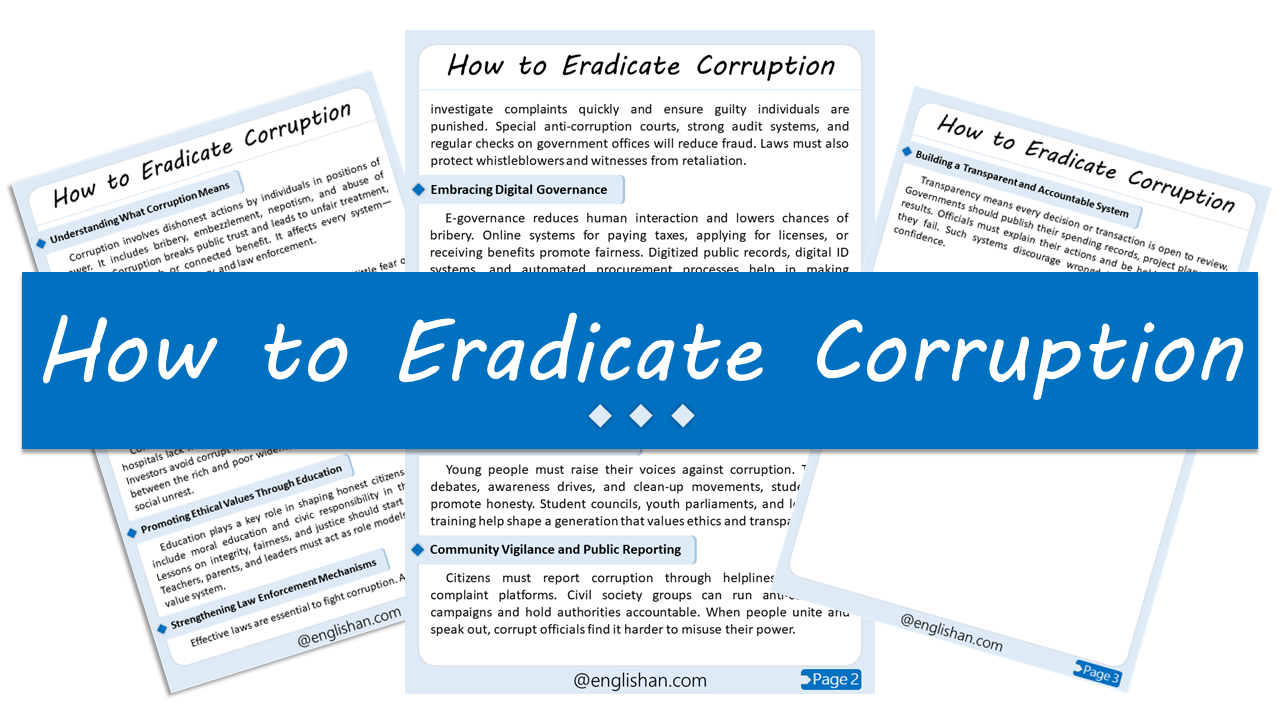
Understanding What Corruption Means
Corruption involves dishonest actions by individuals in positions of power. It includes bribery, embezzlement, nepotism, and abuse of authority. Corruption breaks public trust and leads to unfair treatment, where only the rich or connected benefit. It affects every system—education, healthcare, judiciary, and law enforcement.
Factors That Support Corruption
Corruption flourishes when there is weak oversight and little fear of punishment. Low salaries in public service, poor transparency, and lack of accountability encourage unethical behavior. When citizens feel they must bribe officials to access their rights, corruption becomes a cycle that repeats.
How Corruption Affects Society
Corruption limits access to basic services. Roads remain incomplete, hospitals lack medicines, and students don’t receive proper education. Investors avoid corrupt nations, leading to economic instability. The gap between the rich and poor widens, creating frustration, inequality, and social unrest.
Promoting Ethical Values Through Education
Education plays a key role in shaping honest citizens. Schools must include moral education and civic responsibility in their curriculum. Lessons on integrity, fairness, and justice should start at an early age. Teachers, parents, and leaders must act as role models to build a strong value system.
Strengthening Law Enforcement Mechanisms
Effective laws are essential to fight corruption. Authorities must investigate complaints quickly and ensure guilty individuals are punished. Special anti-corruption courts, strong audit systems, and regular checks on government offices will reduce fraud. Laws must also protect whistleblowers and witnesses from retaliation.
Embracing Digital Governance
E-governance reduces human interaction and lowers chances of bribery. Online systems for paying taxes, applying for licenses, or receiving benefits promote fairness. Digitized public records, digital ID systems, and automated procurement processes help in making administration more accountable and traceable.
Empowering Media and Investigative Journalism
A free press acts as the eyes and ears of the public. Media should report corruption cases without fear or pressure. Investigative journalism uncovers hidden scams and puts pressure on the government to take action. Social media can also be a tool for public awareness and protest.
The Power of Youth Participation
Young people must raise their voices against corruption. Through debates, awareness drives, and clean-up movements, students can promote honesty. Student councils, youth parliaments, and leadership training help shape a generation that values ethics and transparency.
Community Vigilance and Public Reporting
Citizens must report corruption through helplines or official complaint platforms. Civil society groups can run anti-corruption campaigns and hold authorities accountable. When people unite and speak out, corrupt officials find it harder to misuse their power.
Building a Transparent and Accountable System
Transparency means every decision or transaction is open to review. Governments should publish their spending records, project plans, and results. Officials must explain their actions and be held responsible if they fail. Such systems discourage wrongdoing and increase public confidence.
Conclusion
Corruption cannot be defeated by laws alone. It needs the cooperation of honest citizens, strong institutions, active media, and responsible leadership. By promoting ethics, embracing technology, and demanding accountability, we can build a fair and just society. Everyone has a role in shaping a corruption-free future.

Difficult Words Used in 500 How to Eradicate Corruption Essay
| Word | Meaning |
|---|---|
| Eradicate | To completely remove or eliminate something harmful |
| Embezzlement | Theft or misuse of public money or resources by someone in authority |
| Nepotism | Giving unfair advantages to relatives or friends in job positions |
| Oversight | Failing to notice or regulate something important |
| Accountability | Being responsible and answerable for actions taken |
| Whistleblower | A person who informs authorities about illegal or unethical activity |
| E-governance | Using technology to provide government services and improve efficiency |
| Procurement | The act of obtaining goods or services, often by the government |
| Retaliation | Punishment or revenge for speaking out or taking action |
| Transparency | Making actions and decisions open and clear to the public |
| Vigilance | Careful watching to detect danger or wrongdoing |
| Integrity | Being honest and having strong moral principles |
| Civic | Relating to the duties and rights of citizens |
How to Eradicate Corruption Essay PDF
You May Also Like