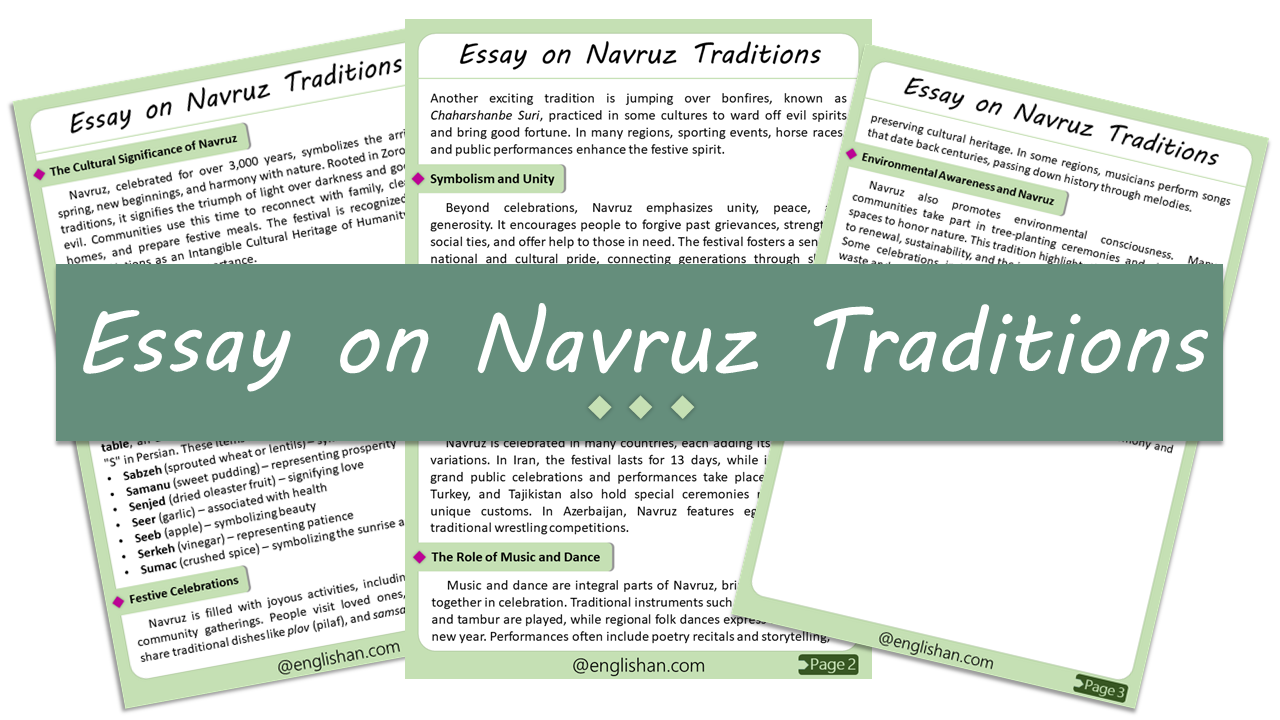
When writing about Navruz traditions, it’s important to understand how people celebrate the new year with customs that bring hope and happiness. This essay on Navruz explains the key traditions, special foods, cultural activities, and the meaning behind the festival. It’s written in 250 words to help middle school students with homework or exams. You can download this Navruz traditions essay as a free PDF or image to study or print.
10 Lines Navruz Traditions Essay for Class 2 to Class 5
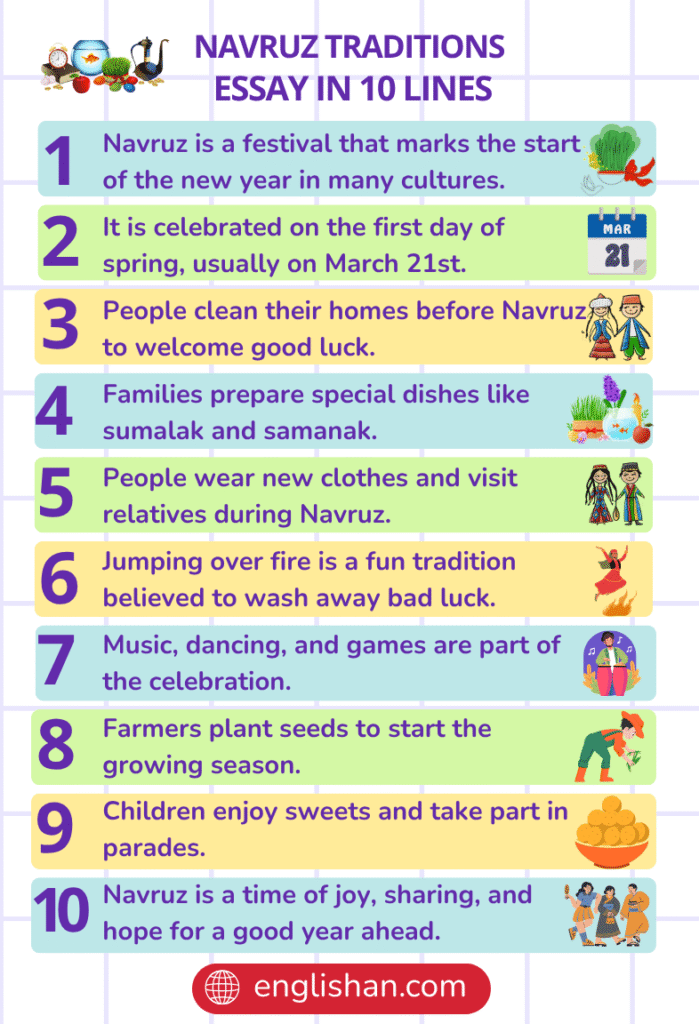
- Navruz is a festival that marks the start of the new year in many cultures.
- It is celebrated on the first day of spring, usually on March 21st.
- People clean their homes before Navruz to welcome good luck.
- Families prepare special dishes like sumalak and samanak.
- People wear new clothes and visit relatives during Navruz.
- Jumping over fire is a fun tradition believed to wash away bad luck.
- Music, dancing, and games are part of the celebration.
- Farmers plant seeds to start the growing season.
- Children enjoy sweets and take part in parades.
- Navruz is a time of joy, sharing, and hope for a good year ahead.
250 Words Essay on Navruz Traditions for Middle School
Navruz, also spelled Nowruz, is a traditional spring festival celebrated in many countries such as Iran, Afghanistan, Uzbekistan, and parts of Pakistan. It marks the beginning of the new year and the arrival of spring. This festival is known for its rich cultural traditions, delicious food, and joyful celebrations.
One of the most important traditions of Navruz is the cleaning of homes before the festival. Families tidy their houses and decorate them to welcome health and happiness. On Navruz day, people wear clean or new clothes, visit relatives, and share meals together. Traditional foods like sumalak, made from wheat, and other sweet dishes are prepared in large pots and shared with neighbors.
Lighting bonfires and jumping over them is another exciting tradition. This act is believed to cleanse people of their past troubles and bring in fresh energy. Farmers also plant seeds during Navruz, symbolizing new beginnings and hope for a good harvest.
Children play games, enjoy sweets, and join in traditional dances and music performances. Public celebrations, parades, and cultural shows are held in towns and cities. Navruz brings people of all ages together to celebrate nature, family, and peace.
Overall, Navruz is more than just a festival. It is a celebration of life, unity, and renewal. The traditions followed during this time teach us the importance of starting fresh, being kind to others, and enjoying the beauty of nature.
500 Words Navruz Traditions Essay for Upper Primary and Lower Secondary
The Cultural Significance of Navruz
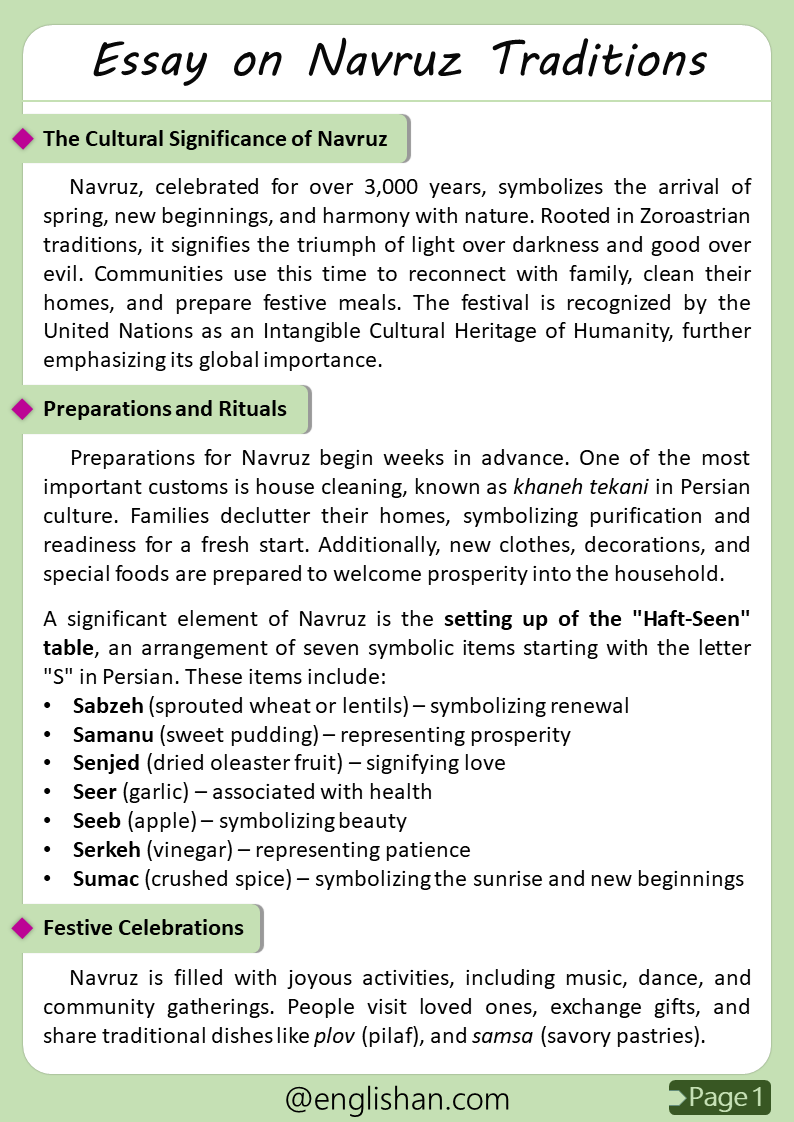
Navruz, celebrated for over 3,000 years, symbolizes the arrival of spring, new beginnings, and harmony with nature. Rooted in Zoroastrian traditions, it signifies the triumph of light over darkness and good over evil. Communities use this time to reconnect with family, clean their homes, and prepare festive meals. The festival is recognized by the United Nations as an Intangible Cultural Heritage of Humanity, further emphasizing its global importance.
Preparations and Rituals
Preparations for Navruz begin weeks in advance. One of the most important customs is house cleaning, known as khaneh tekani in Persian culture. Families declutter their homes, symbolizing purification and readiness for a fresh start. Additionally, new clothes, decorations, and special foods are prepared to welcome prosperity into the household.
A significant element of Navruz is the setting up of the “Haft-Seen” table, an arrangement of seven symbolic items starting with the letter “S” in Persian. These items include:
- Sabzeh (sprouted wheat or lentils) – symbolizing renewal
- Samanu (sweet pudding) – representing prosperity
- Senjed (dried oleaster fruit) – signifying love
- Seer (garlic) – associated with health
- Seeb (apple) – symbolizing beauty
- Serkeh (vinegar) – representing patience
- Sumac (crushed spice) – symbolizing the sunrise and new beginnings
Festive Celebrations
Navruz is filled with joyous activities, including music, dance, and community gatherings. People visit loved ones, exchange gifts, and share traditional dishes like plov (pilaf), and samsa (savory pastries).
Another exciting tradition is jumping over bonfires, known as Chaharshanbe Suri, practiced in some cultures to ward off evil spirits and bring good fortune. In many regions, sporting events, horse races, and public performances enhance the festive spirit.
Symbolism and Unity
Beyond celebrations, Navruz emphasizes unity, peace, and generosity. It encourages people to forgive past grievances, strengthen social ties, and offer help to those in need. The festival fosters a sense of national and cultural pride, connecting generations through shared customs and values.
Traditional Navruz Foods
Food plays a central role in Navruz celebrations. Each dish carries symbolic meaning, representing prosperity, happiness, and good fortune. Popular dishes include Sumalak, a sweet wheat-based pudding, and Kok-Samsa, a green-filled pastry symbolizing spring’s arrival.
Navruz in Different Countries
Navruz is celebrated in many countries, each adding its own cultural variations. In Iran, the festival lasts for 13 days, while in Uzbekistan, grand public celebrations and performances take place. Afghanistan, Turkey, and Tajikistan also hold special ceremonies reflecting their unique customs. In Azerbaijan, Navruz features egg-painting and traditional wrestling competitions.
The Role of Music and Dance
Music and dance are integral parts of Navruz, bringing communities together in celebration. Traditional instruments such as the dutar, rubab, and tambur are played, while regional folk dances express the joy of the new year. Performances often include poetry recitals and storytelling, preserving cultural heritage. In some regions, musicians perform songs that date back centuries, passing down history through melodies.
Environmental Awareness and Navruz
Navruz also promotes environmental consciousness. Many communities take part in tree-planting ceremonies and clean public spaces to honor nature. This tradition highlights the festival’s connection to renewal, sustainability, and the importance of a healthy environment. Some celebrations include eco-friendly initiatives, such as reducing waste and using biodegradable decorations.
Conclusion
Navruz is more than a festival it is a celebration of renewal, hope, and unity. By preserving its rich traditions, communities keep their cultural heritage alive while embracing the joys of the new year. Whether through festive meals, symbolic rituals, or community gatherings, Navruz continues to bring people together in harmony and joy.
Difficult Words Used in 500 Navruz Traditions Essay
| Word | Meaning |
|---|---|
| Intangible | Unable to be touched; abstract but significant |
| Prosperity | The state of being successful and thriving |
| Purification | The process of cleansing and making something pure |
| Heritage | Traditions and customs passed down through generations |
| Reconnect | To restore or strengthen a relationship |
| Equinox | The time of year when day and night are of equal length |
| Sustainability | The ability to maintain ecological balance and avoid depletion of resources |
Navruz Traditions Essay PDF
You May Also Like