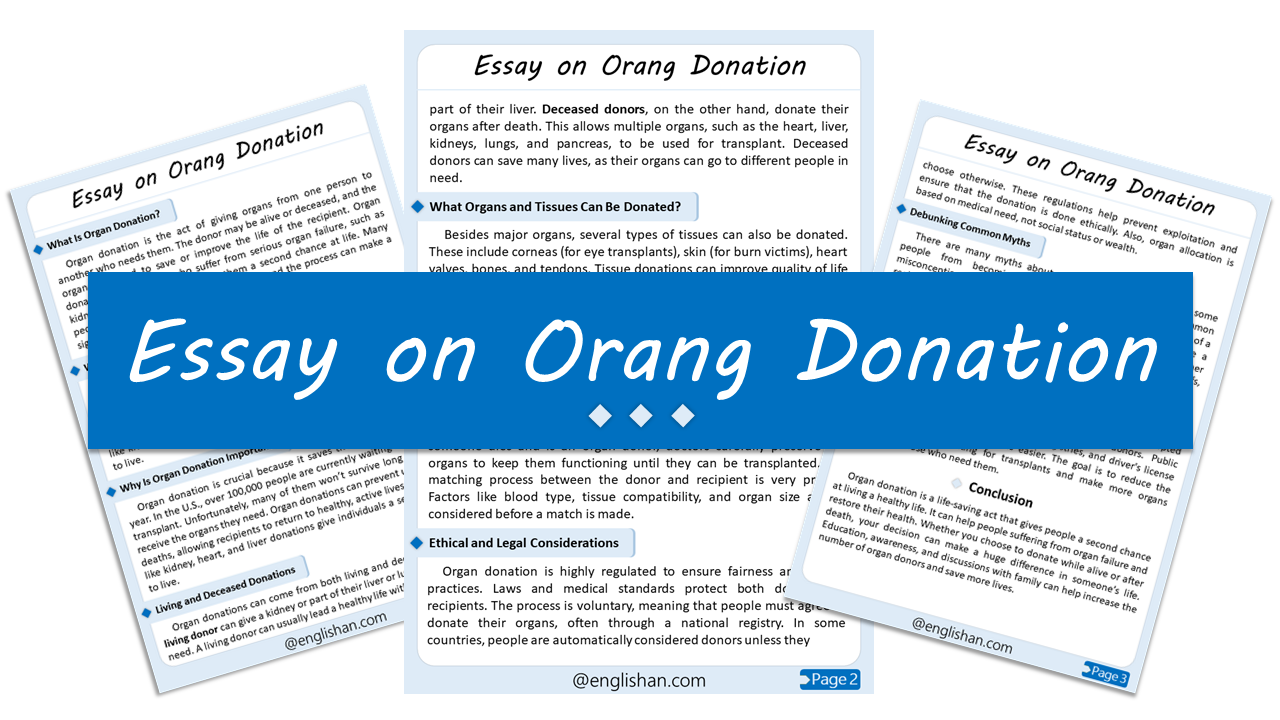
When writing about organ donation, it’s important to understand how giving organs can save lives and help people stay healthy. This essay on organ donation explains what it is, the types of organs donated, how it helps patients, and why it matters. It’s written in 500 words to help students with homework or exams. You can download this organ donation essay as a free PDF or image to study or print.
10 Lines Organ Donation Essay for Class 2 to Class 5
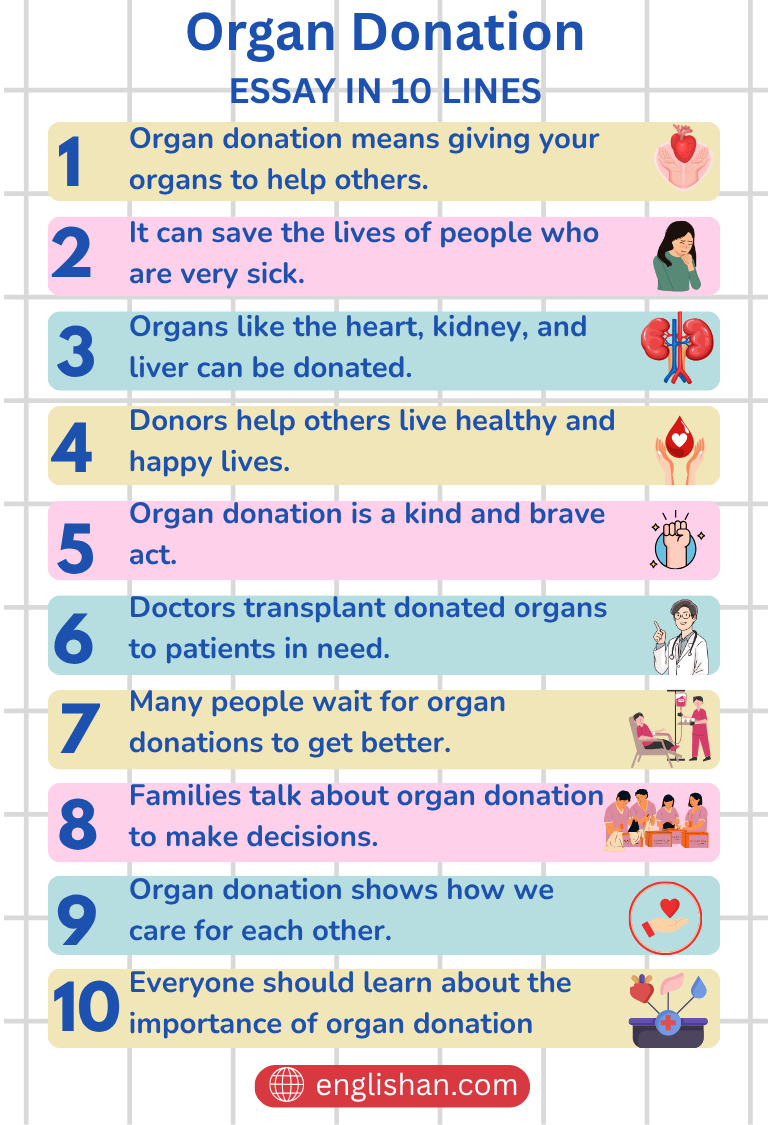
- Organ donation means giving your organs to help others.
- It can save the lives of people who are very sick.
- Organs like the heart, kidney, and liver can be donated.
- Donors help others live healthy and happy lives.
- Organ donation is a kind and brave act.
- Doctors transplant donated organs to patients in need.
- Many people wait for organ donations to get better.
- Families talk about organ donation to make decisions.
- Organ donation shows how we care for each other.
- Everyone should learn about the importance of organ donation.
250 Words Essay on Organ Donation for Middle School
Organ donation is when a person gives their organs to help save or improve someone else’s life. Many people need organ transplants because their organs are damaged or not working properly. Organs like the heart, kidneys, liver, lungs, and pancreas can be donated.
Organ donation can happen when a person has passed away or sometimes when they are alive, like donating one kidney. When doctors transplant healthy organs into sick patients, it can help them live longer and healthier lives.
Many people wait for organ donations, and sometimes there are not enough donors. That’s why it’s important to raise awareness about organ donation so more people can help. Families often discuss organ donation to understand and respect the donor’s wishes.
Organ donation is a generous and life-saving act. It shows kindness and care for others, even after a person is gone. It can give someone a second chance to live and enjoy life with their loved ones.
In conclusion, organ donation is a powerful way to help those in need. Learning about it encourages us to support and respect this life-saving gift.
500 Words Organ Donation Essay for Upper Primary and Lower Secondary
What Is Organ Donation?
Organ donation is the act of giving organs from one person to another who needs them. The donor may be alive or deceased, and the organs are used to save or improve the life of the recipient. Organ donation helps people who suffer from serious organ failure, such as kidney or heart failure, by giving them a second chance at life. Many people rely on organ donations to survive, and the process can make a significant difference in their lives.
Why Is Organ Donation Important?
Organ donation is crucial because it saves thousands of lives each year. In the U.S., over 100,000 people are currently waiting for an organ transplant. Unfortunately, many of them won’t survive long enough to receive the organs they need. Organ donations can prevent unnecessary deaths, allowing recipients to return to healthy, active lives. Transplants like kidney, heart, and liver donations give individuals a second chance to live.
Living and Deceased Donations
Organ donations can come from both living and deceased donors. A living donor can give a kidney or part of their liver or lung to someone in need. A living donor can usually lead a healthy life with one kidney or part of their liver. Deceased donors, on the other hand, donate their organs after death. This allows multiple organs, such as the heart, liver, kidneys, lungs, and pancreas, to be used for transplant. Deceased donors can save many lives, as their organs can go to different people in need.
What Organs and Tissues Can Be Donated?
Besides major organs, several types of tissues can also be donated. These include corneas (for eye transplants), skin (for burn victims), heart valves, bones, and tendons. Tissue donations can improve quality of life for many patients. For example, a corneal transplant can restore vision, and skin grafts can help burn survivors heal. Even though these tissues aren’t as large as organs, they still play an important role in improving health.
How Does the Donation Process Work?
The organ donation process involves several medical steps to ensure that the organs are safe and ready for transplant. For living donors, doctors will test to make sure they are healthy enough to donate. If someone dies and is an organ donor, doctors carefully preserve the organs to keep them functioning until they can be transplanted. The matching process between the donor and recipient is very precise. Factors like blood type, tissue compatibility, and organ size are all considered before a match is made.
Ethical and Legal Considerations
Organ donation is highly regulated to ensure fairness and ethical practices. Laws and medical standards protect both donors and recipients. The process is voluntary, meaning that people must agree to donate their organs, often through a national registry. In some countries, people are automatically considered donors unless they choose otherwise. These regulations help prevent exploitation and ensure that the donation is done ethically. Also, organ allocation is based on medical need, not social status or wealth.
Debunking Common Myths
There are many myths about organ donation that prevent some people from becoming donors. One of the most common misconceptions is that doctors might not try as hard to save the life of a registered donor. In reality, medical teams always work to save a patient’s life, no matter if they are a donor or not. Another misconception is that organ donation is against certain religious beliefs, but most major religions support it as a noble and selfless act.
Global Efforts to Promote Organ Donation
Around the world, organizations and governments are working to increase awareness of organ donation. Many countries have adopted strategies to encourage people to become organ donors. Public awareness campaigns, national donation registries, and driver’s license options all help make the process easier. The goal is to reduce the number of people waiting for transplants and make more organs available to those who need them.
Conclusion
Organ donation is a life-saving act that gives people a second chance at living a healthy life. It can help people suffering from organ failure and restore their health. Whether you choose to donate while alive or after death, your decision can make a huge difference in someone’s life. Education, awareness, and discussions with family can help increase the number of organ donors and save more lives.

Difficult Words Used in 500 Organ Donation Essay
| Word | Meaning |
|---|---|
| Transplant | A medical operation where an organ is moved from one body to another |
| Recipient | A person who receives an organ or tissue for medical purposes |
| Preservation | The act of maintaining something in its original state, especially organs |
| Allocation | The process of distributing resources fairly and according to need |
| Misconception | A wrong or mistaken belief or understanding |
| Voluntary | Done by choice, not forced |
| Dignity | The quality of being worthy of respect or honor |
| Compassion | A feeling of sympathy for others’ suffering, combined with a desire to help |
| Graft | Tissue taken from one part of the body and placed in another |
| Ethical | Conforming to accepted moral principles, especially in medicine |
Organ Donation Essay PDF
You May Also Like