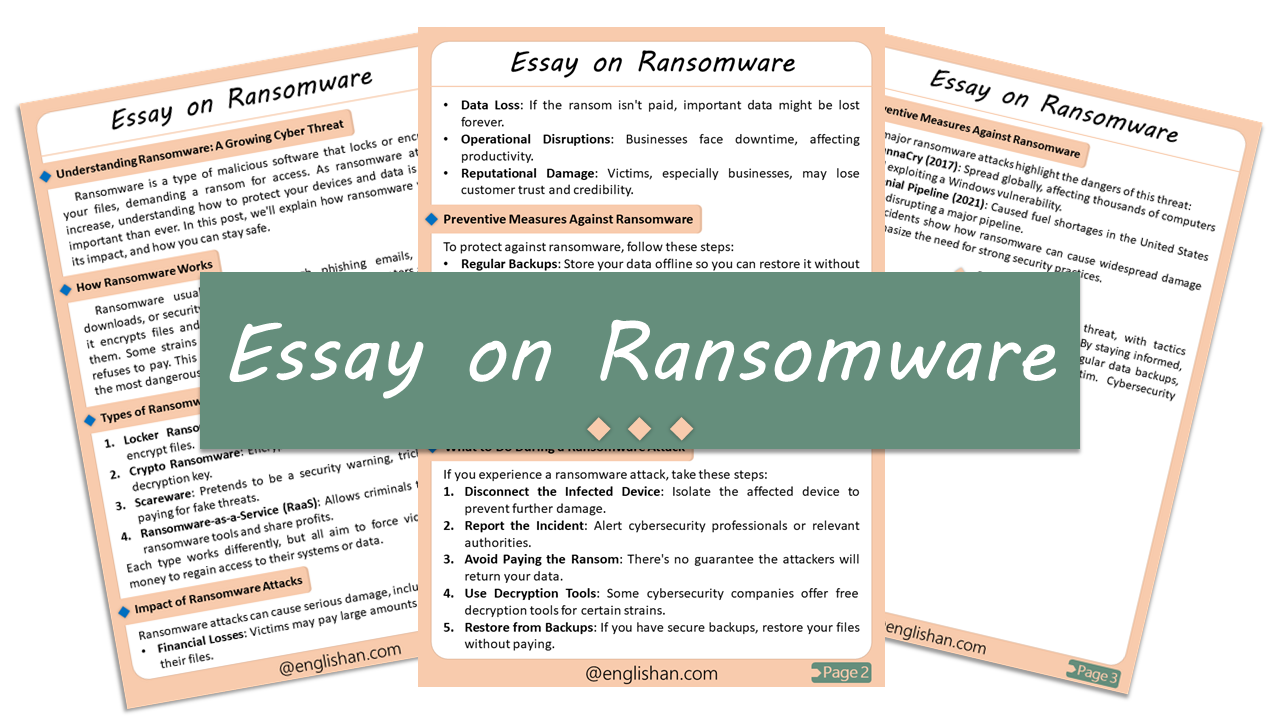
Ransomware is a type of malware that locks data and demands payment to unlock it. This essay on ransomware helps students understand cyber threats through 10-line, 250-word, and 500-word formats. It supports school learning by offering structured samples designed for different levels. Related to cybersecurity, hacking, and digital safety, it meets academic needs. Using real-world formats makes writing clear and time-saving for both students and search engines.
10 Lines Ransomware Essay for Class 2 to Class 5
- Ransomware is a harmful computer program.
- It locks your files or system without permission.
- Attackers ask for money to unlock the data.
- It spreads through emails or unsafe websites.
- Many people lose their files because of it.
- Schools and offices are also targeted by ransomware.
- Using antivirus software can help prevent attacks.
- Never click on unknown links or messages.
- Staying safe online is very important today.
- We must learn about ransomware to protect our data.
250 Words Essay on Ransomware for Middle School
Ransomware is a type of malware that locks people out of their computer files until money is paid. It is one of the most dangerous problems in the world of technology today. The word “ransom” means a demand for money in exchange for something important, like your files or photos.
Most ransomware attacks begin when someone opens a fake email or clicks a bad link. The virus enters the system quietly and locks important files. Then a message appears asking for money to unlock them. This is often done using digital money called cryptocurrency. Some people pay the ransom, but many never get their files back.
Ransomware can affect schools, hospitals, companies, and even families. For example, if a hospital’s computer system is attacked, it could lose access to patient records. Schools might lose report cards or class schedules. These attacks cause delays, stress, and can even risk lives.
It is very important to protect devices from ransomware. Some ways to stay safe include installing antivirus software, avoiding strange emails, and keeping backups of your files. Never click on links or download files from people you don’t know.
In conclusion, ransomware is a serious digital threat. It can affect anyone at any time. By learning how it works and how to prevent it, students can stay safe online and protect their information. Writing about ransomware helps build awareness and teaches the importance of cybersecurity.
500 Words Ransomware Essay for Upper Primary and Lower Secondary
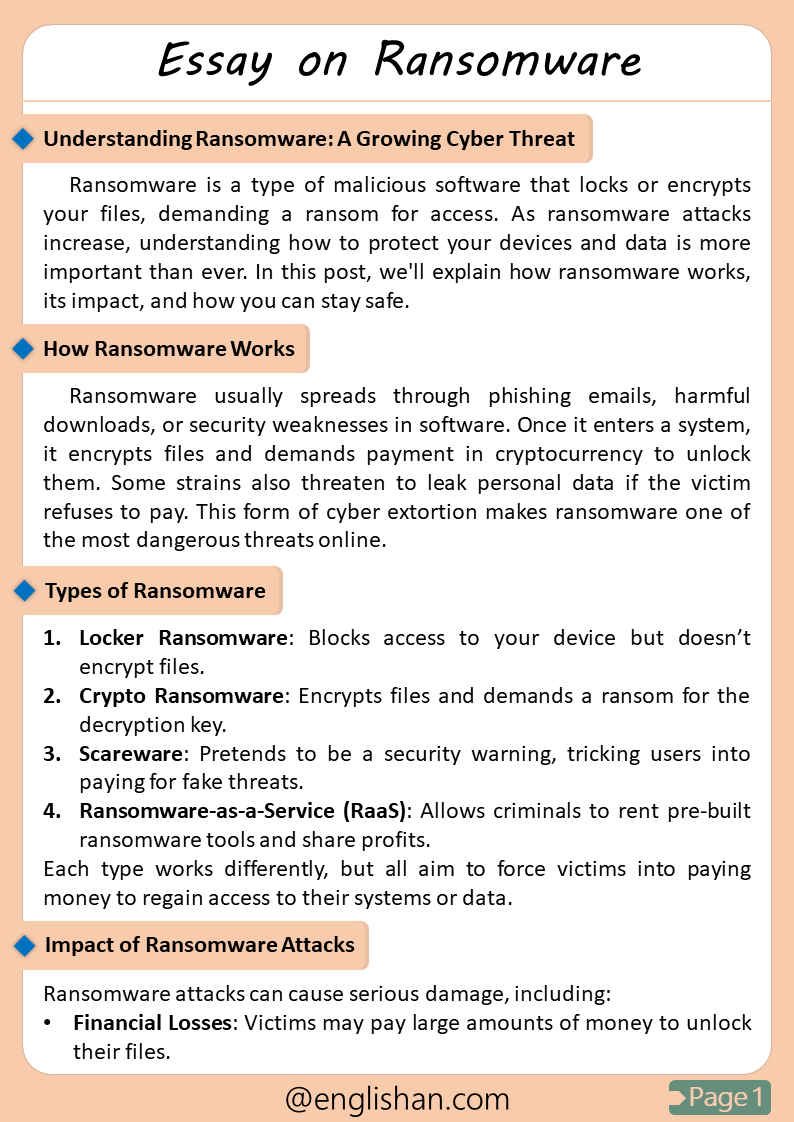
Understanding Ransomware: A Growing Cyber Threat
Ransomware is a type of malicious software that locks or encrypts your files, demanding a ransom for access. As ransomware attacks increase, understanding how to protect your devices and data is more important than ever. In this post, we’ll explain how ransomware works, its impact, and how you can stay safe.
How Ransomware Works
Ransomware usually spreads through phishing emails, harmful downloads, or security weaknesses in software. Once it enters a system, it encrypts files and demands payment in cryptocurrency to unlock them. Some strains also threaten to leak personal data if the victim refuses to pay. This form of cyber extortion makes ransomware one of the most dangerous threats online.
Types of Ransomware
- Locker Ransomware: Blocks access to your device but doesn’t encrypt files.
- Crypto Ransomware: Encrypts files and demands a ransom for the decryption key.
- Scareware: Pretends to be a security warning, tricking users into paying for fake threats.
- Ransomware-as-a-Service (RaaS): Allows criminals to rent pre-built ransomware tools and share profits.
Each type works differently, but all aim to force victims into paying money to regain access to their systems or data.
Impact of Ransomware Attacks
Ransomware attacks can cause serious damage, including:
- Financial Losses: Victims may pay large amounts of money to unlock their files.
- Data Loss: If the ransom isn’t paid, important data might be lost forever.
- Operational Disruptions: Businesses face downtime, affecting productivity.
- Reputational Damage: Victims, especially businesses, may lose customer trust and credibility.
Preventive Measures Against Ransomware
To protect against ransomware, follow these steps:
- Regular Backups: Store your data offline so you can restore it without paying a ransom.
- Updated Security Software: Use antivirus programs and keep your system up-to-date.
- Email Caution: Be careful about clicking on links or downloading attachments from unknown sources.
- Network Security: Use firewalls, endpoint protection, and strong access controls.
- Employee Training: Teach users how to spot phishing emails and other scams.
What to Do During a Ransomware Attack
If you experience a ransomware attack, take these steps:
- Disconnect the Infected Device: Isolate the affected device to prevent further damage.
- Report the Incident: Alert cybersecurity professionals or relevant authorities.
- Avoid Paying the Ransom: There’s no guarantee the attackers will return your data.
- Use Decryption Tools: Some cybersecurity companies offer free decryption tools for certain strains.
- Restore from Backups: If you have secure backups, restore your files without paying.
Notable Ransomware Attacks in History
Two major ransomware attacks highlight the dangers of this threat:
- WannaCry (2017): Spread globally, affecting thousands of computers and exploiting a Windows vulnerability.
- Colonial Pipeline (2021): Caused fuel shortages in the United States after disrupting a major pipeline.
These incidents show how ransomware can cause widespread damage and emphasize the need for strong security practices.
Conclusion
Ransomware remains a severe cybersecurity threat, with tactics evolving to target businesses and individuals alike. By staying informed, practicing good security habits, and maintaining regular data backups, you can protect yourself from becoming a victim. Cybersecurity awareness is essential for a safer digital experience.
Difficult Words Used in 500 Ransomware Essay
| Word | Meaning |
|---|---|
| Ransomware | Malicious software that blocks or encrypts files until a ransom is paid. |
| Extortion | The act of obtaining something (usually money) through force or threats. |
| Cryptocurrency | A digital or virtual currency that uses cryptography for security. |
| Phishing | A fraudulent attempt to obtain sensitive information by disguising as a trustworthy entity. |
| Decryption | The process of converting encrypted data back into its original form. |
| Endpoint | A device or node that is connected to a network, such as a computer or smartphone. |
| Scareware | Software that misleads users into thinking their device is infected with a virus to prompt them to pay for removal. |
| Disruptions | Interruptions or disturbances that cause a breakdown in normal activities. |
| Reputation | The beliefs or opinions held about someone or something based on past actions. |
| Decryption Tools | Software tools designed to help recover data from encrypted files. |
| Backups | Copies of data stored in a separate location to restore in case of data loss. |
| Firewalls | Security systems designed to monitor and control incoming and outgoing network traffic. |
Ransomware Essay PDF
You May Also Like