When writing about television, it’s important to understand how this device plays a big role in learning, news, and entertainment. This Television in our daily life Essay explains how TV is used at home, in school, and in society. It covers the benefits, harmful effects, and simple tips for watching wisely. It’s written in 500 words to help students with homework or exams. You can download this television essay as a free PDF or image to study or print.
10 Lines Television in our daily life Essay for Class 2 to Class 5
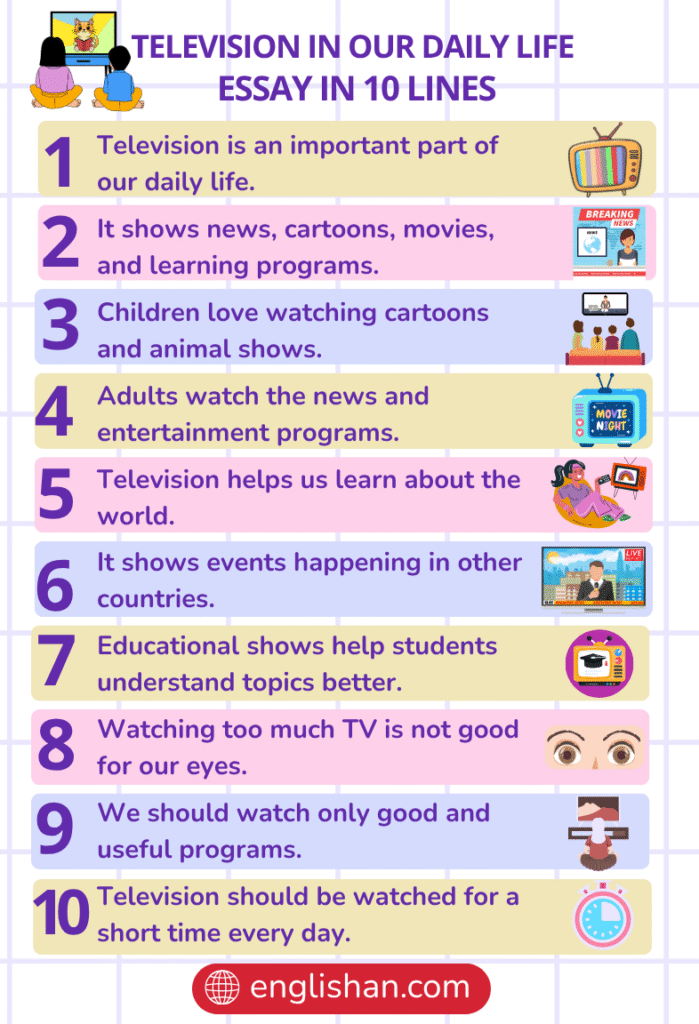
- Television is an important part of our daily life.
- It shows news, cartoons, movies, and learning programs.
- Children love watching cartoons and animal shows.
- Adults watch the news and entertainment programs.
- Television helps us learn about the world.
- It shows events happening in other countries.
- Educational shows help students understand topics better.
- Watching too much TV is not good for our eyes.
- We should watch only good and useful programs.
- Television should be watched for a short time every day.
250 Words Essay on Television in our daily life for Middle School
Television is one of the most common sources of information and entertainment in our daily life. It plays a big role in shaping what we know and how we think. Almost every home has a television today, and people of all ages enjoy watching it.
Television shows a variety of programs like news, cartoons, movies, sports, and educational shows. It helps children learn new things through fun learning programs and animal or science shows. Adults stay updated with current events through news channels. Families often watch entertainment shows or movies together, which gives them time to relax and bond.
One of the biggest advantages of television is that it brings the world into our home. We can learn about different countries, cultures, and global events just by watching TV. Educational programs on history, science, and geography are helpful for school students.
However, watching too much television is not good. It can harm our eyesight and reduce study time. Some programs may also have negative effects on children. That’s why it is important to watch only useful and age-appropriate shows.
In conclusion, television is a useful tool if used wisely. It helps us stay informed, entertained, and educated. We must always balance our TV time with study, play, and rest.
500 Words Television in our daily life Essay for Upper Primary and Lower Secondary
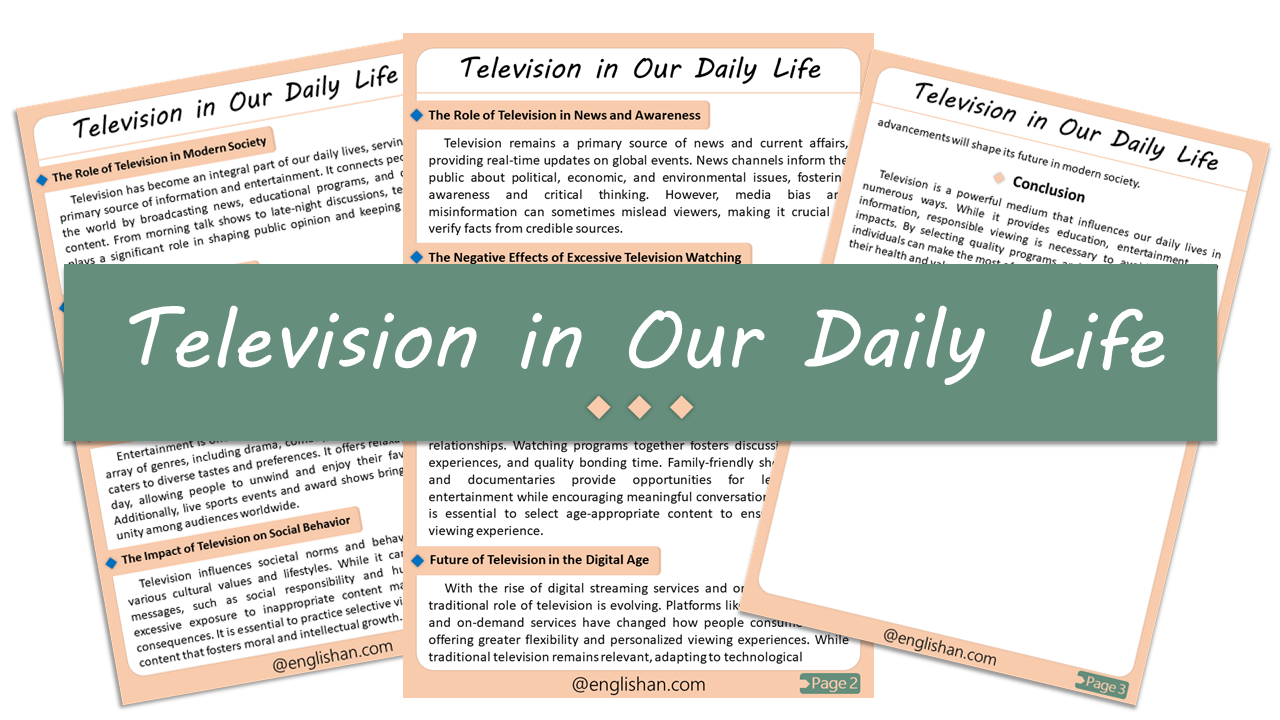
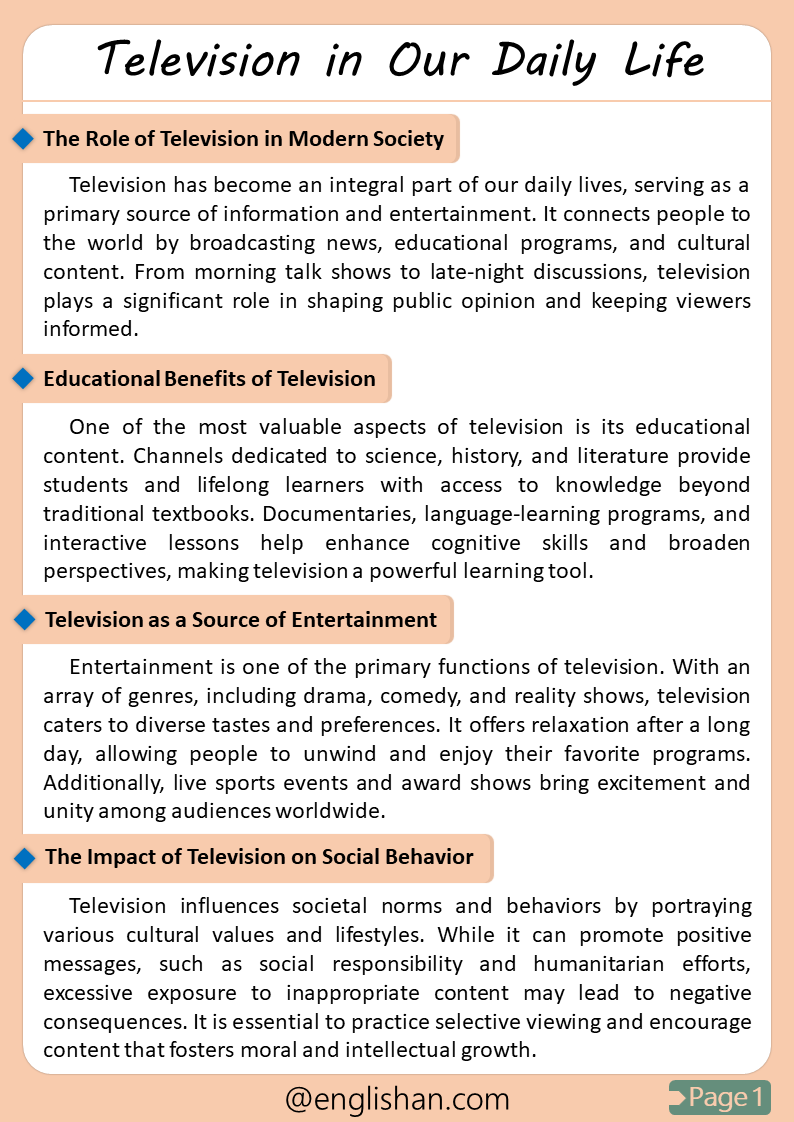
The Role of Television in Modern Society
Television has become an integral part of our daily lives, serving as a primary source of information and entertainment. It connects people to the world by broadcasting news, educational programs, and cultural content. From morning talk shows to late-night discussions, television plays a significant role in shaping public opinion and keeping viewers informed.
Educational Benefits of Television
One of the most valuable aspects of television is its educational content. Channels dedicated to science, history, and literature provide students and lifelong learners with access to knowledge beyond traditional textbooks. Documentaries, language-learning programs, and interactive lessons help enhance cognitive skills and broaden perspectives, making television a powerful learning tool.
Television as a Source of Entertainment
Entertainment is one of the primary functions of television. With an array of genres, including drama, comedy, and reality shows, television caters to diverse tastes and preferences. It offers relaxation after a long day, allowing people to unwind and enjoy their favorite programs. Additionally, live sports events and award shows bring excitement and unity among audiences worldwide.
The Impact of Television on Social Behavior
Television influences societal norms and behaviors by portraying various cultural values and lifestyles. While it can promote positive messages, such as social responsibility and humanitarian efforts, excessive exposure to inappropriate content may lead to negative consequences. It is essential to practice selective viewing and encourage content that fosters moral and intellectual growth.
The Role of Television in News and Awareness
Television remains a primary source of news and current affairs, providing real-time updates on global events. News channels inform the public about political, economic, and environmental issues, fostering awareness and critical thinking. However, media bias and misinformation can sometimes mislead viewers, making it crucial to verify facts from credible sources.
The Negative Effects of Excessive Television Watching
Despite its benefits, excessive television consumption can have adverse effects on physical and mental health. Prolonged screen time may contribute to obesity, eye strain, and reduced physical activity. Additionally, overexposure to violent or sensationalized content can lead to stress and anxiety. Balancing television viewing with outdoor activities and social interactions is essential for overall well-being.
Television and Family Bonding
Television can serve as a medium for strengthening family relationships. Watching programs together fosters discussions, shared experiences, and quality bonding time. Family-friendly shows, movies, and documentaries provide opportunities for learning and entertainment while encouraging meaningful conversations. However, it is essential to select age-appropriate content to ensure a positive viewing experience.
Future of Television in the Digital Age
With the rise of digital streaming services and online content, the traditional role of television is evolving. Platforms like Netflix, YouTube, and on-demand services have changed how people consume media, offering greater flexibility and personalized viewing experiences. While traditional television remains relevant, adapting to technological advancements will shape its future in modern society.
Conclusion
Television is a powerful medium that influences our daily lives in numerous ways. While it provides education, entertainment, and information, responsible viewing is necessary to avoid its negative impacts. By selecting quality programs and maintaining moderation, individuals can make the most of television’s benefits while safeguarding their health and values.
Difficult Words Used in 500 Television in Our Daily Life Essay
| Word | Meaning |
|---|---|
| Integral | Essential or necessary for completeness |
| Cognitive | Related to mental processes such as learning and understanding |
| Perspective | A particular attitude or way of viewing something |
| Humanitarian | Concerned with human welfare and social justice |
| Bias | A preference or inclination that prevents impartial judgment |
| Misinformation | False or misleading information |
| Adverse | Harmful or unfavorable |
| Moderation | The avoidance of excess or extremes |
Television in Our Daily Life Essay PDF
You May Also Like