Writing a TV addiction essay helps students understand this common issue clearly and quickly. This resource offers sample essays in three lengths: 10 lines, 250 words, and 500 words. They are designed to support learners at different levels. These essays explain causes, effects, and solutions for TV addiction using simple, direct language. The clear structure saves time for both readers and search engines, making it easier to learn and master essay writing on this topic.
10 Lines TV Addiction Essay for Class 2 to Class 5
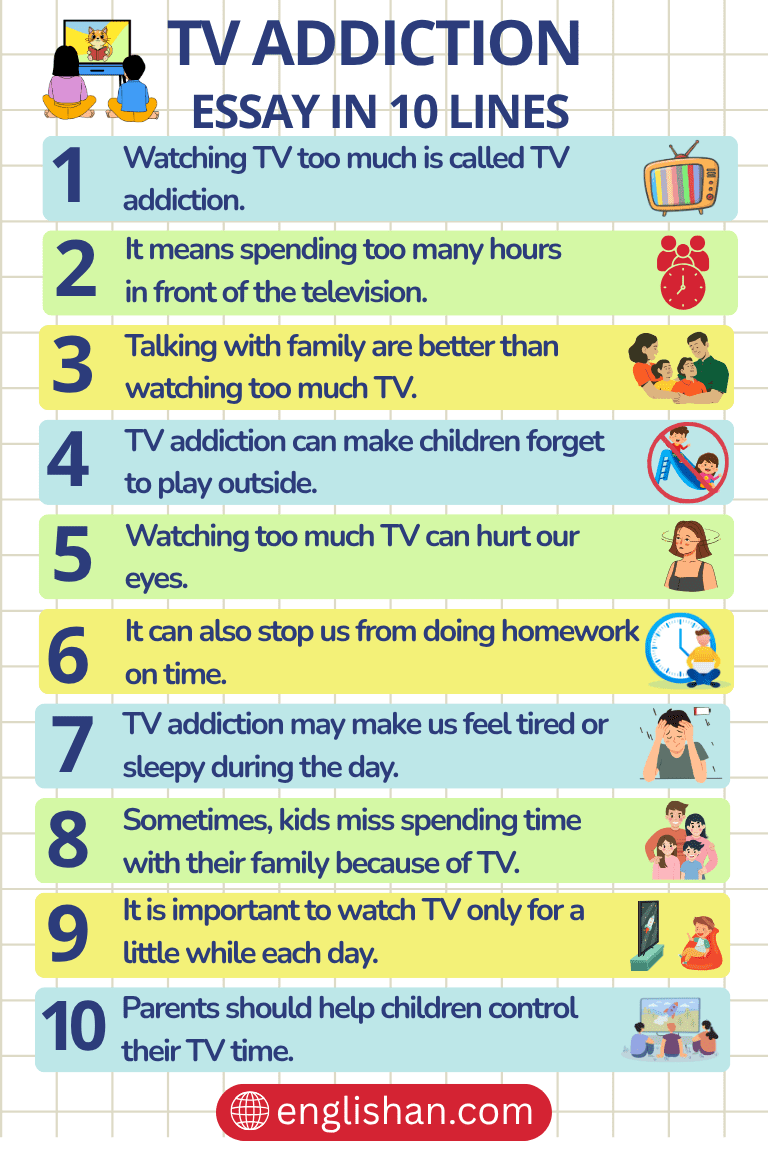
- Watching TV too much is called TV addiction.
- It means spending too many hours in front of the television.
- TV addiction can make children forget to play outside.
- Watching too much TV can hurt our eyes.
- It can also stop us from doing homework on time.
- TV addiction may make us feel tired or sleepy during the day.
- Sometimes, kids miss spending time with their family because of TV.
- It is important to watch TV only for a little while each day.
- Parents should help children control their TV time.
- Playing games, reading, and talking with family are better than watching too much TV.
250 Words Essay on TV Addiction for Middle School
TV addiction is a problem many students face today. It happens when someone watches television for too many hours and finds it hard to stop. This can cause many issues in daily life. One major effect of TV addiction is that it takes away time from important activities like studying, playing, or spending time with family and friends. When children watch TV for long hours, their eyes may become tired and they may have trouble sleeping well at night. This can affect their health and energy.
Another reason TV addiction is harmful is because it reduces physical activity. Sitting for hours watching shows means less exercise, which can lead to weight gain and other health problems. Also, watching too much TV can affect attention and focus, making it harder to concentrate in school.
Parents and teachers should help children set limits on how much TV they watch. Making a schedule with specific TV time and including other activities like reading, sports, or hobbies can help reduce addiction. It is important to choose good programs and avoid watching violent or inappropriate content.
In conclusion, TV can be fun and educational when watched in moderation. But too much TV causes addiction that harms health, learning, and relationships. Learning to control TV watching is important for a balanced and healthy life.
500 Words TV Addiction Essay for Upper Primary and Lower Secondary
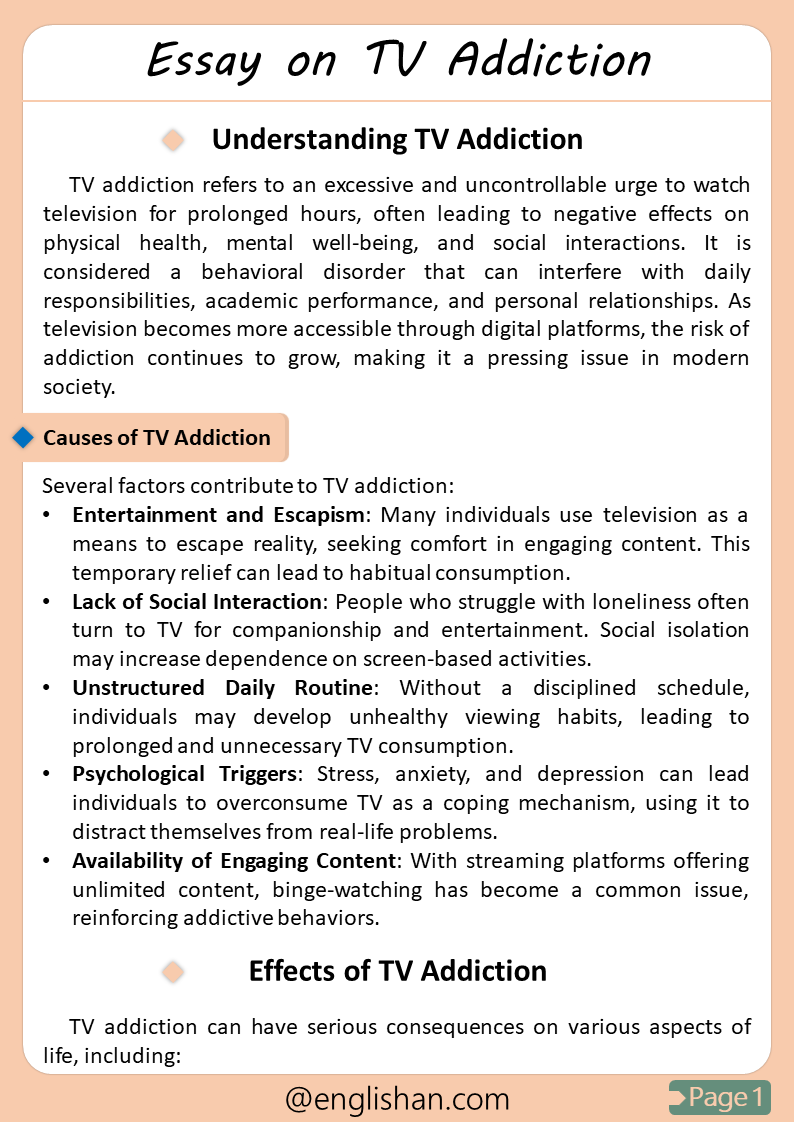
Understanding TV Addiction
TV addiction refers to an excessive and uncontrollable urge to watch television for prolonged hours, often leading to negative effects on physical health, mental well-being, and social interactions. It is considered a behavioral disorder that can interfere with daily responsibilities, academic performance, and personal relationships. As television becomes more accessible through digital platforms, the risk of addiction continues to grow, making it a pressing issue in modern society.
Causes of TV Addiction
Several factors contribute to TV addiction:
- Entertainment and Escapism: Many individuals use television as a means to escape reality, seeking comfort in engaging content. This temporary relief can lead to habitual consumption.
- Lack of Social Interaction: People who struggle with loneliness often turn to TV for companionship and entertainment. Social isolation may increase dependence on screen-based activities.
- Unstructured Daily Routine: Without a disciplined schedule, individuals may develop unhealthy viewing habits, leading to prolonged and unnecessary TV consumption.
- Psychological Triggers: Stress, anxiety, and depression can lead individuals to overconsume TV as a coping mechanism, using it to distract themselves from real-life problems.
Effects of TV Addiction
TV addiction can have serious consequences on various aspects of life, including:
Physical Health Risks
- Prolonged screen time can lead to obesity, poor posture, and eye strain, resulting in long-term health complications.
- Sedentary behavior increases the risk of cardiovascular diseases and diabetes, as excessive TV consumption often replaces physical activities.
Mental and Emotional Impact
- Excessive TV consumption can lead to anxiety, depression, and reduced attention span, making it harder to focus on important tasks.
- Overindulgence in fictional narratives may blur the perception of reality, causing individuals to develop unrealistic expectations from life.
- Constant exposure to violent or distressing content may lead to increased stress levels and emotional desensitization.
Social Consequences
- TV addiction can reduce face-to-face interactions, weakening relationships with family and friends, as people prioritize screen time over social engagement.
- It may lead to neglect of responsibilities, such as work or studies, affecting academic and professional growth.
- A reliance on television for entertainment can limit participation in outdoor activities and social events, further deepening isolation.
Strategies to Overcome TV Addiction
Overcoming TV addiction requires conscious effort and self-discipline. Here are some effective strategies:
- Set Viewing Limits: Establish a daily time limit for watching TV to prevent excessive consumption and encourage balanced screen use.
- Engage in Productive Activities: Substitute screen time with hobbies like reading, exercise, or social interactions to develop a well-rounded lifestyle.
- Create a Structured Routine: Planning daily activities helps reduce idle screen time and ensures that essential tasks are prioritized.
- Practice Mindful Watching: Choose informative and educational content rather than watching aimlessly, helping to make TV consumption more purposeful.
- Use Alternative Entertainment Sources: Exploring outdoor activities, board games, or creative pursuits can reduce dependence on television.
- Seek Professional Help: If TV addiction affects mental health, consulting a psychologist or counselor may be beneficial for developing coping strategies.
Conclusion
TV addiction is a growing concern with significant effects on physical, mental, and social well-being. While television offers entertainment and knowledge, excessive dependence can be detrimental. The availability of unlimited content has made it easier for individuals to fall into addictive patterns, but with conscious efforts, balance can be restored. By implementing effective strategies, individuals can manage screen time and engage in healthier activities. Maintaining moderation in TV consumption ensures a better quality of life and overall well-being.
Difficult Words Used in 500 TV Addiction Essay
| Word | Meaning |
|---|---|
| Escapism | The tendency to seek distraction and relief from reality through entertainment |
| Psychological | Related to the mind and mental processes |
| Sedentary | Involving little or no physical activity |
| Binge-watching | Watching multiple episodes of a show in succession |
| Desensitization | Reduction in emotional response to stimuli due to repeated exposure |
| Productivity | The ability to produce or complete tasks efficiently |
| Dependency | A state of relying on something excessively |
| Isolation | The state of being separated from social interactions |
| Cognitive | Related to mental processes such as thinking and understanding |
| Compulsion | An irresistible urge to behave in a certain way, often against one’s better judgment |
TV Addiction Essay PDF
You May Also Like