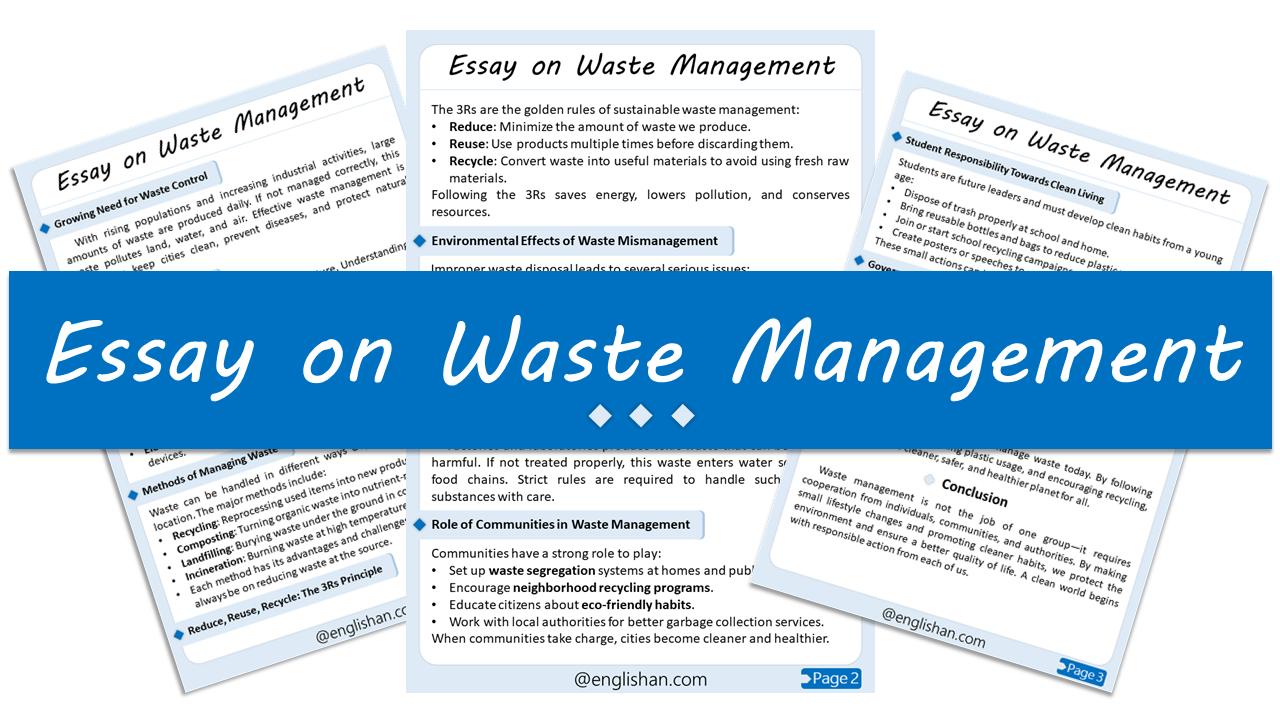
When writing about waste management, it’s important to understand how we handle trash to keep our surroundings clean and safe. This essay on waste management explains the types of waste, smart ways to manage it, its effects on the environment, and simple actions we can take at home or school. It’s written in 500 words to help students with homework or exams. You can download this waste management essay as a free PDF or image to study or print.
10 Lines Waste Management Essay for Class 2 to Class 5
- Waste management means taking care of our garbage properly.
- It helps keep our homes, schools, and streets clean.
- We should always throw waste in the dustbin.
- Waste can be of different types like food waste, plastic, and paper.
- We should separate dry and wet waste before throwing it.
- Recycling is a good way to reuse old things.
- Burning waste is bad because it pollutes the air.
- We must reduce, reuse, and recycle to save the environment.
- Clean surroundings keep us healthy and happy.
- Good waste management makes our Earth a better place.

250 Words Essay on Waste Management for Middle School
Waste management is the process of collecting, sorting, and disposing of waste in a proper and safe way. It is very important to keep our environment clean and protect the health of people, animals, and plants.
There are different types of waste: biodegradable waste like food and paper, and non-biodegradable waste like plastic and metal. To manage waste properly, we must first separate it into dry and wet waste. Wet waste includes leftover food and vegetable peels, while dry waste includes plastics, paper, and glass.
One of the best ways to manage waste is by following the 3Rs Reduce, Reuse, and Recycle. We should reduce the amount of waste we create, reuse things whenever possible, and recycle materials to make new products. This helps in saving natural resources and reducing pollution.
Improper waste disposal can lead to many problems like water pollution, air pollution, and diseases. That is why it is important to throw garbage only in bins and not on roads or in open areas. Composting is another smart way to manage kitchen waste at home and turn it into useful fertilizer for plants.
In conclusion, waste management is everyone’s responsibility. By being careful about how we throw and handle waste, we can keep our surroundings clean, protect nature, and make the world a better and healthier place for all.
500 Words Waste Management Essay for Upper Primary and Lower Secondary
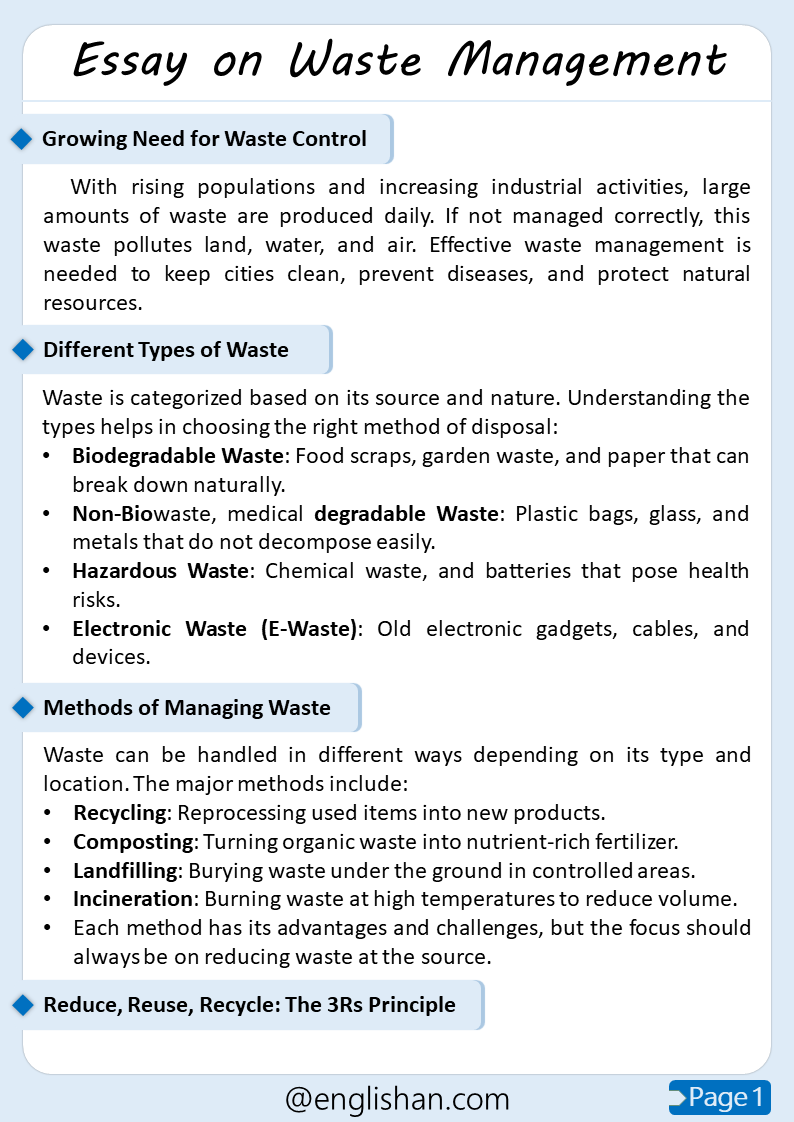
A Growing Need for Waste Control
With rising populations and increasing industrial activities, large amounts of waste are produced daily. If not managed correctly, this waste pollutes land, water, and air. Effective waste management is needed to keep cities clean, prevent diseases, and protect natural resources.
Different Types of Waste
Waste is categorized based on its source and nature. Understanding the types helps in choosing the right method of disposal:
- Biodegradable Waste: Food scraps, garden waste, and paper that can break down naturally.
- Non-Biodegradable Waste: Plastic bags, glass, and metals that do not decompose easily.
- Hazardous Waste: Chemical waste, medical waste, and batteries that pose health risks.
- Electronic Waste (E-Waste): Old electronic gadgets, cables, and devices.
Methods of Managing Waste
Waste can be handled in different ways depending on its type and location. The major methods include:
- Recycling: Reprocessing used items into new products.
- Composting: Turning organic waste into nutrient-rich fertilizer.
- Landfilling: Burying waste under the ground in controlled areas.
- Incineration: Burning waste at high temperatures to reduce volume.
Each method has its advantages and challenges, but the focus should always be on reducing waste at the source.
Reduce, Reuse, Recycle: The 3Rs Principle
The 3Rs are the golden rules of sustainable waste management:
- Reduce: Minimize the amount of waste we produce.
- Reuse: Use products multiple times before discarding them.
- Recycle: Convert waste into useful materials to avoid using fresh raw materials.
Following the 3Rs saves energy, lowers pollution, and conserves resources.
Environmental Effects of Waste Mismanagement
Improper waste disposal leads to several serious issues:
- Air Pollution from burning plastics and chemicals.
- Water Contamination due to waste dumped in rivers and oceans.
- Soil Degradation from chemicals leaking into the ground.
- Health Hazards like respiratory problems, infections, and skin diseases.
These effects harm humans, animals, and the environment, making responsible disposal essential.
The Dangers of Industrial and Chemical Waste
Factories and laboratories produce toxic waste that can be extremely harmful. If not treated properly, this waste enters water sources and food chains. Strict rules are required to handle such hazardous substances with care.
Role of Communities in Waste Management
Communities have a strong role to play:
- Set up waste segregation systems at homes and public places.
- Encourage neighborhood recycling programs.
- Educate citizens about eco-friendly habits.
- Work with local authorities for better garbage collection services.
When communities take charge, cities become cleaner and healthier.
Student Responsibility Towards Clean Living
Students are future leaders and must develop clean habits from a young age:
- Dispose of trash properly at school and home.
- Bring reusable bottles and bags to reduce plastic use.
- Join or start school recycling campaigns.
- Create posters or speeches to raise awareness.
These small actions can inspire big change in society.
Government Actions and Regulations
Governments must support waste control by:
- Implementing strict waste disposal laws.
- Building proper collection and recycling infrastructure.
- Running awareness campaigns on hygiene and cleanliness.
- Promoting eco-friendly alternatives to plastic and chemicals.
Such efforts protect citizens and improve public health.
A Cleaner Future Through Waste Awareness
The future depends on how we manage waste today. By following sustainable practices, reducing plastic usage, and encouraging recycling, we contribute to a cleaner, safer, and healthier planet for all.
Conclusion
Waste management is not the job of one group—it requires cooperation from individuals, communities, and authorities. By making small lifestyle changes and promoting cleaner habits, we protect the environment and ensure a better quality of life. A clean world begins with responsible action from each of us.
Difficult Words used in 500 Waste Management Essay
| Word | Meaning |
|---|---|
| Biodegradable | Capable of being broken down naturally by microorganisms |
| Incineration | The burning of waste at high temperatures |
| Composting | A process of turning organic waste into nutrient-rich soil |
| Hazardous | Dangerous or risky to health or the environment |
| Degradation | The process of something becoming worse or damaged |
| Contamination | The act of making something impure or harmful by adding pollutants |
| Infrastructure | Basic systems and structures such as roads and waste treatment facilities |
| Segregation | The act of separating waste into different categories |
| Sustainable | Using methods that do not harm the environment or deplete resources |
| Nutrient-rich | Containing a high amount of substances needed for growth and health |
Waste Management Essay PDF
You May Also Like