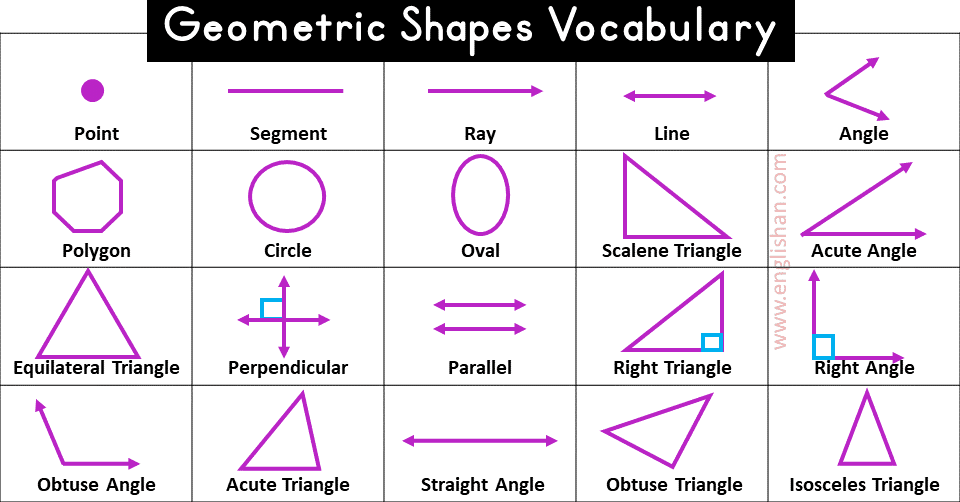
Understanding geometric shapes names in English helps learners recognize objects by form and structure. Knowing these names builds stronger shape-word links, especially in school subjects like geometry and drawing. This article uses pictures and examples to teach both 2D and 3D shape names for kids, students, and ESL learners. Whether it’s identifying a triangle or learning what makes a cube solid, each shape helps in learning spelling, grouping, and classroom understanding.
List of Geometric Shapes and their Names
Point

Segment

Ray

Line

Angle

Circle

Oval

Polygon

Acute angle

Right Angle

Obtuse angle
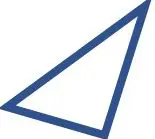
Straight angle

Acute triangle
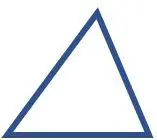
Scalene Triangle

Isosceles Triangle

Right Triangle

Equilateral Triangle

Perpendicular

Parallel


2D Geometric Shapes Names List
2D geometric shapes are flat figures made of straight or curved lines. Learning their names supports spelling, shape recognition, and helps students group shapes by sides, corners, or symmetry in early geometry lessons.
- Circle: A round shape with no corners or edges. Every point is the same distance from the center
- Square: All four sides are equal and meet at right angles. It’s often used in math and drawing
- Rectangle: Two long and two short sides, with every corner forming a perfect square angle
- Triangle: A three-sided shape with different angle combinations. It’s a basic but very important figure
- Oval: Looks like a stretched circle. It has curved lines and no corners
- Rhombus: A slanted square with all sides equal. The angles are not right angles
- Trapezoid: A four-sided shape with one pair of sides parallel. Also known as a trapezium in some countries
- Parallelogram: Opposite sides are parallel and equal. It slants like a leaning rectangle
- Kite: Two sets of equal-length sides that touch at a point. It forms a diamond-like shape
- Pentagon: A five-sided shape. Often seen in flags and signs
- Hexagon: A shape with six straight sides of equal length
- Heptagon: This seven-sided shape appears less often but is useful in advanced topics
- Octagon: An eight-sided polygon, commonly used for stop signs
- Nonagon: A nine-sided shape. Not very common but part of polygon studies
- Decagon: Has ten sides and ten angles. Used in complex geometric tasks
- Dodecagon: A twelve-sided figure with equal sides and angles in regular form
Common Flat Shapes in Geometry
Common flat shapes include triangles, quadrilaterals, and polygons used in early geometry. These shapes help learners sort by angle types, side lengths, and other groupings based on flat surface properties.
- Right Triangle: One angle is exactly 90 degrees. The sides meet at a sharp corner
- Acute Triangle: All three angles are smaller than 90 degrees. It looks tight and narrow
- Obtuse Triangle: One angle is larger than 90 degrees. The shape opens wide on one side
- Scalene Triangle: Each side has a different length. No sides or angles match
- Equilateral Triangle: All three sides and angles are equal. Often taught first in triangle lessons
- Isosceles Triangle: Two equal sides and one different. The top angle is usually sharper
- Semi-circle: Half of a circle. It’s made by cutting a circle across the center
- Quadrilateral: A general name for any shape with four straight sides
- Arrowhead: A shape that points in one direction with an inward dent
- Star Polygon: A sharp, pointed figure often made of overlapping triangles
Shapes Grouped by Sides and Angles
Shapes can be grouped by the number of sides or the type of angles they have. Knowing these categories helps students compare shapes and understand their geometric properties more deeply.
- Polygon: Any closed shape with three or more straight sides
- Regular Polygon: All angles and sides are exactly the same length and size
- Irregular Polygon: Has sides and angles that do not match each other
- Concave Polygon: One or more angles point inward, forming an inward corner
- Convex Polygon: All angles point outward. No corners go inward
- Acute Triangle: Each angle is sharp and below 90 degrees
- Right Triangle: Has one corner that makes a square turn
- Obtuse Triangle: One wide corner greater than 90 degrees
- Scalene Triangle: All three sides look different in size
- Equilateral Triangle: All edges and corners look exactly the same
- Isosceles Triangle: Two equal-length sides meet at a shared corner
3D Shapes Names with Images
3D shapes are solid figures with length, width, and height. Learning their names helps students describe volume, edges, and faces in both classroom tasks and object recognition.
- Cube: Six square faces of equal size. All corners are right angles
- Cuboid: Similar to a cube but with different-length rectangular sides
- Sphere: A round solid with no flat surfaces. Every point is the same distance from the center
- Cylinder: Two circular bases connected by one smooth curved surface
- Cone: A circle base that meets at a single sharp point
- Pyramid: A solid with a flat base and triangular sides that meet at the top
- Square Pyramid: A pyramid with a square base and four equal triangle faces
- Rectangular Prism: A box shape made from six rectangles
- Triangular Prism: Two triangle bases and three rectangle sides make up this solid
- Hexagonal Prism: Two hexagon ends joined by rectangles. It’s longer and more complex
- Tetrahedron: A four-faced shape where every face is a triangle
- Ellipsoid: A stretched sphere that looks more like an egg
- Torus: A shape like a donut with a circular hole inside
Solid Figures Used in Learning
Solid figures have faces, edges, and vertices. Learning their structure helps learners describe physical objects and solve shape-based problems involving measurement or construction.
- Face: A flat part of a 3D shape, like a side of a box
- Edge: The straight line where two faces touch each other
- Vertex: The sharp point where edges meet
- Base: The bottom part of a shape that it stands on
- Height: How tall the shape is from base to top
- Depth: The distance from the front of the shape to the back
- Net: A pattern that folds into a solid. It helps students understand 3D shapes
How Shapes Differ by Faces and Edges
3D shapes can be compared by counting their faces, edges, and corners. This helps students classify shapes correctly and visualize their properties.
- Cube: 6 faces, 12 edges, 8 corners. Each face is a square
- Cuboid: Also 6 faces and 8 corners, but the sides differ in length
- Square Pyramid: Has 5 faces, including 1 square and 4 triangles
- Cone: 1 flat face and a smooth curved side. It has 1 corner at the tip
- Cylinder: Two flat circles and a curved surface with no corners
- Sphere: A ball-shaped solid with no edges or corners
- Tetrahedron: 4 triangle faces, 6 edges, and 4 corners
Shapes Names for Kids Learning English
These shape names are common in beginner English lessons. Knowing them supports vocabulary growth, spelling, and everyday object recognition in early learning.
- Circle
- Square
- Triangle
- Rectangle
- Star
- Heart
- Oval
- Diamond
- Arrow
- Cross
- Moon
- Crescent
- Spiral
- Semi-circle
- Plus Sign
Beginner Shapes with Spellings
These shape names are great for spelling practice. Learning their spellings improves writing, memory, and recognition.
- Circle – C-I-R-C-L-E
- Square – S-Q-U-A-R-E
- Triangle – T-R-I-A-N-G-L-E
- Oval – O-V-A-L
- Star – S-T-A-R
- Heart – H-E-A-R-T
- Arrow – A-R-R-O-W
- Cross – C-R-O-S-S
- Diamond – D-I-A-M-O-N-D
Shapes Kids See in Daily Life
These shapes are often seen on signs, toys, books, or common objects. Learning them helps build strong associations between names and everyday items.
- Circle: Found in clocks and wheels
- Square: Seen in windows and floor tiles
- Triangle: Common in road signs or sandwiches
- Rectangle: Looks like a book or a phone screen
- Star: Appears in drawings or stickers
- Heart: Used in greeting cards
- Oval: Found in mirrors and sports fields
- Arrow: Seen on signs or keyboards
Shapes Names Used in Math Class
These shape words are used in geometry, measurement, and drawing lessons. Students often hear or write these names during school activities.
- Circle
- Triangle
- Square
- Rectangle
- Polygon
- Cube
- Sphere
- Cone
- Cylinder
- Pyramid
- Line Segment
- Angle
- Parallel Lines
- Perpendicular Lines
- Radius
- Diameter
- Chord
Basic Geometry Vocabulary
These words help describe shapes and their structure. Knowing these supports early math success and improves understanding of shape-related concepts.
- Angle
- Vertex
- Edge
- Face
- Side
- Corner
- Base
- Height
- Width
- Depth
- Line
- Arc
- Curve
- Symmetry
- Perimeter
- Area
- Volume
- Net
- Coordinate
- Axis
Shape Words in School Subjects
Shape vocabulary appears in both art and math. These names help with describing drawings, diagrams, or building shapes in class.
- Circle
- Square
- Line
- Rectangle
- Shape
- Polygon
- Symmetry
- Angle
- Curve
- Point
- Edge
- Vertex
- Corner
- Outline
- Sketch
- Figure
FAQs
Geometrical shapes are figures that have specific properties, such as size, angles, and sides. Here are some common ones:
1. Circle
2. Square
3. Rectangle
4. Triangle
5. Pentagon
6. Hexagon
7. Octagon
8. Oval
These are the basic shapes in geometry!
Geometric shapes are figures or forms that have specific properties, such as sides, angles, and dimensions. They can be 2D (two-dimensional) or 3D (three-dimensional). Here are examples of each:
2D Shapes (Flat shapes):
1. Circle
2. Square
3. Rectangle
4. Triangle
5. Pentagon
6. Hexagon
7. Octagon
8. Rhombus
9. Trapezoid
10. Parallelogram
3D Shapes (Solid shapes):
1. Sphere
2. Cube
3. Rectangle Prism
4. Cylinder
5. Cone
6. Pyramid
7. Tetrahedron
These are all types of geometric shapes!
You May Also Like