When we sit on a chair, we rarely think about how many parts work together to support us. But every chair is made up of different components, and each one has a specific purpose. From the seat we sit on to the legs that keep it steady, every part plays an important role in comfort and balance. In this guide on Parts of a Chair, we’ll explore the main sections of a chair in a simple and easy way so you can understand how it is built and how it functions.
Parts of a Chair Diagram With Names
A chair is a carefully designed piece of furniture made up of several important components that work together to provide support, balance, and comfort. The seat forms the main sitting surface, while the legs distribute body weight evenly to keep the chair stable. The backrest supports the spine and helps maintain proper posture during sitting. In many designs, armrests add extra comfort by supporting the arms and reducing shoulder strain. Structural elements such as rails, stretchers, and joints strengthen the frame and prevent wobbling. Every part, from the top rail to the base, plays a vital role in durability, safety, and everyday usability.
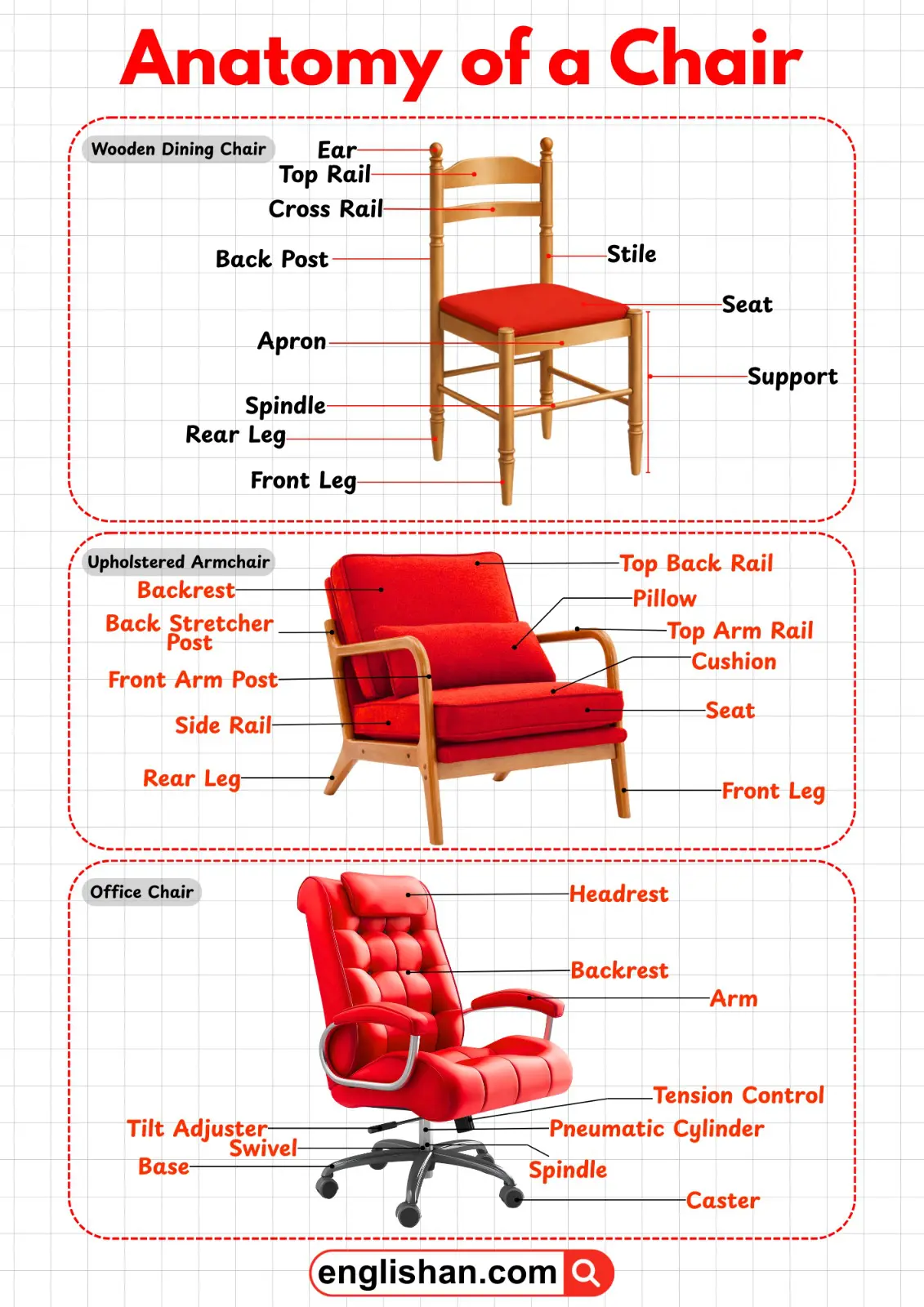
Wooden Dining Chair
Ear
The ear is the small upward projection located above the top rail of the chair back. Although primarily decorative, it visually extends the height of the chair and contributes to classical or traditional styling.
Top Rail
The top rail is the highest horizontal structural member of the backrest frame. It ties together the two vertical stiles and resists lateral stress, preventing the back from spreading apart under pressure.
Cross Rail
Positioned below the top rail, the cross rail provides intermediate reinforcement. It distributes load across the back structure and increases rigidity.
Stile
The stile refers to the vertical side members of the back frame. These components form the primary load-bearing structure of the back and typically continue downward to function as the rear legs.
Back Post
The back post is the vertical support forming the rear legs of the chair. It transfers the user’s weight directly to the floor and ensures structural stability.
Backrest
The backrest is the supporting surface against which the user leans. It is designed to maintain spinal alignment and provide ergonomic support.
Apron
The apron is the horizontal framing element located beneath the seat. It connects the legs and supports the seat panel, preventing flexing or sagging.
Spindle
Spindles are slender vertical rods installed between horizontal rails. They provide light back support while maintaining airflow and visual openness in the design.
Seat
The seat is the primary load-bearing horizontal surface. It distributes body weight evenly across the apron and leg structure.
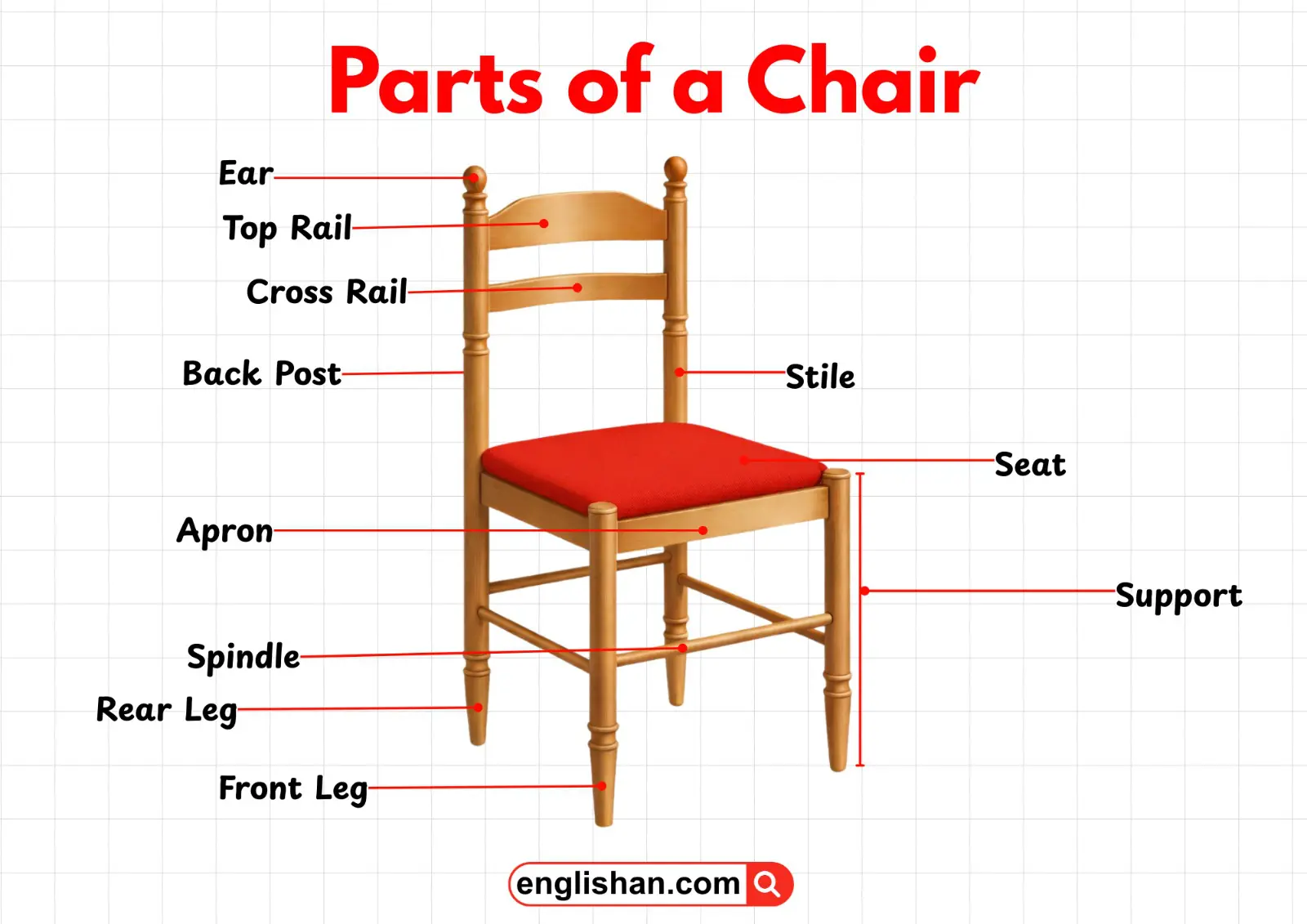
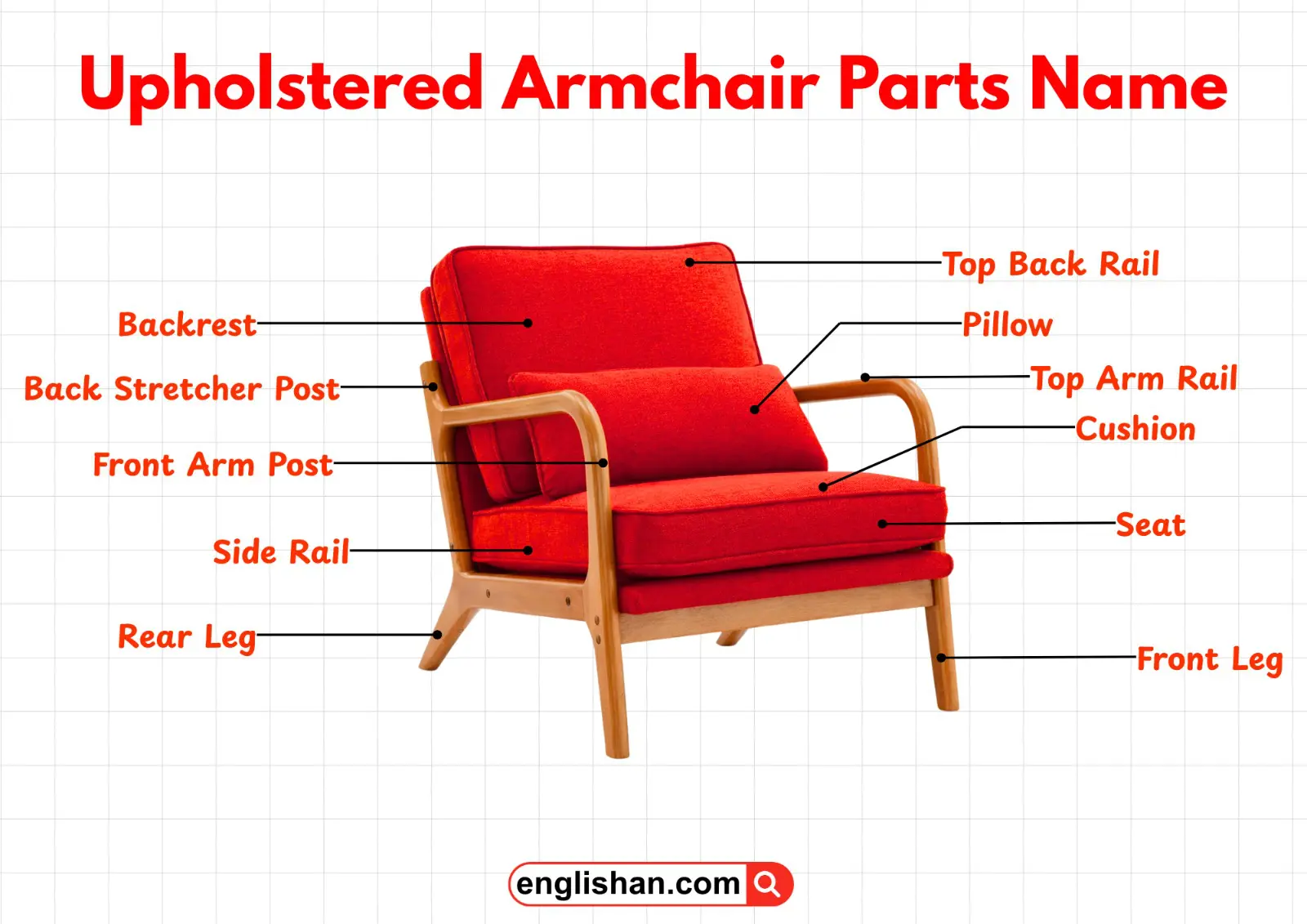
Upholstered Armchair
Top Back Rail
This is the uppermost horizontal framing element at the back. It maintains the structural integrity of the upholstered back panel.
Back Stretcher Post
A vertical reinforcement element positioned at the rear. It strengthens the back assembly and prevents structural distortion.
Backrest
The backrest is a padded panel designed for comfort and lumbar support. It absorbs pressure and promotes relaxed posture.
Pillow
The pillow is a removable cushioning accessory. It enhances comfort and allows customization of support.
Cushion
The cushion is a thick padded element placed over the seat base. It provides pressure distribution and shock absorption.
Top Arm Rail
The upper structural member of the armrest. It supports the forearms and adds to ergonomic comfort.
Side Rail
The side rail runs horizontally between front and rear legs. It stabilizes the frame and prevents side-to-side movement.
Front Arm Post
This vertical support connects the armrest to the seat structure. It helps bear downward force applied to the armrest.
Front Leg
The front leg is a primary vertical load-bearing support transferring weight to the ground.
Rear Leg
The rear leg provides back support and balance. It is often slightly angled for improved stability.
Seat
The seat structure forms the base platform beneath the cushion. It supports static and dynamic loads during sitting.
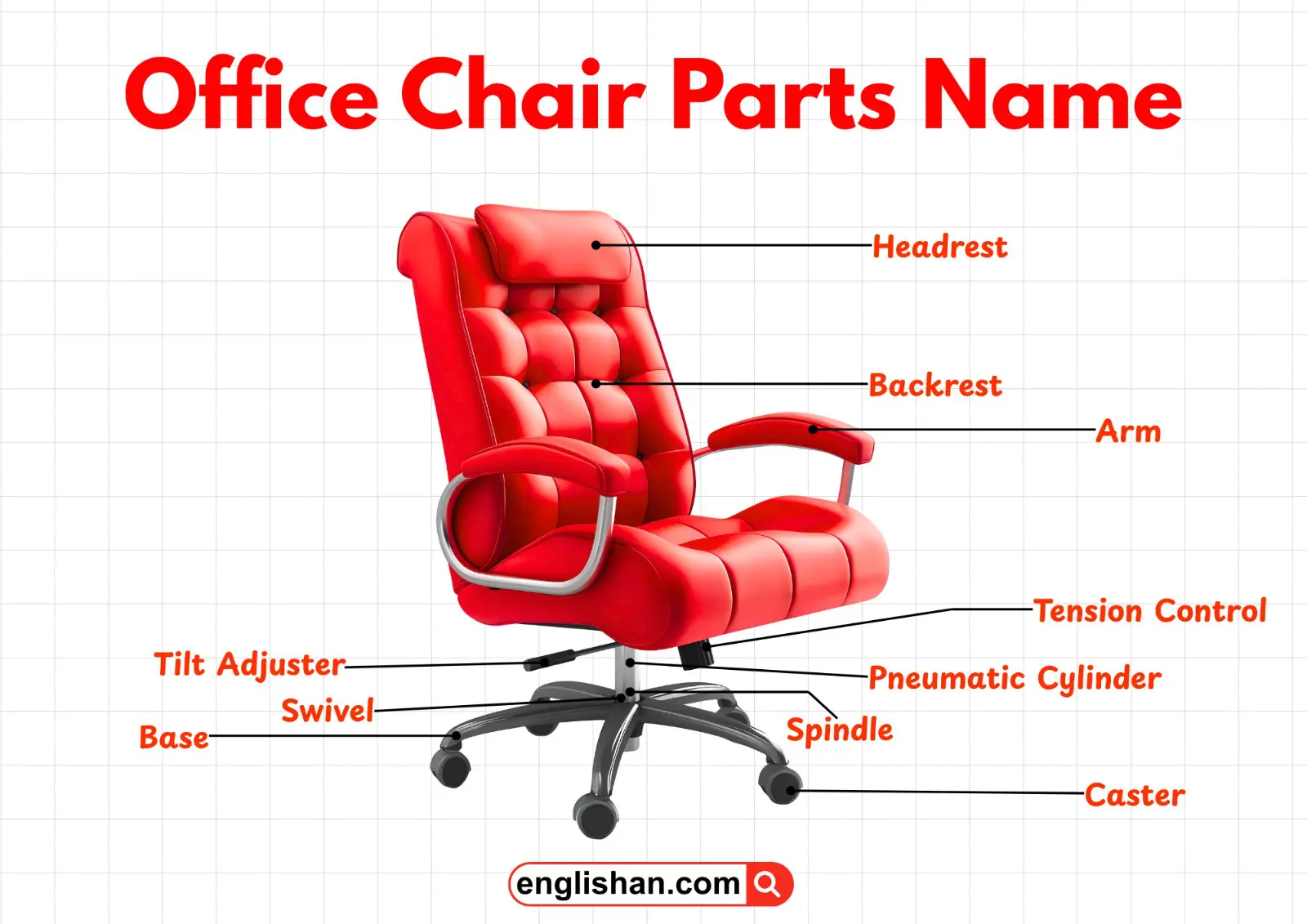
Office Chair
Headrest
The headrest supports the head and cervical spine. It reduces neck strain, especially during reclining.
Backrest
The backrest supports the thoracic and lumbar regions of the spine. In ergonomic designs, it may include contouring for lumbar alignment.
Arm
Armrests support the forearms and reduce shoulder tension. Adjustable models enhance ergonomic customization.
Tilt Adjuster
A mechanical control that allows the backrest to recline. It may lock the chair at various tilt angles.
Tension Control
This mechanism regulates the resistance felt when reclining. It allows the user to adjust the recline force based on body weight.
Pneumatic Cylinder
A gas-lift mechanism that enables vertical height adjustment. It ensures smooth and controlled seat positioning.
Spindle
The central vertical shaft connecting the seat to the base. It supports rotational and vertical movement.
Swivel
The rotational mechanism allowing 360-degree seat movement without repositioning the base.
Base
Typically a five-star structure that distributes weight evenly. It ensures balance and prevents tipping.
Caster
Small rolling wheels attached to the base legs. They enable mobility across various floor surfaces.
Key Takeaway
As we learned, a chair is more than just a seat because its parts work together to provide comfort, support, and stability. The ear, top rail, and cross rail strengthen the backrest, while stiles and back posts transfer weight to the legs. The backrest, spindles, and seat provide ergonomic support, and aprons and side rails keep the frame sturdy. In upholstered or office chairs, cushions, armrests, tilt adjusters, and casters add comfort and functionality. Understanding these parts highlights the design, support, and craftsmanship in every chair.
You May Also Like