When we look at a coat, it might seem like just a simple piece of clothing, but there is actually a lot going on in its design. From the collar and lapels to the sleeves and lining, every part has its own role in both style and comfort. Whether you are learning fashion basics, improving your vocabulary, or just curious about how coats are made, understanding the different parts of a coat can be really helpful. In this article, we’ll explore all the key parts of a coat in a simple and easy way.
List of Coat Parts With Names
- Lapels
- Buttons
- Buttonholes
- Lining
- Storm Flap
- Sleeves
- Belt Loops
- Belt
- Flap Pockets
- Cuff Straps
- Cuffs
- Hem
- Epaulettes
- Collar
- Back Yoke
- Sleeve Loops
- Back Vent
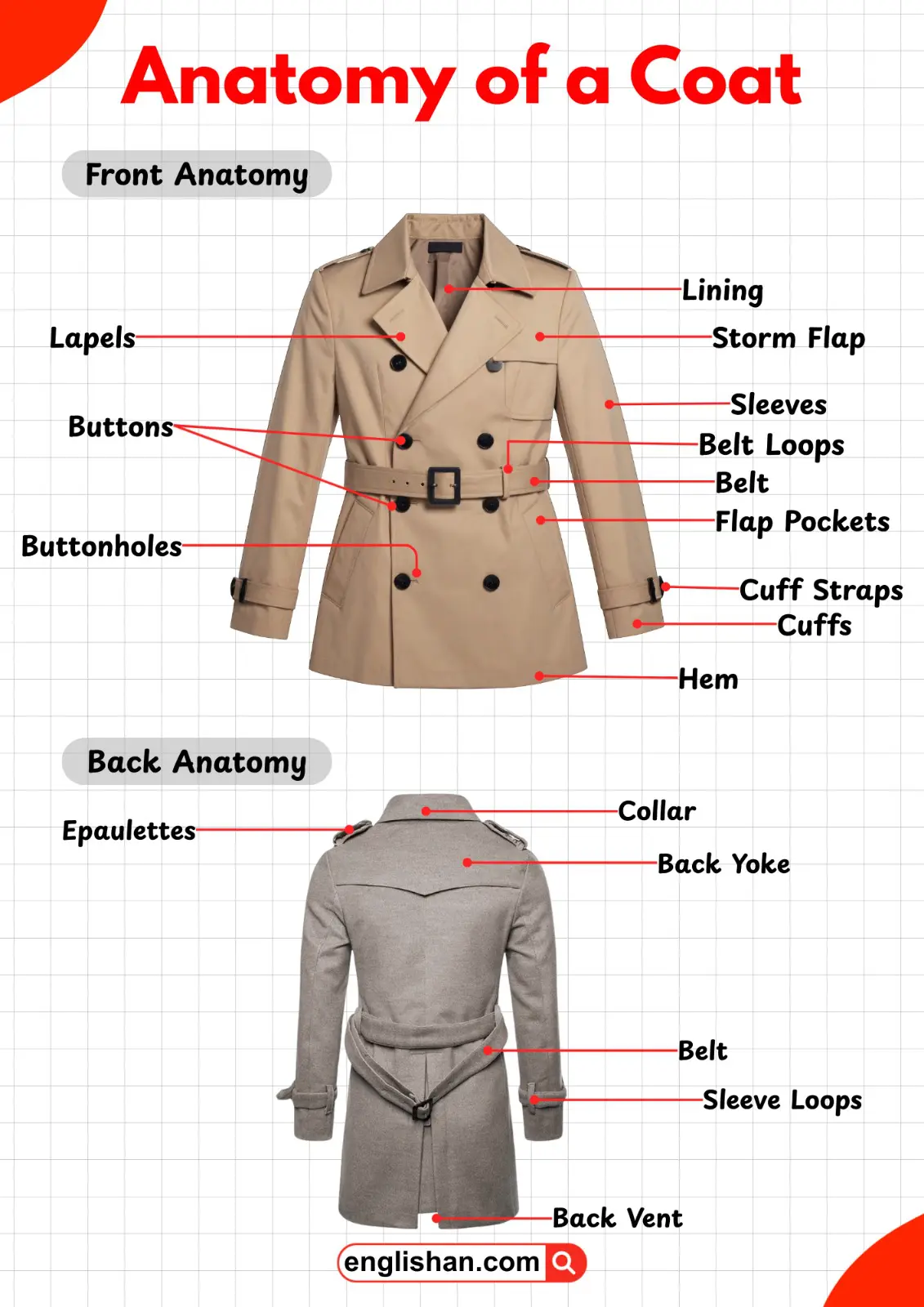
Parts of a Coat Diagram With Names
Coats are made up of several parts that work together to provide style, comfort, and function. The collar and lapels shape the neckline, while sleeves and cuffs allow movement. Pockets add convenience and design, and the front and back panels form the main structure. Buttons, buttonholes, and zippers help secure the coat, and the lining and seams ensure a proper fit. Each part plays an important role in making a coat look good and work well.
Upper Body Parts
These parts form the top section of the coat, mainly around the neck, shoulders, and upper back, giving structure and style, and together they define the coat’s overall upper appearance.
Collar
The collar sits around the neck and frames the top of the coat. It adds structure and style while also protecting the neck from cold and wind.
Lapels
Lapels are the folded flaps on the front near the chest. They give the coat a polished, classic look and help define its overall design.
Epaulettes
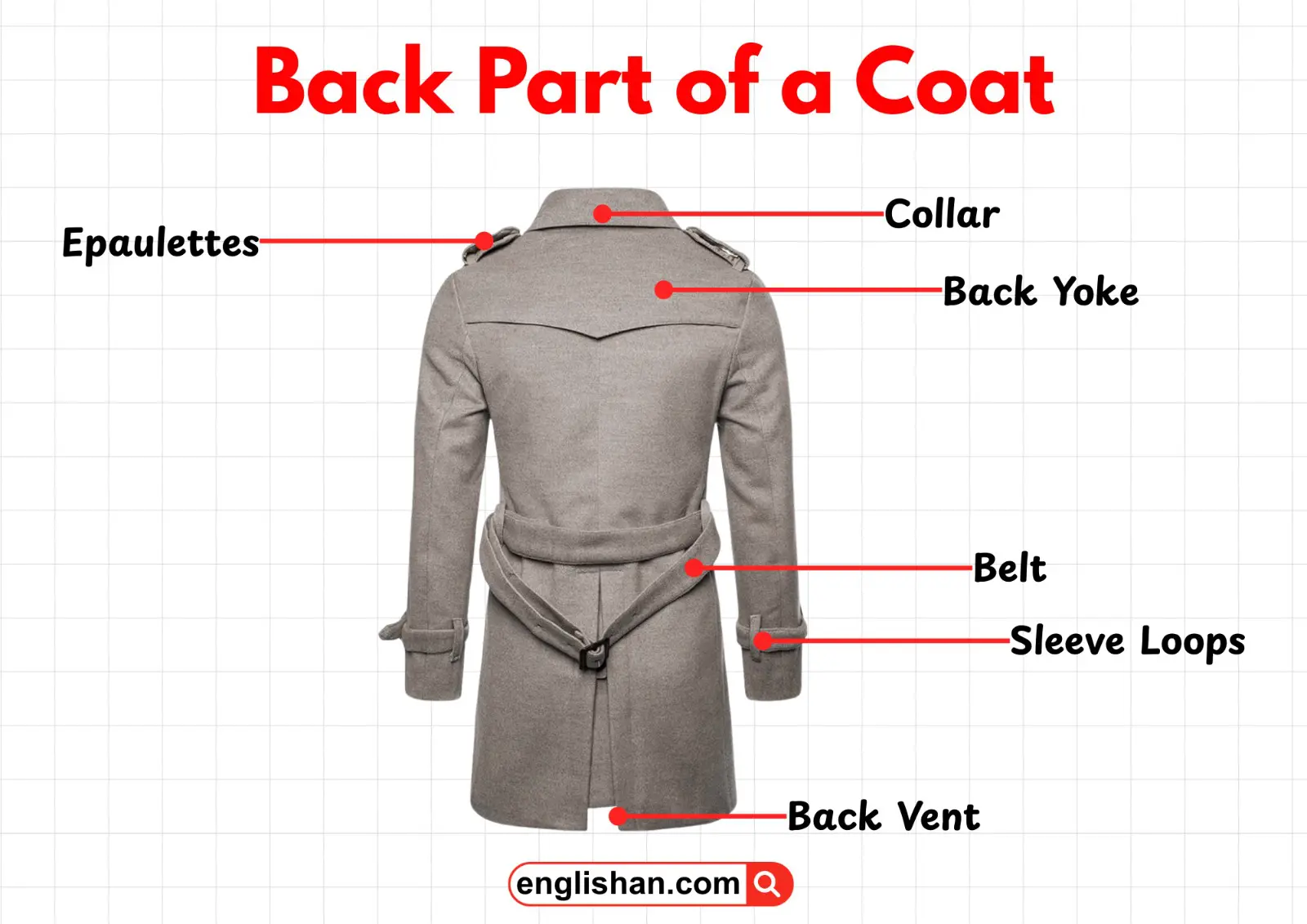
Epaulettes are small shoulder straps often secured with a button. Originally military-inspired, they add a decorative and structured appearance to the coat.
Back Yoke
The back yoke is a panel across the upper back. It provides extra strength, better fit, and allows ease of movement.
Front Closure & Fastening
These elements help in closing and securing the coat while also contributing to its overall fit and appearance, ensuring both functionality and a polished look.
Buttons
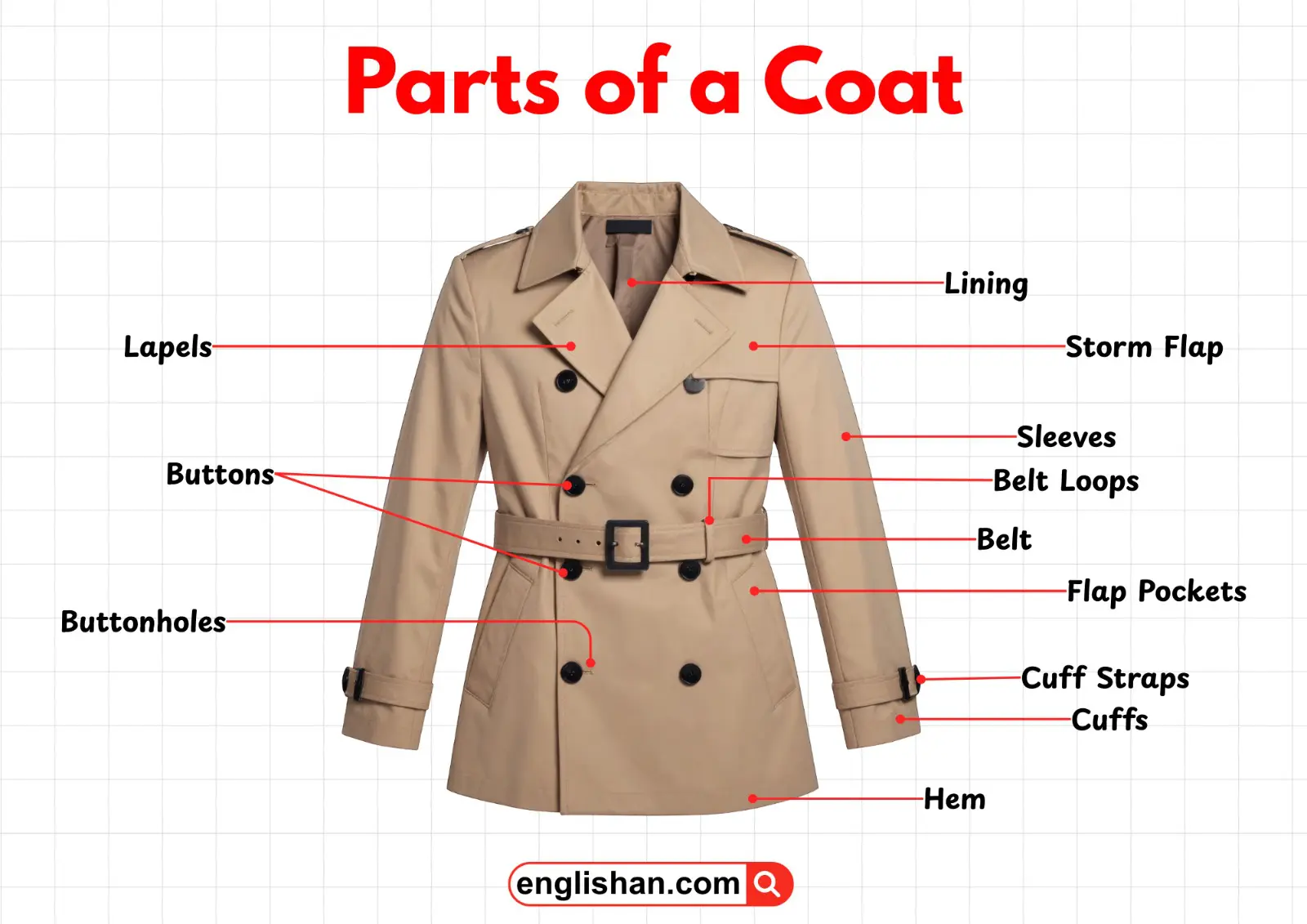
Buttons are used to fasten the coat at the front. They also act as decorative elements, enhancing the coat’s overall look.
Buttonholes
Buttonholes are the stitched openings where buttons pass through. They ensure the coat can be securely closed.
Belt
The belt wraps around the waist and can be tightened for a better fit. It adds shape to the coat and enhances style.
Belt Loops
Belt loops are small fabric loops that hold the belt in place, preventing it from slipping or moving out of position.
Sleeves & Arm Details
These parts are related to the arms, providing coverage, comfort, and adjustable fitting, making movement easy and comfortable.
Sleeves
Sleeves cover the arms and provide warmth and protection. They also contribute to the coat’s fit and comfort.
Cuffs
Cuffs are the ends of the sleeves at the wrists. They help keep warmth in and give a neat finish to the sleeves.
Cuff Straps
Cuff straps are adjustable bands at the sleeve ends. They allow tightening or loosening around the wrist for comfort and style.
Sleeve Loops
Sleeve loops are small loops near the cuffs that hold straps or add decorative detail to the sleeves.
Pockets & Flaps
These features are designed for storage and protection, while also adding functional and stylish details, making the coat both practical and visually appealing.
Flap Pockets
Flap pockets are pockets covered with a flap. They protect items inside from rain or dust while adding style.
Storm Flap
The storm flap is an extra layer of fabric on the front or shoulder area. It protects against wind and rain, making it more weather-resistant.
Inner Structure
This part focuses on the inside of the coat, improving comfort, warmth, and wearability, ensuring a smooth and cozy experience.
Lining
The lining is the inner layer of the coat. It adds comfort, improves warmth, and helps the coat slide on easily over clothes.
Lower & Back Structure
These components shape the bottom and back of the coat, allowing ease of movement and a clean finish, completing the coat’s overall design.
Hem
The hem is the bottom edge. It gives a clean finish and determines the coat’s length.
Back Vent
The back vent is a slit at the lower back. It allows easier movement and prevents from feeling tight while walking or sitting.
Key Takeaway
As we learned, the parts of a coat are carefully designed to combine style, comfort, and functionality—where upper parts add structure, closures ensure proper fitting, sleeves provide movement, pockets add practicality, the inner lining gives comfort, and the lower sections allow ease and a neat finish.
You May Also Like