
A door knob may look complete from the outside, yet its inner parts do the actual work behind every turn. When you try to explain how it functions, replace a worn piece, or understand how the lock engages, the challenge often comes from not knowing the internal names.
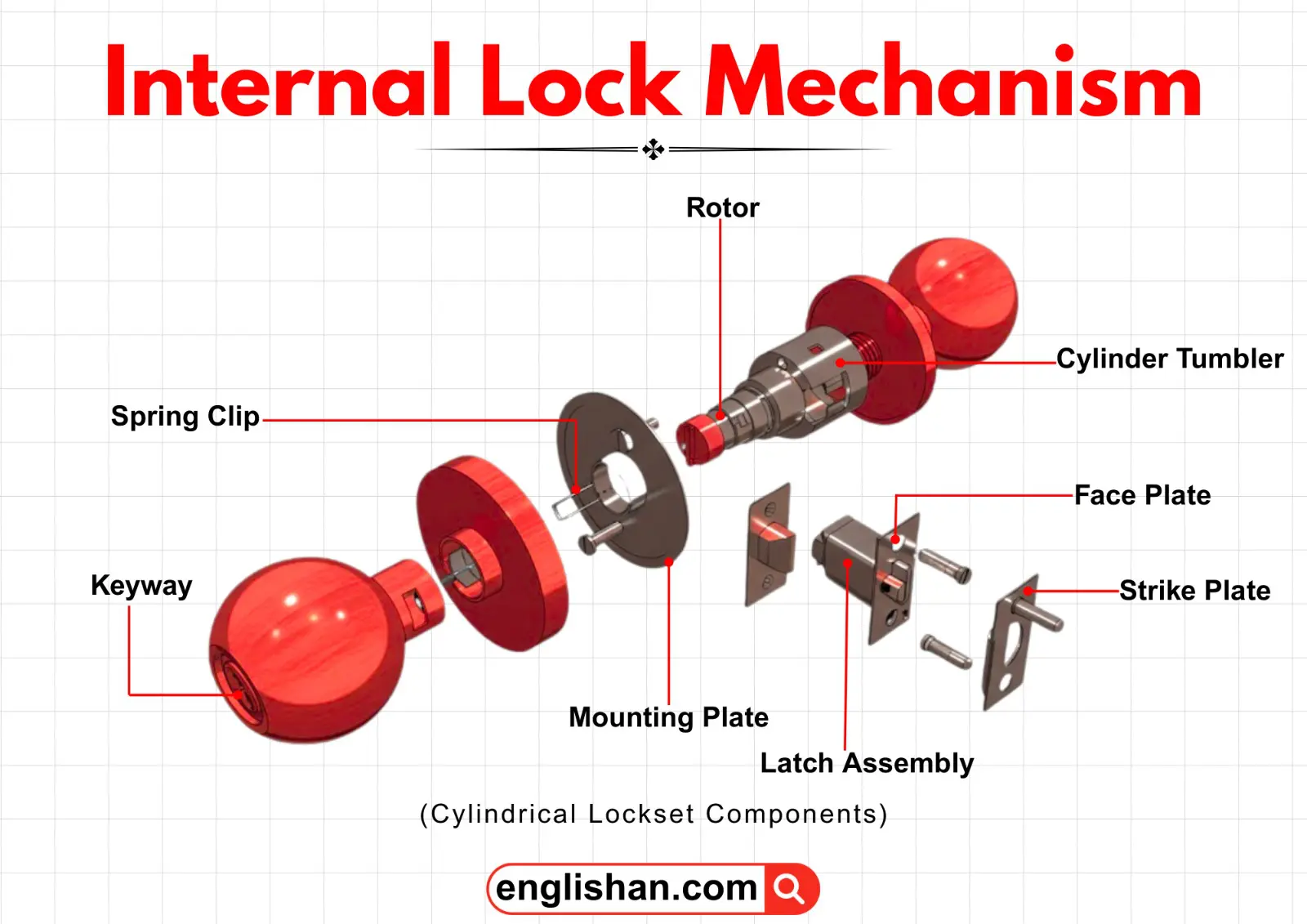
In this article, we break down the inner parts of a door knob with focus on how they fit and work together. The coverage includes pieces such as the spindle, latch, lock cylinder, faceplate, strike plate, and set screw, using standard knob assemblies as the base. The labeled diagram below helps connect each name to its position at a glance.
List of Parts Door Knob Parts
- Exterior Knob
- Interior Knob
- Knob Grip
- Knob Neck
- Rose
- Trim Plate
- Shank
- Slot
- Lock Body
- Chassis
- Spindle
- Mounting Plate
- Spring Plate
- Through Bolts
- Mounting Screws
- Cylinder
- Cylinder Tumbler
- Rotor
- Keyway
- Thumb Turn
- Lock Button
- Latch Assembly
- Latch Bolt
- Latch Face Plate
- Strike Plate
- Strike Box
- Dead Bolt
- Dead Bolt Knob
- Spring
- Return Spring
- Spring Clip
- Borehole
- Edge Bore
- Backset
- Door Prep Hole
Door Knob Parts Diagram With Names
A door knob is a compact door hardware assembly fitted through the face and edge of a door. Each named part sits in a fixed position and works together to control opening, closing, and locking.
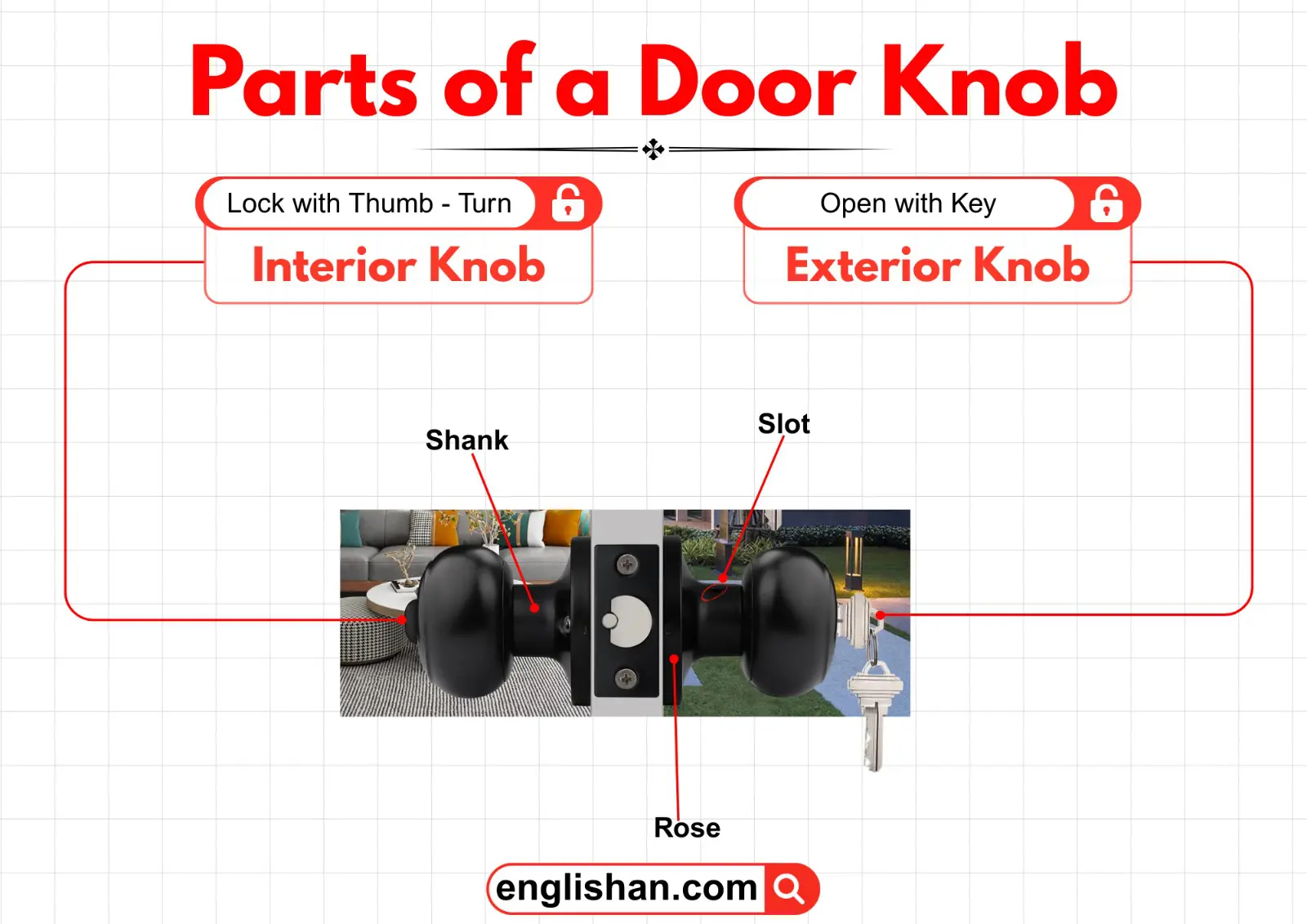
Door Knob And Trim Parts
These parts are the visible components on both sides of the door that are handled during use.
Exterior Knob
The exterior knob is fitted on the outside face of the door. It connects to the locking system and is often designed to work with a key.
Interior Knob
The interior knob is installed on the inside face of the door. Turning it retracts the latch so the door can open.
Rose
The rose is the round trim plate behind the knob. It:
- Covers mounting screws
- Protects the door surface
- Gives a finished edge
Shank
The shank is the solid section behind the knob. It transfers turning force from the knob to internal parts.
Slot
The slot is a small opening near the knob base. It is used for:
- Alignment during installation
- Emergency release on some designs
Mounting And Body Parts
These parts are positioned inside the thickness of the door and hold the system together.
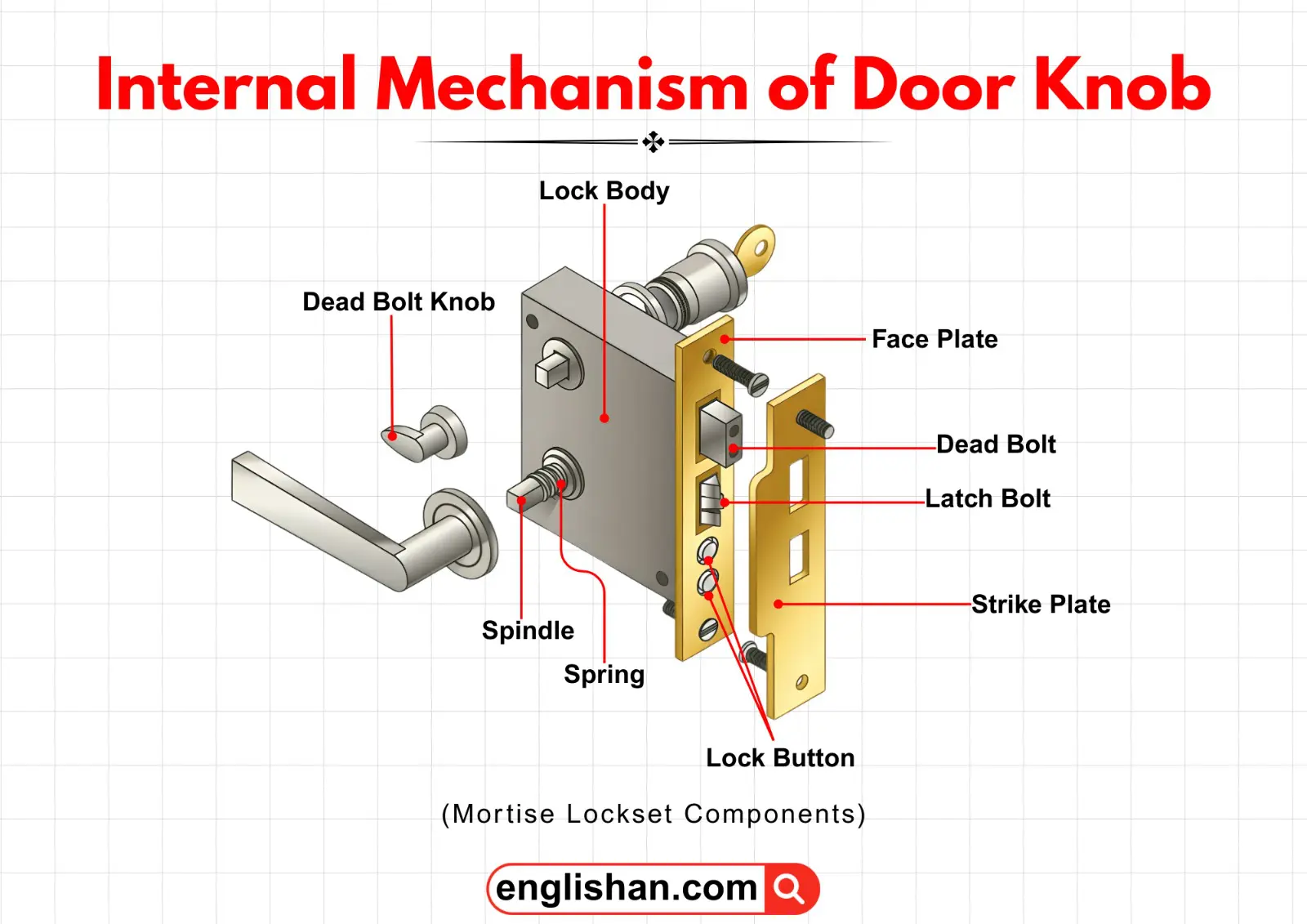
Lock Body
The lock body sits inside the main door hole. It:
- Holds moving parts
- Connects both knobs
- Houses the latch action
Chassis
The chassis forms the internal frame of the lock body. Other components are fixed to it for stability.
Spindle
The spindle is a metal rod passing through the door. It:
- Connects both knobs
- Turns when either knob is rotated
Mounting Plate
The mounting plate sits between the lock body and door surface. It:
- Keeps alignment straight
- Holds the assembly firmly
Spring Plate
The spring plate is positioned behind the spindle inside the lock body. It supports spring movement that returns the knob to rest.
Keyed Lock Parts of a Door
These parts are located inside the exterior knob or lock body and work with a key.
Cylinder
The cylinder is the round locking unit facing outward. It accepts the key and controls locking.
Cylinder Tumbler
Cylinder tumblers are small pins inside the cylinder. They:
- Align with the correct key
- Block rotation when misaligned
Rotor
The rotor is the turning core inside the cylinder. When unlocked, it rotates to operate the lock.
Keyway
The keyway is the shaped opening on the cylinder face. It guides the key into position.
Thumb Turn Parts of Knob
These parts appear on the interior side of keyed knobs.
Thumb Turn
The thumb turn is a small turning control on the inside knob or plate. It locks or unlocks the door without a key.
Latch Parts
Latch parts are installed in the edge of the door, aligned with the frame.
Latch Assembly
The latch assembly is the complete unit inside the edge bore. It controls holding and release of the door.
Latch Bolt
The latch bolt is the angled sliding metal piece. It:
- Extends into the frame
- Retracts when the knob turns
Face Plate
The face plate is the flat metal plate on the door edge. It covers the latch opening and protects the edge.
Strike Plate Parts
These parts are mounted on the door frame, opposite the latch.
Strike Plate
The strike plate is the metal plate on the frame. It:
- Receives the latch bolt
- Reinforces the frame opening
Locking Parts
These parts control manual locking from inside.
Lock Button
The lock button is a push or turn control on the interior knob. It activates the locking function.
Spring And Clip Parts
These parts are located inside the lock body and control movement.
Spring
The spring is a coiled metal part. It:
- Pushes the latch outward
- Returns the knob to neutral
Spring Clip
The spring clip is a small retaining clip. It holds springs and parts in place.
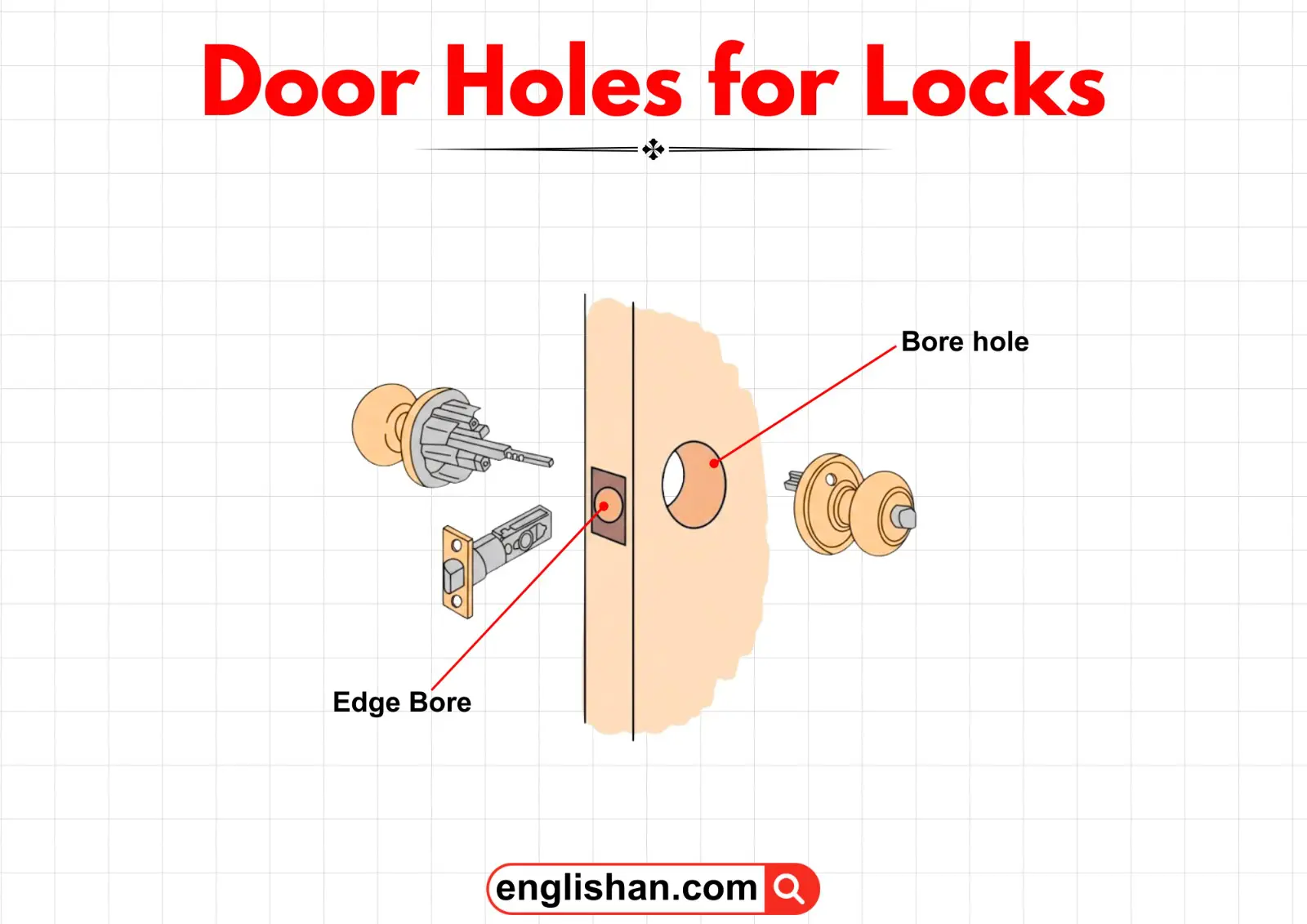
Door Holes
These openings are drilled into the door to fit the hardware.
Borehole
The borehole is the large round hole through the door face. It holds the knobs and lock body.
Edge Bore
The edge bore is the smaller hole in the door edge. It holds the latch assembly.
Dead Bolt Parts
These parts appear when a deadbolt is part of the knob system.
Dead Bolt
The dead bolt is a solid sliding bolt. It moves straight into the frame for stronger locking.
Dead Bolt Knob
The dead bolt knob is the interior turning control. It extends or retracts the dead bolt.
Key Takeaways
A door knob works as a compact door hardware system fitted through the door face and edge. Knobs and trim stay visible on both sides, the lock body and spindle sit inside the door, latch parts engage the frame, and locking parts control access. Springs manage return motion, plates protect contact points, and drilled holes hold the assembly. Some variation exists in locking style, and the parts of a door knob operate together through aligned mechanical movement.
You May Also Like