When working with a piano, it is difficult to talk about problems or features without knowing what each part is called. This affects students learning music basics, beginners practicing at home, and enthusiasts dealing with tuning, repair, or buying a used instrument. Without the correct names, even simple conversations about keys, pedals, or sound issues become unclear.
In this article, we teach you the names of the parts of a piano by breaking the instrument down into clear sections. You will learn both external parts like the keys, pedals, lid, and fallboard, and internal parts such as the hammers, dampers, strings, and soundboard. A labeled diagram is included to help you connect each name to its exact position on the piano.
Piano Parts and Their Functions
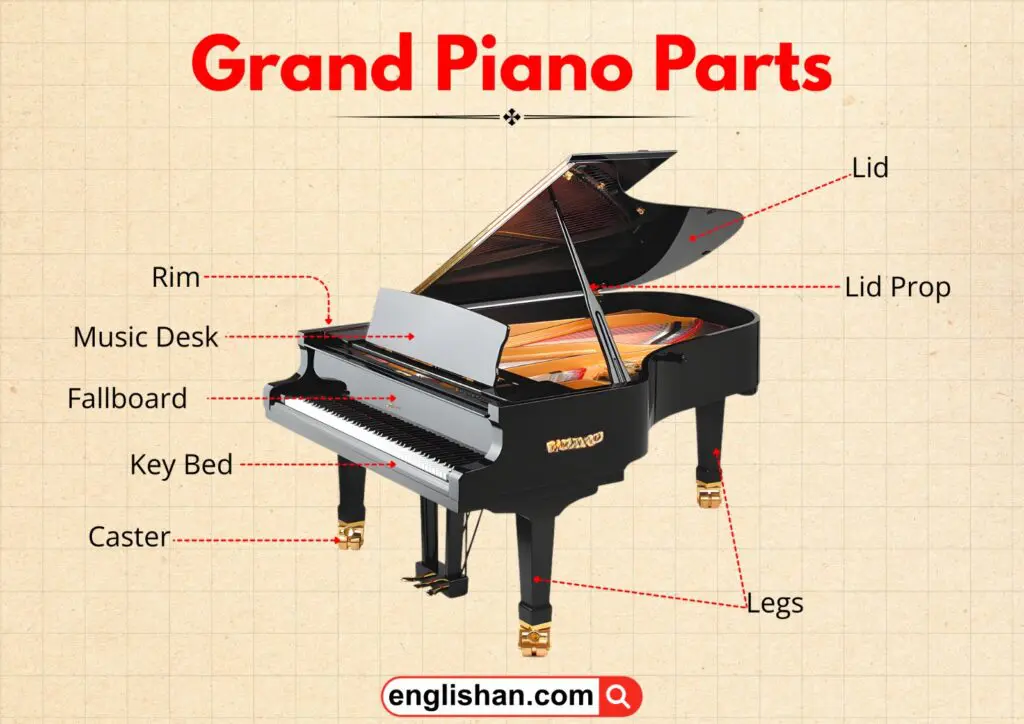
Grand Piano Parts
Case And Lid
Working as the main enclosure and hinged cover, this set protects the instrument and creates a stable shell for the action. It also manages sound projection by shaping how the open space interacts with the room. Strong joinery and a smooth finish matter for long-term rigidity.
Lid
Opening this panel changes how the piano speaks, often making the tone feel more open and direct. Closing it softens the projection and reduces dust exposure. Many lids use layered wood to balance strength with resonance.
Lid Prop
Built to hold the lid at a chosen angle, the prop sets the level of opening and keeps it steady during play. A firm fit reduces wobble and prevents sudden drops, which protects both finish and hardware. Good props also allow quick changes between positions.
Rim
Paired with the inner structure, the rim provides the cabinet’s main frame and handles much of the instrument’s tension load. Its stiffness affects how energy moves through the body and can shape the sense of power in the tone. Laminated construction is common for strength and consistent bending.
Music Desk
Made to hold sheet music upright, the desk keeps pages stable and readable during performance. It often folds down for storage and uses hinges that resist shake. A sturdy desk avoids rattles that can distract from quiet passages and keeps pages secure.
Fallboard
When closed, this cover shields the keys from dust and light contact, and it also protects fingers from pinch points. When opened, it stays out of the way while keeping a neat edge line. Soft liners can reduce noise and prevent scratches.
Key Bed
Serving as the base for the keyboard assembly, the key bed keeps parts aligned so touch stays even. Small shifts can change feel, so it is built for stability under repeated motion. Tight tolerances protect alignment over time.
Legs
Carrying the instrument’s weight, the legs keep the piano steady and reduce rocking during heavy playing. Their shape and joints affect overall stability and how vibration transfers into the floor. Strong legs also protect the cabinet from twist stress.
Caster
Used for moving the piano, casters let it roll without dragging, and many include locks to prevent drift. Hard wheels roll better on firm floors, while softer types can reduce marking on delicate surfaces. Regular contact with the floor makes durability important.
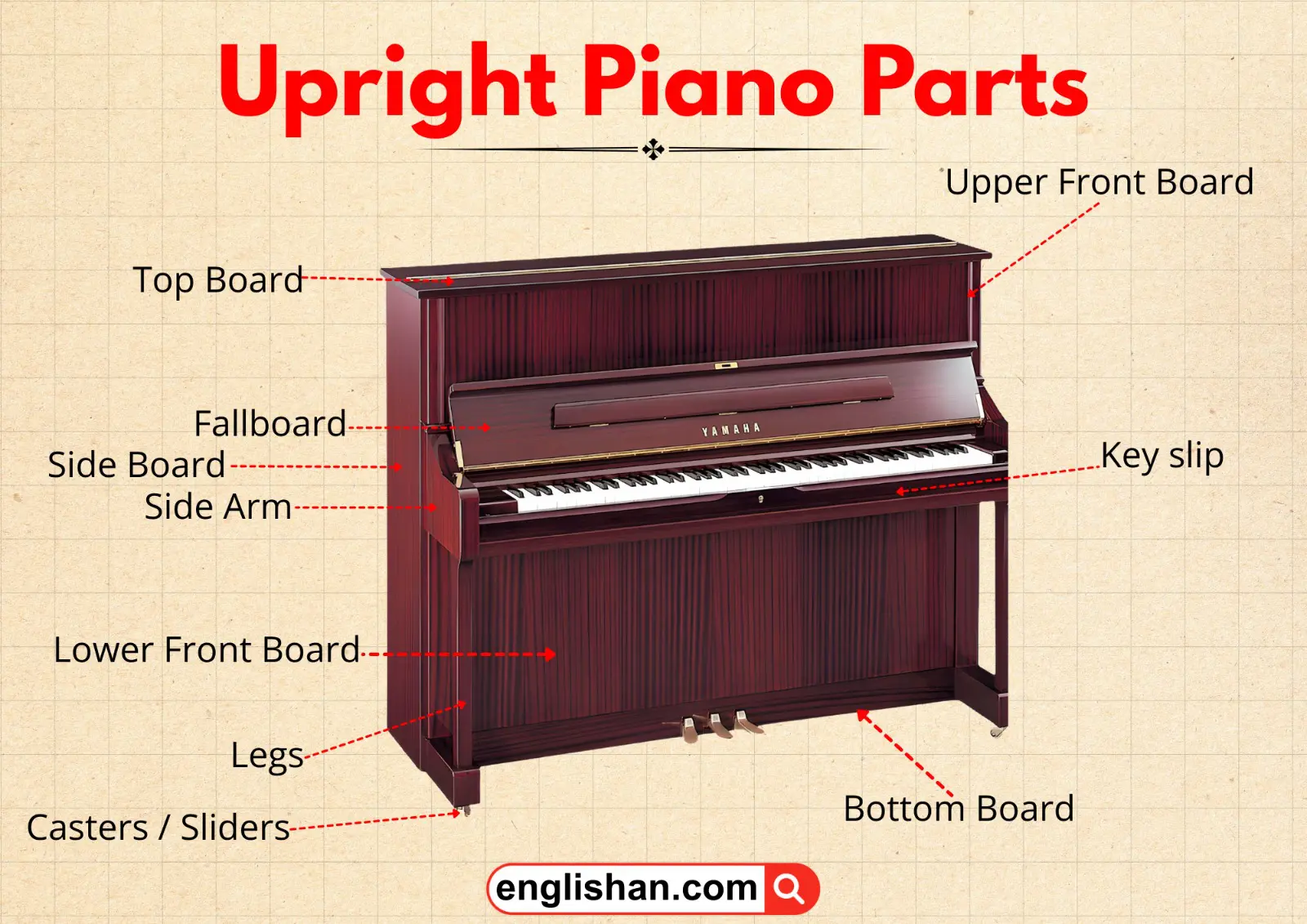
Upright Piano Parts
Cabinet
Serving as the main outer housing, the cabinet gives the piano its structure and protects internal parts from bumps and dust. It also shapes how vibration travels through the wood, which affects tone and volume.
Top Board
This panel acts as a cover that reduces dust and shields the inner space when closed. When opened, it can change how sound leaves the cabinet and can make the tone feel more open. Strong hinges and a steady fit keep rattles down.
Fall Board
A protective cover for the keys, the fall board reduces dust and limits accidental contact when closed. Smooth action and soft lining can prevent noise and protect the finish from scratches.
Side Board / Side Arm
Framing pieces like these add rigidity so the cabinet stays square under long-term tension. They also reduce flex that can lead to creaks or loose joints.
Lower And Upper Front Board
These panels form a protective face that also controls airflow and how sound moves out of the cabinet. A tight fit reduces buzz and keeps small gaps from causing rattle.
Keyslip
Working as a finishing strip near the key area, the keyslip gives a clean edge and can reduce debris getting into moving parts. A snug, even fit prevents clicks and helps keep alignment steady.
Bottom Board
This panel closes and stiffens the lower cabinet while limiting dust and small impacts. Solid joining reduces vibration noise and keeps the body stable over time.
Keybed
Acting as the base for the keyboard assembly, the keybed keeps parts level so the touch feels even. Small shifts can change feel, so stability and tight fit matter.
Music Rack
Built to hold music in place, the rack keeps pages upright and steady during play. Firm joints reduce shake and prevent page slips.
Legs
Carrying the instrument’s weight, the legs control stability and reduce rocking during strong playing. Strong joints also limit twist that can stress the cabinet.
Casters / Sliders
These allow movement without dragging, and many include locks to reduce drift after placement. Wheel and pad materials affect floor marking and smooth rolling.
The Back
This area forms a large part of the enclosure and affects projection by shaping how sound escapes the cabinet. Solid joining reduces rattle and keeps panels from flexing under vibration.
Back Posts
These are major load-bearing members that add strength and keep the body from bending over time. Stiff posts also reduce cabinet flex, which can limit unwanted noise.
Keyboard And Action
This group is the playing and motion system that turns finger force into sound. It links the front touch to fast internal movement, so small changes can affect control and consistency. Clean alignment also reduces noise from extra contact.
Keyboard
Working as the full set of playing levers, the keyboard gives consistent spacing and travel for each note. Even geometry improves balance across the range and keeps the touch predictable. A stable frame limits shift that can change feel.
Keys
Each key acts as a lever that transfers finger force into the action with a set amount of travel and return. Smooth surfaces and stable pins reduce side play and keep motion clean. Weighting choices influence touch and speed.
Piano Action
This is the mechanism that converts key movement into a timed strike and reset cycle. It controls timing and repetition, so it must move fast while staying consistent. Tight regulation limits lost motion and supports repeat speed.
Hammers
Felt-covered hammers strike the strings and shape much of the note’s character. Firmness and shaping affect attack and brightness, while even matching keeps tone consistent across notes. Balanced travel and clean return support repetition.
Strings And Tuning
This set holds pitch and creates the vibrating source that the action drives. String tension, pin grip, and wood stability work together as one system. When one part shifts, tuning stability can change.
Strings
Vibration in the strings creates the notes after the hammer strike, and string length and mass shape pitch and tone. Wound bass strings add weight without extreme thickness, which keeps response even. Uniform tension across the set supports clarity and sustain.
Tuning Pins
These steel pins set string tension by turning in small steps, which changes pitch precisely. Firm friction in the wood keeps them from drifting under constant pull. Smooth turning without sudden jumps improves fine control.
Pinblock
This thick wood block grips the tuning pins and provides long-term stability under heavy tension. Layered hardwood construction is common because it holds threads tightly and resists cracking. A solid pinblock reduces tuning drift and supports consistent pitch.
Sound Parts
These parts shape how vibration becomes audible tone and how notes start and stop. Energy moves from the strings into wood and metal, so stiffness and contact quality affect projection and balance. Tight fitting also limits buzz.
Bridge
Serving as the transfer point from strings to the soundboard, the bridge passes vibration into the wood with strong contact. Its crown and firmness influence clarity and sustain. Stable pin seating reduces false tones and limits rattle.
Soundboard
This large wooden panel acts as the main amplifier, spreading vibration into wider motion that the air can carry. Grain quality and crown shape affect volume and color. A healthy board keeps response even and avoids dead notes.
Dampers
Dampers stop string vibration when the key is released, controlling note length and overall cleanliness. Firm felt contact prevents ringing, while quick lift and return keep timing consistent. Even damping reduces unwanted blur between notes.
Plate
Also called the harp or frame, this cast-iron structure holds the massive string tension and keeps the piano stable. Its strength protects tuning by resisting flex, and it also anchors key hardware points. A rigid plate reduces shift and supports stability.
Piano Pedals
Sustain Pedal
Used most often, this pedal lifts all dampers at once so strings keep vibrating after keys are released. The result is longer resonance and smoother connection between notes. Sound blends naturally, which helps shape fuller phrases and chords.
Soft Pedal
This pedal, also called una corda, changes how hammers contact the strings. It produces a quieter tone with a softer edge while keeping pitch intact. Players use it to reduce volume and alter color without changing touch.
Sostenuto Pedal
Unlike the others, it holds only selected notes that are already sounding. Those tones sustain while later notes remain unaffected. This creates independent sustain control, useful for holding bass or harmony lines cleanly.
Key Takeaways on Parts of Piano
A piano operates through the outer case, the keyboard, the action system, the string set, the soundboard, and the pedal assembly. Keys start motion. The action mechanism transfers movement to hammers. Hammers strike strings. Strings create vibration. The soundboard amplifies that vibration into audible tone. Pedals adjust sustain and damping during play. Together, these groups form a continuous mechanical and acoustic chain. We observe that the same structural pattern remains consistent across upright and grand designs, even though proportions and construction details can vary.
You May Also Like