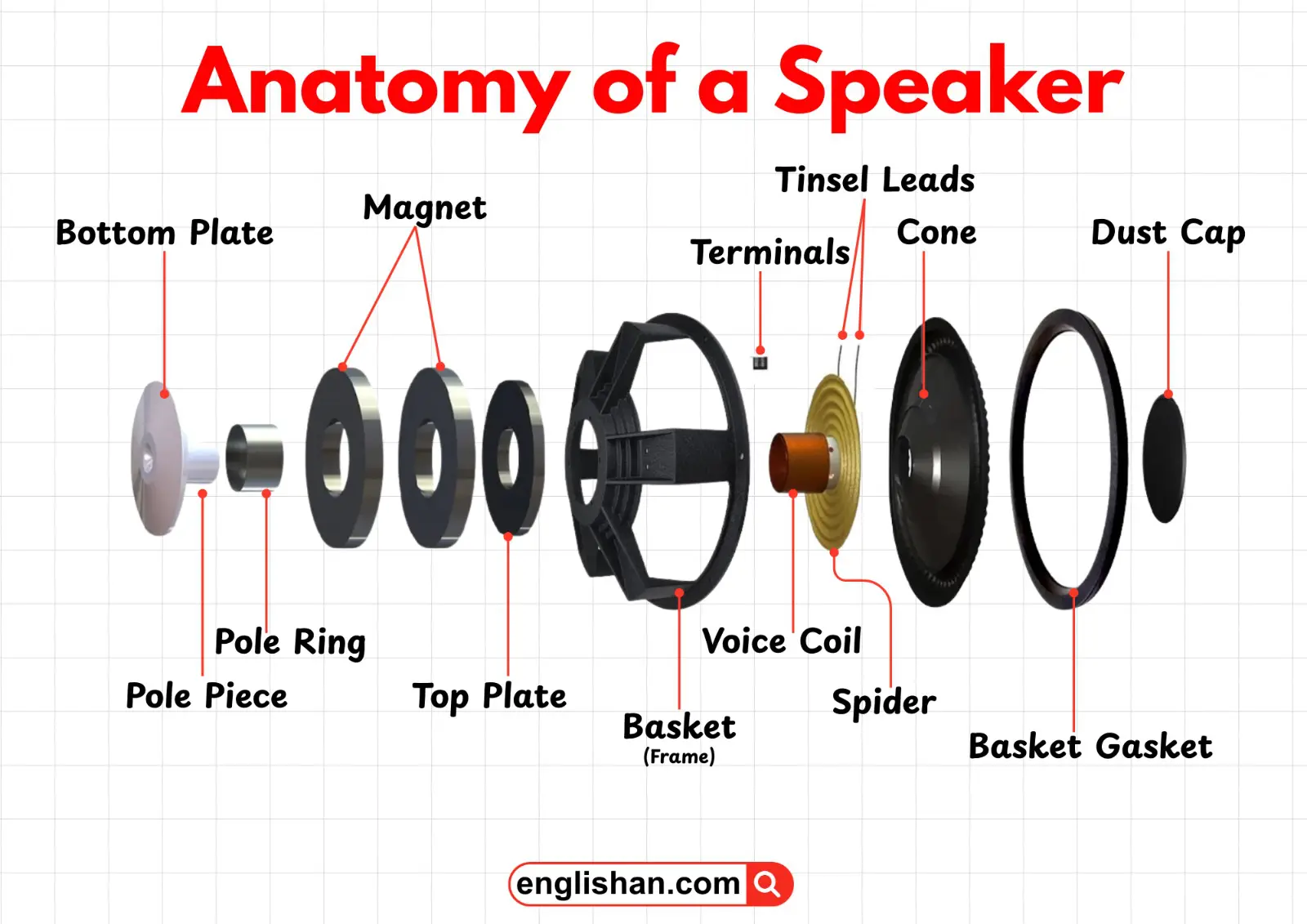
Speakers turn electrical signals into the sounds we hear from music systems, TVs, computers, and smartphones. Though they look simple, each speaker has several key parts like the cone, voice coil, magnet, and enclosure that work together to produce clear sound. Understanding these components helps explain how speakers work and why sound quality differs. In this article, we’ll explore the main parts of a speaker with a labeled diagram.
List Of Speaker Parts With Names
- Bottom Plate
- Pole Piece
- Pole Ring
- Magnet
- Top Plate
- Basket (Frame)
- Terminals
- Tinsel Leads
- Voice Coil
- Spider (Suspension)
- Cone (Diaphragm)
- Surround
- Dust Cap
- Basket Gasket
- Gasket
Parts of a Speaker Diagram With Names
A speaker is a complete audio device made up of several important components that work together to produce sound. The cone vibrates to create sound waves, while the voice coil moves within the magnetic field to generate these vibrations. The magnet provides the necessary magnetic force for the voice coil to function. The suspension and spider hold the cone in place and allow it to move smoothly. The speaker frame or basket supports all the components, and the enclosure enhances sound quality by controlling resonance. Every part, from the diaphragm to the casing, plays a vital role in delivering clear, balanced, and high-quality sound.

Magnetic System
Magnet
The magnet is one of the most important components of a speaker. It creates a strong and stable magnetic field inside the speaker. This magnetic field interacts with the voice coil when electrical signals pass through it. The strength and quality of the magnet greatly affect the speaker’s power, sensitivity, and overall sound performance.
Top Plate
The top plate is a metal plate positioned above the magnet. Its main function is to help direct and concentrate the magnetic field toward the voice coil gap. By guiding the magnetic field efficiently, the top plate improves the movement accuracy of the voice coil and enhances sound clarity.
Bottom Plate
The bottom plate is located beneath the magnet and acts as a base for the magnetic structure. It supports the magnet and helps complete the magnetic circuit. This plate ensures the magnet remains firmly in place and contributes to the proper distribution of the magnetic field.
Pole Piece
The pole piece is a cylindrical metal part located at the center of the magnet assembly. It focuses and directs the magnetic field into the small gap where the voice coil moves. This concentrated magnetic field allows the voice coil to respond precisely to electrical signals, producing accurate sound vibrations.
Pole Ring
The pole ring is a metal ring that helps stabilize the magnetic field and reduce distortion. It improves the speaker’s efficiency by smoothing the magnetic flux in the voice coil gap. As a result, it enhances sound quality and reduces unwanted noise or distortion during playback.
Moving Assembly (Sound-Producing Parts)
Voice Coil
The voice coil is a coil of thin wire wrapped around a small cylinder. When electrical audio signals pass through this coil, it interacts with the magnetic field created by the magnet. This interaction causes the coil to move back and forth rapidly. The movement of the voice coil drives the speaker cone, which produces sound waves.
Cone (Diaphragm)
The cone, also called the diaphragm, is the part that actually pushes air to create sound. It is usually made from lightweight materials like paper, plastic, or composite fibers. When the voice coil moves, it pushes and pulls the cone, creating vibrations in the air that we hear as sound.
Dust Cap
The dust cap is the small dome-shaped cover located in the center of the speaker cone. Its main purpose is to protect the voice coil and inner components from dust, dirt, and debris. In addition to protection, the dust cap can also influence the speaker’s high-frequency sound characteristics.
Tinsel Leads
Tinsel leads are flexible wires that connect the voice coil to the speaker terminals. They are designed to be highly flexible so they can move along with the cone without breaking. These leads ensure a stable electrical connection while the speaker is constantly vibrating.
Suspension System
Spider (Suspension)
The spider is a flexible, corrugated component that supports the voice coil and keeps it centered in the magnetic gap. It controls the movement of the cone and ensures it moves in a straight line. The spider also helps the cone return to its resting position after each vibration.
Surround
The surround is a flexible ring that connects the outer edge of the cone to the speaker frame. It allows the cone to move freely while keeping it properly aligned. Surrounds are usually made of rubber, foam, or cloth and play a major role in controlling the speaker’s bass response and durability.
Structural Parts (Frame & Mounting)
Basket (Frame)
The basket, also known as the frame, is the main structural body of the speaker. It holds all the components together, including the magnet assembly, cone, and suspension system. The basket also provides mounting points so the speaker can be installed securely in an enclosure.
Basket Gasket
The basket gasket is a soft ring placed on the edge of the speaker frame. It creates a tight seal between the speaker and the speaker cabinet. This seal prevents air leaks, which helps maintain proper sound quality and bass performance.
Gasket
The gasket is another sealing component that helps reduce vibrations and prevents air from escaping around the speaker edges. It also helps protect the speaker and ensures a stable mounting surface.
Electrical Connection Parts
Terminals
The terminals are the connection points where speaker wires from an amplifier or audio system are attached. They allow electrical signals to flow into the speaker. These signals travel through the terminals to the voice coil, which then converts them into mechanical vibrations and sound.
Key Takeaway
As we learned, a speaker is made up of several essential components that work together to produce clear and balanced sound. The diaphragm and tweeter handle high and mid-range frequencies, the woofer manages deep bass, the voice coil converts electrical signals into vibrations, and the enclosure shapes and enhances the sound quality. Additional parts like the crossover network, terminals, and mounting structures ensure proper signal distribution and stability. Understanding each part and its function helps you enjoy better audio, maintain your speaker, and choose the right setup for your space.
You May Also Like