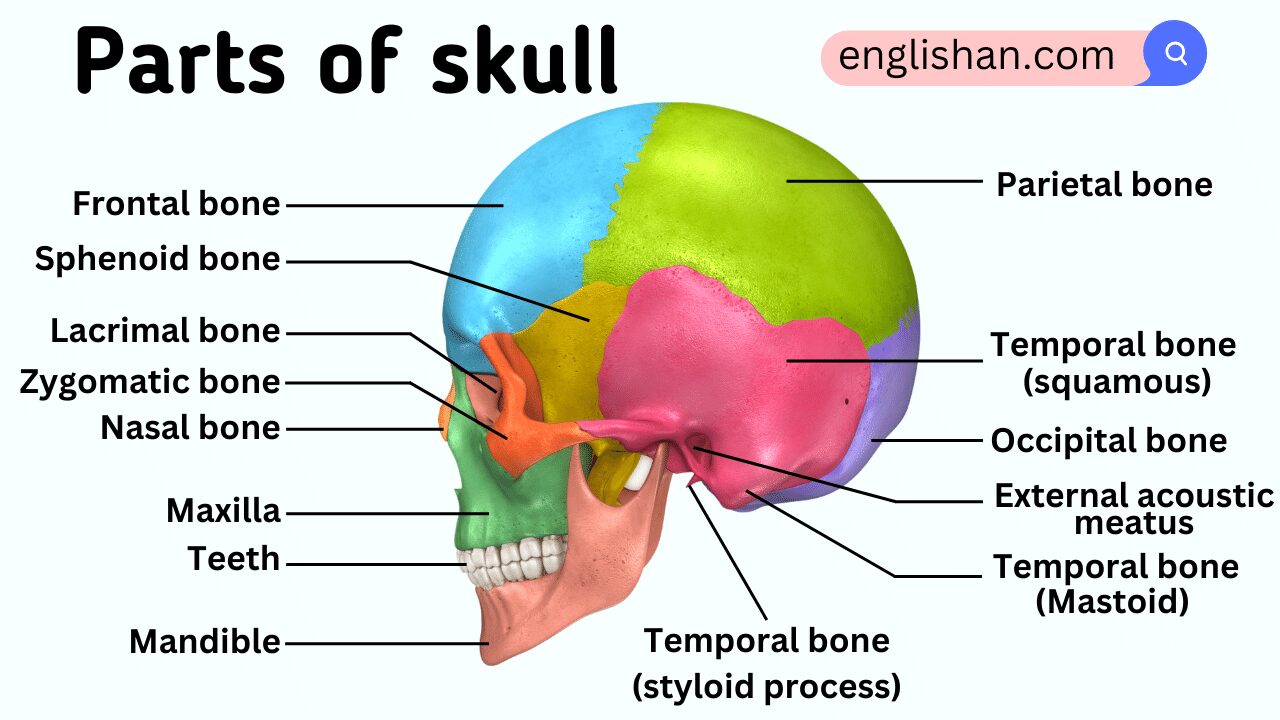

A toilet might seem like a simple bathroom fixture, but it’s made up of several parts that work together to keep things clean and hygienic. Knowing the different parts of a toilet can help you understand how it works and make maintenance a lot easier. In this article, we’ve included a clear labeled diagram so you can easily see and identify each part, from the flush handle to the cistern and bowl.
List Of Toilet Parts With Names
- Toilet Handle
- Trip Lever
- Tank Cover
- Float Ball
- Float Rod
- Float Rod Adjustment Screw
- Fill Valve
- Ball Cock
- Refill Tube
- Overflow Tube
- Flapper Valve
- Flush Valve
- Flush Valve Gasket
- Chain
- Shut-Off Valve
- Flexible Hose
- Washers and Nuts
- Closet Flange
- Closet Bolt
- Wax Ring
- Bowl
- Rim Holes
- Drain Pipe
- P-Trap Pipe
- Seat
- Seat Cover
- Base
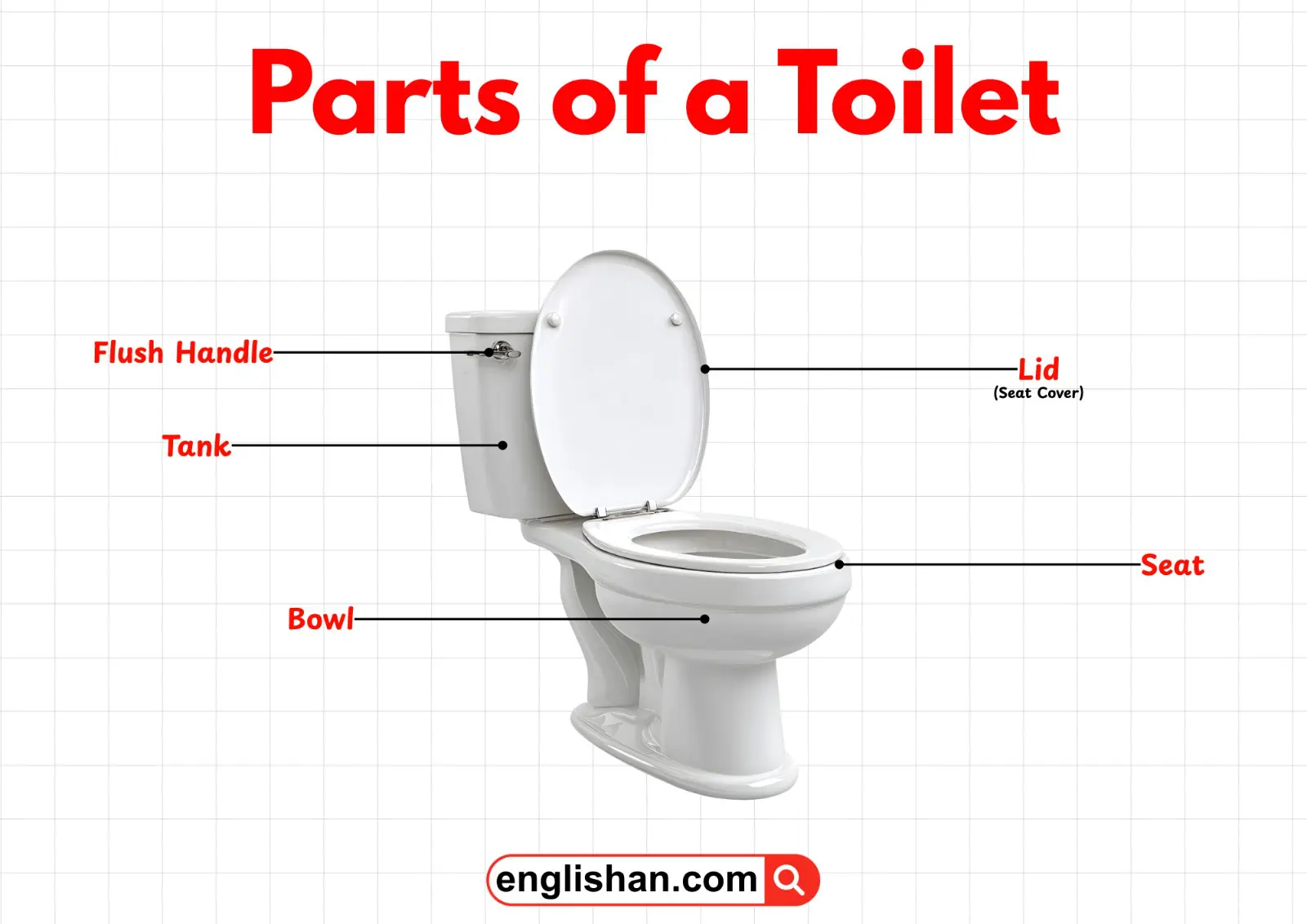
Parts of a Toilet Diagram With Names
A toilet is a complete water disposal system made up of several key components that work together to maintain hygiene and proper flushing. The cistern stores water, which flows through the flush pipe into the bowl when needed. The bowl provides a receptacle for waste, while the trap prevents odors from escaping into the bathroom. Each part, from the flush handle to the seat and lid, plays an important role in smooth operation, water efficiency, and overall cleanliness.
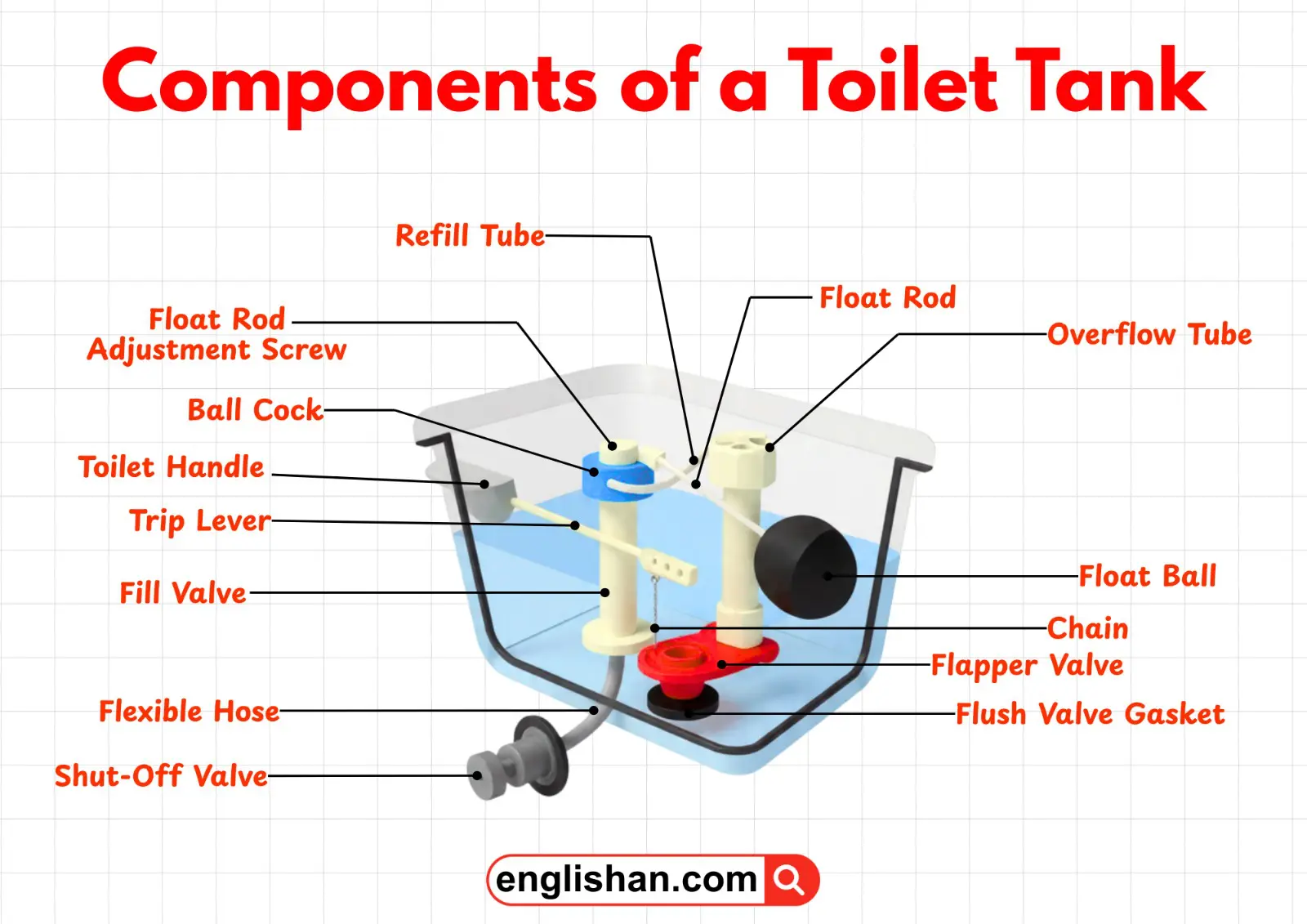
Tank Components (Water Storage & Control System)
Water storage tanks store and manage water for homes, businesses, and industries. They have components that control flow, monitor levels, and maintain water quality, helping prevent overflow, contamination, or system issues.
Tank Cover
The tank cover is the flat lid positioned at the very top of the toilet tank. It is usually made of ceramic to match the tank body. Its primary function is to protect and conceal the internal flushing components from dust, damage, and accidental contact. It also allows easy access when lifted for maintenance or repairs.
Toilet Handle
The toilet handle is located on the outside front or side of the tank. It is the part users press or push to initiate flushing. When activated, it moves the internal trip lever, starting the flushing process by lifting the flapper valve.
Trip Lever
The trip lever is located inside the tank and is connected to the toilet handle. When the handle is pressed, the trip lever pivots upward. Its function is to pull the chain attached to the flapper valve, allowing water to flow from the tank into the bowl.
Fill Valve
The fill valve is positioned vertically inside the tank, usually on the left side. It controls the refilling of water after a flush. Once the tank empties, the fill valve opens to allow fresh water in, and it automatically shuts off when the proper water level is reached.
Ball Cock
The ball cock is a traditional type of fill valve assembly found in older toilets. It includes a float ball attached to a rod. Located inside the tank, its function is to regulate incoming water flow based on the water level.
Float Ball
The float ball is a hollow plastic or metal ball located inside the tank, attached to a float rod. As water fills the tank, the float ball rises with the water level. When it reaches a preset height, it signals the fill valve to stop refilling the tank.
Float Rod
The float rod is a thin metal or plastic arm connected between the fill valve and the float ball. It is located inside the tank. Its function is to transfer the movement of the float ball to the fill valve, controlling water shut-off.
Float Rod Adjustment Screw
This small screw is located on top of or near the fill valve assembly. It allows fine adjustment of the float height. By turning the screw, you can raise or lower the water level inside the tank.
Refill Tube
The refill tube is a small flexible tube connected from the fill valve to the overflow tube. It is located inside the tank. Its function is to send a small stream of water into the bowl after flushing to restore the proper bowl water level.
Overflow Tube
The overflow tube is a vertical tube located in the center of the tank, attached to the flush valve. Its main purpose is to prevent tank overflow by directing excess water into the bowl if the water level rises too high.
Chain
The chain is a small metal or plastic link chain located inside the tank. It connects the trip lever to the flapper valve. When the handle is pressed, the chain lifts the flapper to release water.
Flapper Valve
The flapper valve is a rubber or silicone seal located at the bottom center of the tank. It covers the flush valve opening. When lifted, it allows water to rush into the bowl during flushing, and it reseals once the tank empties.
Flush Valve
The flush valve is located at the base of the tank, directly under the flapper. It is the opening that releases water into the bowl during flushing. Its function is to control the rapid discharge of tank water.
Flush Valve Gasket
The flush valve gasket is a rubber seal located between the tank and the bowl around the flush valve. It prevents water leakage from the tank to the outside of the toilet.
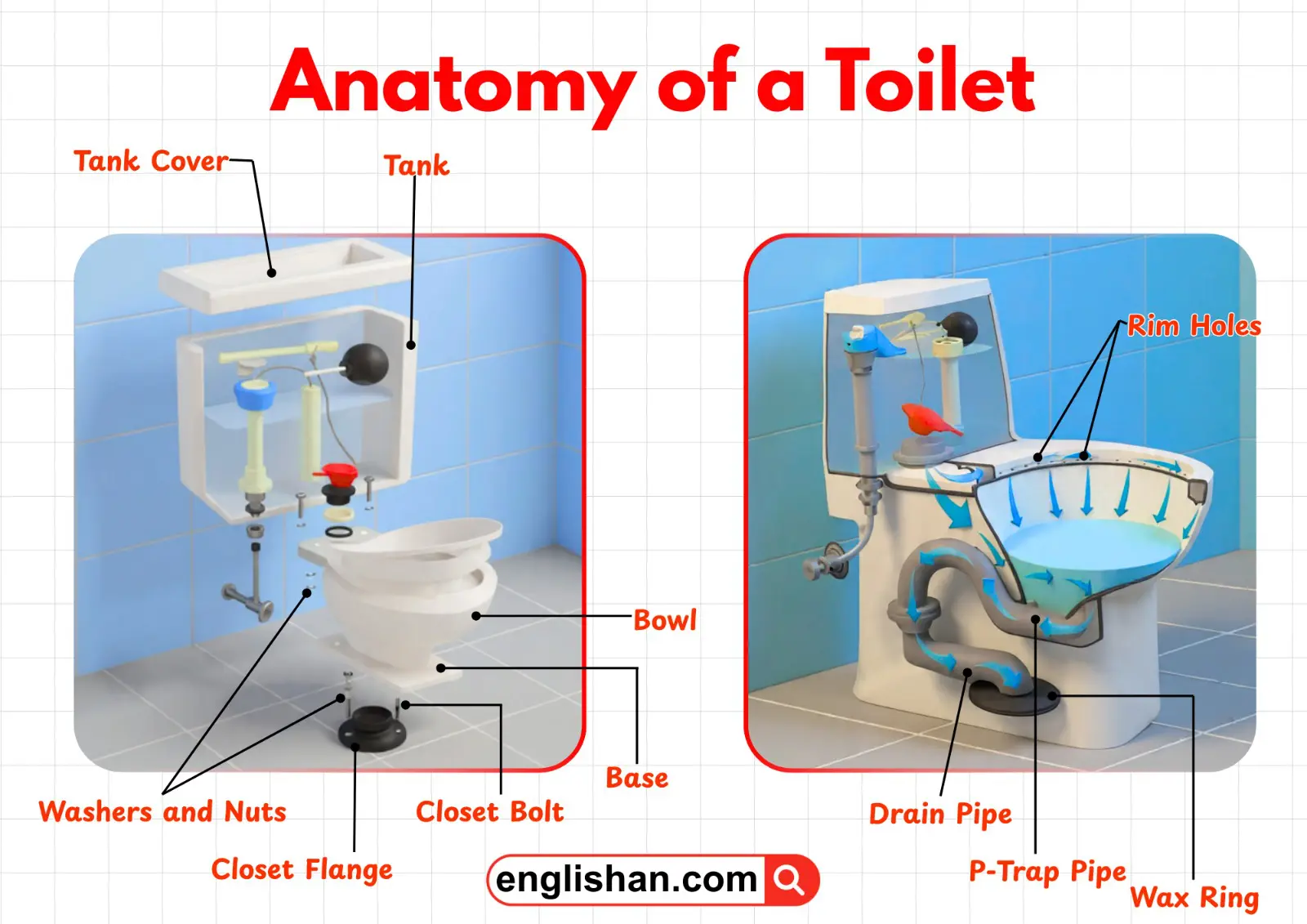
Water Supply Components
A water supply system delivers clean water to homes, buildings, and industries efficiently. It relies on several components that manage flow, pressure, and quality, ensuring safe and continuous water availability.
Shut-Off Valve
The shut-off valve is located on the wall or floor behind the toilet. It controls the water supply entering the toilet. Its function is to allow users to turn off water during maintenance or emergencies.
Flexible Hose
The flexible hose connects the shut-off valve to the fill valve at the bottom of the tank. It supplies water from the home plumbing system into the toilet tank.
Bowl & Waste Removal System
The bowl and waste removal system is the core part of a toilet. It’s where waste collects and is safely carried away through the plumbing, working together with other components to ensure proper flushing and hygiene.
Bowl
The bowl is the lower front portion of the toilet where waste collects before flushing. It is connected to the tank and drain system. Its function is to hold water and guide waste into the drainage system during flushing.
Rim Holes
Rim holes are small openings located under the rim of the toilet bowl. When flushing occurs, water flows through these holes to create a swirling motion that cleans the inner surface of the bowl.
P-Trap Pipe
The P-trap pipe is the curved section inside the base of the toilet bowl. It holds a small amount of standing water. Its function is to block sewer gases from entering the bathroom while allowing waste to pass through.
Drain Pipe
The drain pipe is located beneath the toilet and connects it to the home’s sewer or septic system. Its function is to carry waste and wastewater away from the building.
Floor Mounting & Sealing Components
Floor mounting and sealing components are essential for securely installing fixtures and preventing leaks. These parts ensure stability, proper alignment, and a tight seal between surfaces, keeping systems safe and functional.
Closet Flange
The closet flange is mounted on the bathroom floor beneath the toilet base. It connects the toilet to the drain pipe and provides anchor points for securing the toilet with bolts.
Closet Bolt
Closet bolts are long bolts inserted through the flange and secured to the toilet base. Their function is to firmly hold the toilet in place.
Wax Ring
The wax ring is located between the toilet base and the closet flange. It creates a watertight and airtight seal to prevent leaks and block sewer odors.
Washers and Nuts
Washers and nuts are used with the closet bolts at the base of the toilet. They secure the toilet tightly to the floor.
External Body & Seating Parts
The external body and seating parts give a vehicle its shape, comfort, and safety. Knowing them helps with maintenance and proper use.
Base
The base is the bottom portion of the toilet that rests on the floor. It supports the entire toilet structure and houses the internal P-trap.
Seat
The seat is the hinged ring attached to the top of the bowl. It provides a comfortable sitting surface for users.
Seat Cover
The seat cover is attached to the seat with hinges. It covers the bowl opening when not in use, maintaining hygiene and improving appearance.
Key Takeaway
A toilet functions as a complete water disposal and hygiene system. The cistern stores and releases water for flushing, while the bowl receives and directs waste. The flush handle and internal valve control water flow, and the trap prevents odors from escaping. Every part, from the seat and lid to the flush pipe, works together to ensure smooth operation, cleanliness, and proper sanitation.
You May Also Like