You stand at the bottom of a staircase and look up. The steps you walk on, the rail you hold, the posts that support it, each piece has a name. If you have ever wondered what to call them, this guide shows you.
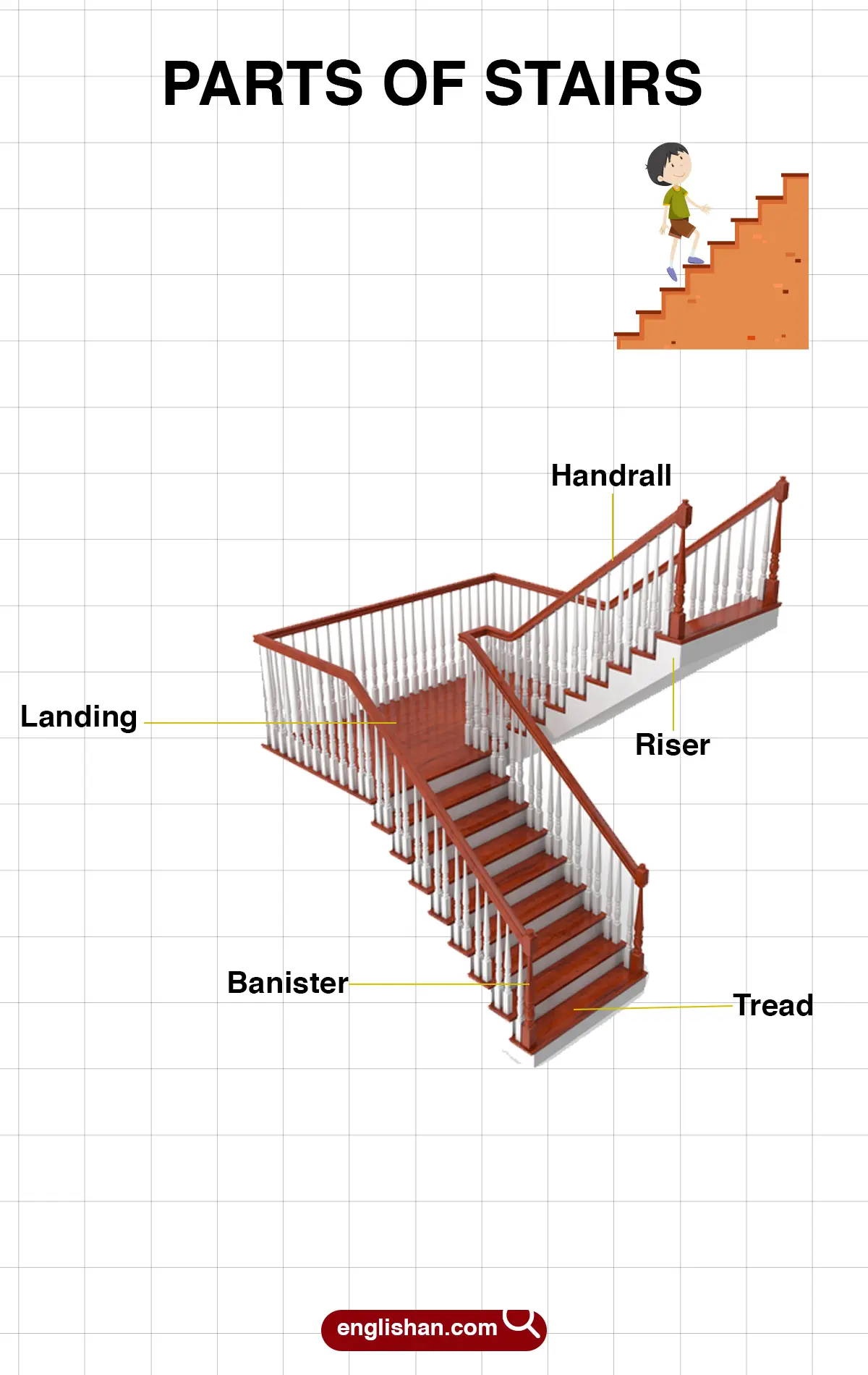
I have put together pictures of the main parts of a stair with their names labeled. You will see the tread (where you step), the riser (the vertical part), the handrail, balusters, stringer, and newel posts, each shown so you can match the word to the image.
Use this to study for a test, plan a renovation, or satisfy your own curiosity. By the end, you will recognize each part and know exactly what it is called.
Main Parts of a Stair
A stair consists of multiple essential components that provide stability, safety, and aesthetic appeal. Below is a breakdown of each part:
1. Tread
The tread is the horizontal part of the stair where you step. It is usually made of wood, concrete, or metal for durability and safety.
2. Riser
The riser is the vertical part between each tread. It adds height to the stair and can be open or closed depending on the design.
3. Stringer
The stringer is the structural support on the side of the staircase that holds the treads and risers in place.
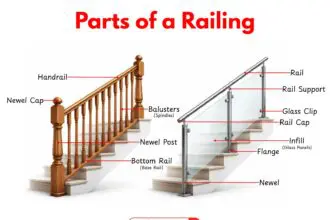
4. Handrail
The handrail is a safety feature that provides support for people as they walk up and down the stairs. It is usually attached to balusters or walls.
5. Baluster
The baluster is the vertical post that supports the handrail. Multiple balusters together form the balustrade, adding both safety and style.
6. Newel Post
The newel post is the large vertical post at the beginning and end of a stair railing. It provides stability and serves as an anchor for the handrail.
7. Landing
The landing is the flat platform between flights of stairs. It provides a resting point and changes the direction of the staircase.
8. Nosing
The nosing is the edge of the tread that extends slightly over the riser. It increases safety by reducing trip hazards and adds aesthetic appeal.
9. Spindle
The spindle is another name for balusters in some stair designs. These vertical rods support the handrail and add a decorative touch.
10. Skirting Board
The skirting board runs along the base of the wall next to the staircase, covering gaps and adding a finished look.
Interesting Facts About Stairs
Stairs have been a fundamental part of architecture for centuries, and many fascinating facts make them more interesting:
- The world’s longest staircase has 11,674 steps and is found on Mount Niesen in Switzerland.
- Spiral staircases in medieval castles were usually built clockwise to favor right-handed defenders.
- The first escalator was patented in 1892 and was called the “moving staircase.”
- Ancient Egyptians built stairs using stone blocks to create pyramids.
- Some staircases, like floating stairs, appear to have no support, giving them a modern aesthetic.
FAQs
There are straight, spiral, U-shaped, L-shaped, and cantilevered staircases. Each type serves different architectural and functional purposes.
Nosing improves safety by reducing sharp edges and preventing trips. It also adds to the durability of the stair treads by protecting them from wear.
Staircases can be made from wood, metal, stone, concrete, and glass. The choice depends on the design, durability, and aesthetic preference.
You May Also Like