
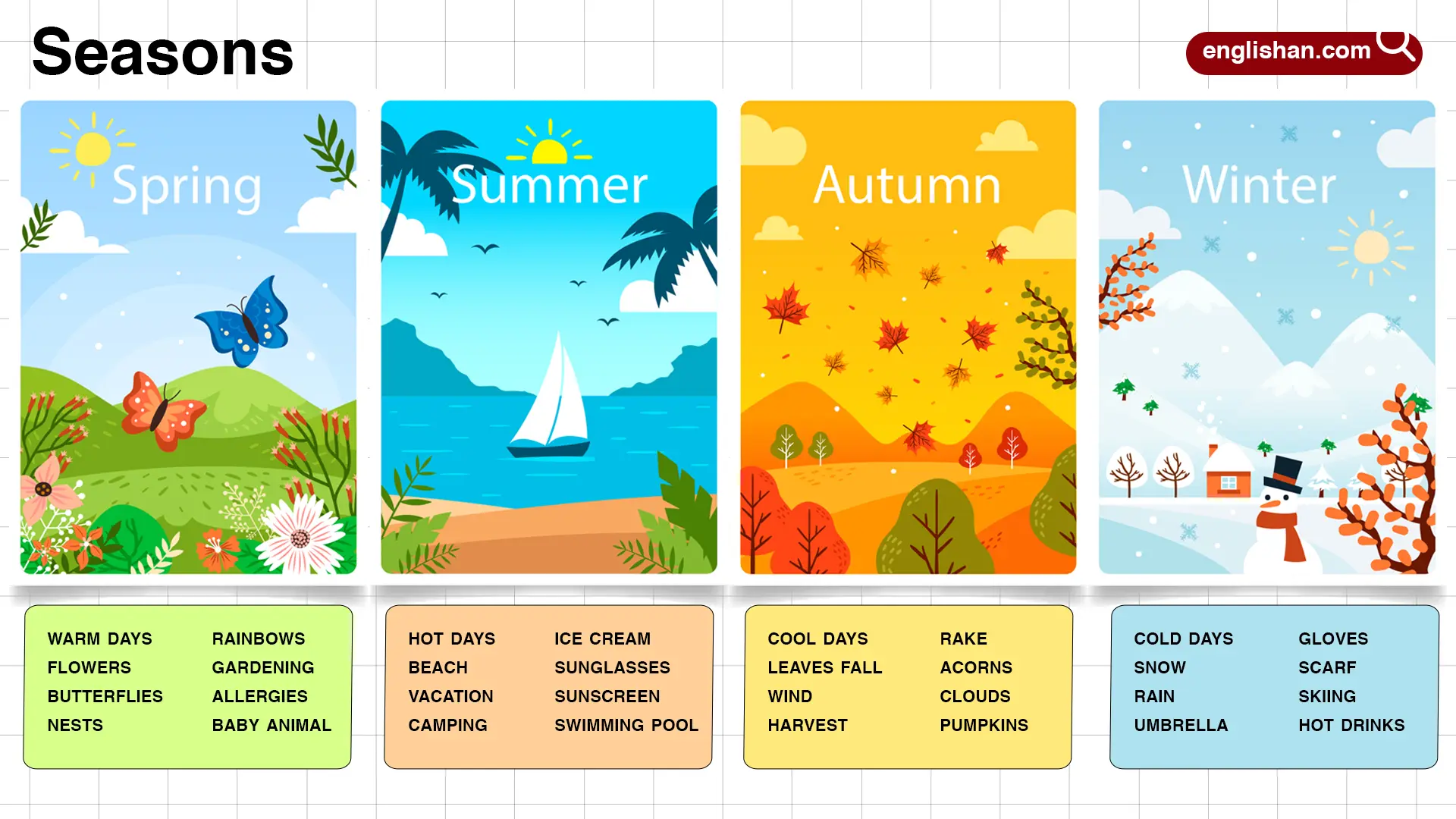
There are four main seasons in a year, and each brings different weather, changes in nature, and activities. These seasons are spring, summer, autumn (fall), and winter, and they are used in daily conversations and weather talks.
This post lists seasons names with pictures. You’ll learn each season’s name clearly and how they relate to months, weather, and vocabulary building.
List of Seasons Names in English
In English, there are four main seasons in a year. Each one brings different weather, nature changes, and daily activities. Below is the complete list of the season names with a short explanation for each.
- Spring: The season of new growth, warmer weather, and blooming plants.
- Summer: The hottest season with long days and many outdoor activities.
- Autumn (also called Fall): The season when leaves change color and the weather cools down.
- Winter: The coldest season, often with snow and freezing temperatures.
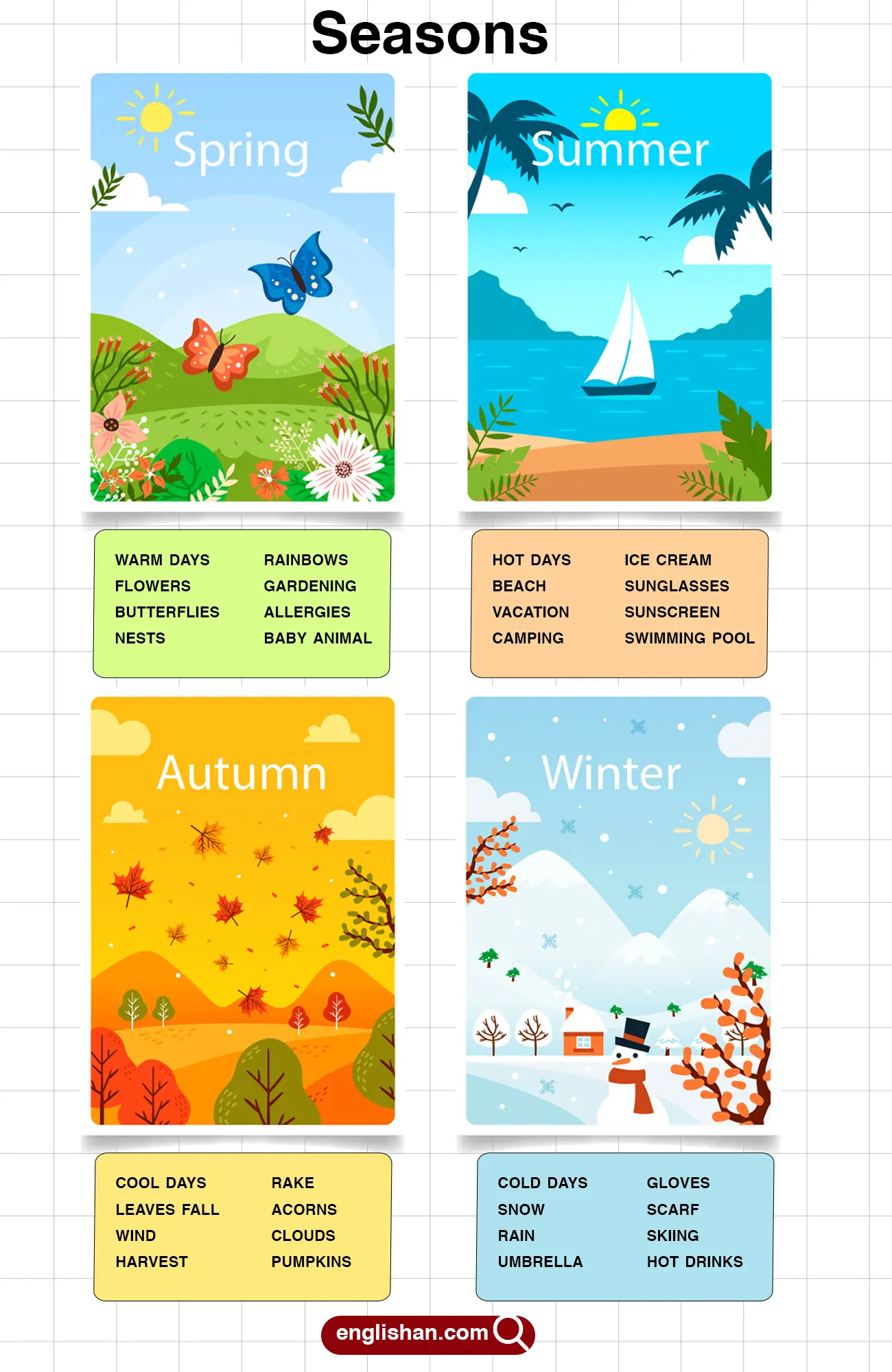
Seasons Names in English
Seasons divide the year into parts based on changes in weather and daylight. Below is a list showing the four main seasons used in English. Each season has its own name and is linked with special weather, activities, and times of year.
Spring Season
Spring is a time when plants begin to grow, and animals become more active. It marks the end of cold days and the beginning of warm sunshine. Below is a list of vocabulary words that describe spring weather, nature, and things people do during this season.
- Warm days: When the temperature is comfortable and the sun feels pleasant.
- Flowers: Bright, colorful plants that bloom in gardens and fields.
- Butterflies: Light, flying insects that are seen near flowers in spring.
- Nests: Homes built by birds to lay their eggs.
- Rainbows: Colorful arcs that appear in the sky after rain and sunshine.
- Gardening: Planting and caring for flowers or vegetables in the soil.
- Allergies: Sneezing or itchy eyes caused by pollen in the air.
- Baby animals: Young animals like lambs, chicks, or calves born during spring.
- Rain: Light or heavy showers common in early spring.
Summer Season
Summer is the hottest season of the year. Children enjoy outdoor activities, families travel, and the days are long and sunny. Below is a vocabulary list that includes common summer words used to describe weather and seasonal fun.
- Hot days: Very warm days when people often stay cool indoors or go swimming.
- Beach: Sandy place near the sea where people relax, swim, or play.
- Vacations: Time away from school or work, often during summer months.
- Camping: Staying outside in tents, often near forests or mountains.
- Ice cream: Cold, sweet dessert enjoyed during hot weather.
- Sunglasses: Dark glasses worn to protect eyes from sunlight.
- Sunscreen: Lotion applied to skin to avoid sunburn.
- Swimming pool: A place filled with water for people to swim in.
- Sun: The bright star that gives light and heat to Earth.
Autumn Season
Autumn, or fall, is the season between summer and winter. Trees lose their leaves, and the air becomes cooler. People harvest crops and prepare for colder weather. Below is a vocabulary list that describes the changes and activities of autumn.
- Cool days: Days that are not too cold but no longer warm.
- Leaves fall: When tree leaves change color and drop to the ground.
- Wind: Moving air that feels stronger in autumn months.
- Harvest: The time when fruits and vegetables are picked.
- Rake: A tool used to gather fallen leaves in yards.
- Acorns: Small nuts that fall from oak trees in autumn.
- Clouds: Grey or white shapes in the sky, often leading to rain.
- Pumpkins: Round orange vegetables that are common in autumn and used for cooking or decorations.
Winter Season
Winter is the coldest season of the year. Many places get snow, and people wear warm clothes and drink hot beverages. Below is a list of vocabulary words to help students describe winter weather, clothing, and seasonal actions.
- Cold days: Days when temperatures are very low and the air feels chilly.
- Snow: White, soft ice crystals that fall from the sky and cover the ground.
- Rain: Water that falls from clouds, often icy in winter.
- Umbrella: A tool used to stay dry during rain or snow.
- Gloves: Warm coverings for hands to protect them from the cold.
- Scarf: A piece of fabric wrapped around the neck for warmth.
- Skiing: A winter sport where people move over snow using skis.
- Hot drinks: Warm beverages like tea, cocoa, or coffee that people enjoy in winter.
- Coat: Thick clothing worn outdoors to stay warm.
Matching Months with Each Season
Each season happens during specific months, depending on the part of the world. Below is a chart that shows which months belong to each season in the Northern Hemisphere.
- Spring: March, April, May
- Summer: June, July, August
- Autumn: September, October, November
- Winter: December, January, February
This helps students connect months with seasons and use the right seasonal words in context.
Conclusion
Understanding the seasons names in English helps build strong vocabulary through clear words, matching weather, and example use. Keep practicing spring, summer, autumn, and winter terms to remember them easily and use them confidently in your everyday English.
FAQs About Seasons Names
In English, the four seasons are Spring, Summer, Autumn (also called Fall in North America), and Winter. These are the standard season names used in everyday conversation.
No. Meteorological seasons (by month) differ from astronomical ones (by equinox/solstice). Also, countries like Australia have opposite seasons due to hemisphere differences.
Yes! In tropical regions, “season” can refer to rainy or dry times rather than the four temperate seasons. Some cultures even recognize six-season or three-season calendars.
You May Also Like