Some cultures recognize six seasons in a year, each showing different changes in weather and nature. These six season names are spring, summer, monsoon, autumn, pre-winter, and winter. Each season has its own time and characteristics.
In this post, you will learn the names with images and simple meanings. The seasons are organized to support English learners and seasonal vocabulary growth.
List of Six Seasons Names
Each season in the six-season model reflects a unique period of weather and nature. Below is a list of the six seasons arranged in the order they appear through the year. These names help learners recognize and describe seasonal changes in English vocabulary.
- Spring
- Summer
- Monsoon
- Autumn
- Pre-Winter
- Winter
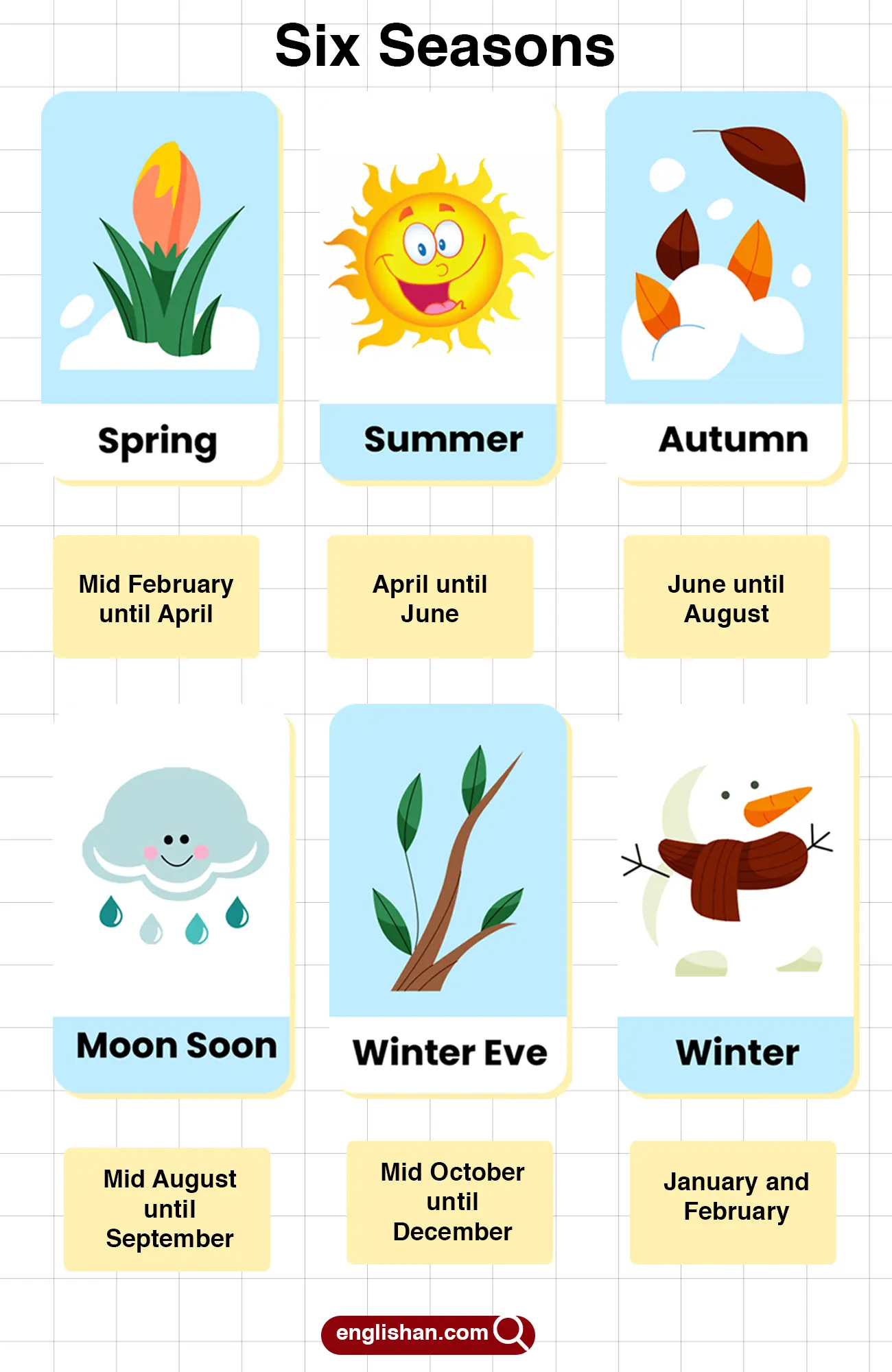
Six Seasons Names in English
The year is divided into six named seasons in some cultures to show detailed weather changes. Below is a list of all six seasons in English, arranged in order with common features to support vocabulary learning.
Spring Season
(Mid-February to Mid-April)
Spring marks the return of warmth, new plants, and active animals. It’s the first season in the six-season cycle. Below is a list of signs, animals, and foods related to spring.
Signs of Spring
- Flower buds appear
- Trees grow new leaves
- Grass becomes green
- Birds start singing
- Longer daylight hours
- Soft, gentle wind
- Warmer days than winter
- Snow melts in colder areas
- Insects begin to move
Spring Animals
- Butterfly: Flies near flowers and looks colorful in gardens.
- Rabbit: Active in grassy areas, often seen hopping and digging.
- Bee: Visits flowers to collect nectar during warm daylight.
- Frog: Comes near water as ponds begin to warm up.
- Birds: Begin nesting and singing during early spring days.
Spring Foods
- Strawberries: First fresh fruits of spring, sweet and red.
- Peas: Green pods harvested early in the season.
- Spinach: Grows quickly in moist, cool soil.
- Radish: A crunchy root vegetable harvested in early spring.
- Asparagus: Shoots up when spring days become warmer.
Summer Season
(Mid-April to Mid-June)
Summer is the hottest season, known for long days, heat, and outdoor time. Below are examples of weather, common activities, and foods of summer.
Summer Weather
- Hot sun during the day
- Clear blue skies
- Strong daylight from morning to evening
- Dry air or sudden heatwaves
- Warm nights
Summer Activities
- Swimming in pools or lakes
- Walking or playing outside
- Traveling during school breaks
- Eating cool foods
- Gardening and lawn mowing
Summer Fruits
- Mango: Soft, yellow fruit loved in warm places.
- Watermelon: Big, juicy fruit with red flesh and black seeds.
- Pineapple: Rough outside, sweet inside, eaten fresh or juiced.
- Lychee: Small, white fruit with a red peel.
- Melon: Soft orange or green flesh, eaten cold.
Monsoon Season
(Mid-June to Mid-August
Monsoon is the rainy season that follows summer. It brings rain, wet soil, and cooler winds. Below are weather signs, nature details, and daily activities seen in monsoon.
Monsoon Weather
- Heavy rainfall
- Cloud-covered skies
- Thunder and lightning
- Humid air
- Sudden downpours
Nature in Monsoon
- Soil becomes wet and soft
- Rivers and ponds fill
- New plants grow fast
- Fungi and moss appear
- Frogs croak often
Monsoon Activities
- Using umbrellas or raincoats
- Planting seeds in moist soil
- Watching rain from windows
- Staying indoors
- Reading or warm cooking
Autumn Season
(Mid-August to Mid-October)
Autumn, also called fall, is when trees lose their leaves and the air becomes cool. It comes after monsoon. Below are common signs, foods, and changes in autumn.
Changes in Autumn
- Leaves change color
- Trees shed dry leaves
- Shorter days
- Cool breeze in evenings
- Sky becomes pale
Autumn Foods
- Pumpkin: Orange vegetable used in cooking and carving.
- Apple: Crisp and juicy, picked during cooler autumn weeks.
- Sweet Potato: Earthy root with brown skin and orange flesh.
- Corn: Yellow kernels eaten boiled or roasted.
- Pears: Soft fruit with a thin skin, grown in late autumn.
Autumn Leaves
- Maple: Turns red or orange before falling.
- Oak: Brown and wide, drops slowly.
- Birch: Small yellow leaves shed quickly.
- Poplar: Flat, golden leaves seen on roads.
- Elm: Oval and dry, scattered on the ground.
Pre-Winter Season
(Mid-October to Mid-December)
Pre-winter is the short season before full winter begins. It brings a mild chill and slow changes. Below are some early winter signs and changes.
Pre-Winter Weather
- Cool mornings
- Light fog or mist
- Cold breeze in afternoons
- Dry air
- Early sunsets
Changes Before Winter
- People wear light sweaters
- Fewer flowers bloom
- Warm foods become common
- Indoor time increases
- Winds become steady
Winter Season
(Mid-December to Mid-February)
Winter is the coldest season of all six. It brings frost, snow in some places, and long nights. Below are common changes and animals seen during winter.
What Happens in Winter
- Cold winds
- Snow in colder regions
- Frost on windows
- Long nights
- Short daylight
Winter Animals
- Bear: Sleeps through winter in deep caves.
- Fox: Grows a thick fur coat in cold weather.
- Owl: Active at night, hunts small animals in snow.
- Wolf: Moves in packs during cold months.
- Deer: Seen in forests, searching for food.
Four vs. Six Seasons
The four-season model includes spring, summer, autumn, and winter. But in many places, people notice two extra stages monsoon and pre-winter. These help explain more weather shifts in the year.
Conclusion
Learning the six seasons in English helps students build clear weather and nature vocabulary. By using names, examples, and images, learners understand how each season affects life. Keep practicing these words to describe the world accurately throughout the year.
FAQs About Six Seasons
The six seasons are Spring, Summer, Monsoon, Autumn, Pre-Winter, and Winter.
After Monsoon comes Autumn. It is followed by Pre-Winter and then Winter. The sequence shows a natural flow in temperature and weather.
You May Also Like