A sentence is a set of words that makes a complete sense and follows grammar. It begins with a capital letter and ends with a full stop, question mark, or exclamation mark. For example, “I like apples” is an easy sentence for kids.
In this lesson, you will learn sentences for kids that will make grammar and writing simpler to understand.
Short Sentences For Kids
Short sentences help kids read and understand basic sentence forms easily. Below is a list using clear subjects, actions, and objects to practice smooth sentence building.
- I run fast.
- She jumps high.
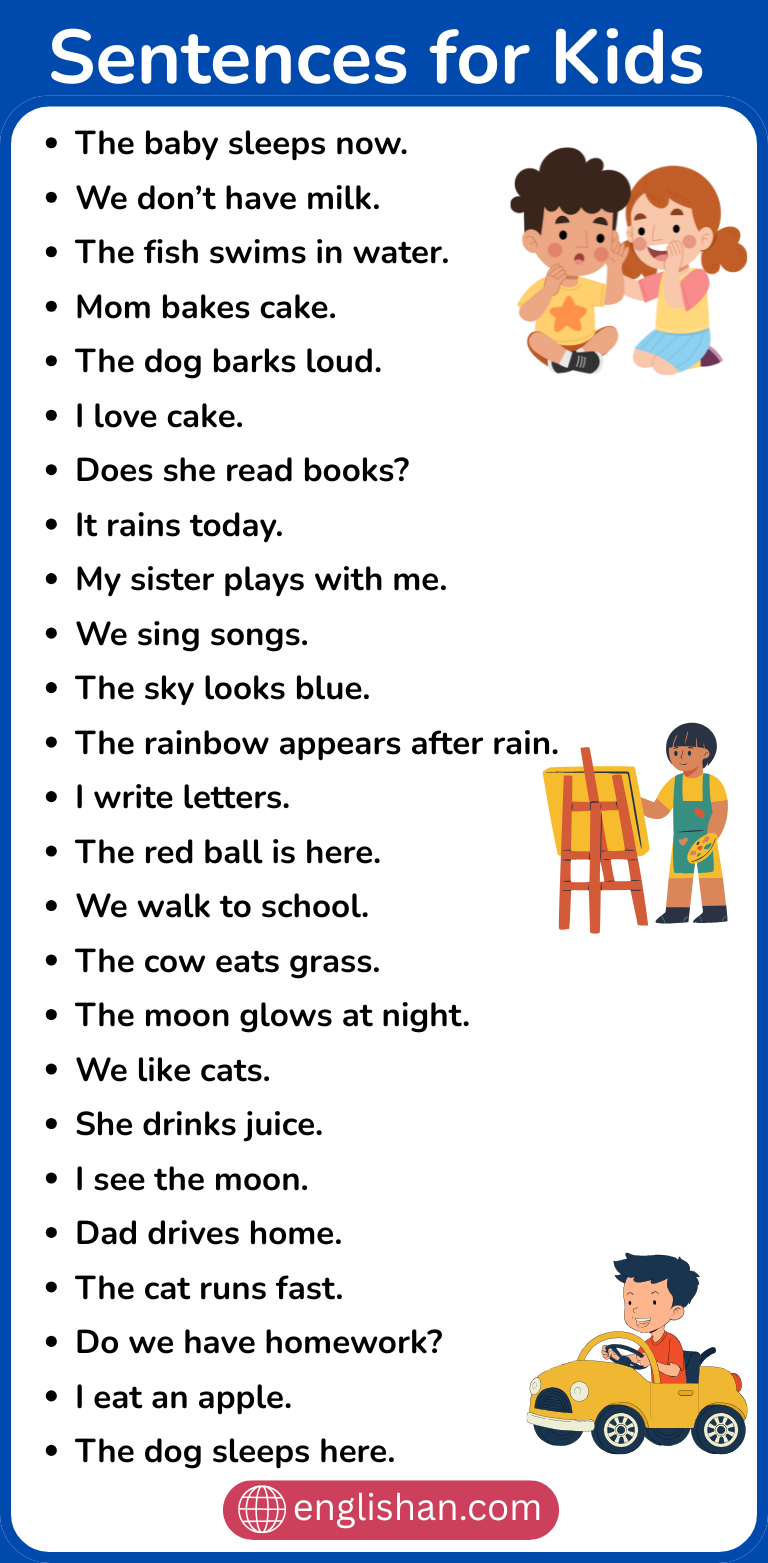
- The dog barks loud.
- We play outside.
- They sing songs.
- He eats rice.
- Mom cooks food.
- Dad drives home.
- I see the moon.
- We like cats.
- She reads books.
- The baby sleeps now.
- I drink milk.
- We walk to school.
- He laughs loud.
Positive Sentences For Kids
Positive sentences show clear actions and help learners see affirmative sentence structure. Below is a list for practice.
- I love apples.
- She has a red bag.
- They are playing.
- We watch cartoons.
- Dad makes breakfast.
- The cat sits here.
- I find a coin.
- He writes well.
- We have two dogs.
- She draws flowers.
- Mom bakes cake.
- They study math.
- I feel happy.
- We travel by bus.
- He climbs trees.
Negative Sentences For Kids
Negative sentences help learners practice saying what is not happening. Below is a list for understanding structure.
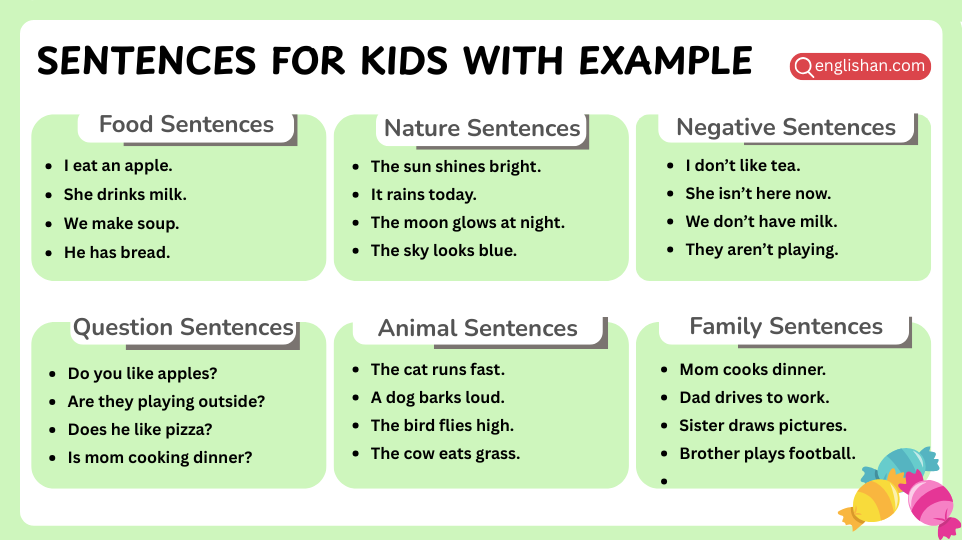
- I don’t like tea.
- She isn’t here now.
- They aren’t playing.
- We don’t have milk.
- He doesn’t run fast.
- The dog isn’t barking.
- I don’t see the bird.
- She doesn’t like fish.
- We aren’t watching TV.
- Dad isn’t working now.
- The cat doesn’t jump.
- I don’t feel tired.
- They aren’t coming today.
- She isn’t wearing shoes.
- We don’t play inside.
Question Sentences For Kids
Questions help kids practice asking using proper sentence patterns. Below is a list for practice.
- Do you like apples?
- Is she here now?
- Are they playing outside?
- Do we have homework?
- Does he like pizza?
- Is the dog barking?
- Can I go out?
- Are we going to school?
- Does she read books?
- Is mom cooking dinner?
- Do you see the bird?
- Is he running fast?
- Are they coming today?
- Does she like flowers?
- Do we watch cartoons?
Sentences With Animals For Kids
Animal sentences help learners connect sentence patterns with common animal names. Below is a list for practice.
- The cat runs fast.
- A dog barks loud.
- The bird flies high.
- The cow eats grass.
- A rabbit jumps fast.
- The horse runs in the field.
- The fish swims in water.
- The dog sleeps here.
- The duck quacks near the pond.
- The goat eats leaves.
- A lion roars loud.
- The sheep stands there.
- A frog jumps in water.
- The monkey climbs trees.
- The hen lays eggs.
Sentences With Family Words
These sentences use family words to help kids see sentence structure naturally. Below is a list for reading and practice.
- Mom cooks dinner.
- Dad drives to work.
- My sister plays with me.
- My brother runs fast.
- Grandma tells stories.
- Grandpa reads books.
- My cousin visits us.
- Uncle fixes the bike.
- Aunt makes cake.
- Dad helps with homework.
- Mom buys fruits.
- Sister draws pictures.
- Brother plays football.
- Grandma bakes bread.
- Grandpa walks in the park.
Sentences With Action Verbs
Action verbs show what someone is doing. Below is a list for practicing strong, clear actions.
- I run in the park.
- She jumps on the bed.
- They play football.
- We sing songs.
- He claps his hands.
- Mom cooks food.
- Dad drives the car.
- The baby cries softly.
- I write letters.
- She paints pictures.
- We read books.
- He kicks the ball.
- They dance together.
- The cat climbs the tree.
- She laughs with friends.
Sentences With Colors And Objects
Color + object sentences help kids learn clear descriptive sentence structures. Below is a list for practice.
- The red ball is here.
- I see a blue car.
- She wears a green dress.
- They like yellow flowers.
- The black cat runs fast.
- We have a white dog.
- He holds a pink balloon.
- I see brown shoes.
- The purple bag is new.
- She has an orange pencil.
- The gray clouds are big.
- He sees a gold star.
- They draw with silver pens.
- We buy a red apple.
- She holds a blue cup.
Sentences Using Food Words
Food words help build simple sentence structures with things children know. Below is a list for practice.
- I eat an apple.
- She drinks milk.
- They like rice.
- We make soup.
- He has bread.
- Mom cooks chicken.
- Dad buys oranges.
- The baby eats bananas.
- I love cake.
- She drinks juice.
- We eat noodles.
- They have ice cream.
- He likes carrots.
- Mom makes salad.
- We cook eggs.
Sentences About Nature For Kids
Nature sentences help children learn natural objects and actions in clear patterns. Below is a list for practice.
- The sun shines bright.
- It rains today.
- The wind blows softly.
- Trees grow tall.
- Flowers bloom in spring.
- Birds sing in the morning.
- The river flows fast.
- Leaves fall down.
- Snow covers the ground.
- The sky looks blue.
- The moon glows at night.
- Stars shine above.
- Clouds move slowly.
- The grass feels soft.
- The rainbow appears after rain.
You May Also Like