A singular noun names one person, place, or thing, while a plural noun names more than one. Most plurals end in -s or -es, such as book/books or class/classes. Some words change completely, like child/children or man/men, and a few stay the same, like sheep/sheep.
This article gives 100 singular and plural sentences that support learning English grammar and building correct sentences.
What is Singular and Plural?
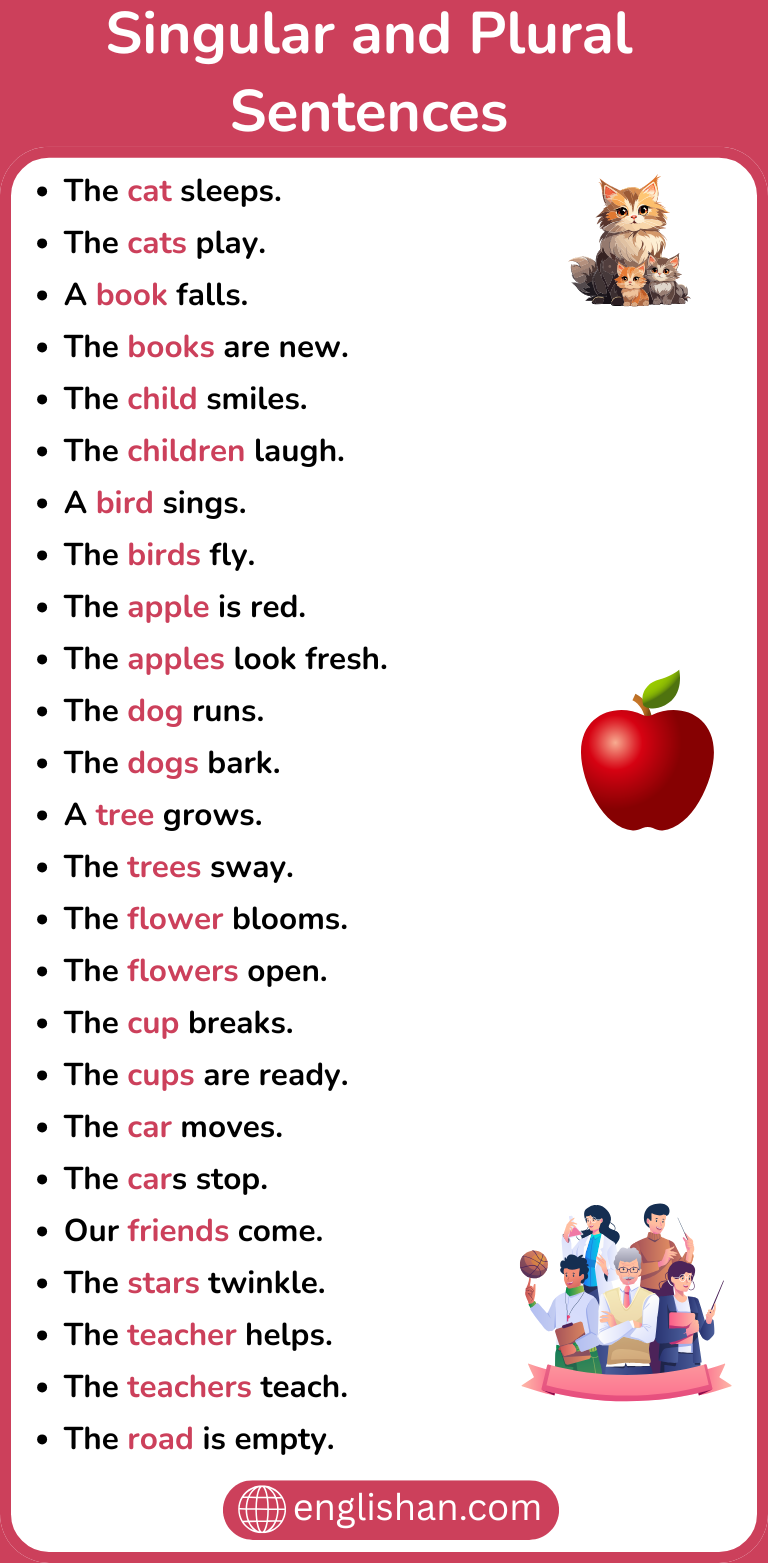
Singular means one noun, like book or child. Plural means more than one, often with -s or -es, like books or cars. Some change form, like man/men, while others stay the same, like deer.
Singular And Plural Examples In Sentences
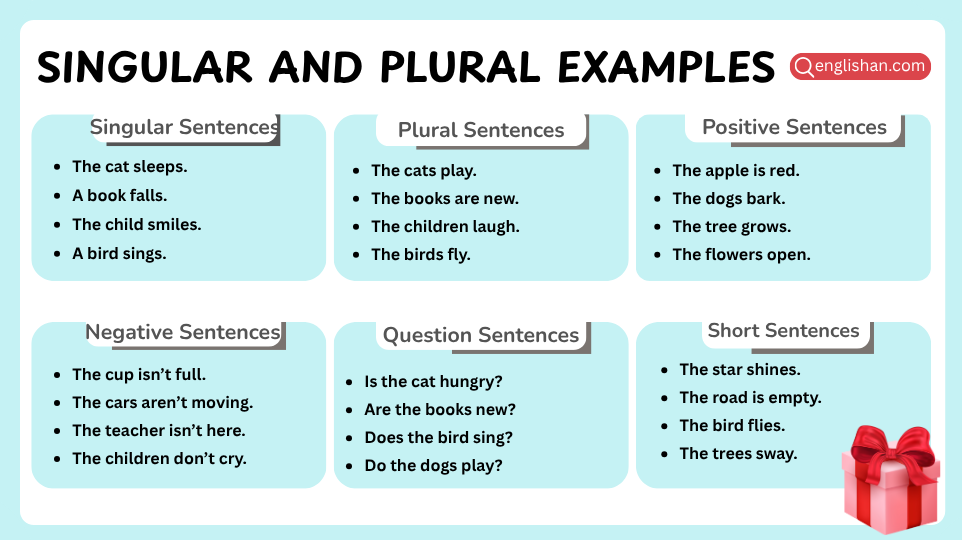
Below is a list using singular and plural in sentences to help you see their structure and grammar patterns clearly.
- The dog barked at the gate.
- Three dogs ran across the street.
- I saw a car in the driveway.
- Many cars are parked outside.
- A child plays with a ball.
- Two children are laughing in the yard.
- She bought a pen yesterday.
- We need some pens for the meeting.
- The apple is on the table.
- There are apples in the basket.
- My friend lives nearby.
- Our friends came over.
- The teacher is kind.
- The teachers are in the staff room.
- I found a coin under the sofa.
- He collected coins from different countries.
- That bird is singing.
- Many birds fly south in winter.
Singular Noun Sentences
Below is a list using singular nouns to help you see how they appear in sentences.
- The cat sleeps on the mat.
- A book is on the shelf.
- My friend likes music.
- The sun is shining today.
- I see a star in the sky.
- This shirt is new.
- A tree grows in the yard.
- She has a dream every night.
- The phone rang twice.
- The river flows quietly.
- That child is smiling.
- The flower smells sweet.
- A bird landed on the window.
- He found a stone near the lake.
- The road is empty now.
- The cup is full.
- My teacher is helpful.
- The key is missing.
Plural Noun Sentences
Plural nouns show more than one, like “dogs” or “ideas.” Below is a list using plural nouns in clear sentences for your English learning.
- The dogs bark loudly.
- Five books are on the table.
- Our friends came over.
- The stars twinkle at night.
- These shirts are clean.
- Tall trees stand in the forest.
- She shares her dreams with us.
- Two phones are ringing.
- The rivers flow into the sea.
- Many children play in the park.
- The flowers bloom in spring.
- Birds build their nests here.
- He picked up some stones.
- The roads are busy today.
- We bought new cups.
- Our teachers are helpful.
- I found the keys under the table.
- The apples are fresh.
Positive Singular And Plural Sentences
These sentences use singular and plural nouns positively, helping you see how to build clear, affirmative statements in English.
- The boy smiles brightly.
- The boys play soccer.
- A woman walks her dog.
- Two women chat by the store.
- The car is fast.
- The cars are ready for the race.
- My friend helps me.
- Our friends support us.
- A student answers quickly.
- The students study hard.
- The flower blooms.
- The flowers look beautiful.
- The bird sings.
- The birds fly together.
- A child laughs softly.
- The children draw pictures.
Negative Singular And Plural Sentences
These examples show singular and plural nouns in negative sentences, useful for practicing structure in everyday English.
- The dog isn’t barking now.
- The dogs aren’t outside.
- A car isn’t parked here.
- The cars aren’t working today.
- My friend doesn’t live here.
- Our friends don’t know yet.
- A student isn’t ready.
- The students aren’t in class.
- The flower doesn’t bloom in winter.
- The flowers don’t open at night.
- The child doesn’t cry.
- The children don’t play today.
- The teacher isn’t here.
- The teachers aren’t on duty.
- The apple isn’t ripe.
- The apples aren’t sweet now.
Question Singular And Plural Sentences
Here are sentences using singular and plural nouns in question form, helping you practice how questions are structured in English.
- Is the cat hungry?
- Are the cats outside?
- Is your friend coming?
- Are your friends ready?
- Does the flower smell nice?
- Do the flowers need water?
- Is the child awake?
- Are the children at home?
- Does the bird sing every morning?
- Do the birds fly south?
- Is there a book on the table?
- Are there books in the bag?
- Is the teacher in the room?
- Are the teachers available?
- Does the car work well?
- Do the cars need fuel?
Short Singular And Plural Sentences
Below is a list of short, clear sentences using singular and plural nouns to help you learn structure easily.
- The cat runs.
- The cats play.
- A boy laughs.
- Boys shout.
- The car moves.
- The cars stop.
- She likes the book.
- They read books.
- The child smiles.
- Kids sing.
- The dog jumps.
- The dogs bark.
- My friend calls.
- Friends help.
- The bird flies.
- The birds chirp.
Simple Singular And Plural Sentences
These simple sentences help you understand the structure of singular and plural usage in English clearly.
- The apple is red.
- The apples are sweet.
- The child is happy.
- The children are playing.
- A woman is here.
- Women are talking.
- The cup is full.
- The cups are on the shelf.
- The teacher is kind.
- Teachers help students.
- The star shines.
- Stars fill the sky.
- The bird sings.
- Birds fly away.
- A tree grows tall.
- Trees give shade.
Checking Singular And Plural In Sentences
Below is a list using singular and plural nouns, mixing short and mid-length structures to test your understanding while reading.
- The book is interesting.
- The books are heavy.
- The flower looks pretty.
- The flowers are fresh.
- The child has a toy.
- The children have many toys.
- The dog loves to run.
- The dogs need food.
- The teacher writes well.
- The teachers plan lessons.
- The car is old.
- The cars need repairs.
- The cup broke.
- The cups are on the table.
- The cat is hungry.
- The cats are sleeping.
- The bird sings daily.
- The birds fly in groups.
You May Also Like