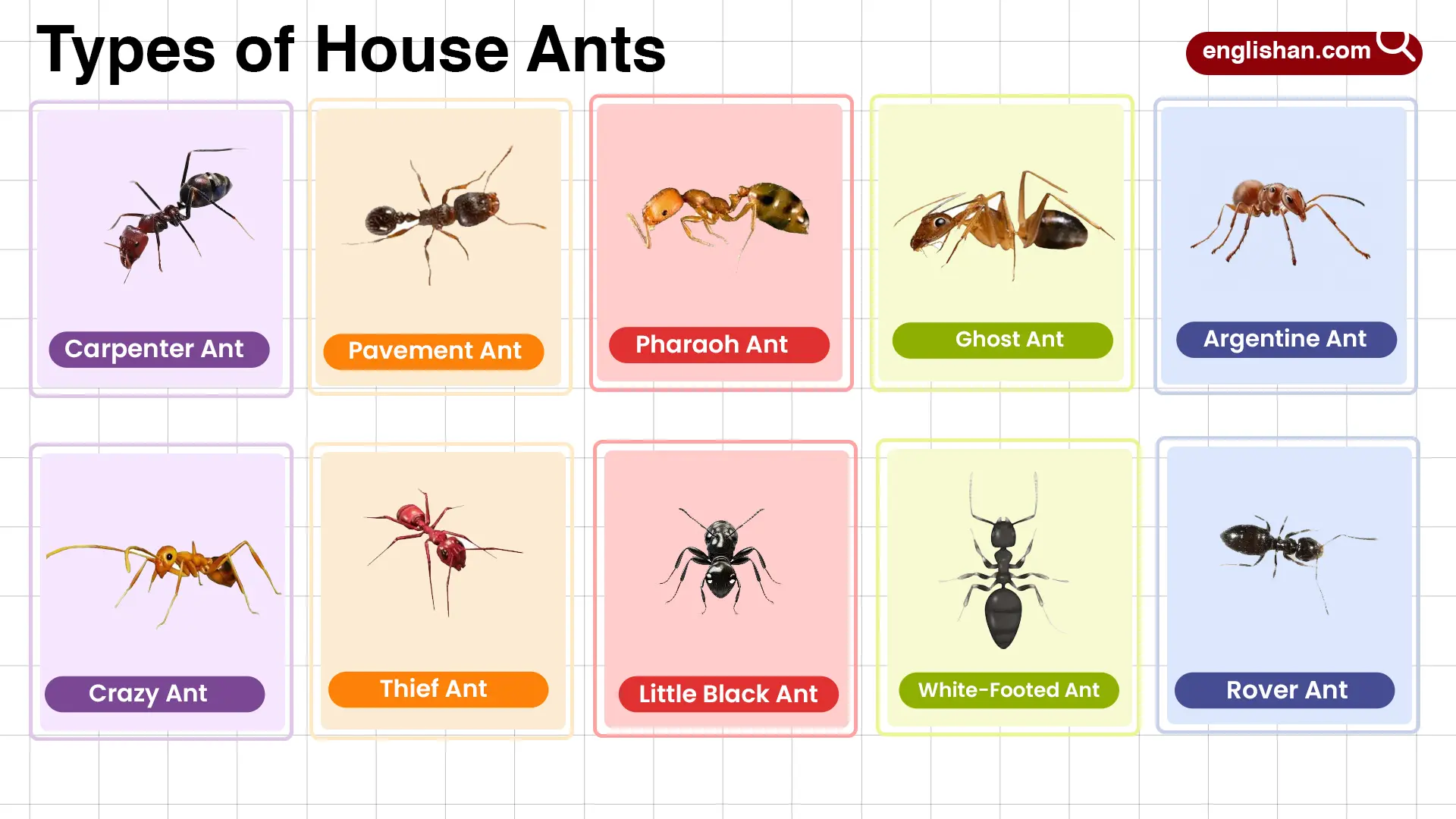
Types of house ants include many small species that live, nest, or search for food inside homes. Some ants, like carpenter ants, damage wood, while others, like pavement ants, follow trails through cracks. Each type behaves differently, and knowing them helps you spot them faster. Some ants are tiny, fast movers, while others stay near water or sweet food.
In this blog post, you will learn house ant names with pictures and how to recognize their traits.
List of Types of House Ants
Here is a list of common types of house ants you might find indoors or near your home. These ants vary in size, color, nesting habits, and the problems they cause:
- Carpenter Ant
- Odorous House Ant
- Pavement Ant
- Pharaoh Ant
- Ghost Ant
- Argentine Ant
- Crazy Ant
- Thief Ant
- Little Black Ant
- White-Footed Ant
- Rover Ant
Common Types of House Ants
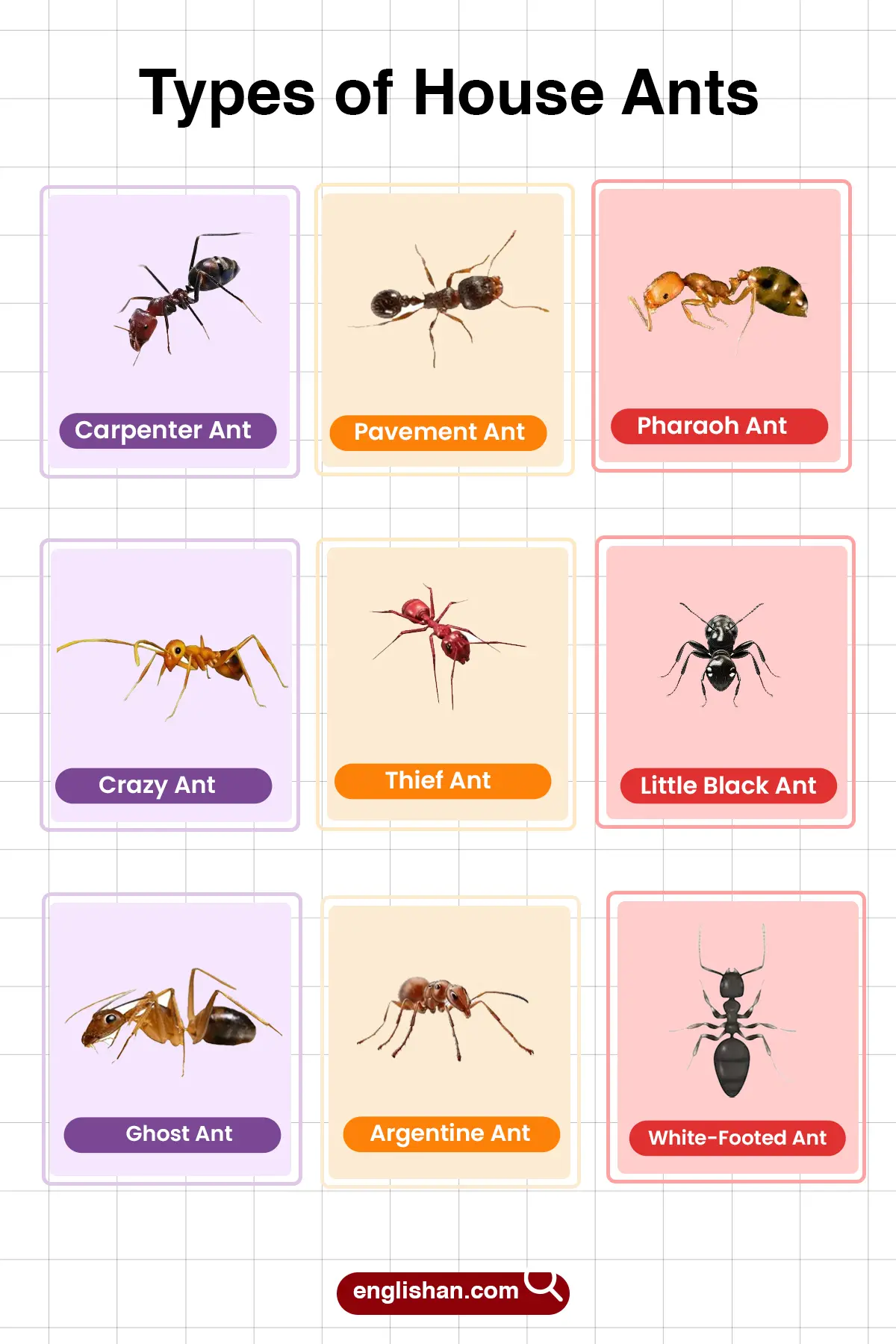
These are the most frequently found ant species inside homes. Each has unique traits, nesting habits, and behavior that help you identify and understand them.
- Odorous House Ant: These ants smell like rotten coconut when crushed. They usually crawl near sinks or sweet food spills indoors.
- Pavement Ant: Pavement ants often nest in cracks in sidewalks or walls. They follow straight trails and like greasy or sweet crumbs.
- Pharaoh Ant: Tiny and yellow, pharaoh ants live in warm places. They can spread bacteria and are hard to remove completely.
- Ghost Ant: They’re fast and hard to spot because of their see-through legs. You’ll often find them near sinks or plants.
- Carpenter Ant: Large black or red ants that build nests in soft wood. They don’t eat wood, but they can damage it.
- Crazy Ant: These ants move in weird, zigzag ways. They love to crawl into wires or electronics and gather near outlets.
- Little Black Ant: Tiny, shiny, and black. These ants often march in lines near kitchen counters, especially during warmer months.
- Acrobat Ant: They lift their heart-shaped abdomens when scared. You can find them in moist wood or behind foam boards.
- Argentine Ant: These ants form big colonies and stick together. They usually nest in damp places like under sinks or near mulch.
- Rover Ant: Rover ants are super small and fast. They pop up near fruit or spills and move a lot during hot weather.
Tiny Ants Often Seen Indoors
This section focuses on very small ants commonly seen in homes. These ants may be hard to notice at first but can multiply quickly and become a nuisance.
- Thief Ant: Very small and pale, thief ants sneak into other nests. They hide in cracks near pantries and steal food.
- Sugar Ant: This is just a common name. People call small ants that love sugar or sweets by this name, especially indoors.
- Big-Headed Ant: Soldiers in these colonies have huge heads. They nest under garden stuff and enter homes looking for seeds or sweets.
Ant Species That Nest in Wood
Some ants build their colonies inside damp or decaying wood. These species can sometimes cause structural damage indoors or in garden structures.
- Carpenter Ant: These ants chew through damp wood to make homes. Over time, they can weaken wooden parts of buildings or sheds.
- Velvety Tree Ant: They live in old wood and smell strong when crushed. These ants may bite and like to hide in fence posts.
Common Indoor Nesting Places
Ants often build nests in hidden, warm, and protected areas inside homes. Below is a list of common places where house ants are found nesting indoors.
- Cracks: Tiny wall or floor cracks offer ants easy hiding spots close to food and water sources.
- Walls: Ants can live inside walls, building tunnels and moving silently between rooms or electrical lines.
- Cabinets: Kitchen or bathroom cabinets provide shelter and quick access to crumbs, grease, and moist spots.
Where Ants Nest in Houses
Indoor ants choose spaces that are warm, undisturbed, and close to food or water. Below is a list of places where they typically nest.
- Inside Walls and Cabinets: These are warm and dark areas where ants can hide, move, and build quiet colonies.
- Under Tiles or Flooring: Broken or loose tiles let ants enter below the floor, where they create hidden and secure nests.
Conclusion
Understanding the types of house ants helps you identify them by name, shape, and nesting habits. This post shared common and tiny indoor ants in English, so you can recognize them easily and describe their traits in simple words.
FAQs on Types of House Ants
The most common types of house ants include odorous house ants, pavement ants, carpenter ants, pharaoh ants, and ghost ants. Each has unique nesting spots and behaviors.
No, not all are harmful. Some like pharaoh ants can contaminate food, while others like carpenter ants may damage wood structures over time.
Look at the size, color, movement, and trail patterns. Odorous ants smell when crushed, carpenter ants are large, and ghost ants have pale legs.
You May Also Like