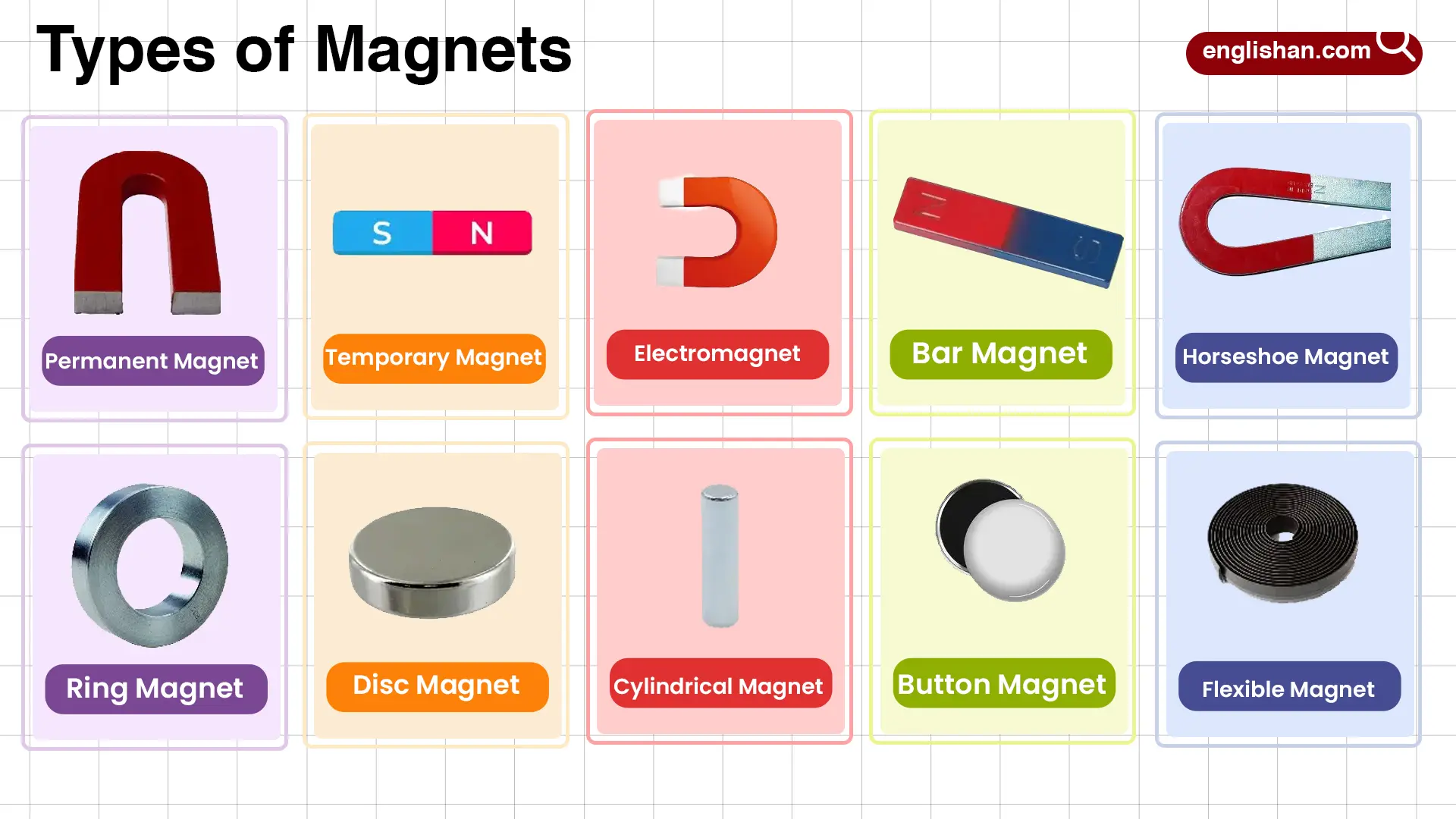
Magnets come in different forms based on their shape, strength, and material. These types of magnets include bar magnets, horseshoe magnets, and electromagnets used in science, industry, and daily tools.
This post lists their names with pictures. You’ll learn various types of magnets, grouped for easy vocabulary learning and clear understanding.
List of Magnets Types
This section lists the different types of magnets based on their magnetic properties and physical shapes, helping learners understand how each type functions and where it is used.
- Permanent Magnet
- Temporary Magnet
- Electromagnet
- Bar Magnet
- Horseshoe Magnet
- Ring Magnet
- Disc Magnet
- Cylindrical Magnet
- Button Magnet
- Flexible Magnet
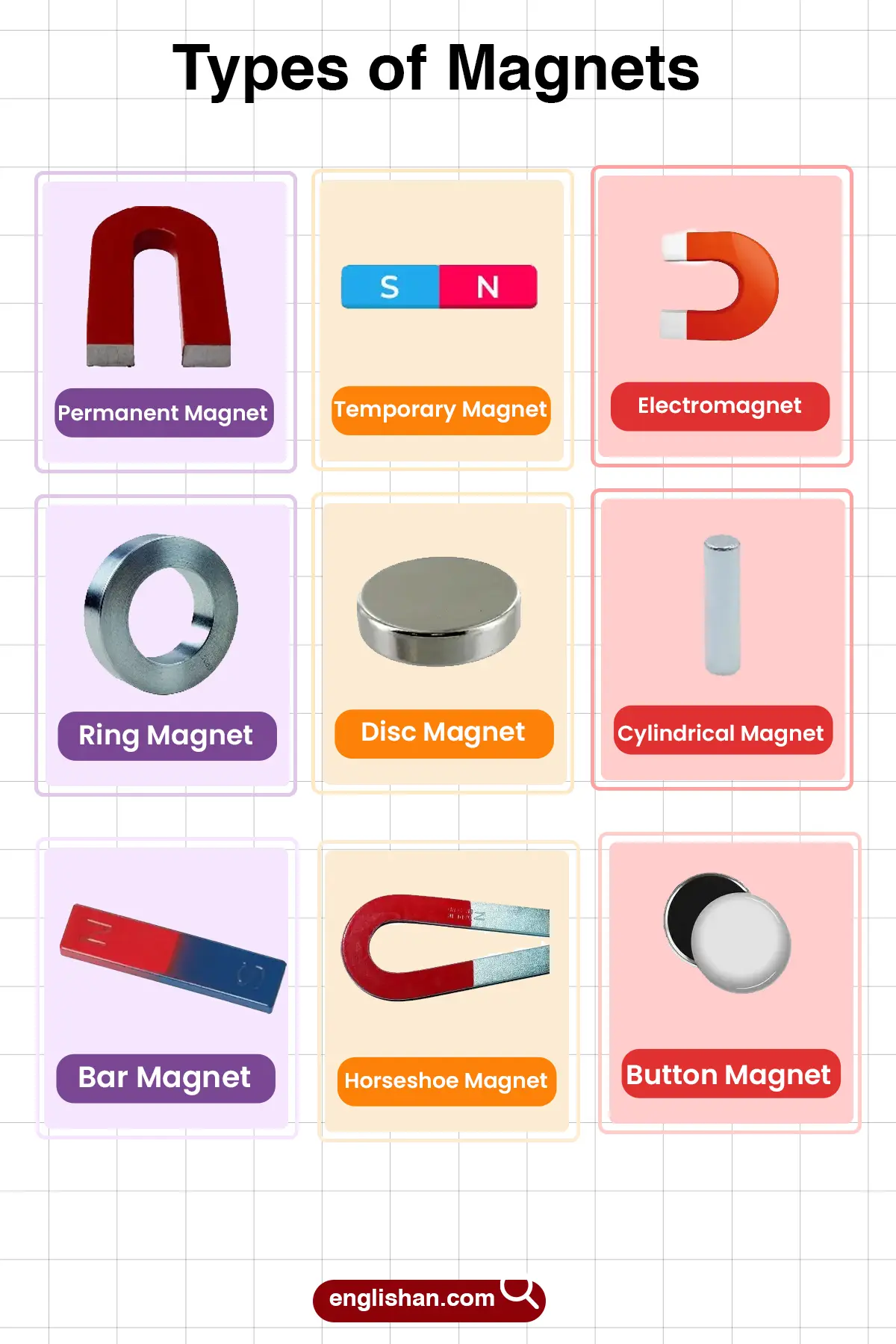
Types of Magnets in English
Magnets are classified into types based on how they produce and use magnetic force. Below is a list that explains the main types of magnets in English, including permanent, temporary, and electromagnets. Each type works differently and has its own use in tools, devices, and daily life.
Main Magnet Classifications
Magnets are grouped into three main types based on how they produce magnetism. Below is a list with short definitions to explain each one.
- Permanent Magnet: This magnet keeps its magnetic force over time. It doesn’t need power to work.
- Electromagnet: This magnet needs electricity to work. The force can be turned on or off.
- Temporary Magnet: This magnet becomes magnetic when near a strong magnet. The force goes away quickly.
Shapes of Magnets
Magnets come in different shapes depending on how they are used. Below is a list that shows common magnet shapes and their basic features.
- Bar Magnet: A straight, rectangular magnet used in school experiments and science kits.
- Ring Magnet: A round magnet with a hole in the center. Often found in electronic devices.
- Disc Magnet: A flat, round magnet used in badges, toys, and magnetic fasteners.
Household Uses of Magnets
Magnets are everywhere in homes. Below is a list of common items that use magnets.
- Toys: Many construction toys and puzzle toys use magnets to stick parts together.
- Locks: Some cabinet doors and safety locks use magnetic catches to stay closed.
- Refrigerator Uses: Fridge magnets hold notes or pictures on doors. The seal around the fridge also contains a magnet.
Types of Magnets in Technology
Magnets play a key role in many machines. Below is a list of devices that use magnets in their function.
- Electric Motors: Inside fans, washers, and tools, magnets make the motor spin.
- Audio Devices: Headphones and speakers use magnetic coils to produce sound by moving air.
Magnet Strength and Effectiveness
Magnet strength refers to how much force a magnet can produce. Some magnets pull strongly, while others work gently or only for a short time. Below is a list showing what affects a magnet’s force, such as size, material, and distance from objects. You’ll also learn how strong and weak magnetic fields behave differently in everyday magnets and machines.
Factors That Affect Magnetic Force
Several things can change how strong a magnet is. Below is a list that explains key factors like the type of material used, the size of the magnet, how far it is from the object, and the temperature around it.
Strong vs. Weak Magnetic Fields
Not all magnets produce the same level of force. Below is a list that compares strong magnetic fields, like those in neodymium magnets, to weak fields found in temporary or small magnets. You’ll understand when and why each is used.
Conclusion
Magnets come in different types, shapes, and strengths. Learning their names and uses helps you understand how they work in daily tools and machines. This knowledge makes it easier to describe and recognize magnets correctly in English and science topics.
FAQs About Types of Magnets
The three main types are permanent, temporary, and electromagnets, each defined by how they produce magnetic force.
Neodymium magnets are the strongest permanent magnets and are used in electronics, machines, and small tools.
No. Only electromagnets need electricity. Permanent magnets work without power and keep their force over time.
Magnets come in many shapes, including bar, ring, disc, horseshoe, and cylindrical shapes for different uses.
You May Also Like