Many spiders live in different environments, from forests to deserts, but some types are more common and well-known. These types of spiders vary in shape, size, and behavior. You’ll find spiders that build webs, jump, hunt, or hide in burrows.
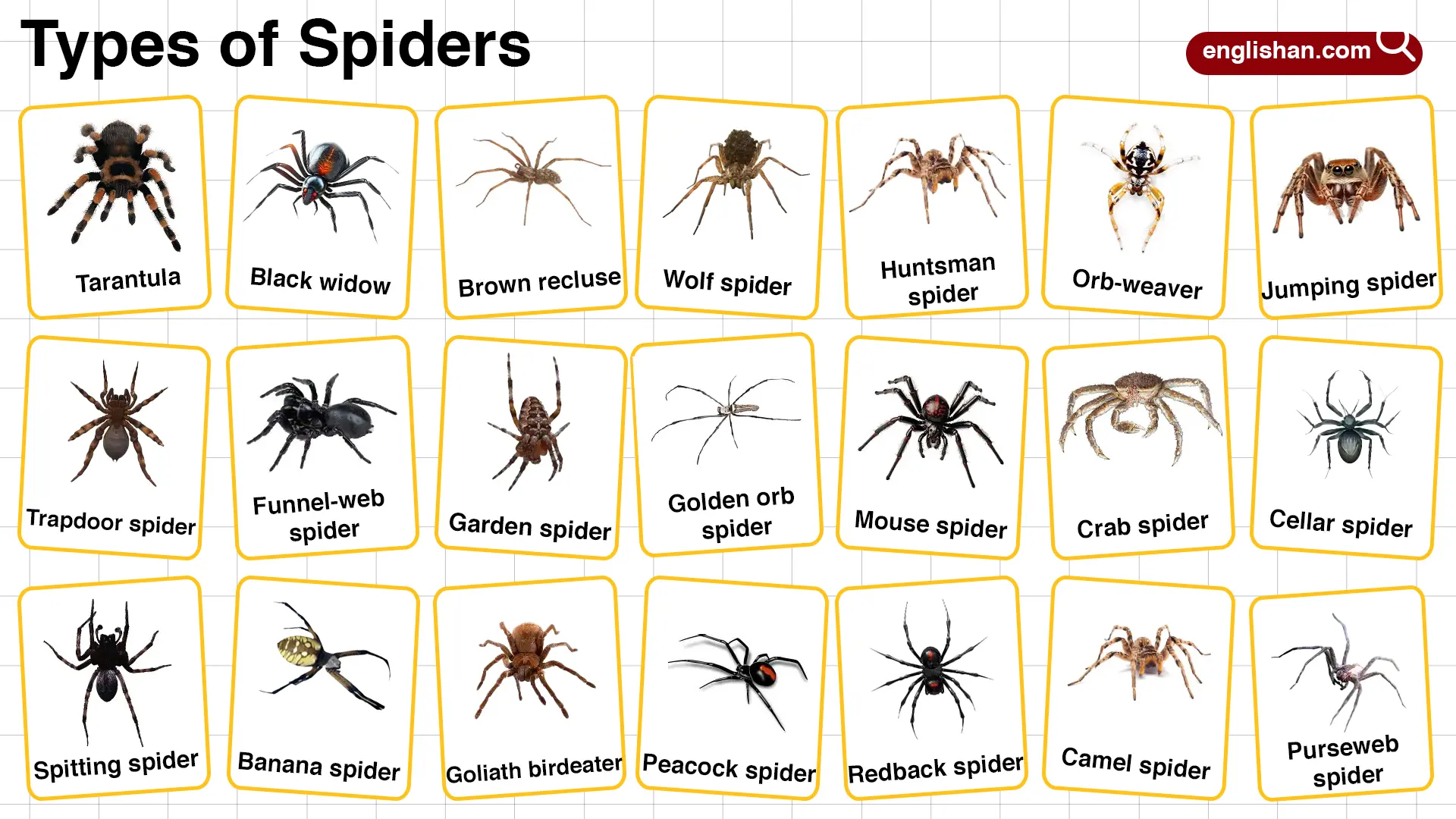
In this post, you’ll learn the names of different spider types with pictures. The spiders are grouped for easier learning, helping you understand and remember their names and features.
List of Types of Spiders
Spiders come in many types based on their behavior, habitat, and web style. Below is a list of common and unique spider types in English.
- Tarantula
- Black widow
- Brown recluse
- Wolf spider
- Huntsman spider
- Orb-weaver
- Jumping spider
- Trapdoor spider
- Funnel-web spider
- Garden spider
- Golden orb spider
- Mouse spider
- Lynx spider
- Crab spider
- Cellar spider
- Spitting spider
- Banana spider
- Goliath birdeater
- Peacock spider
- Redback spider
- Net-casting spider
- Camel spider
- Purseweb spider
- Cobweb spider
- Sheet weaver

Types of Spiders
Spiders come in many shapes and sizes. Some live indoors, while others live in forests, deserts, or underground. They may spin webs to catch prey or actively hunt it. Below is a categorized list of different spider types based on where they live, how they behave, and what they look like.
Common House Spiders
House spiders are often seen indoors. They build webs in corners, attics, and basements and usually stay out of sight.
- House Spider: Found in corners of walls and ceilings, it builds tangled webs and stays hidden most of the time.
- Cellar Spider: Has long legs and thin body, often hangs upside down in basements and damp areas.
- Brown Recluse: Known for its violin-shaped mark on the back, it hides in dark, quiet places.
- Hobo Spider: Fast-moving and low web builder, mostly seen in basements or storage spaces.
Web-Building Spiders
These spiders use silk to make different kinds of webs. The shape of the web often helps identify the spider.
- Orb Weaver: Builds circular, wheel-shaped webs in gardens or open spaces.
- Sheet Web Spider: Spins flat, sheet-like webs across grass or low plants.
- Funnel Web Spider: Makes a funnel-shaped web with a narrow entrance at one side.
- Cobweb Spider: Common in corners of rooms; their webs look messy and sticky.
Types of Hunting Spiders
These spiders don’t use webs to catch prey. Instead, they chase, jump, or ambush insects.
- Wolf Spider: Large eyes and strong legs, chases prey on the ground.
- Jumping Spider: Has great eyesight, jumps from surface to surface while tracking insects.
- Lynx Spider: Sharp spines on legs, hunts on plants by leaping at prey.
- Nursery Web Spider: Carries eggs in its jaws and hides young in a web tent.
Burrowing Spiders
Burrowing spiders live in tunnels or holes, often lined with silk. They stay hidden and wait to catch prey.
- Trapdoor Spider: Builds a trapdoor lid over its burrow and waits to ambush insects.
- Mouse Spider: Found in burrows, often confused with funnel-web spiders due to similar appearance.
- Purseweb Spider: Creates a silk tube and strikes from inside when prey walks over it.
Venomous Spiders
These spiders can be dangerous to humans. Their bites may cause pain or require medical help.
- Black Widow: Shiny black with a red hourglass mark, its bite can cause muscle pain.
- Brown Widow: Related to the black widow but with lighter body color.
- Redback Spider: Has a red stripe on the back; common in Australia and very venomous.
Habitat-Based Spiders
Some spiders are known by where they live. Their names reflect the environment they are most found in. Below is a list of spiders based on habitat.
- Garden Spider: Lives among flowers and shrubs, builds neat orb webs.
- Desert Spider: Survives dry, hot environments with burrows or quick movements.
- Forest Spider: Found in wooded areas, builds large webs between branches.
- Cave Spider: Lives in dark, damp caves with very little light.
Large Spiders
These spiders are larger than average and often draw attention due to their size. Below is a list of big spider species.
- Goliath Birdeater: One of the biggest spiders in the world; can eat small animals.
- Huntsman Spider: Long legs and fast movements, often seen on walls in warm climates.
Tarantula Types
Tarantulas are hairy, slow-moving spiders. They’re often kept as pets and come in many species. Below is a list of common tarantula types.
- Pink Toe Tarantula: Known for pink-colored feet and calm behavior.
- Mexican Redknee Tarantula: Black body with orange joints, popular in pet trade.
- Chilean Rose Tarantula: Light brown or pinkish in color, prefers dry environments.
Unique Spiders
These spiders stand out due to their color, shape, or behavior. Below is a list of unusual spiders.
- Peacock Spider: Bright colors and dancing moves, often compared to a peacock.
- Spiny Orb Weaver: Has spikes on its back and builds round webs.
- Arrowhead Spider: Triangle-shaped body with yellow and black colors.
Conclusion
Learning spider types in English helps you describe them clearly. This post shared names with pictures and examples, grouped by traits. From house spiders to tarantulas, each was explained to build your vocabulary and boost your confidence.
FAQs About Types of Spiders
Orb weavers spin round, wheel-shaped webs.
Sheet-web spiders make flat mats.
Funnel-web spiders build tunnels with funnel openings.
Cobweb spiders create messy, tangled webs indoors
Yes. Desert spiders and mouse spiders thrive in dry areas and often live in burrows to avoid heat .
You May Also Like