Seeing ASMR meaning and not knowing it can lead to confusion, especially when someone talks about sound, sleep, or relaxation. The meaning matters because people use this word to describe both a feeling and the sounds linked to it. It refers to a gentle tingling sensation that often begins on the scalp and moves downward, and many people find it calming.
In this article, we explain the meaning first, then how people use the word in context. Usage can vary with whispering, tapping, soft voices, headphones, sleep, stress, anxiety, or insomnia, and examples help set the context that follows.
What Does ASMR Mean?
This term refers to a distinct physical sensation that feels like static or mild electrical currents. The feeling typically begins on the scalp and travels down the back of the neck and upper spine. People primarily consume this type of content to trigger deep relaxation or to help them fall asleep faster.
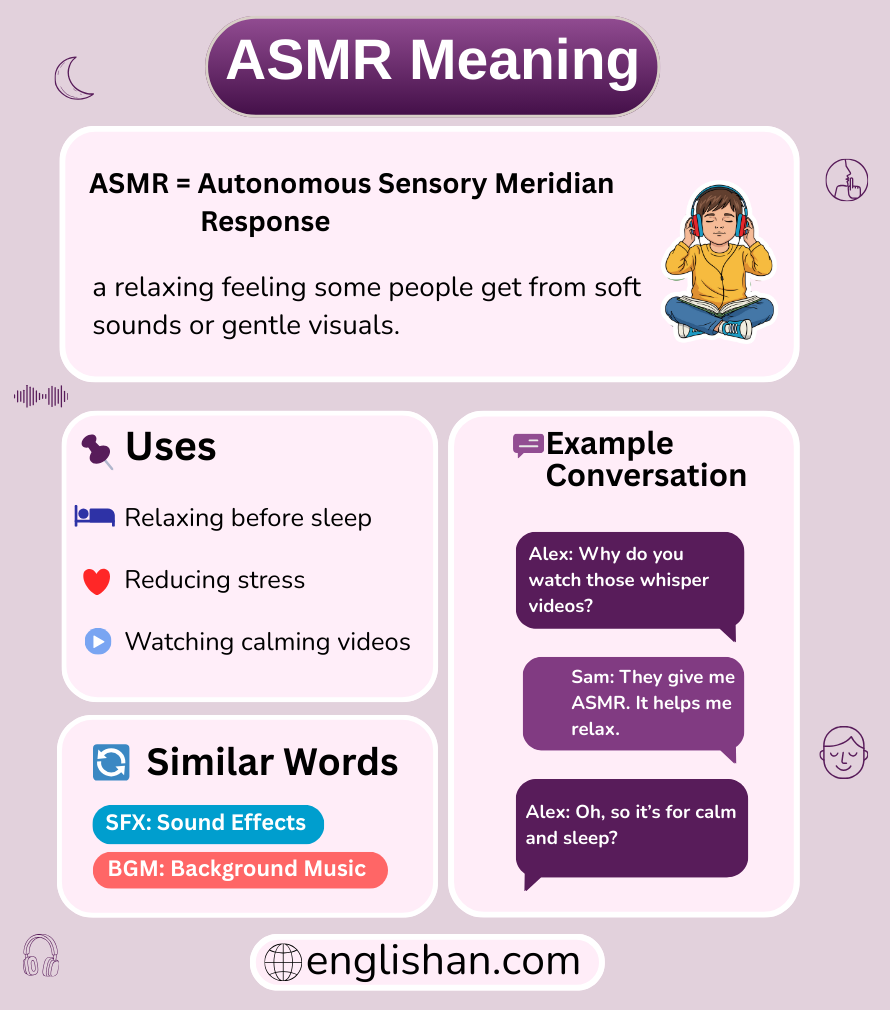
What Does ASMR Stand For?
The acronym represents the pseudo-scientific name Autonomous Sensory Meridian Response. “Autonomous” implies the reaction happens spontaneously, while “Sensory” refers to the physical senses involved. “Meridian” suggests a peak or pathway of energy, and “Response” describes how the body reacts to specific audio or visual stimuli.
ASMR Meaning In Different Contexts
While the technical definition describes a physical feeling, the term has evolved to cover a wide genre of media. It can refer to the sensation itself, a specific video category, or a style of speaking. These variations depend heavily on the digital platform or social setting where the conversation happens.
On YouTube
Creators on this video platform focus on long-form content designed to induce sleep or calm anxiety. These videos often feature “roleplays” where the host simulates a haircut, medical exam, or spa treatment with binaural audio. Viewers use these extended sessions as a form of digital comfort after a long day.
On TikTok
Content here shifts toward rapid, visually satisfying clips rather than slow, sleep-inducing sessions. A typical video might show someone slicing kinetic sand, crushing floral foam, or organizing items perfectly. The goal is usually immediate visual satisfaction and quick brain stimulation rather than prolonged relaxation.
In Everyday Use
Outside of the internet, people use the word to describe any sound or voice that feels uniquely soothing or quiet. A friend might describe a librarian or a soft-spoken teacher as having an “ASMR voice.” In this general sense, it acts as a synonym for gentle and calming speech patterns.
Origin Of ASMR
Jennifer Allen coined the term in 2010 within a Facebook group to create a clinical-sounding name for the sensation. Before this formal naming, online communities used vague descriptions like “brain massage” or “head tingles.” The establishment of a serious-sounding name helped the concept gain legitimacy and mainstream recognition.
ASMR Examples In Conversations
These dialogues show how people discuss the sensation and the videos in real life.
Jordan: I have been having so much trouble falling asleep lately.
Casey: You should try listening to some ASMR videos before bed.
Jordan: I tried one, but the whispering sound actually annoyed me.
Casey: You might like the visual ones better, like wood carving or painting.
Taylor: Why are you tapping your pen on the desk like that?
Alex: I am just trying to make some ASMR sounds.
Taylor: Please stop, it is just distracting me from my work.
Alex: Sorry, I did not realize it was bothering you.
Morgan: Did you see that video of the hydraulic press crushing things?
Riley: Yes, it was oddly satisfying and total ASMR.
Morgan: I watched it five times just because the crunch was so perfect.
Riley: Same here, it scratches an itch in my brain.
Other Related Slang Words
Enthusiasts use specific terminology to classify different parts of the experience.
- Triggers: Specific sounds or sights, like tapping or hand movements, that cause the reaction.
- Tingles: The physical, static-like sensation experienced on the skin.
- Mukbang: A video trend involving eating large amounts of food, often overlapping with ASMR audio.
Common Confusions
A frequent misunderstanding is that this content is inherently sexual or fetishistic due to the intimacy of whispering. However, the vast majority of creators and viewers use it strictly for non-sexual stress relief and insomnia management. Correctly separating intimacy from erotica clarifies the true intent of the genre.
Key Takeaway
We use the acronym ASMR to describe a tingling, sedative sensation that typically starts on the scalp. The term stands for Autonomous Sensory Meridian Response and encompasses a massive digital culture of videos featuring whispering, tapping, and visual satisfaction. Correct usage applies to both the physical feeling and the media designed to trigger it. By recognizing this term, we identify a popular tool for managing stress and sleeplessness.
FAQs About ASMR Meaning
Q1. What triggers ASMR for most people?
Common triggers include whispering, soft tapping, page turning, and personal attention roleplays. These specific sounds and visuals help induce relaxation and tingles in the viewer.
Q2. Is ASMR scientifically real?
Yes, studies show that ASMR can lower heart rates and increase skin conductance levels. This physical data suggests it is a genuine physiological response to stimuli.
Q3. Why does ASMR make me angry?
You may have misophonia, a condition where specific sounds trigger anger or disgust. For these individuals, standard ASMR triggers cause negative reactions instead of calm.
Q4. Can everyone feel ASMR?
No, only a portion of the population experiences the specific “tingle” sensation. People without the sensitivity may just find the videos relaxing or boring.
Q5. Is ASMR safe for children?
Most general relaxation content is safe, but parents should screen videos first. Some content labeled ASMR might contain mature themes or inappropriate roleplays.
You May Also Like