You see photos of friends out together while your phone sat untouched, and the moment passes without you. By the time you catch up, the story is already old, and the feeling lingers longer than the post itself.
That reaction is often tied to the fear of missing out, when being offline or out of the loop creates a quiet sense of pressure. It shows up around plans, trends, or conversations and can feel light and joking or genuinely uncomfortable, depending on the situation.
In this guide, we will explain fomo meaning and how it plays out online and offline, from casual jokes to everyday decisions. You will see how people use it in sentences, short chats, and similar expressions, so it becomes easier to spot and understand in real moments.
What Does FOMO Mean?
This slang term describes the anxious feeling that you are missing out on something fun. It happens when you think your friends or peers are enjoying an exciting event without you. This worry often pushes people to constantly check their phones for updates and photos.
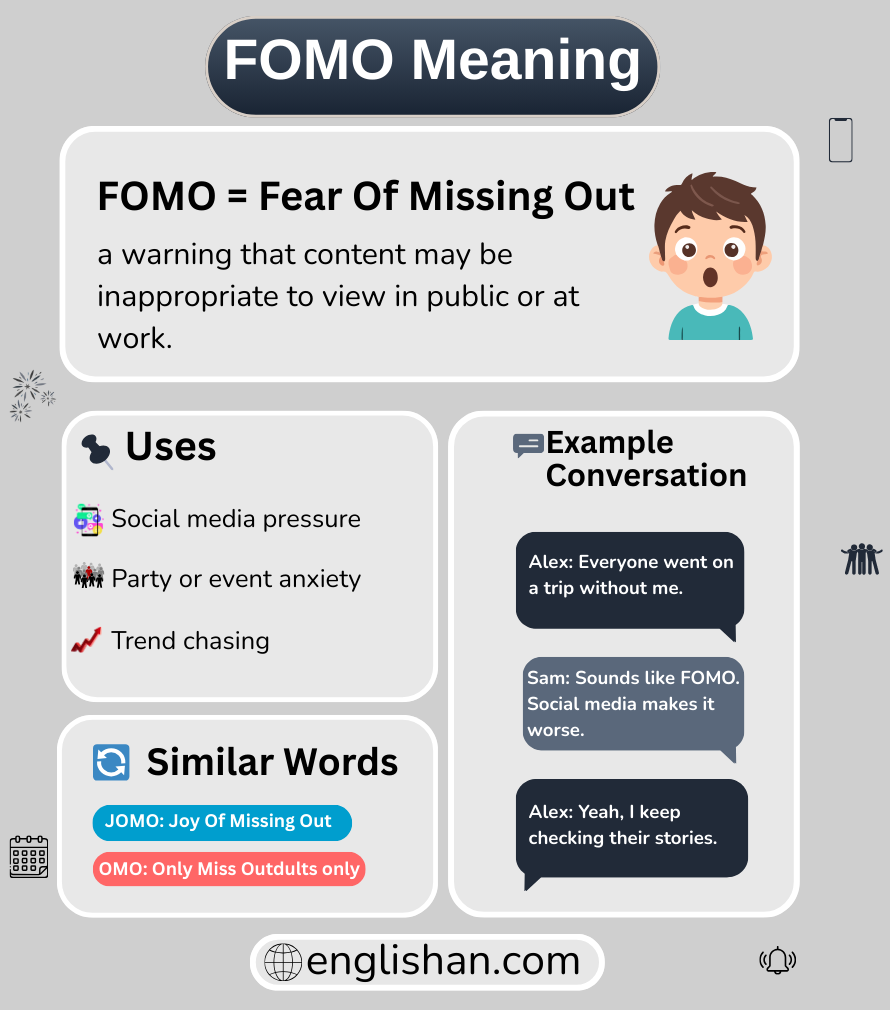
What Does FOMO Stand For
The acronym represents the phrase Fear Of Missing Out. The word “Fear” highlights the worry you feel, while “Missing Out” refers to not being there for the fun. This short form perfectly captures the pressure to be everywhere at once so you do not get left behind.
How To Use FOMO
You can use this word to explain why you feel restless or jealous of other people’s plans. It acts as a noun to describe the nervous energy that makes you say “yes” to every invitation. People often use it to admit they are only attending an event because they are afraid to skip it.
In Texting And Social Posts
On apps like Instagram or Snapchat, users add the tag #FOMO to show they wish they were somewhere else. It is a quick way to tell friends, “I am sad I missed this party.” Using this tag lets you share your playful envy without writing a long, sad message.
In Conversations
Friends say this word aloud to explain strange behaviors, like checking social media during dinner. It serves as a valid excuse for being distracted or unable to commit to just one plan. If someone says they “have FOMO,” they mean they need to know what everyone else is doing right now.
In Other Areas
Beyond just parties, stores and advertisers use this fear to sell products. A “Flash Sale” or “Limited Time Offer” creates a sense of urgency to buy something before it is gone. In this case, the fear is about missing a good deal rather than a social event.
FOMO Examples
Situations that cause this feeling usually involve exclusion or popular trends.
- Phone Checking: Refreshing your feed over and over to see where your friends are eating.
- Impulse Buying: Getting tickets to a concert just because everyone else is going.
- Overbooking: Agreeing to three different parties on the same night to avoid feeling lonely.
FOMO Example Conversations
These dialogues show how friends talk about the pressure to join in and the worry of missing out.
Jordan: I am so tired, but I think I should go to the movies tonight. Casey: Why push yourself if you are exhausted? Jordan: I have major FOMO because the whole group is going. Casey: You can just ask them how it was tomorrow.
Alex: Did you buy that new video game everyone is playing? Sam: No, I do not even like those types of games. Alex: I bought it because the FOMO was getting to me. Sam: You should save your money for things you actually like.
Taylor: I cannot believe I missed the camping trip this weekend. Jamie: The photos looked fun, I bet you have serious FOMO right now. Taylor: It is the worst, I wish I had asked for the day off. Jamie: Next time we will make sure you can come with us.
FOMO Origin
Writer Patrick J. McGinnis created this term in 2004 while studying at Harvard Business School. He noticed that students were packing their schedules too full because they were afraid of missing a single social moment. His simple name for this anxiety eventually became a world-famous word used by everyone.
Other Related Slang Words
Internet culture has created new words to describe different feelings about social plans.
- JOMO: Stands for the Joy Of Missing Out, which means you are happy to stay home.
- YOLO: Stands for You Only Live Once, often used to justify doing something risky.
- FOBO: Means Fear Of Better Options, where you cannot decide what to do.
Common Confusions
Many people think this word is just another way to say “jealousy,” but there is a small difference. Jealousy is wanting what someone else has, while FOMO is the fear of not being present. It focuses on the loss of connection rather than a specific object.
Key Takeaway
We use the slang word FOMO to describe the nervous feeling that fun things are happening without us. It stands for Fear Of Missing Out and explains why we check our phones so often or go to parties when we are tired. While it usually refers to social life, it can also make us buy things we do not need. By naming this feeling, we can learn to enjoy our own time without worrying about what others are doing.
FAQs
Common examples include checking social media constantly, going to parties you dislike, or buying trendy clothes just to fit in. These actions come from a fear of exclusion.
People use the hashtag #FOMO to show they are sad about missing an event. Stores also use it to create urgency for sales and deals.
The opposite is JOMO, or the Joy Of Missing Out. This means you feel happy and relieved to skip plans and relax at home.
Yes, while it is not a disease, psychologists see it as a form of social anxiety. It can make people feel stressed or unhappy with their own lives.
Yes, people often spend money they do not have because of this fear. This is called panic buying or impulse shopping.
You May Also Like