

LMK meaning comes up when someone wants an update without writing a full sentence. It stands for let me know, and it is used in a text message, DM, group chat, email, or Slack after a question about plans, timing, or a decision. It often follows details like a time, place, or meeting.
In this article, we explain LMK meaning first, then how it is used in invites, scheduling, and quick check-ins. Next come short examples so your reply timing fits the tone and keeps the conversation smooth.
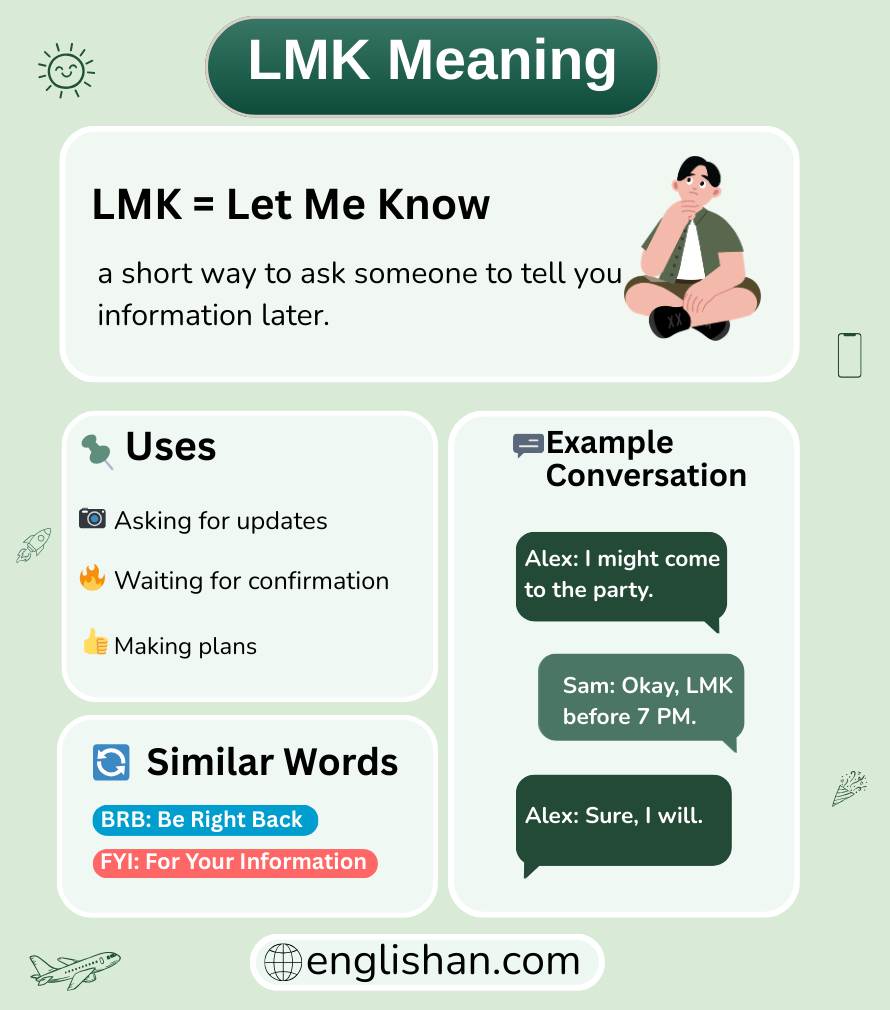
What Does LMK Mean?
The acronym LMK functions as a direct request for information or confirmation. It signals that the sender is waiting for an answer that the recipient might not have right now. Writers use it to keep a line of communication open without demanding an immediate reply.
What Does LMK Stand For?
This three-letter abbreviation stands strictly for the phrase Let Me Know. It grammatically functions as a verb phrase used to close a sentence or finalize a request. While the letters are simple, they represent a standard social protocol for following up on plans or questions.
How To Use LMK In Texts And Chats
People type this slang to coordinate plans or check availability without applying pressure. It often appears at the end of an invitation to give the other person time to think. You will see it used frequently when scheduling events that depend on another person’s timeline.
LMK In Work Messages
In professional chats, this acronym serves as a tool to soften requests for status updates. Colleagues use it to ask for data or file completion without sounding bossy or impatient. It implies trust that the coworker will get back to them at a convenient time.
When To Avoid LMK
You should avoid using this shorthand in formal documents or serious emotional discussions. If the topic requires gravity, such as a resignation letter or a condolence message, using an abbreviation can seem lazy or disrespectful. In these cases, typing out the full words shows more care.
How To Reply To LMK
If someone sends this to you, the best response is to confirm receipt immediately, even if you do not have the answer yet. A quick “I will” or “Checking now” lets the sender know you saw the message. Once you have the information, you should follow up with the actual answer.
Example Conversations Using LMK
These dialogues demonstrate how friends and coworkers use the term to plan events and track tasks.
Jason: Do you want to go to the movies on Friday?
Mike: I might have to work late, I am not sure yet.
Jason: Okay, just LMK whenever you figure it out.
Sarah: Did you finish the report for the meeting?
Emily: I am almost done, just adding the final chart.
Sarah: Great, please lmk when you send it over.
David: Are we still playing basketball tomorrow?
Jessica: It depends on the weather.
David: LMK if you decide to cancel so I don’t drive there.
Origin Of LMK
The abbreviation emerged during the internet boom of the 1990s alongside other common chatroom shorthand. It gained widespread usage with the advent of SMS texting, where character limits made shorter phrases necessary. It has remained a staple of digital vocabulary because it efficiently manages expectations.
Other Related Slang Words
These acronyms also manage conversation flow and updates.
- LYK: Let You Know. The response version of LMK.
- TTYL: Talk To You Later. Used to end chats.
- BRB: Be Right Back. Used for short breaks.
- TBH: To Be Honest. Used to share opinions.
Common Confusions
A frequent mix-up occurs with the acronym IDK (I Don’t Know), as they serve opposite functions. LMK asks for knowledge, while IDK admits a lack of it. Readers usually distinguish them easily by context, but fast typists might accidentally swap the letters in a rush.
LMK Vs Let Me Know
There is no difference in meaning, but the full phrase is more formal. You use “Let me know” in emails to a boss or client to sound professional and polite. You use LMK with friends or close peers where speed is more important than etiquette.
Key Takeaway
We define this acronym as a standard text abbreviation standing for “Let Me Know,” used to request future information. It serves as a polite way to ask for an update or confirmation without pressuring the recipient for an immediate answer. While acceptable in casual work chats to soften requests, users should stick to the full phrase in formal settings. Remember to use LMK when you want to keep the door open for a friend to reply later.
FAQs
No, it is generally considered polite and casual in texts.
Only if the email is to a close colleague, otherwise avoid it.
You say the letters L-M-K individually.
Not usually. It suggests you can reply at your convenience.
It can be LMK or lmk; both are correct.
You May Also Like